

how_long_is_a_health_and_social_care_course

How Long Is a Health and Social Care Course?

Health and social care courses range from a few weeks to several years depending on the level and study mode. Short CPD courses may take days or weeks. Diplomas typically take 6 to 18 months. Degrees take three years or more. This guide breaks down typical timelines for each course type in the UK.

The length of a health and social care course depends on the type, level, and how you choose to study. Short CPD courses can take just a few hours or weeks. Diplomas typically take 6 to 18 months. A full undergraduate degree takes three years or more. The right timeline depends on your goals and circumstances.

How Long Do CPD Courses Take?

CPD courses in health and social care are usually the shortest option. They focus on specific topics such as safeguarding, infection control, or mental health awareness. Most can be completed in a few hours to a few weeks.

These courses are designed for flexible, self-paced learning. You study online and progress when it suits you. There are no fixed term dates or rigid deadlines. This makes CPD a practical option for people already working in care who want to build their knowledge around existing commitments.

It is important to note that CPD courses support your professional development. They are not regulated qualifications. They do not carry the same formal recognition as a diploma or degree.

Health and Social Care Level 3 Diploma

Learn to Promote Health and Social Care Level 3 Diploma!

How Long Do Level 2 and Level 3 Diplomas Take?

Diplomas are among the most common routes into health and social care. Typical timelines vary by level and study mode.

  • Level 2 Certificate or Diploma – usually takes around 6 to 12 months. This level covers introductory topics and suits people new to the care sector.
  • Level 3 Diploma – typically takes 12 to 18 months. This level goes deeper into areas like care planning, person-centred approaches, and safeguarding. It is often a requirement for more senior care roles.

These are regulated qualifications. They are assessed against national standards set by awarding bodies. Some require evidence of workplace practice, which means you may need to be working in a care setting during your studies.

Full-time learners tend to complete these courses faster. Part-time or online learners may take longer, depending on how many hours they study each week.

How Long Does an Access to Higher Education Diploma Take?

An Access to Higher Education Diploma in health and social care is designed for adults who want to progress to university. Most learners complete this in around 9 to 12 months when studying full-time. Part-time study may extend the timeline to 18 months or longer.

This route suits people who do not have A Levels but want to train for roles such as nursing, social work, or occupational therapy at degree level.

How Long Does a Degree Take?

An undergraduate degree in health and social care typically takes three years of full-time study. Part-time options are available through some universities and may take up to six years.

Some universities also offer foundation year programmes. These add an extra year at the start and are aimed at learners who need additional preparation before beginning degree-level study.

A degree opens the door to roles that require professional registration, such as social work or nursing. These programmes usually include supervised placements alongside academic study.

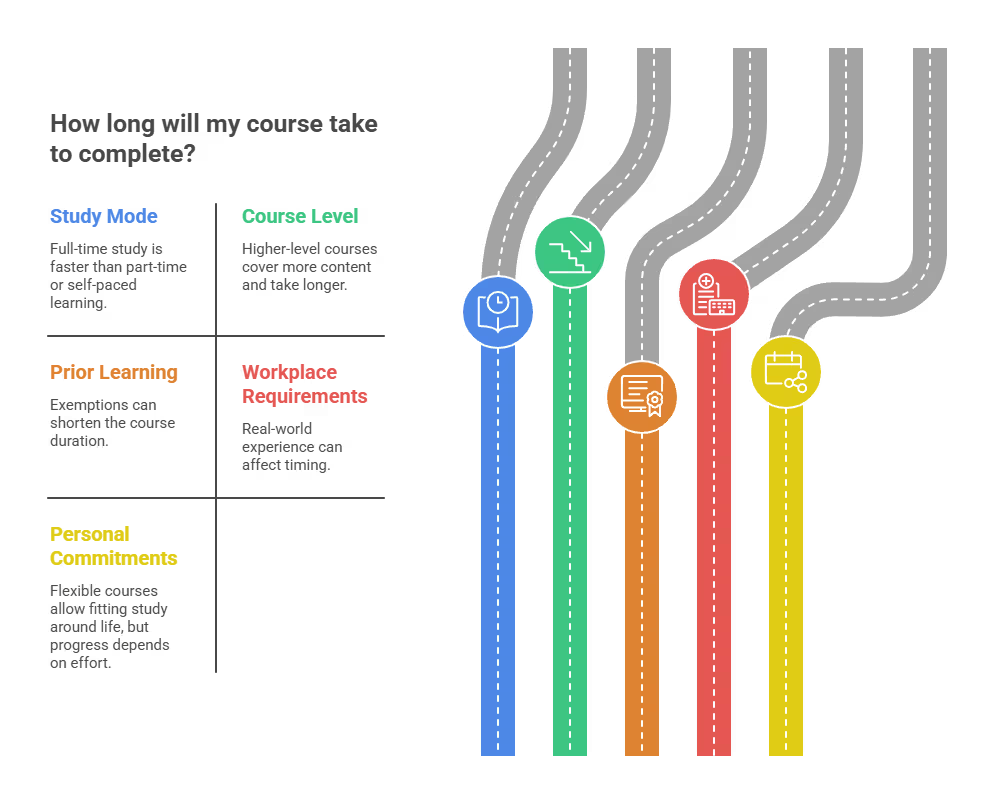
what_affects_how_long_a_course_takes


Does Faster Completion Affect the Value of a Course?

Not necessarily. What matters is whether the course meets recognised standards. For regulated qualifications, the awarding body sets the learning outcomes regardless of how quickly you complete the work. For CPD courses, the value comes from what you learn and how you apply it in practice.

Be cautious of providers that promise unrealistically fast completion times without explaining what the course involves. Always check whether a course is CPD-accredited or leads to a regulated qualification before enrolling.

Quick Recap

  • Health and social care courses range from a few hours (CPD) to three years or more (degrees).
  • Diplomas at Level 2 and Level 3 typically take 6 to 18 months depending on the study mode.
  • CPD supports professional development but is not a regulated qualification.

Studying Through Royal Open College (CPD Learning)

Royal Open College offers CPD courses in health and social care designed for flexible, self-paced study. These courses cover key topics relevant to care roles in the UK and can be completed around your existing schedule. CPD learning through Royal Open College helps you build practical knowledge at a pace that works for you.

Health and Social Care Level 3 Diploma

Learn to Promote Health and Social Care Level 3 Diploma!

Recent Blogs

Safeguarding_and_Child_Protection_UK_Guide

Safeguarding and Child Protection: UK Guide

Safeguarding is one of the most important responsibilities you can hold, whether you work with children, young people or vulnerable adults. This guide walks you through how safeguarding differs from child protection, which UK guidance applies to your setting and the role of a Designated Safeguarding Lead. You will also learn how to report concerns and choose the right CPD learning without confusing it with a regulated qualification.

Choosing a Safeguarding Course for Childcare Professionals

Choosing a Safeguarding Course for Childcare Professionals

Choosing the right safeguarding course depends on your role, your contact with children, and what your employer actually requires for the position. This guide covers common safeguarding training levels, current EYFS requirements for early years settings in England, the Designated Safeguarding Lead role, and how CPD learning fits alongside statutory safeguarding duties in daily practice.

Nursing Assistant Course Birmingham: Online Study Options Explained

Nursing Assistant Course Birmingham: Online Study Options Explained

Not all nursing assistant certificates carry the same weight with Birmingham employers. This guide covers the CPD versus Ofqual distinction no competitor explains, clarifies why an online course does not complete the Care Certificate, and gives you a clear picture of what Birmingham NHS trusts, care homes, and private providers check before offering you a role.