



Health and Social Care Courses
Health and social care courses teach you the skills, knowledge, and confidence needed to support people safely and professionally in care and healthcare settings. At Royal Open College, our health and social care courses are designed to help people step into the care sector with clear guidance, practical learning, and real purpose.
Working in health and social care means supporting people at important moments in their lives. Proper training helps you understand people’s needs, follow safe care practices, and deliver support with empathy and respect. Our CPD accredited health and social care courses online focus on real career-ready care skills used every day in adult social care roles, helping you feel confident and prepared for work in the care sector.
5000+ Courses
Explore our extensive library of fresh courses
Flexible Study
Study anytime, anywhere that suits you!
24/7 Tutor Support
Our experts are here for you whenever you need us.
Health and Social Care Sector Overview
The health and social care sector is centred on one simple goal: helping people live safer, healthier, and more independent lives. From short-term support to long-term care, this work touches people at many points in their lives and plays a vital role in every community.
Care professionals support individuals across a wide range of care settings. This includes adult social care, residential homes, community services, home-care services, and healthcare support roles. Some roles focus on medical needs, while others provide practical help, emotional support, and guidance with everyday tasks. Together, these services help people feel supported, respected, and safe.
Clear communication, safeguarding awareness, and strong professional standards are at the heart of good care. These skills help protect vulnerable people and build trust between care workers and those they support. As more care is delivered in the community, the care workforce continues to grow and evolve.
For learners, this creates clear career opportunities. Relevant health and social care training helps with entering the care sector, building job readiness, and understanding different care sector pathways. It is rewarding work that offers purpose, stability, and the chance to make a real difference every day.
Explore Our Health and Social Care Courses
Royal Open College offers a wide range of health and social care courses designed to support clear, structured progression. You can explore level-based pathways, from introductory options through to advanced learning, alongside specialist and mandatory care training. Courses also cover nursing support, healthcare roles, and care management.
All learning is online, flexible, and self-paced, making it easy to study around real life while progressing through recognised care pathways with practical, career-focused courses.

Health and Social Care Level 2 Diploma
Study Time: Approximately 2 Hours (Self-Study)
A beginner-level course introducing key care duties, safeguarding, communication, and professional behaviour. Designed for those new to care, it builds confidence and understanding through simple, flexible online learning that fits around everyday commitments.
£19.99 £424.99

Health and Social Care Level 3 Diploma
Study Time: Approximately 7 Hours (Self-Study)
Builds on basic care knowledge and supports progression into active care roles. Covers person-centred care, safeguarding, health and safety, and communication, with an online study designed to suit working adults and those gaining experience on the job.
£19.99 £424.99

Health and Social Care Level 4 Diploma
Study Time: Approximately 7 Hours (Self-Study)
Focuses on developing a deeper understanding and greater responsibility in care settings. Suitable for learners aiming to strengthen decision-making and care practice knowledge while studying online in a structured and manageable way.
£19.99 £424.99

Health and Social Care Level 5 Diploma
Study Time: Approximately 7 Hours (Self-Study)
A higher-level qualification for experienced learners preparing for senior or supervisory roles. Covers leadership, care planning, safeguarding, and professional standards through flexible online learning that supports career progression.
£19.99 £424.99

Level 5 Diploma in Health and Social Care Management
Study Time: Approximately 9 Hours (Self-Study)
Designed for learners preparing for management roles in care environments. Focuses on leadership, staff management, quality assurance, and service improvement, delivered online to support learning alongside existing work responsibilities.
£19.99 £424.99

Level 5 Diploma in Leadership and Management for Adult Care
Study Time: Approximately 5 Hours (Self-Study)
Supports the development of leadership skills in adult social care. Covers leading teams, maintaining standards, safeguarding oversight, and service delivery through practical, career-focused online modules.
£19.99 £424.99

Support Worker Diploma & Care Assistant Certificate
Study Time: Approximately 7 Hours (Self-Study)
Covers essential skills for entry-level care roles, including communication, safeguarding, dignity, and daily support tasks. Designed to help learners prepare confidently for support worker and care assistant positions through online study.
£19.99 £424.99

Care Certificate Course – Standards (1 to 16)
Study Time: Approximately 7 Hours (Self-Study)
Covers all 16 Care Certificate standards required for care workers. Focuses on safeguarding, duty of care, communication, equality, and health and safety, supporting new staff through structured and accessible online training.
£19.99 £424.99

Moving and Handling People in Health and Social Care
Study Time: Approximately 9 Hours (Self-Study)
Teaches safe moving and handling techniques to reduce injury risk. Covers correct equipment use, legal responsibilities, and risk awareness, helping learners support people safely through clear online learning.
£19.99 £424.99

Safeguarding Adults in Care Settings
Study Time: Approximately 4 Hours (Self-Study)
Teaches how to recognise safeguarding concerns and respond appropriately. Covers responsibilities, reporting procedures, and protecting vulnerable adults through practical, easy-to-follow online training.
£19.99 £424.99

Safeguarding Children Level 3 Designated Safeguarding Lead (DSL)
Study Time: Approximately 4 Hours (Self-Study)
Supports those involved in safeguarding processes. Covers identifying risks, recording concerns, and understanding procedures, helping learners contribute confidently through accessible online study.
£19.99 £424.99
Dementia Awareness
Study Time: Approximately 2 Hours (Self-Study)
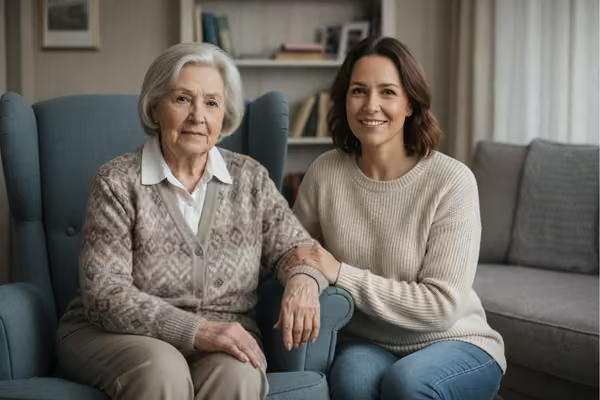
Explores how dementia affects individuals and how to provide compassionate support. Covers communication strategies, behaviour awareness, and person-centred care through practical and accessible online learning.
£19.99 £424.99

End of Life Care Diploma
Study Time: Approximately 2 Hours (Self-Study)
Focuses on dignity, comfort, and sensitive communication at the end of life. Supports learners in providing respectful and compassionate care in emotionally challenging situations through clear online study.
£19.99 £424.99

Level 3 Diploma in Mental Health First Aid
Study Time: Approximately 7 Hours (Self-Study)
Teaches how to recognise mental health concerns and offer initial support. Covers awareness, communication, and appropriate responses, helping learners feel confident through flexible online learning.
£19.99 £424.99

ADHD Awareness
Study Time: Approximately 4 Hours (Self-Study)
Explains ADHD and how it may affect daily life. Covers behaviour support, communication, and inclusive care approaches for those supporting individuals with ADHD in care or community settings.
£19.99 £424.99

Mental Health, Dementia and Learning Disabilities
Study Time: Approximately 7 Hours (Self-Study)
Covers understanding and supporting individuals with complex needs. Focuses on inclusive, person-centred care across mental health, dementia, and learning disabilities through accessible online learning.
£19.99 £424.99

Healthcare Support Worker Course
Study Time: Approximately 7 Hours (Self-Study)
Prepares learners for healthcare support roles. Covers patient care, communication, infection control, and professional behaviour, supporting confidence through flexible and accessible online learning.
£19.99 £424.99

Nursing Assistant Level 3 Diploma
Study Time: Approximately 7 Hours (Self-Study)
Builds practical skills for nursing assistant roles. Covers patient support, clinical awareness, and safe care practices through a structured online study suitable for developing healthcare support workers.
£19.99 £424.99

Nursing Assistant Level 5 Diploma
Study Time: Approximately 5 Hours (Self-Study)
An advanced course for experienced nursing assistants. Focuses on leadership, advanced care skills, and professional responsibility, supporting progression through flexible online modules.
£19.99 £424.99

Adult Nursing Diploma
Study Time: Approximately 9 Hours (Self-Study)
Covers foundational nursing knowledge, patient care principles, and healthcare support skills. Designed for learners exploring progression toward nursing-related roles through online learning.
£19.99 £424.99

Sterile Services Technician Training Level 4
Study Time: Approximately 3 Hours (Self-Study)
Covers decontamination processes, infection control, and sterile services procedures. Designed for healthcare roles requiring accuracy, safety awareness, and technical understanding.
£19.99 £424.99

Phlebotomy and Venipuncture Training
Study Time: Approximately 4 Hours (Self-Study)
Teaches safe blood collection techniques, patient care, and infection prevention. Focuses on clinical awareness and professional standards through structured online learning.
£19.99 £424.99
What You Will Achieve
Starting something new can feel like a big step. So from here, you can see exactly what you will gain from our health and social care training, before you explore our specific health and social care courses. The focus of our health and social care courses is on practical skills, a clear understanding, and growing confidence in real care environments.
By completing these courses, you will learn how to:
- Understand safeguarding responsibilities and recognise someone at risk
- Communicate clearly and respectfully with individuals, families and care teams
- Apply infection control, health, and safety practices in everyday care duties
- Deliver person-centred and compassionate care that respects individual needs
- Work in an inclusive way that supports equality and diversity
- Follow care plans and complete basic documentation accurately
- Understand professional behaviour, boundaries, and expectations in care settings
- Build confidence to support individuals safely and responsibly
Our health and social care courses are designed to help you support individuals confidently, apply compassionate care practices, and understand workplace safety. The skills you develop reflect real-world care environments and professional standards, helping you feel prepared and capable as you move forward in the care sector.
Who These Courses Are For
Our health and social care training feel open and accessible. These courses are designed to support people at many different stages, making it easier to see where you fit and take the next step with confidence.
These courses are ideal for:
- Beginners who want to enter the care sector and build strong foundations
- Job seekers applying for care roles and looking to stand out
- Support workers, carers, and healthcare assistants who want to build skills
- Adults returning to learning after time away from education or work
- Career changers moving into care from other industries
- Agency staff who need CPD training to meet professional standards
- Family carers who want a deeper, professional-level understanding of care
The flexible learning approach works well for busy schedules and real life commitments. These courses are suitable if you’re looking to join your first care role, build confidence in your current position, or expand your knowledge to support others. Basically, the programs are compatible for those entering care and those already part of the care workforce.
Why Choose CPD-Accredited Training
When you choose CPD-accredited training, you choose learning that meets clear quality standards. It is designed to be useful at work. CPD accreditation shows that a course is well planned, relevant, and focused on practical skills. These skills support ongoing learning in the care sector.
The CPD training helps you keep your skills fresh and your knowledge up to date. In health and social care, good practice matters every day. CPD learning supports safer working and better communication. It also helps you make confident decisions in real care settings. CPD training encourages regular learning, which is important in a sector that is always changing.
CPD-accredited courses support professional development in a realistic way. They do not promise more than they can deliver. They focus on skills you can use, knowledge you can apply, and clear standards you can follow.
CPD learning also adds value to your CV. It shows commitment and motivation to learn. It shows that you want to develop professionally. This can help you stand out at work and feel more confident in your role and your future.

Key Skills You’ll Gain
As you move through your learning, you’ll start to feel more confident in what you know and how you apply it. These courses focus on real-world care competence, helping you build skills that matter in everyday care settings.
You will gain skills in:
Safeguarding Duties
Learn how to protect adults and children by spotting risks early, understanding safeguarding duties, and knowing how to raise concerns correctly while respecting confidentiality and professional responsibility.
Infection Prevention & Hygiene
Understand how infections spread and how to reduce risk. You’ll learn safe hygiene practices, cleanliness standards, and simple infection control steps that help protect both individuals and care workers.
Communication & Teamwork
Build strong communication skills for working with individuals, families, and care teams. Learn how to listen, share information clearly, and work together to support safe and effective care.
Equality & Inclusive Practice
Learn how to provide fair, respectful care for everyone. This includes understanding equality, diversity, and inclusion, and applying these values to support dignity, choice, and individual needs.
Care Planning & Documentation
Develop skills in following care plans and keeping clear records. Learn why accurate documentation matters and how it supports safe care, good communication, and professional accountability.
Mental Health & Dementia Awareness
Gain awareness of mental health needs, dementia, and disabilities. Learn how these conditions affect daily life and how to respond with understanding, patience, and person-centred care.
Professional Boundaries & Dignity
Understand how to maintain safe boundaries while being caring and respectful. Learn how professionalism, confidentiality, and dignity help build trust and protect everyone involved.
Basic Emergency Awareness
Learn how to stay calm in unexpected situations. Build awareness of basic emergency responses, risk awareness, and knowing when to seek help to keep people safe.
Career Opportunities & Progression
Training in health and social care helps you explore different roles as your skills and confidence grow. Below are some of the most common roles learners move into, showing how learning can support steady development over time.
- Care Assistant
Supports individuals with daily tasks such as personal care, mobility, and routines. This role helps build confidence, communication skills, and hands-on understanding of care environments. - Support Worker
Works closely with individuals to provide emotional, practical, and social support. Often found in community or residential settings, this role focuses on independence, dignity, and consistent care. - Healthcare Assistant
Supports healthcare teams by assisting with patient care, observations, and basic clinical tasks. This role helps learners understand healthcare environments and develop teamwork and professional communication skills. - Senior Carer
Takes on added responsibility within care settings, including guiding others and supporting care plans. This role suits those developing leadership skills and confidence in decision-making. - Nursing Assistant
Works alongside nursing staff to support patient care and comfort. This role builds on care knowledge and helps learners understand structured healthcare routines and patient-focused support.
Why Learners Choose Royal Open College
Learners choose Royal Open College because studying here feels clear, supportive, and realistic. Everything is designed to help you focus on learning practical care skills, without pressure or confusion, while fitting study around real life.
Here’s what makes the Royal Open College experience different:
- 100% online learning
All courses are delivered online, so you can study from home or on the go, without classrooms, travel, or fixed schedules. - Flexible, self-paced study
Learn at a pace that suits you. You can pause, revisit lessons, and move forward when you feel ready, making learning feel manageable and stress-free. - Extended access to course materials
You keep access to your learning for longer, giving you time to fully understand topics and return to key areas whenever you need a refresher. - Mobile-friendly learning platform
Study on your phone, tablet, or computer. The platform is simple to use and works smoothly across devices, so learning fits into everyday moments. - CPD-accredited provider
Courses are CPD accredited, supporting recognised professional development while keeping expectations clear, honest, and appropriate for online learning. - CPD certificates upon completion
Receive a CPD certificate once you finish your course, making it easy to acquire, store, or share when needed. - Support throughout your learning
Learner support is available to help you stay on track, understand course content, and feel confident as you progress. - Transparent pricing
Course prices are clear from the start, with no hidden fees, helping you plan your learning with confidence.
Royal Open College is trusted by learners and employers who want accessible professional experience. You’ve seen how flexible, supportive, and practical learning with Royal Open College can be. So, if you’re ready to build confidence, grow your skills, and take the next step in care, now is a great time to begin.
Browse courses, explore flexible online care training, and choose CPD-accredited courses that fit your goals and your schedule. Enrol now and start learning today with confidence.
TESTIMONIAL
We provide professional, reliable audio visual training courses which are CPD accredited and Endorsed by QLS.
Check out our 5 Star Reviews from our Students!
Trusted By Thousands Of Learners From Hundreds Of Businesses Around The World
Frequently Asked Questions
1. What are health and social care courses?
Health and social care courses teach essential care skills like how to support people’s physical, mental, and social needs in healthcare support and community settings. You learn person-centred care, communication, safeguarding, and professional standards that help you understand how care services work together to support individuals safely and confidently.
2. What is included in a health and social care course?
Health and social care courses include core care topics like safeguarding, communication, infection prevention, equality and inclusion, health and safety, and person-centred care. Many courses also introduce mental health, dementia awareness, record keeping, and professional standards needed for safe, effective care in different settings.
3. Are health and social care courses suitable for beginners?
Yes, health and social care courses are suitable for beginners. Many courses start at entry or Level 2 and are designed for adults with no prior experience. Learning begins with the basics, uses clear guidance, and often offers flexible, self-paced study to help new learners build confidence step by step.
4. Can I study health and social care courses online?
Yes, health and social care courses are available for studying online. Many providers like the Royal Open College, offer fully online courses that let you study from home using flexible, self-paced learning. This makes it easier to fit learning around work, family, or other commitments while building care knowledge at your own pace.
5. What are the benefits of online health and social care courses?
Online health and social care courses offer flexible learning. They let the learners study at their own pace, from home, and around work or family commitments. Online study improves access to training, reduces travel time, and helps learners build care skills gradually in a way that fits real life.
6. How long do health and social care courses take to complete?
Health and social care course length varies by level. Short introductory courses may take weeks or months, while diplomas and advanced learning take longer. Online and self-paced study gives learners control, allowing progress at a comfortable speed based on time, commitment, and learning goals.
7. What levels are available in health and social care courses?
Health and social care courses are available from Levels 2 to 5. Level 2 introduces basic care skills for beginners, Level 3 builds confidence for active care roles, Level 4 develops responsibility and decision-making, and Level 5 focuses on leadership and management progression within health and social care.
8. What is the difference between Level 2, 3, 4, and 5 health and social care courses?
Levels differ by responsibility, depth, and learner experience. Level 2 suits beginners learning basic care skills, Level 3 supports active care roles with more responsibility, Level 4 develops supervision and decision-making skills, and Level 5 focuses on leadership, management, and overseeing care services.
9. What is a health and social care access course?
A health and social care access course prepares learners for study. It provides foundation learning for people returning to education, focusing on core health and social care topics, academic skills, and confidence building. Access-style courses help learners prepare for further study or progression without claiming to replace regulated qualifications.
10. What is a moving and handling course in health and social care?
A moving and handling course teaches safe patient transfer techniques. It focuses on how to lift, support, and reposition individuals safely while reducing injury risk. The training promotes correct techniques, risk awareness, and use of equipment, helping carers protect dignity, comfort, and safety in everyday care situations.
11. What are health and social care management courses?
Health and social care management courses develop leadership skills. They focus on managing teams, coordinating services, and overseeing care quality in care settings. These courses suit experienced learners looking to build confidence in decision-making, compliance, and service leadership while progressing into senior or management roles.
12. What are train the trainer courses in health and social care?
Train the trainer courses teach staff to deliver training. They help experienced care workers learn how to plan and deliver internal training for colleagues. These courses focus on teaching skills, sharing knowledge clearly, and supporting consistent learning across care teams without making regulatory or assessor claims.
13. Are health and social care courses recognised by employers?
Health and social care courses support professional development. Many employers value these courses because they build practical care knowledge, safeguarding awareness, and professional skills. CPD-accredited courses, in particular, show commitment to ongoing learning and are commonly used to support credibility, confidence, and progression within care roles.
14. Can these courses help with career progression in health and social care?
Yes, these courses support long-term career progression. They help develop care skills, confidence, and understanding at each level, allowing learners to grow professionally over time. By building knowledge through structured learning and CPD pathways, individuals can prepare for increased responsibility and broader opportunities in health and social care.
15. How do I choose the right health and social care course for me?
Choose a health and social care course that aligns perfectly with your goals. Start by considering your experience, interests, and long-term aims, then match these to the right level and subject area. Entry courses suit beginners, while higher levels support development. Exploring course listings helps you compare options and choose with confidence.






Royal Open College provides high-quality online courses covering a variety of topics along with certificates issued by top organisations.
Quickly and easily check the validity of your
Royal Open College course certificates with Royal Open College’s Course Certificate Validator tool.


Payment methods possible


Copyright © 2026 Royal Open College. All Right Reserved.