



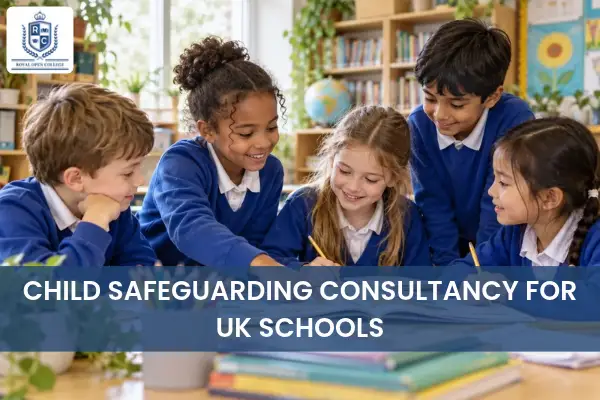



NSPCC, Child Protection Company and Adele Gladman & Associates provide child safeguarding consultancy for schools. Their services include audits, policy reviews and advice on improving safeguarding practice. Start by identifying whether your school needs a broad review or support with a specific issue.
If your school’s safeguarding review highlights gaps in staff knowledge, further learning can help address them. Royal Open College’s Safeguarding Children Level 3 offers CPD study covering recognising abuse, responding to concerns and multi-agency working. Before choosing the course, check that its content matches staff responsibilities and your school’s training requirements.
Quick Recap
- Schools can commission consultancy to examine safeguarding policies, systems and everyday practice.
- The right service depends on your school’s needs, location and agreed project scope.
- Consultancy reviews organisational arrangements; CPD learning develops staff knowledge.
NSPCC, Child Protection Company and Adele Gladman & Associates offer services specifically relevant to school safeguarding. Barnardo’s also provides wider safeguarding consultancy worth discussing against your school’s brief.
Provider | Published Consultancy Services |
NSPCC | School practice reviews, safeguarding audits, policy checks and tailored training plans. |
Child Protection Company | School audits, policy development, advisory sessions and written action plans. |
Adele Gladman & Associates | School audits, independent investigations, safer recruitment reviews and policy drafting. |
Barnardo’s | Organisational audits, case reviews, policy development, supervision and governance support. |
These examples reflect services described by the providers themselves. They offer a starting point for enquiries rather than a ranking.
When contacting Barnardo’s, confirm the proposed consultant’s school experience and the scope available for your setting. For every provider, describe your school type and UK nation before requesting a proposal. Ask who will undertake the work and which local procedures they will consider.
What Can A School Safeguarding Consultant Help With?
A school safeguarding consultant can examine policies, records and working practices to identify improvements. The agreed service determines whether this involves a focused policy check or a broader organisational review.
Depending on the provider and brief, support can include:
- Reviewing whether safeguarding policies explain responsibilities and reporting routes clearly.
- Examining records to identify gaps in recording or follow-up.
- Reviewing safer recruitment arrangements.
- Helping leaders strengthen safeguarding oversight.
- Identifying staff learning needs through findings from the review.
For example, a school might notice that staff record similar concerns differently. A focused review could examine whether unclear procedures or inconsistent understanding contribute to those differences.
Use that finding to agree on a practical outcome before commissioning the work. This could mean revised recording guidance, staff discussion and a later check of how changes work.
How Should You Choose A Safeguarding Consultant For Your School?
Choose a safeguarding consultant with relevant school experience and a clear method for examining your concerns. Begin with the problem you want their work to resolve. This gives you something concrete to discuss beyond a general request for reassurance.
Look for explanations that connect their approach to your school’s circumstances. For example, a review of reporting practice should explore how staff understand and use procedures.
Request an anonymised sample report where available. Use it to assess whether recommendations identify priorities and explain practical improvements.
What Should A School Safeguarding Consultancy Quote Include?
A school safeguarding consultancy quote should clearly explain the scope, deliverables, costs and terms before you commit. Give shortlisted providers the same written brief so differences between proposals become easier to understand.
What Should You Agree Before Work Begins?
Agree what the consultant will examine and what your school will receive afterwards. The proposal should specify:
- Which policies, records, teams or school sites are included.
- Whether meetings and visits happen remotely or in person.
- Whether fees include VAT, travel and follow-up discussions.
- When the written report and action plan will arrive.
- How additional work and cancellation charges are agreed.
A lower quote might cover fewer records or exclude a meeting to explain findings. Compare the complete service against your brief before deciding.
Also agree how urgent concerns discovered during the work will reach the appropriate school contact. Make this process clear before providing access to records or arranging interviews.
Does Hiring A Consultant Fulfil Your School’s Safeguarding Responsibilities?
Hiring a consultant does not fulfill your school’s safeguarding responsibilities on its own. Their advice can help improve arrangements but your school remains responsible for taking action and responding to concerns. An independent report provides findings to act on rather than transferring those responsibilities.
For maintained schools in England, governing bodies have strategic responsibility for safeguarding arrangements. Government guidance requires them to ensure policies, procedures and training remain effective and comply with the law.
The Keeping Children Safe In Education guidance explains safeguarding duties for schools and colleges in England. Apply the relevant national guidance when commissioning work elsewhere in the UK.
Staff must continue responding promptly to concerns while consultancy takes place. They should follow school procedures rather than wait for a review to finish.
After receiving the report, assign each agreed action to a named person. Set review dates and identify what evidence will show whether changes improve practice.
What Mistakes Should Schools Avoid When Commissioning Safeguarding Consultancy?
Schools should avoid commissioning safeguarding consultancy without deciding how they will use and evaluate its findings. A detailed report offers limited practical value if recommendations remain unread or unresolved.
Watch for these problems:
- Buying a policy template without checking how it fits your school.
- Treating an audit as a guarantee of a favourable inspection outcome.
- Requesting general reassurance when a specific concern needs examination.
- Accepting recommendations without clarifying priorities or implementation costs.
- Filing the report without arranging a progress review.
Before closing the project, bring together those responsible for making changes. Discuss which recommendations need immediate attention and which require further planning.
For example, revised reporting guidance needs more than approval at a leadership meeting. Plan how staff will learn the changes and how leaders will check their understanding.
Studying through Royal Open College (CPD learning)
Royal Open College’s Safeguarding Children Level 3 supports CPD learning about recognising abuse, responding to concerns and multi-agency working. These topics can support staff development where a consultancy review identifies relevant learning needs.
The course provides structured learning rather than a regulated qualification or an assessment of your school’s arrangements. Completion alone does not demonstrate workplace competence. Check its learning outcomes against staff responsibilities and your employer’s training requirements before enrolling.
Use the review’s findings to identify a specific knowledge gap first. Then agree on suitable learning and how staff will apply it within your school’s procedures.