



manages safeguarding referrals
A new DSL gets appointed. A deputy lead starts covering complex concerns. A care manager sees Level 5 DSL training online and wonders if Level 3 is enough. This is where confusion starts.
Level 5 Designated Safeguarding Lead training is advanced safeguarding leadership training. It is for people who lead, supervise or oversee safeguarding practice. It is not a legal requirement for every DSL.
Safeguarding course levels differ by provider, sector and UK nation. A Level 5 course in one setting might not match Level 5 safeguarding competency wording in healthcare. Your role, employer policy and local safeguarding advice matter.
TL;DR:
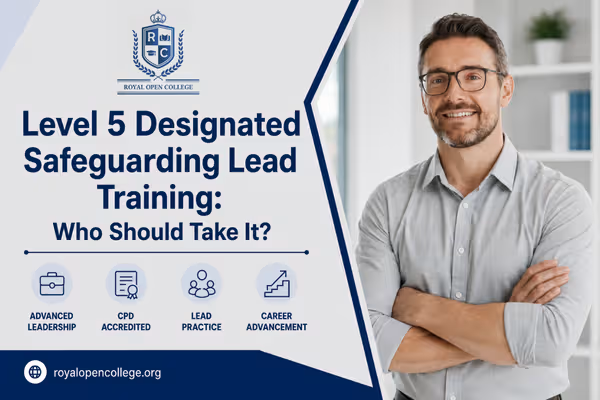
Level 5 DSL training suits people with higher safeguarding responsibility. You should consider Level 5 if you:
- lead safeguarding practice
- work as a DSL or Deputy DSL
- advise staff after concerns or disclosures
- manage referrals, records or escalation
- review safeguarding policies and procedures
- oversee safeguarding across teams or sites
- hold a senior, trustee, governor or management role with safeguarding oversight
You might not need Level 5 yet if you only need basic awareness, induction training or frontline safeguarding knowledge. Many learners start with Level 3 DSL training, then move to Level 4 or Level 5 when their duties grow.

What is Level 5 Designated Safeguarding Lead training?
Level 5 Designated Safeguarding Lead training is for advanced safeguarding work. It goes beyond basic awareness and first response.
A DSL is the named person who takes lead responsibility for safeguarding and child protection in a setting. In schools and colleges, KCSIE uses the term Designated Safeguarding Lead. Deputies should train to the same standard as the DSL.
A DSL often:
advises staff
keeps child protection records
works with local authority children’s social care
follows local safeguarding procedures
acts on Prevent concerns
helps create a safer culture
Level 5 usually focuses on leadership tasks. These include policy review, risk assessment, escalation, staff supervision, audit, staff allegations, training needs and multi agency working.
One key point matters. Level 5 does not always mean an Ofqual regulated qualification. Some courses are CPD accredited. Some are QLS endorsed. Some are certificates of completion. Always check the certificate type.
Who should take Level 5 DSL training?
Level 5 DSL training suits people who already hold, support or are preparing for a lead safeguarding role with higher responsibility.
Current DSLs and Deputy DSLs
A DSL or Deputy DSL should consider Level 5 when their role involves complex concerns, staff advice, safeguarding records, referrals, policy checks or leadership duties.
A Deputy DSL does not take over the DSL’s lead responsibility. The deputy gives trained cover and helps manage delegated safeguarding work.
Senior managers and safeguarding officers
Level 5 suits safeguarding officers, care managers, nursery managers, college managers, team leaders and service managers where they supervise staff or check safeguarding practice.
This includes people who:
- review concerns
- check records
- lead staff training
- manage escalation
- review policy
- report to senior leaders
Governors, trustees and organisational leaders
Governors, trustees, directors and senior leaders need strong safeguarding oversight. They do not always manage daily cases, but they need to ask the right questions. This matters in charities, education, sports, youth services, care and community settings.
Multi site or multi agency leads
Level 5 is useful for people who oversee safeguarding across several sites, branches or departments. It also suits those who work often with local authorities, police, LADO, social care, Channel panels or safeguarding partners.
Quick Table
| Role or duty | Best training fit | Reason |
|---|---|---|
|
🛡️
Named DSL
|
Level 3 or Level 5, based on role depth | Leads referrals, records and staff advice |
|
🤝
Deputy DSL
|
Level 3 or Level 5, based on duties | Covers lead work and needs strong role knowledge |
|
👤
Frontline worker
|
Level 1, 2 or 3 | Reports concerns but does not lead cases |
|
📊
Senior manager
|
Level 4 or Level 5 | Oversees policy, audit, culture or risk |
|
🤲
Care worker
|
Level 2, 3 or adults course | Needs role suitable adult safeguarding knowledge |
|
🏛️
Trustee or governor
|
Level 4 or Level 5 | Holds governance oversight |
Who may not need Level 5 DSL training yet?
Level 5 is not the right first step for everyone.You might need a lower or more focused course first if you:
- Are new to safeguarding
- Do not hold lead duties
- Only need induction training
- Report concerns but do not manage them
- Work under a DSL or safeguarding manager
- Need adult safeguarding only
- Need child safeguarding awareness only
If you are moving into a named DSL or Deputy DSL role, Royal Open College’s Safeguarding Children Level 3 Designated Safeguarding Lead course is a stronger starting point.
If you need broader safeguarding knowledge without lead duties, Royal Open College’s Safeguarding Level 3 course might fit better.
The aim is simple. Match training to your real duties. Do not choose Level 5 for status. Choose Level 5 when your role needs advanced judgement.
Is Level 5 DSL training mandatory in the UK?
No. Level 5 DSL training is not automatically mandatory for every DSL in the UK. Law, guidance, policy and best practice are not the same. Law creates safeguarding duties. Statutory guidance explains what organisations should do. Employer policy sets local training rules. Best practice helps teams make safer choices.
KCSIE requires schools and colleges to have a DSL. It also says DSLs and deputies need training for the role, training updates at least every two years, Prevent awareness training and regular knowledge updates. KCSIE does not say every DSL must hold Level 5 DSL training.
Early years settings should also follow EYFS and local safeguarding partner advice. Some local authority frameworks name Level 3 as the training route for DSLs and deputies.
In care and healthcare, CQC focuses on role-suitable safeguarding training. CQC does not require a course called Level 5 DSL training for every safeguarding lead.
Level 3 vs Level 4 vs Level 5 safeguarding training: what is the difference?
Higher level does not always mean better. It means different responsibilities.
Table
| Training level | Best fit | Main focus |
|---|---|---|
|
3
Level 3
|
DSLs, Deputy DSLs, lead practitioners, care staff with higher contact | Recognising concerns, reporting, referrals, records, role duties |
|
4
Level 4
|
Supervisors, safeguarding coordinators, staff handling complex concerns | Risk, escalation, complex cases, multi agency working |
|
5
Level 5
|
Senior DSLs, safeguarding managers, strategic leads, governors, trustees | Leadership, policy, audit, governance, supervision, safer culture |
Royal Open College’s Safeguarding Level 4 course works well as a bridge for learners who handle complex safeguarding work or supervise others.
Royal Open College’s Level 5 Designated Safeguarding Lead course, or Diploma in Designated Safeguarding Lead Level 5, fits learners with advanced safeguarding leadership or oversight duties.
Which sectors is Level 5 DSL training suitable for?
Level 5 DSL training fits several sectors, but each sector uses different wording and expectations.
Schools, colleges and early years
Schools and colleges use DSL and Deputy DSL wording clearly. Early years settings also use DSL wording in current EYFS guidance.
These roles often need strong child protection, referral, recording, Prevent, staff allegation and online safety knowledge.
Health and social care
Care homes, supported living, domiciliary care and healthcare settings often use safeguarding lead, safeguarding manager, named professional or designated professional wording.
Adult safeguarding links to the Care Act 2014, Section 42 enquiries, CQC Regulation 13 and role suitable training.
If your work focuses on adults, Royal Open College’s Level 3 Safeguarding Adults course might be more relevant before a Level 5 DSL route.
Charities, sports and community settings
Charities, sports clubs, faith groups and youth organisations often use safeguarding officer or designated safeguarding person wording.
Level 5 fits leaders who write policy, train teams, manage concerns, oversee risk or report to trustees.
Sector terminology and suitability
| Setting | Common title | Training note |
|---|---|---|
|
🏫
School or college
|
DSL, Deputy DSL | Check KCSIE and employer policy |
|
🧸
Early years
|
DSL, lead practitioner | Check EYFS and local advice |
|
🤲
Care setting
|
Safeguarding lead | Check CQC and adult safeguarding duties |
|
🏥
Healthcare
|
Named or designated professional | Check employer competency framework |
|
🤝
Charity or sports club
|
Safeguarding officer | Check trustee and governance duties |
Is healthcare Level 5 safeguarding the same as Level 5 DSL training?
No. Healthcare Level 5 safeguarding is not always the same as provider labelled Level 5 DSL training.
Healthcare often uses terms such as named professional, designated professional, safeguarding lead and safeguarding manager. NHS and clinical employers often follow specific safeguarding competency frameworks.
This matters because a school DSL, nursery DSL and NHS designated professional do not always need the same course.
If you work in healthcare, check your employer’s safeguarding competency framework before choosing a DSL labelled course.
What responsibilities show you are ready for Level 5 DSL training?
Your job title matters less than your duties. You are closer to Level 5 if you:
Lead safeguarding decisions
leadAdvise staff after disclosures
adviseManage referrals to children’s social care or adult safeguarding teams
referOversee safeguarding records
recordReview policy and procedures
policyHandle staff allegation routes, including LADO where relevant
LADOPlan staff training
trainJoin multi agency meetings
meetAudit safeguarding practice
auditLead safeguarding across sites or departments
oversightHelp with safer recruitment and online safety practice
safetyIf you only pass concerns to a DSL, you likely need a lower level. If other people bring concerns to you for advice, Level 5 starts to make sense.
CPD, QLS and regulated qualifications: what should learners check?
A safeguarding certificate is useful evidence. A certificate alone does not prove full competence.
CPD accredited training shows professional development. QLS endorsed learning shows course quality review by an endorsement body. An Ofqual regulated qualification sits on the Register of Regulated Qualifications.
📝
Before you enrol, check:
📄
Certificate type
🏷️
Course level wording
🎯
Learning outcomes
✅
Assessment method
🔄
Renewal advice
👍
Employer acceptance
🧩
Sector fit
📍
Local safeguarding partner advice
🛡️
Inspectors and employers look beyond certificates. They check current knowledge, role fit, records, procedures, supervision and safeguarding culture.
How should employers decide who needs Level 5 DSL training?
Employers should match safeguarding training to risk, role and setting. Use this quick check.
Safeguarding responsibility check
🛡️
Does the person lead safeguarding decisions?
✓
💬
Do staff ask them for advice?
✓
📤
Do they manage referrals or escalation?
✓
📋
Do they review policies or audits?
✓
👥
Do they supervise safeguarding practice?
✓
🏢
Do they oversee more than one site?
✓
🤝
Do they work with external agencies?
✓
🔎
Do they need evidence for inspection or governance?
✓Employers should also keep clear training records. Record the course title, provider, date, certificate type, refresh date and reason for selecting the course. This protects the organisation and helps staff understand their duties.
Common misconceptions about Level 5 DSL training
Level 5 is useful, but many claims around it cause confusion.
Myth vs reality
×
Myth
Every DSL needs Level 5
↓
✓
Reality
Official guidance asks for suitable DSL training, not always Level 5
×
Myth
Level 5 suits all staff
↓
✓
Reality
It suits lead, supervisory or strategic duties
×
Myth
Deputy DSLs need lower training
↓
✓
Reality
Deputies should train to the same standard as the DSL in schools and colleges
×
Myth
CPD Level 5 means Ofqual regulated
↓
✓
Reality
CPD and Ofqual regulation are different things
×
Myth
Healthcare Level 5 equals school DSL Level 5
↓
✓
Reality
Healthcare uses separate competency frameworks
×
Myth
A certificate proves compliance
↓
✓
Reality
Competence also needs records, systems, supervision and current practice
How to choose the right safeguarding course for your role
Choose your course by duty, not by title alone.
Simple course route
-No safeguarding background, start with introductory or Level 2 training.
-Named DSL or Deputy DSL, check employer policy and consider Safeguarding Children Level 3 DSL.
-Complex cases or supervisory duties, consider Safeguarding Level 4.
-Advanced leadership, policy, audit or multi site oversight, consider Level 5 Designated Safeguarding Lead or the Diploma in DSL Level 5.
-Adult care focus, consider Level 3 Safeguarding Adults first.
Quick flowchart
▶
Start
↓
?
Do you only need basic safeguarding awareness?
→ Yes
Choose introductory, Level 1 or Level 2 training.
→ No
Continue.
↓
?
Are you a named DSL or Deputy DSL?
→ Yes
Check Level 3 DSL training first.
→ No
Continue.
↓
?
Do you supervise complex safeguarding work?
→ Yes
Check Level 4 safeguarding training.
→ No
Continue.
↓
?
Do you lead policy, audit, governance or multi site safeguarding?
→ Yes
Check Level 5 DSL training.
→ No
Check your employer’s training policy and local safeguarding guidance.
↓
✓
Summary
Level 5 DSL training is right for you if your role includes leadership, oversight, complex decisions, policy, audit or safeguarding supervision.
Summary
Level 5 DSL training is right for you if you lead, supervise or oversee safeguarding practice.
It suits DSLs, deputies, safeguarding managers, senior leaders, trustees, governors and multi site leads. It is not the best first step for every learner.
Check your role, sector, employer policy and local safeguarding advice. Then choose the course level that matches your real responsibility.
FAQ’s
Q: Is Level 5 DSL training mandatory?
A: No. Level 5 DSL training is not automatically mandatory for every DSL. Your training requirement depends on your sector, role, employer policy and local safeguarding advice.
Q: Who should take Level 5 Designated Safeguarding Lead training?
A: It suits people who lead, supervise or oversee safeguarding work. This includes DSLs, Deputy DSLs, safeguarding managers, senior leaders, trustees, governors and multi site leads.
Q: Is Level 5 DSL training suitable for beginners?
A: Some providers accept beginners, but Level 5 is usually better for people with safeguarding knowledge or role responsibility. New learners often start with Level 3 DSL or role specific safeguarding training.
Q: Do Deputy DSLs need Level 5 training?
A: Deputy DSLs need training suitable for their duties. In schools and colleges, KCSIE says deputies should train to the same standard as the DSL, but this does not always mean a Level 5 course.
Q: Is Level 5 DSL the same as Level 3 DSL?
A: No. Level 3 often covers core DSL duties such as reporting, referrals and records. Level 5 goes further into leadership, policy, supervision, audit and complex safeguarding oversight.
Q: Is healthcare Level 5 safeguarding the same as DSL Level 5?
A: No. Healthcare Level 5 often links to specific competency frameworks and designated professional roles. NHS and healthcare staff should check employer guidance before choosing a DSL labelled course.
Q: Is a CPD Level 5 course a regulated qualification?
A: Not always. CPD training and QLS endorsement are different from Ofqual regulated qualifications. Check the GOV.UK regulated qualifications register if regulated status matters for your role.
Q: Will Ofsted or CQC accept Level 5 DSL training?
A: Inspectors look at whether training is suitable, current and used in practice. They also check safeguarding systems, records, staff confidence and leadership oversight.
Q: What course should I take before Level 5 DSL?
A: Many learners start with Safeguarding Children Level 3 DSL if they are moving into a named DSL or deputy role. Adult care learners might need Safeguarding Adults Level 3 first.
Q: How often should DSL training be refreshed?
A: In schools and colleges, DSL training should be updated at least every two years under KCSIE. DSL knowledge should also stay current through regular updates, briefings and CPD.