


What Are the Best Level 3 Safeguarding Adults Certification Providers

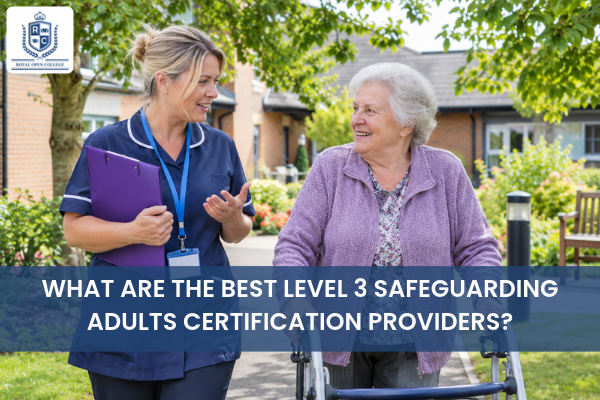
What Are the Best Level 3 Safeguarding Adults Certification Providers?

No official ranking of Level 3 safeguarding adults providers exists. The 2024 framework suggests eight hours over three years, with at least half participatory. Check employer acceptance, evidence, accreditation wording and reporting before you enrol.

The best Level 3 safeguarding adults certification provider is the one your employer accepts for your role. No official ranking of providers exists, so five checks work better than a league table.

Level 3 comes from a non-statutory framework, so employers decide how each level applies to each role. The 2024 edition suggests eight hours of learning over three years. At least half the learning should be participatory, and the framework expects evidence of reflection. A CPD course covers one part of this total.

Tracking eight hours across three years takes planning. Our Level 3 Safeguarding Adults course adds flexible online CPD learning to your plan. You study when your rota allows, and you keep the certificate for your records. Check your employer’s requirements first, then enrol if the course fits your role.

Quick Recap

  • Level 3 suits staff who assess needs, plan responses and review outcomes when safeguarding concerns arise.
  • The 2024 framework suggests eight hours over three years, and employers apply the guidance by role.
  • Online learning alone does not prove competence, because the framework expects participatory learning and evidence.

What checks should you apply to any Level 3 provider?

Apply five checks to every provider: employer acceptance, learning hours, evidence, accreditation wording and team reporting.

Does your employer accept the provider?

Your employer decides which providers count for your role, so ask before you enrol. Ask your commissioner too if they fund your service.

Do the hours match the suggested eight over three years?

The framework suggests a minimum of eight hours of Level 3 learning over three years. At least half should be participatory, such as face-to-face or virtual classroom sessions. E-learning should not be the main or only method.

New post-holders without the required knowledge complete eight hours of tailored learning within 12 months. The 2024 edition values meaningful learning over counted hours.

Does the provider help you build evidence?

A multiple-choice test shows knowledge, not workplace competence. Over three years, the framework expects reflection or learning from three different aspects of safeguarding. Case reflection, safeguarding supervision and multi-agency work all count as evidence.

Practise first with our Safeguarding Decision Tree. The tool produces a report with recording points to discuss in supervision. The tool does not replace professional judgement.

Does the accreditation wording describe the course accurately?

CPD accreditation shows a course follows continuing professional development guidelines. Read the exact wording on the course page and certificate.

Does the provider report for your team?

Managers need records of who completed what and when. Check completion dates, certificate verification and exportable reports. The 2024 edition asks organisations to define when someone counts as compliant in the three-year cycle.

Which Level 3 routes should you compare?

Employers, NHS England, local boards and online CPD providers each cover different parts of the eight hours.

  • Employers give supervision, case reviews and local procedures.
  • NHS England runs an on-demand Level 3 course for registered healthcare professionals in England.
  • Many local Safeguarding Adults Boards and councils run multi-agency sessions on local procedures.
  • Online CPD providers add flexible knowledge learning, which forms one part of the total.

For places to look, read our guide on where to find Level 3 safeguarding training courses.

How do you match your role to Level 3?

Match your role to Level 3 by checking your duties, not your job title. Level 3 fits staff who assess needs, plan responses and review outcomes when safeguarding concerns arise. Ask your manager which of these duties your post includes. Your employer then records the level in your training plan. Two people with the same title often need different levels.

What does the CQC expect from your safeguarding training?

The CQC expects staff to receive appropriate training, supervision and appraisal under Regulation 18. The regulation names no safeguarding level. Each provider defines its own mandatory training. Keep your certificate, supervision notes and reflection records together, so your employer holds evidence of competence. Scotland, Wales and Northern Ireland use separate regulators.

Which provider claims you should ignore?

Treat claims of full compliance, nationwide recognition or regulated status as red flags until you verify them.

  • A “fully compliant” claim ignores how your employer maps your role to the levels.
  • Employers and commissioners decide acceptance locally, so “recognised nationwide” means little.
  • A “CQC approved” claim misleads because the CQC regulates services, not courses.
  • A “CPD accredited qualification” label mixes CPD accreditation with Ofqual regulation.
  • A “legal requirement” claim needs a named law.
  • A “refresh every two years” rule is an employer choice, not a framework rule.

What are the common mistakes when choosing a Level 3 provider?

The most common mistake is buying a course before you confirm the level your role needs.

  • Many learners count one certificate as the full eight hours.
  • Some rely on e-learning alone for a Level 3 role.
  • Others skip the reflection and supervision records.
  • Some ignore the three-year cycle and miss renewal dates.

Check what regulators expect in the CQC guidance on Regulation 18 staffing

Studying through Royal Open College (CPD learning)

Royal Open College is an online CPD provider, not a regulated awarding organisation. Its Level 3 safeguarding adults course offers CPD learning on safeguarding for adults and children.

Pair this knowledge with supervision and reflective practice at work. Check your employer’s training requirements and role expectations before you enrol.

Recent Blogs

What Are the Latest Government Guidelines on Safeguarding Children?

What Are the Latest Government Guidelines on Safeguarding Children?

Working Together to Safeguard Children 2026 is England’s current statutory safeguarding guidance. Schools and colleges also follow Keeping Children Safe in Education 2026. A new information sharing duty began on 30 September 2026. Which documents apply depends on your role and setting.
How much does safeguarding children training cost in the UK

How Much Does Safeguarding Children Training Cost In The UK?

Safeguarding children training costs £10 to £65 online in the UK. Local safeguarding partnership courses cost £30 to £100, and live specialist courses start near £125. Prices vary because many sellers discount list prices. Check what the price includes before you buy.

Where Can I Find Safeguarding Children Level 3 Courses in the UK

Where Can I Find Safeguarding Children Level 3 Courses in the UK?

Level 3 safeguarding children courses are available through NHS e-learning, local safeguarding partnerships and online CPD providers. The right route depends on your role and employer. This guide maps routes to healthcare, education and wider children’s workforce roles. It also shows how to check which level you need.