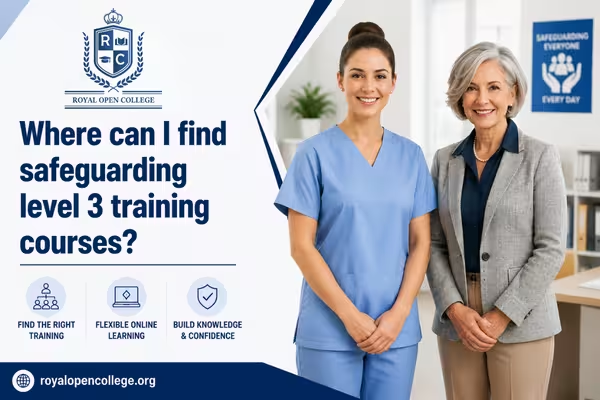

You can find safeguarding Level 3 training courses through online CPD providers, NHS learning routes, local safeguarding partnerships, local authorities, employers and specialist training organisations. The right place to start depends on your job role and whether you work with adults, children, patients, families or people at risk.
If you want flexible online CPD learning, Royal Open College’s Safeguarding Level 3 course can help you build knowledge around recognising concerns, responding to disclosures, reporting issues, referral routes and record keeping. It supports professional development, but it does not replace employer-led training, DBS checks, local procedures or regulated qualifications where these are required.
Quick recap
- You can find Level 3 safeguarding training online, through employers, NHS routes and local safeguarding partnerships.
- Choose a course based on your role, sector, workplace policy and local safeguarding procedures.
- CPD training can support knowledge, but employer requirements still come first.
Where should you look first?
Start with your employer if you already work in care, healthcare, education, childcare or support work. Many workplaces have approved training providers or their own learning platform.
If your employer has named a specific course, follow that route first. This is especially important in NHS, school, nursery, local authority and regulated care settings.
Which type of safeguarding course do you need?
Not every Level 3 safeguarding course is the same. Some focus on safeguarding adults. Some focus on safeguarding children. Some are written for healthcare staff, while others are for education, social care, charities, volunteers or safeguarding leads.
Before choosing a course, ask yourself: who am I responsible for supporting?
Care Worker
A care worker may need adult safeguarding knowledge.
Teaching Assistant
A teaching assistant may need child safeguarding training.
Healthcare Assistant
A healthcare assistant may need training that matches employer or NHS policy.
Team Leader
A team leader may need stronger knowledge of reporting, escalation and record keeping.
Can you complete safeguarding Level 3 training online?
Yes, many safeguarding Level 3 courses are available online. This can be helpful if you need flexible learning, refresher CPD or a clear understanding of safeguarding responsibilities.
But online training may not be enough for every role. Some jobs also need workplace induction, supervision, local reporting procedures, practical discussion or multi-agency training. Always check before you rely on one certificate.
What should the course cover?
A good Level 3 safeguarding course should explain how to recognise abuse, neglect, harm and exploitation.
It should also show how to respond calmly, record concerns clearly and report them through the correct route.
Recognise
Abuse, neglect, harm and exploitation
Respond
Calmly and appropriately
Record
Concerns clearly
Report
Through the correct route
Useful topics include:
Who usually needs Level 3 safeguarding training?
Level 3 safeguarding training is often suitable for people who have more direct responsibility for recognising, reporting or managing safeguarding concerns.
This may include care workers, healthcare assistants, support workers, teachers, teaching assistants, early years staff, childcare workers, youth workers, volunteers, team leaders, supervisors, safeguarding leads and deputy safeguarding leads.
The exact level still depends on the workplace. A job title alone does not decide it.
Is Level 3 the same as DSL training?
Not always. This is where many people get confused.
Level 3 safeguarding can support deeper safeguarding knowledge, but Designated Safeguarding Lead training is usually more role-specific. A DSL or deputy DSL may need training linked to school policy, local authority expectations, referrals, staff allegations and multi-agency work.
If you are working as a DSL, check your school, college, nursery or local safeguarding partnership before choosing a general CPD course.
Common misunderstandings
Know the Difference
A safeguarding Level 3 course is not one fixed UK course. Different providers use the term in different ways, and course expectations can vary by:
A CPD certificate is not a licence to practise. It does not guarantee:
The Safest Route
The safest route is simple: choose training that matches your role, check your employer's policy, and use CPD learning to build confidence, awareness and safer workplace practice.