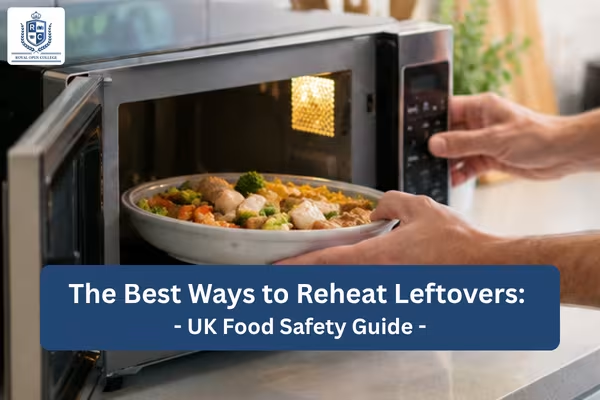
The Best Ways to Reheat Leftovers: UK Food Safety Guide

The Best Ways to Reheat Leftovers: UK Food Safety Guide

Most people reheat leftovers the same way every time, regardless of what is actually in the container. It usually works fine until it does not. This guide explains which method suits each food type, why rice needs handling differently from everything else, and the storage habits that matter long before the reheating stage even begins.

The best way to reheat leftovers depends on what you are reheating. Use the oven or stovetop for meats, roasted dishes and anything with a crispy texture. Use the microwave for soups, pasta and wet dishes. For rice, take extra care. It has its own rules that go beyond simply making it hot.

Whatever method you choose, the food must be piping hot all the way through before you eat it. This is one of the first things professional food handlers learn, and it is covered in detail in training such as the Food Hygiene and Safety Level 3 course.

Quick Recap

  • Reheat leftovers until they are steaming hot all the way through.
  • Cool rice quickly, ideally within one hour, and eat refrigerated rice within 24 hours.
  • Match your reheating method to the food type and reheat leftovers only once.

Why safe reheating matters

Cooking food thoroughly kills or significantly reduces most harmful bacteria, but that does not mean the food stays safe indefinitely afterwards. If it is cooled too slowly, left at room temperature for too long or stored incorrectly, bacteria can multiply and create a new risk entirely.

Thorough reheating helps, but it cannot always undo the damage caused by poor storage. The risk carries through every stage, from the moment the pan comes off the heat to the moment the food goes back on.

Most people think of this as a professional kitchen problem. It is not. Home cooking carries many of the same food safety risks. The difference is that professional food handlers are trained to follow temperature and storage rules as a matter of routine. At home, those habits are often picked up informally, and that is usually where things go wrong.

The UK food safety standard for reheating

For food prepared at home, the Food Standards Agency advises reheating leftovers until they are steaming hot all the way through rather than simply warm.

The practical test is whether the food feels genuinely piping hot throughout, not warm at the edges with a cold centre. Bacteria survive in cooler pockets even when the outside of a dish feels hot to the touch. For thick portions, dense casseroles or large cuts of meat, that distinction really matters.

A food thermometer removes any guesswork. A basic probe model is inexpensive and takes seconds to use. It is far more dependable than going by feel, particularly with larger or denser portions where the centre is difficult to judge.

It is also worth remembering that leftovers should only be reheated once. Each time food is cooled and reheated, there is more opportunity for bacteria to develop. If you have a large batch of soup or curry, take out only what you need and heat that portion separately. The rest stays refrigerated or frozen until you are ready for it.

Reheating Safety — Quick Scan

♨️
Heat thoroughly
Steaming hot Piping hot Throughout
🎯
Check the centre
Cold spots Thick portions Dense foods
🌡️
Use a food probe
Accurate Reliable No guesswork
🔁
Reheat once
Portion first Chill rest Freeze rest
30 sec scan
♨️ Hot throughout 🎯 Check centre 🌡️ Use probe 🔁 Reheat once

Best reheating method by food type

Matching the method to the food affects both texture and safety. Using the wrong one can leave cold spots in the middle even when the outside looks perfectly done.

✏️ Reheating Methods

The oven suits foods that benefit from dry, even heat. Roasted meats, baked dishes, pies and anything with a crust or crispy coating all reheat well here.

🌡️ 150°C to 180°C

Set the temperature low, around 150°C to 180°C, and Cover loosely with foil if the food risks drying out. Check at intervals rather than relying on a fixed time, since portion sizes vary.

Soups and stews reheat reliably in a saucepan over low to medium heat. Stir regularly and make sure the food is steaming hot all the way through before serving.

For meats, a pan over medium heat with a small splash of water, broth or oil holds in moisture and stops the outside drying before the inside is properly hot. For greater accuracy with larger or denser portions, a clean food thermometer is the most reliable way to check.

🍕

Pizza is worth a special mention here. A dry frying pan with a lid crisps the base without drying out the topping, and the result is far better than the microwave for texture.

Rice and pasta also reheat well on the stovetop with a small amount of added liquid. Water, stock or milk all work well. Keep the heat gentle and stir often.

The microwave is quick and works well for moist or wet foods. Soups, stews, pasta sauces, casseroles and steamed vegetables all respond reliably.

Spread food out in an even layer rather than piling it in the centre, and cover with a damp piece of kitchen paper to trap a little steam.

⏱️

Stir halfway through and allow a minute or two of standing time once the cycle ends. The centre of the food continues to heat during that standing time, which is why skipping it is a common mistake.

The air fryer is a solid choice for reheating fried foods and chips. It circulates hot air around the food and tends to restore crispiness more effectively than a standard oven, usually in less time.

How to reheat rice safely

Rice carries a specific safety risk that other common leftovers simply do not. It can harbour a bacterium called Bacillus cereus, which produces heat-resistant spores. Those spores survive normal cooking temperatures. The problem is not the reheating itself. It is what happens in the time between cooking and reheating.

When cooked rice sits at room temperature, those spores can germinate and produce toxins. Crucially, those toxins are not destroyed by reheating, regardless of how hot the food gets. This is why leaving rice out overnight and then reheating it thoroughly still does not make it safe.

The FSA advises cooling cooked rice as quickly as possible, ideally within one hour, then refrigerating it straight away. Eat it within 24 hours and reheat it only once. Make sure it is steaming hot all the way through before eating. A small splash of water before heating helps it warm more evenly.

Rice is one of those foods where the storage stage matters far more than the reheating stage. Get that part right and the rest follows naturally.

How to store leftovers before reheating

How to store leftovers before reheating

Safe reheating starts well before you switch on the hob. If leftovers were not cooled and stored correctly, reheating cannot fully correct the risk that has already developed.

Cool leftovers as quickly as possible and get them into the fridge within two hours of cooking. If you are dealing with a large quantity, a wide, shallow dish helps the heat escape faster. Once stored, keep your fridge at 5°C or below, use sealed containers, and keep cooked food well away from raw meat, fish and unwashed produce.

Cooked leftovers are best eaten within two days. If you do not expect to get through them in that time, freeze them once they have fully cooled rather than leaving them and hoping for the best.

When defrosting, use the fridge overnight or the microwave defrost setting. Avoid leaving food on the worktop to thaw. The outer surface can reach unsafe temperatures long before the inside has fully defrosted, which creates exactly the conditions bacteria need to multiply.

Once fully defrosted, reheat thoroughly and eat straight away. Generally speaking, defrosted food should be cooked and eaten promptly rather than put back in the freezer. Raw food is the exception. If it has been defrosted and then cooked thoroughly, it can be frozen again safely.

Common mistakes when reheating food

Most reheating mistakes come from habits that feel sensible and from guidance that has never been explained clearly enough.

Vague advice like “heat until warm” leaves too much open. What feels hot on the surface can still be cold at the centre, particularly with thick cuts of meat, dense casseroles or dishes reheated from frozen.

Many people also assume food is safe if it looks and smells fine. The problem is that bacteria causing food poisoning do not reliably change either. A dish can pass the sniff test and still carry a risk if it was stored incorrectly or reheated unevenly.

Confusion around the one-reheat rule is common too. Some households return to the same pot for days without a second thought. Others apply the rule to soups but not rice, which carries a more serious risk if mishandled.

✏️ These are the mistakes that come up most often:

Reheating food more than once. Take out only what you need and heat that portion. Leave the rest refrigerated or frozen until next time.

Assuming the microwave has heated food evenly. Always stir during reheating, allow standing time, and check the centre of dense portions before eating.

Leaving cooked food out for too long before refrigerating. Aim to get it into the fridge within two hours of cooking.

Reheating rice that has been left out overnight. Even thorough reheating cannot make it safe once those toxins have formed.

Defrosting food on the worktop. Use the fridge overnight or the microwave defrost setting instead.

Using a container not rated for the heat method. Check suitability before putting anything in the oven or microwave.

Studying through Royal Open College (CPD learning)

Food safety knowledge does not stop being useful outside a professional kitchen. If you work in catering, hospitality or food service and want a more structured grounding in the subject, Royal Open College offers the Food Hygiene and Safety Level 3 as a CPD learning programme.

The course covers the core areas that matter most at a supervisory level: temperature control, contamination risks, allergen management and food safety management systems. It is aimed at kitchen managers, senior food handlers and supervisors who want to feel more confident in their day-to-day decision-making.

It is CPD-accredited and designed to support professional development rather than replace any employer-specific training. Whether it satisfies a particular workplace requirement will depend on the role and organisation. What it does offer is a solid foundation in food safety principles that is relevant across every food environment.

Recent Blogs

What Is Health and Social Care? A UK Guide

What Is Health and Social Care? A UK Guide

Health and social care covers two distinct systems with different purposes, funding, and providers. Health care delivers clinical treatment for illness and injury. Social care helps people manage daily life when age, disability, or long-term conditions affect their independence. Across the UK, arrangements differ between the four nations, with adult social care largely separate from NHS healthcare.

Can You Reheat Salmon? The Best Methods That Actually Work

Can You Reheat Salmon? The Best Methods That Actually Work

You can reheat salmon safely with the right storage, temperature, and technique. Too much heat can leave it dry before the centre warms through. This guide explains the best ways to reheat salmon, how long cooked salmon keeps in the fridge, and the UK FSA rules that apply.

Can I Do Safeguarding Level 4 Online (UK Guide 2026)

Can I Do Safeguarding Level 4 Online (UK Guide 2026)

Online Safeguarding Level 4 training is available in the UK, but the right format depends on your role. This guide explains self paced learning, live virtual study, blended training, CPD evidence, healthcare competency expectations, DSL overlap, and employer checks before enrolment.