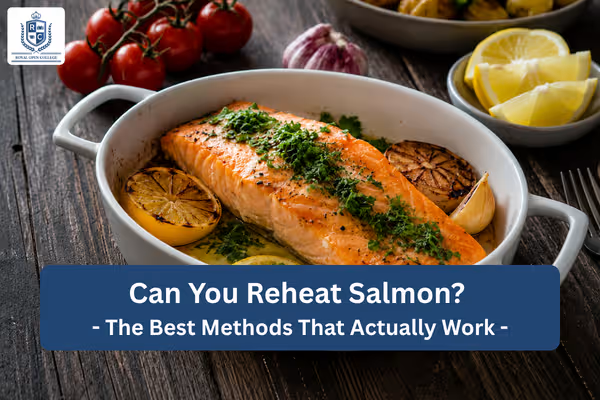
Gentle heat protects the texture and gives the centre time to warm through. High heat can overcook the outside before the inside catches up, and by the time the centre is hot enough, the outside may already be overdone.
Yes, you can reheat cooked salmon safely. The key is storing it correctly, reheating it until steaming hot throughout, and using gentle heat to protect its texture. Get that wrong and the fish dries out within minutes. Get it right and it tastes far closer to the original than most people expect.
Salmon is a delicate fish. Its natural oils give it that rich, distinctive flavour, and too much heat quickly ruins the texture. What you end up with is dry, tough flesh that no sauce can rescue. Most reheating failures come down to temperature, not the quality of the fish.
Temperature control matters for more than just keeping salmon moist. It is a core part of safe food handling and central to what the Food Hygiene and Safety Level 3 course from Royal Open College covers, alongside HACCP principles and FSA-aligned food safety management.
Quick Recap
- Use gentle heat and add a little moisture before reheating.
- Store cooked salmon in the fridge and eat within 48 hours.
- Make sure it is steaming hot all the way through.

Why Does Salmon Dry Out When Reheated?
Heat causes the proteins in salmon to denature, changing their structure and forcing the muscle fibres to contract. As that happens, the fish loses its ability to hold onto water, moisture gets pushed out, and the texture turns rubbery rather than soft and flaky.
High heat makes this worse. The outside of the fillet gets too hot while the centre is still catching up. By the time the inside is properly warm, the outside may already be overcooked and dry. That is why the edges of a poorly reheated fillet are often the first to suffer.
There is an important difference between reheating salmon and cooking it a second time. Reheating should bring the fish back to a safe serving temperature, nothing more. Every extra minute of heat beyond that pushes out more moisture and moves the texture further from where you want it.
The practical answer is gentle heat, a little added liquid or fat, and a cover where the method allows. Those three things help keep steam around the fish while it warms and make a real difference to the finished result.
The Best Ways to Reheat Salmon
Different methods suit different situations. A whole fillet needs different treatment from a small portion left over from the night before. What every method has in common is the need for gentle, even heat.
🔥
Oven: best for whole fillets or larger portions
The oven gives reliable, even heat distribution. It is particularly useful for thicker fillets where the centre needs time to warm through before the outside becomes overcooked.
- ✓Preheat your oven to 120°C to 135°C.
- ✓Place the salmon in an oven-safe dish.
- ✓Add a small splash of water, stock, or olive oil.
- ✓Cover the dish tightly with foil.
- ✓Heat for around 10 to 15 minutes depending on thickness.
- ✓Remove once the fish is steaming hot throughout.
A higher oven temperature heats the salmon faster, but it can overcook the outside before the centre is ready. A lower, slower approach helps protect the texture and gives you more control over the result.
🍳
Hob: best for individual portions
A non-stick pan on a low heat gives you direct control and clear visibility throughout. This is a practical choice for a single fillet or a smaller leftover piece.
- ✓Set the hob to a low heat.
- ✓Add a small amount of butter or olive oil.
- ✓Place the salmon skin-side down where possible.
- ✓Cover the pan with a lid to trap steam.
- ✓Warm gently for around 3 to 5 minutes.
- ✓Flip the fillet once if needed, but keep handling to a minimum.
- ✓Remove once the salmon is steaming hot throughout.
The lid helps retain moisture. Without it, the surface can dry out before the inside has a chance to warm through.
💨
Air fryer: quick, but easy to overheat
Air fryers can work well for reheating salmon, but they need more attention than an oven. The circulating hot air can dry the surface quickly, so shorter bursts and a moderate temperature help protect the texture.
- ✓Preheat the air fryer to around 150°C.
- ✓Line the basket with foil if permitted by the manufacturer's instructions.
- ✓Brush the salmon lightly with oil or melted butter.
- ✓Heat in 3 to 4 minute bursts and check between each one.
- ✓Remove once the salmon is steaming hot throughout.
Leave it for too long and it can overcook. Checking regularly helps the centre warm through without drying out the outside.
📡
Microwave: quickest, but easy to overheat
A microwave can heat salmon unevenly and may dry the surface quickly. For a small portion in a hurry, it can work, but only if you use it carefully.
- ✓Place the salmon on a microwave-safe plate.
- ✓Add a few drops of water or melted butter.
- ✓Cover with a microwave-safe lid or damp kitchen paper.
- ✓Use a lower power setting to help the fish heat more evenly.
- ✓Heat in short intervals and check between each one.
- ✓Reposition the salmon between intervals if needed to encourage even heating.
The goal is even heating with no cold spots. Microwaves can leave the edges hot while the centre remains cold, so checking thoroughly matters more than following a fixed reheating time. Make sure the salmon is steaming hot throughout before serving.
How Long Can You Store Cooked Salmon?
Storage matters just as much as the reheating method itself, and getting it wrong can create food safety risks.
Cooked salmon should go into the fridge as soon as possible after the original meal. The Food Standards Agency advises cooling and storing leftovers in the fridge within two hours of cooking. Left at room temperature beyond that, bacteria can multiply to unsafe levels.
Once chilled and sealed in an airtight container, the FSA advises eating leftovers within 48 hours. Some sources suggest three to four days for cooked fish, but that figure tends to reflect US guidance rather than FSA positioning. For UK leftovers, 48 hours is the window to work within.
Keep cooked salmon and raw fish completely separate in the fridge. The FSA advises storing raw fish on the bottom shelf, properly sealed, so it cannot touch or drip onto other food.
Before reheating, check the fish carefully. A sour or unusual smell, a slimy surface, or unusual discolouration can be signs that the fish has spoiled, so discard it if you have concerns. That said, appearance and smell alone cannot confirm that food is safe. If you are unsure how long it has been in the fridge, throw it out. With cooked fish, the risk is not worth taking.
If you do not plan to eat the salmon within 48 hours, freeze it. Wrap it tightly, label it with the date, and defrost it overnight in the fridge when you are ready to use it. If time is short, a microwave defrost setting can be used, but reheat the fish immediately afterwards. Never defrost on the worktop or under warm running water. Both can allow bacteria to multiply on the surface before the centre has fully thawed.

What Temperature Should Reheated Salmon Reach?
Reheated salmon should be steaming hot throughout before you eat it. The Food Standards Agency is clear on this. It should be genuinely hot all the way through, with no cold centre.
If you use a food thermometer, FSA guidance includes recognised time-and-temperature combinations such as 75°C for 30 seconds or 70°C for 2 minutes at the core. If you do not have a thermometer, steaming hot throughout is the practical standard that matters most.
When using a thermometer, insert the probe into the thickest part of the fillet. Salmon can feel warm on the outside while the centre remains much cooler, so a stable reading removes the guesswork.
Once the salmon is steaming hot throughout, take it off the heat. Further heating is unnecessary and can dry the flesh.
One important note for food businesses in Scotland. Food Standards Scotland’s CookSafe guidance says reheated food should generally reach a core temperature of at least 82°C. Where reheating to this temperature would cause the food to deteriorate in quality, an alternative time-and-temperature combination can be used, such as 70°C for 2 minutes. Food businesses in Scotland should reflect the applicable requirements and appropriate critical limits in their food safety procedures.
🌡️
Salmon Reheating Temperature - Quick Safety Guide
♨️
Heat throughout
No cold centre
→
🌡️
Probe thickest part
Stable reading
→
✅
Temperature check
75°C / 30 sec
70°C / 2 min
→
70°C / 2 min
👀
No thermometer?
Steaming hot throughout
→
✋
Stop when hot
Avoid drying
🏴 Scotland food businesses:
82°C core • quality issue → 70°C / 2 min • follow food safety procedures
Common Mistakes When Reheating Salmon
Most problems with reheated salmon trace back to the same handful of errors. The consequences are not always limited to texture.
Storing salmon beyond its safe window can allow harmful bacteria to multiply, while inadequate reheating may fail to destroy bacteria that are present. The FSA advises reheating leftovers until they are steaming hot throughout for this reason.
A dry fillet is disappointing, but salmon reheated after being stored too long is a food safety problem, not just a culinary one.
When the reheating method allows it, using a lid, foil, or suitable cover helps retain moisture and prevents the salmon from drying out.
This can result in uneven heating, with the outside becoming hot while the inside remains cold. Defrost in the fridge first where possible. A microwave defrost setting can also be used when appropriate, provided the salmon is reheated immediately afterwards.
The FSA advises reheating leftovers only once because repeated changes in temperature give bacteria more opportunities to grow. Only reheat the portion you plan to eat at that sitting.
Make sure the salmon is steaming hot all the way through. If you use a probe thermometer, check at the thickest point.
Refrigerated leftovers should be eaten within 48 hours or frozen. No reheating method makes improperly stored fish safe
Studying Through Royal Open College (CPD Learning)
Temperature control, safe storage, and food hygiene management are not skills confined to professional kitchens. They sit at the heart of food safety practice across catering, hospitality, food retail, and food service at every level.
Royal Open College offers a CPD-accredited Food Hygiene and Safety Level 3 course covering HACCP principles, temperature monitoring, contamination control, and food safety management aligned with FSA guidance. It is designed for supervisors, chefs, and managers working in UK food environments. The course carries CPD recognition and gives learners a structured way to develop and evidence their food safety knowledge in a professional setting. It is not a regulated qualification, but it carries CPD recognition and supports continuing professional development.
For anyone working in food service, the principles covered in this article are just the starting point. The Level 3 course explores them in greater depth and provides a structured way to build and evidence that knowledge.