




Finding Phlebotomy Jobs in the UK Royal Open College

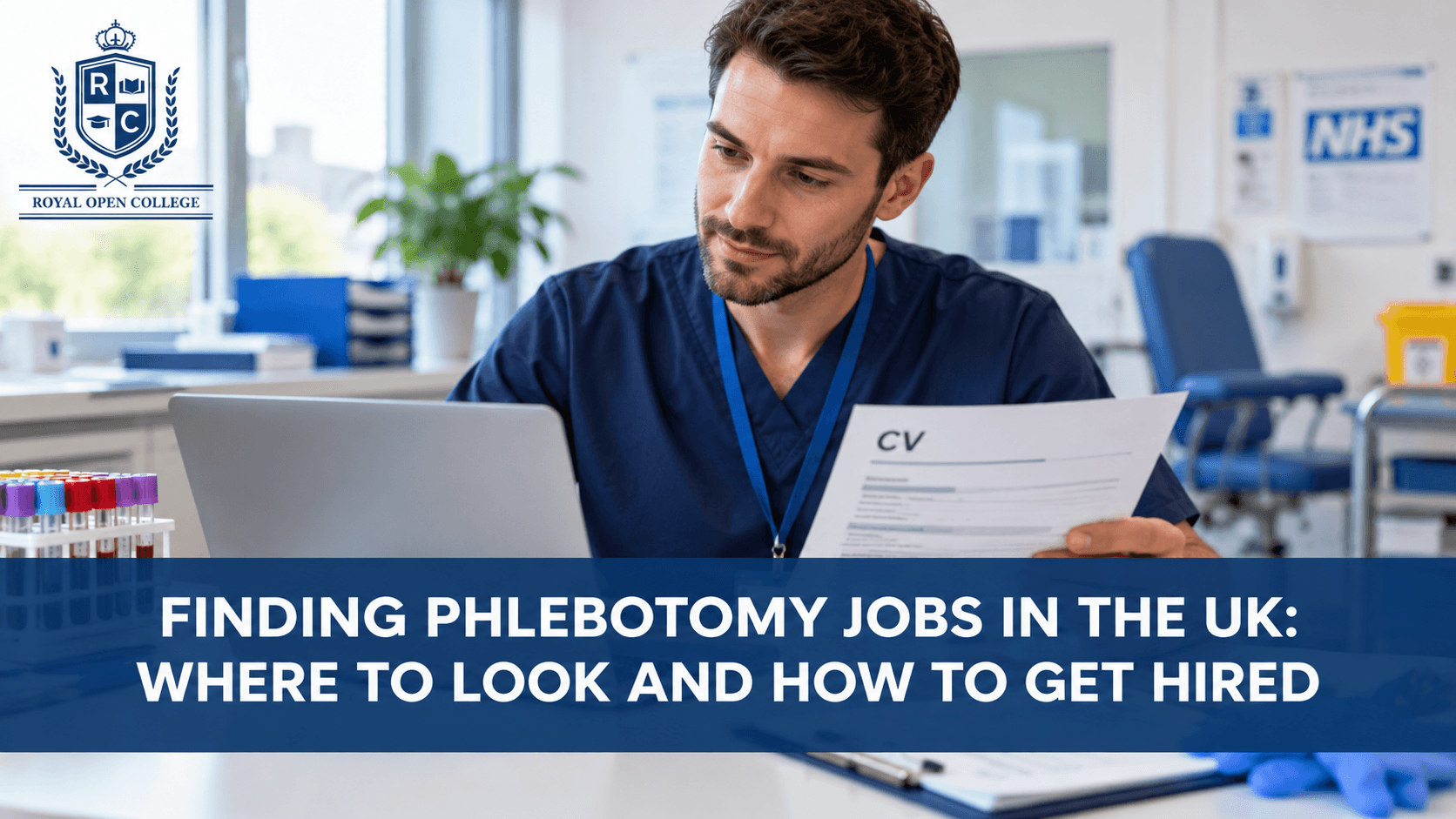
Finding Phlebotomy Jobs in the UK: Where to Look and How to Get Hired

Finding your first phlebotomy job in the UK starts with knowing where to look. Trainee posts appear on NHS portals, trust websites, blood services and GP boards. Learn which phrases to search, how to read job adverts, what the latest NHS pay looks like and how to build an application without blood-taking experience. Official NHS figures anchor the pay numbers.

Phlebotomy jobs in the UK are advertised on NHS Jobs for England and Wales, NHSScotland Jobs, HSC Jobs in Northern Ireland, trust and GP surgery sites, blood service pages and private job boards. Many beginners start in trainee posts. Search trainee wording such as training provided and developmental post.

The wording matters because one job title covers two kinds of posts. Hospital and blood service adverts often train beginners, while GP, agency and freelance adverts usually expect blood-taking experience. Vacancies also move fast. In ten NHS Jobs adverts we checked, closing dates fell 6 to 16 days after posting.

Phlebotomy terms feel unfamiliar until you study them. Knowledge is the first of three proofs employers look for. Royal Open College’s Phlebotomy and Venipuncture Training course covers anatomy, equipment and infection control online, with CPD accreditation and 12 months of access. The course teaches theory only, so your employer handles practical sign-off. 

Read This First

Start with trainee and developmental posts, because employers train phlebotomists on the job.

  • Search “trainee phlebotomist”, “training provided” and “developmental post”.
  • England pays NHS Band 2 £25,272 for 2026/27.
  • GP, agency and freelance posts usually expect blood-taking experience.
  • Build three proofs: knowledge, practice and care.
  • Set three job alerts today.

Where Do You Find Phlebotomy Jobs in the UK?

Start with the official portal for your nation. NHS Jobs covers England and Wales, NHS Scotland Jobs covers Scotland and HSC Jobs covers Northern Ireland. Then add trust websites, blood services, GP boards and private employers, because not every employer uses the national portal.

Where Do You Find Phlebotomy Jobs in the UK

Job Search Map

Where to look

Nation

Beginner friendly

Search tip

NHS Jobs

England and Wales

Yes

Save alerts for trainee roles

NHSScotland Jobs

Scotland

Yes

Search using relevant job keywords

HSC Jobs

Northern Ireland

Yes

Watch closing dates and waiting-list vacancies

Trust and board websites

All nations

Yes

Check bank and temporary staff opportunities

Blood services

All nations

Yes

Search terms such as “donor carer”

GP and primary care job boards

All nations

Sometimes

In Scotland, try Practice Jobs

Private laboratories and clinics

All nations

Sometimes

Check employer career pages directly

Agencies and freelance providers

All nations

Rarely

Many roles expect around 6–12 months of experience

Do You Need Experience to Get a Phlebotomy Job in the UK?

No. Many employers advertise trainee posts and teach you on the job, although some adverts expect experience. Trainee posts carry no set entry requirements. Employers usually ask for two GCSEs or equivalent and like to see health or social care experience, paid or voluntary.

  • Trainee or developmental post: apply directly and learn on the job.
  • Healthcare support role first: work as a healthcare assistant, then train in venepuncture, which means taking blood from a vein.
  • Apprenticeship: a healthcare science assistant apprenticeship runs about 12 to 15 months at some colleges.

The word experience means two different things in adverts. Hospital trainee posts often mean patient contact, such as care work, reception or volunteering. GP, agency and freelance posts usually mean blood-taking experience you already hold. Read the wording closely before you rule yourself out.

How Much Do Phlebotomy Jobs Pay in 2026?

England pays NHS Band 2 phlebotomists £25,272 a year for 2026/27, a single rate of £12.92 an hour. Band 3 runs from £25,760 to £27,476 and rises after two years. Phlebotomists typically start on Band 2 or Band 3 in the NHS.

                                                                               NHS Pay at a Glance

                                                                                 Band 2 — England
                                                                                  £25,272 per year

                                                                                 Band 3 — England
                                                                        £25,760–£27,476 per year

                                                                                  Band 2 — Scotland
                                                                        £26,696–£28,988 per year

                                                                                  Band 2 — Wales
                                                                                 £26,300 per year

(Figures from NHS Employers, NHS Scotland and the Welsh Government. Rates effective from 1 April 2026.)

Scotland and Wales pay differently. Scotland’s Band 2 starts at £26,696 and Wales lists £26,300. Northern Ireland’s health minister plans to pay the 3.3% award, but timing depends on the budget, so read the figure on each advert. Check the nation before you compare figures.

London supplements change the picture. Band 2 reaches £31,066 in inner London and £26,618 in the fringe zone. Agency and private rates vary more. One agency advert in July 2026 paid £18 an hour on weekdays and £24 on Sundays. Compare hours, pension and gaps between shifts before you choose.

  • Check the year on any pay page, because older pages still quote 2023 to 2025 figures.
  • These figures exclude enhancements for nights, weekends and bank holidays.
  • For bands, enhancements and London weighting in detail, read our phlebotomist salary article.

How Do You Read a Phlebotomy Job Advert?

Read the training and experience wording first, because one job title covers trainee posts and posts for experienced staff. Then open the person specification, which lists essential and desirable criteria. Panels shortlist against this list, so give an example for every essential line.

How Do You Read a Phlebotomy Job Advert Royal Open College

How to Read a Phlebotomy Job Advert

  • “Training provided” or “no experience necessary”
    • What it signals: This usually signals a trainee-friendly role.
    • What to do: Apply and use examples of patient contact, care work, volunteering or other transferable experience.

  • “Experience desirable, not essential”
    • What it signals: The employer is open to beginners who meet the essential criteria.
    • What to do: Make sure your application clearly addresses every essential requirement.

  • “Band 2 to Band 3 developmental”
    • What it signals: The role may move to a higher pay band after you complete the required training or competency sign-off.
    • What to do: Ask what you need to complete, and how progression is assessed.

  • “Apprentice phlebotomist”
    • What it signals: This usually means a structured role combining paid work with training.
    • What to do: Check the apprenticeship requirements, funding rules and contract length.

  • “Fully qualified” or “one year of experience required”
    • What it signals: This is aimed at someone who can already work with limited supervision.
    • What to do: If you are just starting out, save the vacancy and look for trainee or developmental posts instead.

  • “Full driving licence and own vehicle”
    • What it signals: The job is likely to involve community clinics, care homes or home visits.
    • What to do: Check mileage reimbursement, travel expectations and the area you will cover.

  • “Level 2 Health and Social Care”
    • What it signals: The employer is looking for evidence of previous care knowledge or experience.
    • What to do: Highlight relevant qualifications, care roles, placements or volunteering.

  • “EMIS, SystmOne or Vision”
    • What it signals: These are signs that the role involves GP or community patient records.
    • What to do: Mention any clinical or care-record systems you have used, even if they are different.

Small details matter. Some Nottingham NHS adverts from December 2025 to March 2026 told applicants to pay for their Disclosure and Barring Service check, deducted from salary after appointment. Several trusts state they are unable to sponsor visas. Read the full advert before you apply.

Which Employers Hire Beginners, and Which Expect Experience?

In recent adverts, NHS hospitals and NHS blood services train beginners more often than GP surgeries, agencies and freelance services. Employer type shapes your pay band, hours and checks. Match your experience to the right group below and apply there first.

Which Employers Train Beginners?

NHS hospitals, community teams and blood services run structured training. NHS Blood and Transplant in England hires donor carers on Band 3 pay with a six week training period, which includes the Skills for Health Care Certificate. Scotland, Wales and Northern Ireland run their own blood services.

  • Donor carer posts run evenings, Sundays and bank holidays with no night shifts.
  • A passed donor carer assessment counts for 12 months of applications.
  • Some hospital adverts say “no experience necessary” and promise full training.

Which Employers Expect Experience?

GP surgeries and agencies usually want proven skills. A Solihull surgery asked for one year of phlebotomy experience. An agency advert asked for demonstrable competency and applicants aged 25 or over. Private clinics and labs vary, so read each advert before you decide.

Part Time and Bank Work

Part time NHS posts exist, including a 20 hour a week phlebotomist post at a Scottish hospital. Bank work lets you pick up shifts at a trust, usually after you join its register. Agency shifts often pay more per hour, so compare pension, holiday and gaps between shifts.

Mobile and Freelance Work

Mobile and freelance roles are self employed, so you manage tax, insurance and contract terms. One provider advertised £35 to £55 per successful draw in April 2025. Freelance adverts asked for six to twelve months of experience and a driving licence, so treat this as a second step.

Is Phlebotomy Regulated, and What Checks Do Employers Run?

No. You need no national licence or registration to work as a phlebotomist, so employers decide who is competent through training and sign-off. The Health and Care Professions Council regulates 15 professions, and phlebotomist is not one of them. Voluntary registers exist, but none is a legal requirement.

What Checks Do NHS Employers Run?

Is Phlebotomy Regulated, and What Checks Do Employers Run

NHS employers follow six employment check standards. They cover identity, right to work, criminal records, professional registration and qualifications, health assessments and employment history with references. Your role decides which checks apply. Independent blood-taking starts only after your employer signs off your competence.

How Do Vetting Rules Differ by Nation?

England and Wales use Disclosure and Barring Service checks, known as DBS checks. Scotland uses the Protecting Vulnerable Groups scheme, called PVG, for regulated roles, and a West Lothian phlebotomy advert required membership. Northern Ireland uses AccessNI through a registered body. Check each advert for the exact check. Since 1 July 2025, working in a regulated role in Scotland without PVG membership is an offence.

Myths to ignore

  • Myth: You must register with the HCPC.
    • Fact: Phlebotomists are not on its list.


  • Myth: You need a US credential such as CPT or CSP.
    • Fact: UK employers train and sign off their own staff.


  • Myth: A CPD certificate lets you take blood alone.
    • Fact: CPD shows learning, and your employer authorises practice.

Keep These Points in Mind

  • Search trainee wording, such as “trainee phlebotomist”, “training provided” and “donor carer”, instead of the bare job title.
  • Use the portal for your nation and save three alerts. In ten sampled NHS Jobs adverts, closing dates fell 6 to 16 days after posting.
  • Read the experience wording first. Hospital and blood service posts train beginners more often than GP, agency and freelance posts.
  • Check the nation and year beside any pay figure. England pays Band 2 £25,272 for 2026/27.
  • Match one example of knowledge, practice and care to each essential line of the person specification.
  • Expect employer checks and supervised practice. No national licence applies, and your employer signs off your competence.

Frequently Asked Questions

Q: How much does a trainee phlebotomist earn in the UK?

A: Pay follows the band on the advert, and many trainee posts sit at Band 2 while some start at Band 3. Apprentices follow pay set by the apprenticeship terms. Check the salary line, the nation and any London supplement before you apply.

A: No licence or set qualification applies to trainee posts. Employers usually ask for two GCSEs and like to see health or social care experience. A course is optional, though some learners study first, for example on our Phlebotomy and Venipuncture Training course, to learn the vocabulary before an interview.


A: Full time posts run 37 to 42 hours a week, with some shifts on evenings, weekends and bank holidays. The standard NHS week is 37.5 hours. Part time posts exist, including one at 20 hours a week at a Scottish hospital.


A: Some healthcare assistants take blood after venepuncture training and employer sign-off, so ask your manager what your trust offers. Some learn the steps first. Our Phlebotomy and Venipuncture Training course covers vein selection, the vacutainer system and sharps safety, so you arrive at supervised practice knowing the routine.

A: Training length varies by employer, and sources give timescales from several months to two years. A short course like Phlebotomy and Venipuncture Training takes days but does not replace on-the-job training. Ask how long sign-off takes and how many supervised draws you need before you start.


A: Online courses teach the theory, not the skill of finding a vein on a real arm. Our Phlebotomy and Venipuncture Training course covers vein selection, dermal puncture, labelling and sharps safety. Supervised practice with an employer or trainer comes next, and no online course replaces those sessions.

A: Yes, in England the Level 2 healthcare science assistant apprenticeship leads into phlebotomy roles and runs 12 to 15 months at some colleges. Vacancies vary, and a national careers listing showed none for phlebotomy at the time of writing. Search Find an Apprenticeship and trust websites.

A: A course helps most when you pair the theory with patient contact, because employers still weigh experience and no course guarantees a post. Our course gives you 12 months to study at your own pace. Start the theory with our  Phlebotomy and Venipuncture Training, then volunteer or apply for trainee posts while you learn.

A: Sponsorship varies by employer. Several 2025 and 2026 NHS adverts state the trust is unable to sponsor visas, and donor carer adverts say the same. Check the advert and the GOV.UK Skilled Worker pages for current Home Office rules before you apply.

A: No course guarantees a post, and ours does not. The Phlebotomy and Venipuncture Training course ends with an online multiple choice exam with a 60% pass mark, and your employer handles practical sign-off. Ask any provider who runs a placement, where and at what cost.

A: Experienced phlebotomists become senior phlebotomists or team leaders, and some apply for Band 4 posts. Others move into nursing, biomedical science or other healthcare roles after further study. Each move needs extra training and a vacancy, so keep a record of your supervised practice.

A: Most NHS phlebotomists start on Band 2 or Band 3. Recent adverts show Band 2 in England and Wales and Band 3 in two Northern Ireland posts, and banding varies by trust. Read the band on each advert before you compare salaries.

Recent Blogs

Why the Order of Draw Matters: Carryover, Evidence and UK Charts

Why the Order of Draw Matters: Carryover, Evidence and UK Charts

The order of draw sets the sequence for filling blood tubes. Learn why the sequence exists, how additive carryover changes results, what research shows for vacuum tubes and syringes and why UK hospital charts differ. Butterfly and capillary rules and the steps after a mistake follow.

Venepuncture vs Cannulation What's the Difference

Venepuncture vs Cannulation: What’s the Difference?

Venepuncture takes a blood sample, and the needle comes out. Cannulation leaves a small tube in the vein for treatment. This guide compares what each procedure involves, what needs checking afterwards and how long a cannula stays in. You also learn who is allowed to perform each in the UK, and how training and workplace sign-off usually work in practice.

Book Safeguarding Children Level 3 Training for Teams UK

How Do You Book Safeguarding Children Level 3 Training for Your Team?

Book safeguarding children Level 3 training by matching each role to sector guidance and employer policy. Choose a course your employer accepts, enrol each person and record completion dates. Level 3 is a competency level, not a single national qualification. Requirements differ between health, education and care settings.