
Provider course level
What it may describe
More detailed learning than introductory training
What it does not automatically prove
A regulated qualification







Level 3 safeguarding training does not have one fixed meaning across the United Kingdom. Providers, employers and professional frameworks interpret the label in different ways. It can describe advanced CPD, role-specific learning or professional competency. The right choice depends on your role, sector, nation and employer’s expectations.
Leadership creates another important distinction. Completing a Level 3 course does not automatically appoint you as a safeguarding lead. It also does not prove workplace competence, replace supervision or satisfy every employer requirement.
Royal Open College’s Safeguarding Level 3 course supports online CPD learning. It covers safeguarding frameworks, abuse recognition, responses, referrals, record keeping and leadership-related knowledge. An assessment and CPD certificate provide evidence of course completion. Completion does not appoint you as a DSL or prove workplace competence.
The right Level 3 safeguarding course depends on your role, not the title alone. Different settings may expect different knowledge, duties and workplace support. Before choosing, check whether the programme reflects your sector, UK nation and level of responsibility. Consider how the learning fits alongside your employer’s policies, induction and supervision.

Level 3 safeguarding training means different things because organisations use the label for different purposes. Some providers use it for advanced CPD, while local programmes may focus on additional safeguarding duties. Professional frameworks can also use it to describe role-specific competence.
Safeguarding covers actions that help prevent harm and protect people’s welfare. Child protection focuses more specifically on children facing, or likely to face, significant harm.
The number does not explain everything about a course. You should examine its learning outcomes, intended audience, assessment and supporting framework.
More detailed learning than introductory training
A regulated qualification
Training for additional safeguarding responsibility
A universal UK standard
Role-specific action and expertise
Leadership authority
A qualification difficulty level
Safeguarding competence
The RCPCH safeguarding framework gives healthcare Level 3 a specific meaning. It describes action and expertise for relevant healthcare staff, as outlined in the RCPCH safeguarding competencies. Leadership and additional responsibility appear at Level 4 within that framework.
That framework does not define every safeguarding course or workplace. Education, social care, voluntary organisations and local partnerships may use different terminology.
A regulated Level 3 qualification is also separate from a course using “Level 3” within its title. Course buyers should verify qualification status independently rather than relying on the course name.
People with additional safeguarding responsibilities may need advanced learning, but employers decide the appropriate training.
A worker with occasional contact may need awareness training. Someone providing regular care may need practical learning about responses, reporting and recording.
A manager, coordinator or safeguarding lead may need further knowledge. Their responsibilities could include supporting colleagues, coordinating referrals and working with external agencies.
Tap a role to reveal its learning need
Select a role
Possible learning need
Tap any hexagon above to see the possible learning need for that role.
Completing Level 3 training does not automatically make someone a safeguarding leader or DSL.
A safeguarding leader helps ensure concerns are handled consistently and appropriately. They may guide colleagues, coordinate referrals, maintain clear procedures and liaise with external services. Their responsibilities can also include escalating risks, reviewing policies and contributing to multi-agency meetings when wider support is needed.
Training can support knowledge for these responsibilities. It cannot create workplace authority, appoint someone to a post or provide practical competence by itself.
In England, schools and colleges have specific safeguarding expectations under Keeping Children Safe in Education 2026. The guidance covers staff training and the responsibilities of designated safeguarding leads.
A DSL also needs suitable status, time, support, resources and access to relevant local procedures. A short online course cannot provide those organisational conditions.
The healthcare meaning of Level 3 also requires care. Within the RCPCH framework, Level 3 concerns action and expertise. It does not mean that every Level 3 learner is a safeguarding manager.
Before choosing leadership-focused learning, check the role description. Ask whether the position involves coordination, referrals, supervision, policy responsibility or strategic oversight.
A course may support preparation for these duties. The employer still decides whether additional learning, experience or local training is necessary.
Safeguarding training differs across England, Wales, Scotland and Northern Ireland.
The frameworks share broad aims, but their laws, procedures, terminology and workforce expectations are not identical.
Working Together and sector-specific guidance
Check whether education, care or another sector applies
Welsh safeguarding codes and procedures
Use Welsh terminology and local referral arrangements
National guidance and workforce-group learning
Do not assume numeric Level 3 categories apply
Separate child and adult safeguarding policies
Check Northern Ireland procedures and employer expectations
In England, Working Together to Safeguard Children 2026 provides statutory guidance for multi-agency safeguarding arrangements. It applies to relevant organisations working to help and protect children.
Schools and colleges in England should also follow current KCSIE requirements. Other workplaces may follow different guidance, professional frameworks or employer policies.
Wales uses its own safeguarding code and operational procedures. Training should therefore reflect the Welsh system rather than simply reproducing English arrangements.
Scotland’s national learning framework uses workforce groups. It does not create one fixed numeric requirement for every worker.
Northern Ireland also has separate child and adult safeguarding policies. Local arrangements may influence the training expected within particular services.
A course using “UK” language may therefore provide broad awareness. It may not provide every local procedure needed for your workplace.
Always check which nation applies to your role. Then confirm whether your employer expects additional local learning.
Suitable training should cover recognition, response, recording, reporting and escalation.
A useful course should explain different forms of abuse, neglect, exploitation and harm. It should also help learners recognise concerns without treating individual signs as proof.
Practical content should explain what to do after a disclosure. Learners need to understand how to listen, avoid leading questions and report concerns through the correct route.
Recognising safeguarding concerns
Responding appropriately to disclosures
Recording factual information
Reporting concerns promptly
Sharing information lawfully and proportionately
Maintaining confidentiality and professional boundaries
Understanding duty of care
Using whistleblowing routes
Escalating concerns when necessary
Working with safeguarding partners
Advanced learning may include risk assessment, professional curiosity and multi-agency coordination. These topics should be explained carefully and linked to role responsibility.
Professional curiosity means noticing patterns and seeking appropriate clarification. It does not mean investigating allegations personally or making unsupported assumptions.
Good training should explain that learners are not normally responsible for proving abuse. Their responsibility may involve passing relevant information to someone with authority to assess it.
Leadership-focused content may include supporting colleagues, coordinating referrals and reviewing safeguarding procedures. It should not imply that a generic course replaces local leadership training.
No. There is no single UK-wide law requiring every worker to complete Level 3 safeguarding training.
Legal duties can require organisations to protect people and maintain suitable safeguarding arrangements. They do not necessarily name one commercial course or one universal training level.
Creates duties, powers and responsibilities
Explains expected organisational practice
Supports role-specific competence
Sets local training and reporting requirements
Strengthens safe working without automatically creating law
For example, KCSIE provides statutory safeguarding guidance for schools and colleges in England. Working Together provides statutory guidance for multi-agency child safeguarding arrangements in England.
Other settings may follow different sector guidance or professional expectations. Wales, Scotland and Northern Ireland have separate frameworks.
An employer may require Level 3 training for a particular role. That requirement does not mean every employer uses the same definition.
Renewal arrangements also vary. Some organisations may require regular updates, while others use role-specific review schedules. There is no universal renewal period that applies to every UK worker.
Check your workplace policy before relying on an external course. Ask whether the provider, course scope and assessment meet your organisation’s requirements.
No. A CPD certificate is not the same as a regulated qualification. It records course completion, while a regulated qualification belongs to an approved qualification framework.
CPD course
Supports structured learning and professional development.
Completion certificate
Shows that the learner completed the provider's requirements.
Regulated qualification
Confirms achievement within an approved framework.
Workplace competence
Shows that someone can apply knowledge safely within their role.
Vetting check
Provides separate information about suitability for specific work.
A course using “Level 3” in its title is not automatically a regulated Level 3 qualification.
Likewise, CPD accreditation does not automatically prove professional competence. Employers may still require induction, supervision, practical assessment or local procedure training.
DBS, AccessNI and PVG checks are also separate from safeguarding education. Completing training does not provide criminal-record clearance or barring status.
Read the certificate wording carefully. It should explain what completion demonstrates and avoid implying professional registration or statutory appointment.
You can choose safeguarding training by checking its role relevance, jurisdiction, content, assessment and employer acceptance.
Use this checklist before enrolling:
✓ You have reviewed every point before enrolling.
Do not choose solely because a page uses “Level 3”. Compare the syllabus with the responsibility you hold.
A course for general CPD may support knowledge development. It may not satisfy a local safeguarding partnership or professional framework.
Learners preparing for leadership should also ask about supervision and workplace support. Safeguarding decisions rarely depend on training alone.
The right Level 3 safeguarding course depends on your role, nation, sector and employer requirements. Start by checking your workplace policy and asking which training route applies.
Royal Open College’s Safeguarding Level 3 course can support structured CPD learning. Use it alongside induction, supervision, local procedures and workplace experience. Review the syllabus carefully before enrolling, especially if you are preparing for safeguarding leadership responsibilities.
Can Level 3 safeguarding training include children and adults?
Some courses combine child and adult safeguarding, but coverage varies between providers. Check whether both areas receive meaningful treatment. Your employer may still require separate child or adult safeguarding learning.
Can volunteers complete Level 3 safeguarding training?
Volunteers can study advanced safeguarding content when it suits their responsibilities. However, the course level alone does not determine suitability. The organisation should assess contact, supervision and decision-making duties.
Does Level 3 safeguarding training include a DBS check?
No, safeguarding training and DBS checks are separate processes. A certificate confirms course completion, while a DBS check concerns criminal-record and barring information.
How often should safeguarding knowledge be updated?
Update arrangements depend on your role, employer, sector and UK nation. Follow workplace policy and current guidance. Ask your safeguarding lead before relying on a fixed renewal period.
All Categories
Top Courses

Health Care

Health and Social Care

UK employers recognise Ofqual-regulated Level 3 routes. These include the Level 3 Diploma in Adult Care and the Health T Level. A CPD-accredited Level 3 certificate records learning but is not a regulated qualification. Check the Ofqual Register and the employer’s requirements before you enrol.

Changing careers into healthcare starts with choosing training that fits your goals and existing commitments. Royal Open College and Learnera offer nursing assistant courses that welcome learners from other sectors. Their flexible study options support introductory learning before you explore healthcare support work. This guide explains how to compare courses against your intended role’s requirements.
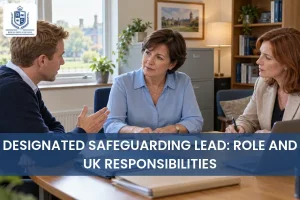
Knowing who handles safeguarding concerns helps staff act promptly when a child needs support. A designated safeguarding lead coordinates the organisation’s response and helps others follow its safeguarding procedures. This guide explains their responsibilities and the boundaries of their role. It also clarifies how training expectations differ between settings and what appointment actually involves.








Royal Open College provides high-quality online courses covering a variety of topics along with certificates issued by top organisations.
Quickly and easily check the validity of your
Royal Open College course certificates with Royal Open College’s Course Certificate Validator tool.


Payment methods possible


Copyright © 2026 Royal Open College. All Right Reserved.
Offer Ends In!
Copy Your Coupon
Added to cart
Check out our shop to see what's available
Not a member yet? Register now
Are you a member? Login now