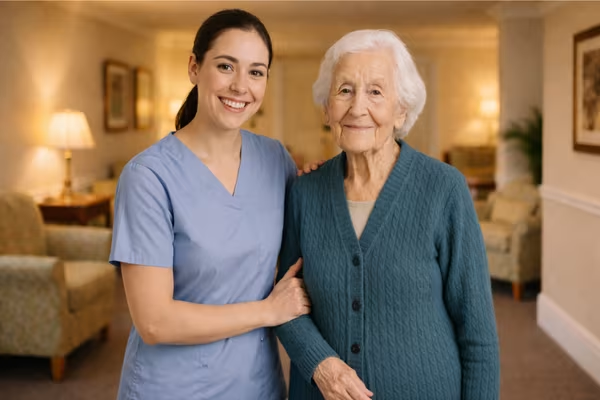
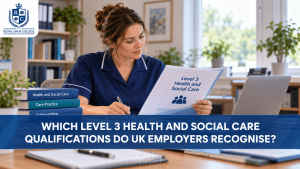
A care assistant working in a busy care home. During a routine shift, a patient is reluctant to take their medication. The nurse doesn’t stop to ask why, assuming it’s just resistance. Later, the patient experiences side effects that could have been avoided if their concerns had been addressed properly.
This is where effective communication makes a difference. When communication is clear and empathetic, patients feel respected, and care teams can deliver safer, more personalised care. Without good communication, both patients and staff face risks that could easily be prevented.
TL;DR
- Level 3 communication covers verbal, non-verbal, written, and digital communication skills in health and social care.
- The focus is on clear, respectful exchanges that ensure patient safety, trust, and teamwork.
- Barriers to communication like sensory impairments, language differences, and emotional distress, are addressed.
- It emphasizes confidentiality, information sharing, and person-centred care practices.
- This knowledge is crucial for care assistants, senior carers, and healthcare professionals to improve patient outcomes and teamwork.
What Does Communication in Health and Social Care Level 3 Mean?
Communication in Health and Social Care Level 3 refers to an advanced stage of learning that focuses on how health and social care professionals communicate effectively and safely in their day-to-day roles.
It teaches learners the importance of communication in providing safe, effective, and person-centred care. This topic covers various methods of communication, including verbal, non-verbal, written, and digital communication, all tailored to meet the diverse needs of patients and service users.
At Level 3, the focus shifts to a more specialised approach, offering a deeper understanding of the skills required to communicate within professional environments, such as hospitals, care homes, and community settings.
While it is commonly part of Diploma programs or NVQs in Health and Social Care, it is important to note that “Level 3” refers to a qualification level. This means that communication skills are taught at a more advanced level than beginner courses but are not always tied to one fixed course title.
Learners develop skills that help them interact with patients who may have specific communication needs, such as those with dementia, sensory impairments, or language barriers. The course also covers confidentiality, clear documentation, and the importance of empathy in building trust with patients.
In practice, this level prepares care workers to adapt their communication methods based on the individual’s needs, ensuring that the information shared is accurate, clear, and respectful.
What Does Level 3 Mean?
Level 3 refers to a more advanced learning stage that builds on basic care knowledge. It focuses on developing specialised skills required for real-world care settings.
Is This a Topic, Unit or Qualification?
Communication in Health and Social Care at Level 3 is often presented as part of a broader qualification, like a Diploma, and might also appear as a specific unit within care programs. It’s not a standalone qualification, but it’s essential for further professional development.
Why Is Communication So Important in Health and Social Care?
Communication in health and social care is critical for several key reasons. It not only ensures safe and effective care but also promotes trust, teamwork, and patient dignity. Whether interacting with patients, families, or colleagues, strong communication underpins every part of care delivery, contributing to better outcomes for both individuals and the care team.
Supports Safe Care
Builds Trust
Patients are more likely to trust care providers who listen attentively, explain procedures clearly, and treat them with respect. Strong communication helps establish a trusting relationship, making patients feel safe and confident in their care plan. This trust encourages patients to follow medical advice and share concerns, ultimately improving health outcomes.
Enhances Teamwork
In health and social care, professionals often work in multidisciplinary teams. Effective communication ensures that all team members are on the same page, allowing for coordinated and timely interventions. When teams communicate well, there is better collaboration, less duplication of efforts, and more efficient care delivery.
Ensures Person-Centred Care
Effective communication ensures that care is person-centred, taking into account the unique preferences, needs, and values of the individual. By understanding and respecting these, healthcare professionals can offer more tailored care, which increases patient satisfaction and engagement in their own health journey.
Improves Patient Outcomes
When communication flows smoothly, patients receive clearer instructions, are more likely to understand their treatment plans, and feel more involved in their care. This involvement leads to better adherence to treatment and overall improved health outcomes.
What Skills and Methods Are Covered at Level 3?
At Level 3 in health and social care, communication goes beyond just talking or listening. It encompasses a range of skills and methods used to ensure clear, respectful, and effective communication in varied care settings. These skills are essential in both daily patient interactions and in supporting the wider care team.
Verbal and Non-Verbal Communication
- Verbal communication refers to the spoken word, including how to use clear, concise, and respectful language. Care workers must adapt their speech to suit the person they’re communicating with, whether it’s a child, elderly patient, or someone with learning disabilities. For instance, using simple, clear language helps prevent misunderstandings when discussing medical conditions.
- Non-verbal communication includes body language, eye contact, facial expressions, and tone of voice. For example, maintaining eye contact shows respect, while a warm tone can reassure a patient during stressful situations. Non-verbal cues are especially important when dealing with patients who may have limited speech or understanding.
Written and Digital Communication in Care Settings
Formal and Informal Communication
- Formal communication often involves clear, structured messages intended for specific professional settings, such as meetings, reports, and handovers. For instance, formal handovers between shifts ensure that essential information about a patient’s health status is communicated accurately.
- Informal communication takes place through casual conversations, often used for building rapport or offering emotional support. It’s just as important in maintaining a supportive environment, such as a brief chat to check in with a patient or colleague. However, even informal communication must remain professional and clear to avoid misunderstandings.
What Are the Main Barriers to Communication in Care Settings?
Effective communication is vital in health and social care settings, but several barriers can hinder clear exchanges between care workers, patients, and their families. These barriers can be physical, sensory, emotional, cognitive, language-related, cultural, environmental, or even organisational. Understanding these obstacles is crucial for care professionals to ensure that communication remains clear and effective, regardless of the challenges they may face.
Common Communication Barriers
Physical Barriers
These include things like noise, distance, or physical separation. For example, in a busy care home, background noise from other patients or equipment can make it difficult to hear or understand what is being said. Additionally, poor acoustics or a physically large space can hinder communication, especially during face-to-face interactions.
Sensory Barriers
Sensory impairments such as hearing or vision loss are common barriers to communication in care settings. For instance, an elderly patient with hearing loss may have difficulty understanding verbal instructions, leading to frustration for both the patient and the care worker. Similarly, patients with vision impairments may struggle to read written information, requiring alternative forms of communication.
Emotional Barriers
Emotional states such as anxiety, depression, or fear can affect how well patients communicate. A patient who is anxious about a procedure may not fully listen or may misunderstand instructions, impacting their care. Similarly, emotional distress can affect a patient’s ability to express their needs or concerns clearly.
Cognitive Barriers
Patients with cognitive impairments, such as dementia or learning disabilities, may have difficulty processing information. This can lead to challenges in both understanding and expressing needs. For example, a patient with dementia may forget important information about their treatment, requiring extra time and patience from care workers.
Language and Cultural Barriers
Environmental Barriers
The care environment itself can sometimes pose challenges. Poor lighting, crowded spaces, or uncomfortable settings can make it hard for patients to focus or communicate effectively. For instance, in a crowded waiting area, a patient may not be able to hear or fully concentrate on their discussion with a nurse.
Organisational Barriers
These barriers arise from structural or procedural issues in healthcare settings. For example, if care workers do not have enough time during their shifts or if there is insufficient handover between teams, important information may be lost, impacting patient safety and care quality.
How Staff Can Respond Appropriately
- Active Listening: By focusing fully on the patient and asking clarifying questions, care workers can overcome communication challenges and ensure understanding.
- Use of Visual Aids: For patients with cognitive impairments or sensory loss, visual aids (such as pictures or diagrams) can help make information more accessible.
- Cultural Sensitivity: Being aware of cultural differences and adjusting communication styles accordingly can reduce misunderstandings and improve care delivery.
- Environmental Adjustments: Ensuring a quiet, comfortable, and well-lit environment can help minimize distractions and improve communication clarity.
How Do You Adapt Communication to Individual Needs?
Adapting communication to the individual needs of patients or service users is a fundamental principle of person-centred care. Each person is unique, and their communication preferences, abilities, and understanding vary.
Care professionals must tailor their approach to meet these diverse needs, ensuring that everyone can fully engage, understand, and participate in their care. Whether working with individuals who have hearing loss, dementia, anxiety, or cultural differences, adapting communication is key to providing effective, compassionate care.
Supporting Different Communication Needs
Hearing Loss
For patients with hearing impairments, it’s important to use clear, direct verbal communication, and always ensure that they are facing you when speaking. Additionally, using written instructions or visual aids, such as flashcards or diagrams, can help convey information effectively. Offering an environment with minimal background noise and ensuring lip-reading is possible can also make a significant difference in communication.
Dementia
When working with individuals living with dementia, it is essential to keep communication simple and clear. Speak slowly and use short sentences to avoid overwhelming the person. Visual aids, such as photos or objects that are familiar to them, can help with understanding. Repeating information and checking understanding through validation (e.g., “Let me know if I’m explaining this clearly”) is important to ensure the person feels heard.
Learning Disabilities
For patients with learning disabilities, it’s vital to adjust communication to their comprehension level. Use simple, everyday language and avoid jargon. Visual aids or objects related to the conversation can help the patient connect better with the information being shared. Encourage questions and check in frequently to confirm their understanding.
Low Literacy or Limited English
Anxiety or Emotional Distress
Patients experiencing anxiety or emotional distress may have difficulty processing information. In these situations, it’s important to use a calm, soothing tone and provide clear, step-by-step explanations. Reassure the person that they have control over their decisions and ensure that they feel supported throughout the process. Giving them time to process and respond can also help alleviate anxiety.
Checking Understanding and Reducing Confusion
Effective communication is a two-way process. It’s not enough to speak clearly—care workers must check the patient’s understanding, especially in complex or sensitive situations. Some ways to do this include:
- Ask Open-Ended Questions: Instead of asking “Do you understand?”, encourage the patient to explain in their own words what they have understood. This approach ensures that both you and the patient are on the same page.
- Use the Teach-Back Method: After explaining information, ask the patient to “teach it back” to you in their own words. This confirms that the information has been understood correctly.
- Observe Non-Verbal Cues: Sometimes, patients may not verbally express confusion, but their body language can reveal anxiety or uncertainty. Being aware of these non-verbal cues and addressing them can prevent miscommunication.
Confidentiality, Records, and Information Sharing: What Do Learners Need to Understand?
In health and social care, effective communication extends beyond verbal interactions. It also involves how we manage and share information. Care professionals are responsible for not only communicating well with service users and colleagues but also ensuring that information is securely recorded, stored, and shared according to legal and ethical standards.
A key aspect of this is understanding the balance between confidentiality and the need to share certain information appropriately for the safety and well-being of those in care.
Confidentiality vs Appropriate Information Sharing
Confidentiality means keeping a person’s private information secure and only sharing it with those who need to know, in the appropriate context. However, it’s important to note that confidentiality does not mean secrecy. There are instances where sharing information is necessary for the protection of the individual or others, such as in safeguarding situations or when coordinating care across different services.
For example, if a care worker learns of a patient’s concern that they may be at risk of harm, this information may need to be shared with healthcare professionals or social workers, while still respecting the patient’s dignity. The key is to ensure that information is shared appropriately, securely, and in line with the law.
Some key principles include:
- Only share information on a need-to-know basis: Share information only with colleagues who require it to provide care. For example, a nurse needs to know about a patient’s allergies, but a receptionist doesn’t need this information.
- Seek consent where possible: Always ask for a service user’s consent before sharing their personal details, unless there are safeguarding concerns where sharing information becomes mandatory.
- Use professional discretion: If unsure about sharing information, always consult with a manager or follow the care home’s guidelines and policies.
Why Written Records Matter
How Does Communication Support Person-Centred Care and Teamwork?
In health and social care, communication is fundamental to delivering person-centred care and effective teamwork. It ensures that service users are actively involved in their care decisions, that their preferences are respected, and that the care they receive aligns with their personal needs and values. Strong communication also enables healthcare teams to collaborate effectively, share important information, and provide consistent, high-quality care.
Service-User Involvement in Decisions
Effective communication allows individuals receiving care to express their preferences, make informed choices, and actively participate in decisions about their care. This is a cornerstone of person-centred care. For instance, when a nurse takes the time to explain the benefits and potential risks of a treatment plan in clear, simple terms, the patient can make an informed decision that aligns with their own values and preferences.
This respectful approach ensures that the person feels valued and respected. For example, when involving a person in discussions about their medication, healthcare professionals can ask, “How do you feel about this treatment plan? Is there anything you would like to change?” This empowers the service user, promoting their dignity and autonomy.
Handover and Multidisciplinary Teamwork
Communication is also vital for smooth handovers between shifts and for coordinating care across multidisciplinary teams. During shift changes, the exchange of clear, accurate, and relevant information ensures continuity of care and reduces the risk of errors. For example, if a nurse is handing over care details to a colleague, using a structured handover method (such as SBAR—Situation, Background, Assessment, and Recommendation) ensures nothing is missed.
In multidisciplinary teams, where professionals from different backgrounds work together, communication supports collaboration. Whether it’s a physiotherapist, doctor, or social worker, clear communication fosters mutual understanding and shared goals. For example, a team working on a discharge plan for a patient will need to communicate effectively about the patient’s condition, care needs, and follow-up appointments to ensure the patient’s smooth transition from the hospital to home.
Trust, Dignity, and Consistency
Good communication builds trust between care staff and service users. When people feel heard, they are more likely to trust that their care is being managed with their best interests at heart. This trust is fundamental to maintaining dignity and ensuring that individuals feel safe and respected.
Furthermore, communication supports the consistency of care. When all team members share information accurately and in a timely manner, it prevents gaps or misinterpretations that can lead to inconsistencies in the care provided.

Common Misunderstandings About Communication in Health and Social Care Level 3
Understanding the nuances of communication in health and social care at Level 3 can sometimes be confusing, especially with the various terms and practices involved. Below, we clear up some of the most common misconceptions that can arise from this topic.
- Myth: Communication in Health and Social Care is Just About Speaking Kindly
- Fact: Communication in health and social care is not limited to speaking kindly; it involves the effective exchange of information in various forms, verbal, non-verbal, written, and digital. It also includes the ability to listen actively, adapt communication styles to individual needs, and maintain confidentiality when sharing sensitive information. The purpose is to ensure clarity, understanding, and respect in every interaction.
- Myth: Level 3 Communication Always Refers to One Specific Course Title
- Fact: Level 3 in health and social care refers to a qualification level, not a fixed course title. It encompasses a range of topics and modules that include communication skills, safeguarding, and person-centred care. While some providers might offer specific courses focused on communication, others may incorporate it as part of broader health and social care qualifications. The key is that Level 3 covers a depth of learning and practical application, rather than one set course.
- Myth: Confidentiality Means Never Sharing Any Information
- Fact: Confidentiality in health and social care is about protecting sensitive information and sharing it appropriately. It does not mean withholding important information that is crucial for providing effective care. Care workers are expected to share relevant details with other healthcare professionals, especially when it affects a patient’s treatment or safety. The principle is to ensure that information is shared securely and only with those who need it for the provision of care.
Real Examples of Communication in Health and Social Care
To make the importance of communication in health and social care more relatable, here are a few real-world examples showing how communication plays a crucial role in everyday care settings.
Service-User Example: Explaining Medication to an Elderly Patient
A nurse is caring for an elderly patient who has just been prescribed new medication. The patient is confused about the dosage and potential side effects. The nurse uses clear, simple language to explain the instructions, checks for understanding by asking the patient to repeat the instructions back, and reassures the patient about any concerns. This ensures the patient is fully informed and comfortable, promoting safety and reducing anxiety.
Staff Handover Example: Updating Shift Information
During a shift change at a care home, a senior carer provides a detailed handover to the incoming team. The outgoing team shares important information about a resident’s change in condition, medication needs, and emotional state. The incoming team listens attentively, asks clarifying questions, and ensures they understand the situation. This smooth communication ensures continuity of care and reduces the risk of errors.
Written/Digital Example: Recording Care Notes
Summary
- Level 3 communication covers practical skills needed to communicate effectively in health and social care settings.
- It includes verbal, non-verbal, written, and digital communication methods, tailored to meet the needs of individuals.
- Confidentiality and appropriate information sharing are key to maintaining patient trust and meeting legal requirements.
- Communication skills are essential for person-centred care, ensuring patients feel involved, respected, and informed.
- Barriers to communication, such as language differences or cognitive challenges, must be addressed to provide effective care.
- Effective communication promotes teamwork, improving collaboration between professionals and ensuring safety.
- Practical experience, through real-world examples and reflective practice, strengthens communication skills over time.
FAQ
Q: What does Level 3 mean in health and social care?
A: Level 3 refers to the qualification level, typically for learners who are working towards advanced skills in care. It may cover a range of learning topics, units, or course content related to communication, care techniques, and other professional skills. It does not refer to a single, fixed course but rather a standard of competence expected at this level.
Q: Is communication in health and social care Level 3 a qualification or a topic?
A: Communication in health and social care at Level 3 is usually a topic or unit within a larger qualification, like the Level 3 Diploma. It covers skills such as verbal, non-verbal, and written communication, but may vary slightly depending on the training provider or awarding body.
Q: Why is communication important in health and social care?
A: Effective communication is critical because it helps ensure safety, builds trust, improves teamwork, maintains dignity, and supports person-centred care. It also helps prevent errors and ensures that care is responsive to the patient’s needs and preferences.
Q: What communication methods are used in health and social care?
A: Communication in health and social care includes verbal (spoken), non-verbal (body language, facial expressions), written (care plans, reports), digital (emails, patient portals), formal (meetings, case discussions), and informal (casual chats, greetings) communication methods.
Q: What are common barriers to communication in care settings?
A: Barriers include physical (distance, noise), sensory (hearing/vision impairments), emotional (stress, anxiety), cognitive (dementia, memory loss), language (language differences), and cultural (beliefs and practices) challenges. Addressing these barriers ensures clearer and more effective communication.
Q: How do care workers adapt communication to individual needs?
A: Care workers adapt communication by tailoring approaches to the person’s needs and preferences. This may include using simple language for patients with learning disabilities, providing additional time for individuals with dementia, or using interpreters for patients with limited English. Ensuring understanding is crucial for providing care that respects the patient’s autonomy.
Q: Does communication in care include written records and reports?
A: Yes, written communication is a critical part of care. It includes care records, reports, and notes. These documents are vital for continuity of care, providing a detailed account of the patient’s progress, observations, and treatment plans, which ensures safe and informed care across shifts and settings.
Q: How does confidentiality affect communication in health and social care?
A: Confidentiality means protecting private patient information. In health and social care, this involves appropriate information sharing, discussing relevant details with authorised professionals only, while safeguarding the individual’s privacy. Confidentiality must be balanced with the need to share information for safety and continuity of care.
Q: Is communication in health and social care only about patients?
A: No, communication in health and social care is not limited to patients. It also involves communication with colleagues, carers, families, and other professionals. Effective teamwork and collaboration are essential for delivering coordinated care, so communication between all parties is equally important.
Q: What is an example of effective communication in health and social care?
A: An example could be a care worker who listens attentively to a patient’s concerns about medication side effects. The worker then explains the issue clearly, reassures the patient, and documents the conversation in the care plan. This demonstrates clear, empathetic communication, ensuring the patient’s needs are understood and addressed.