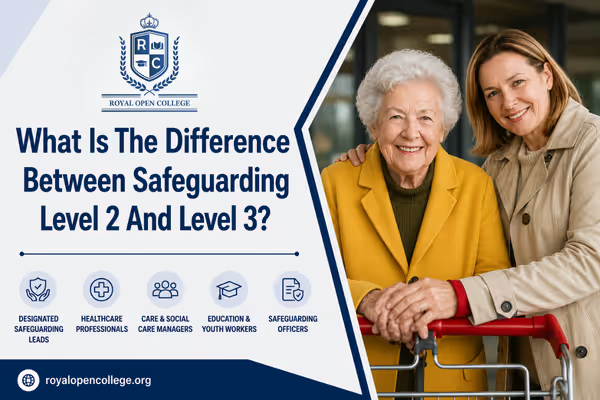

The main difference between safeguarding Level 2 and Level 3 is the level of responsibility. Level 2 is usually for people who need to recognise concerns, respond safely, record what they see or hear, and report it to the right person. Level 3 is usually for people who may take more of a lead role, such as a Designated Safeguarding Lead, deputy DSL, safeguarding officer, manager or senior practitioner.
If you already understand the basics and want to build deeper CPD knowledge, Royal Open College’s Safeguarding Level 3 course can support your understanding of disclosures, reporting, recording, referral routes and multi-agency working. It does not replace employer induction, DBS checks, workplace supervision, local safeguarding procedures or regulated role-specific training where these are required.
Quick recap
What does safeguarding Level 2 usually mean?
Safeguarding Level 2 is often about day-to-day awareness and action. It is for people who may have regular contact with children, adults at risk, patients, learners or service users.
A Level 2 learner should understand common signs of abuse, neglect, harm and exploitation.
They should also know how to respond if someone makes a disclosure, how to record concerns clearly, and how to pass information to the correct safeguarding lead or manager.
This level often fits roles such as :
What does safeguarding Level 3 usually mean?
Safeguarding Level 3 usually goes deeper because the responsibility is greater.
It is often linked to people who may:
Receive concerns from others
Support staff
Follow referral routes
Work with external agencies
Help manage more complex safeguarding situations
This may include:
In Simple Terms
Level 2 helps you know what to notice and who to tell.
Level 3 helps you understand what may need to happen next.
Is Level 3 always the same as DSL training?
Not always, and this is where people often get confused.
Some Level 3 safeguarding courses are designed around DSL or deputy DSL responsibilities. Others are broader courses that help learners build advanced safeguarding knowledge for care, healthcare, education, childcare, community or voluntary settings.
That is why you should always check the course content, your job description and your employer’s safeguarding policy before choosing a course.
Are safeguarding levels legal requirements in the UK?
The numbered levels are not used in exactly the same way across every sector. Some employers use Level 1, 2 and 3 clearly. Others talk about induction, refresher training, DSL training, role-specific training or safeguarding competence.
In adult social care, CQC expects providers to protect people from abuse and make sure staff have suitable safeguarding training for their role. In schools and colleges, staff must understand safeguarding procedures, and DSLs need deeper role-specific training.
So the safest answer is this: your training should match your role, setting, employer policy and local safeguarding arrangements.
Common misunderstandings
Level 3 is not automatically the right choice for everyone.
If your role is mainly frontline and you report concerns to a lead, Level 2 may be what your employer expects.
Level 2 is not "low value".
It matters because frontline staff are often the first people to notice when something feels wrong.
A CPD safeguarding course can support your knowledge and confidence, but it is not:
Always check what your workplace needs before you enrol.