




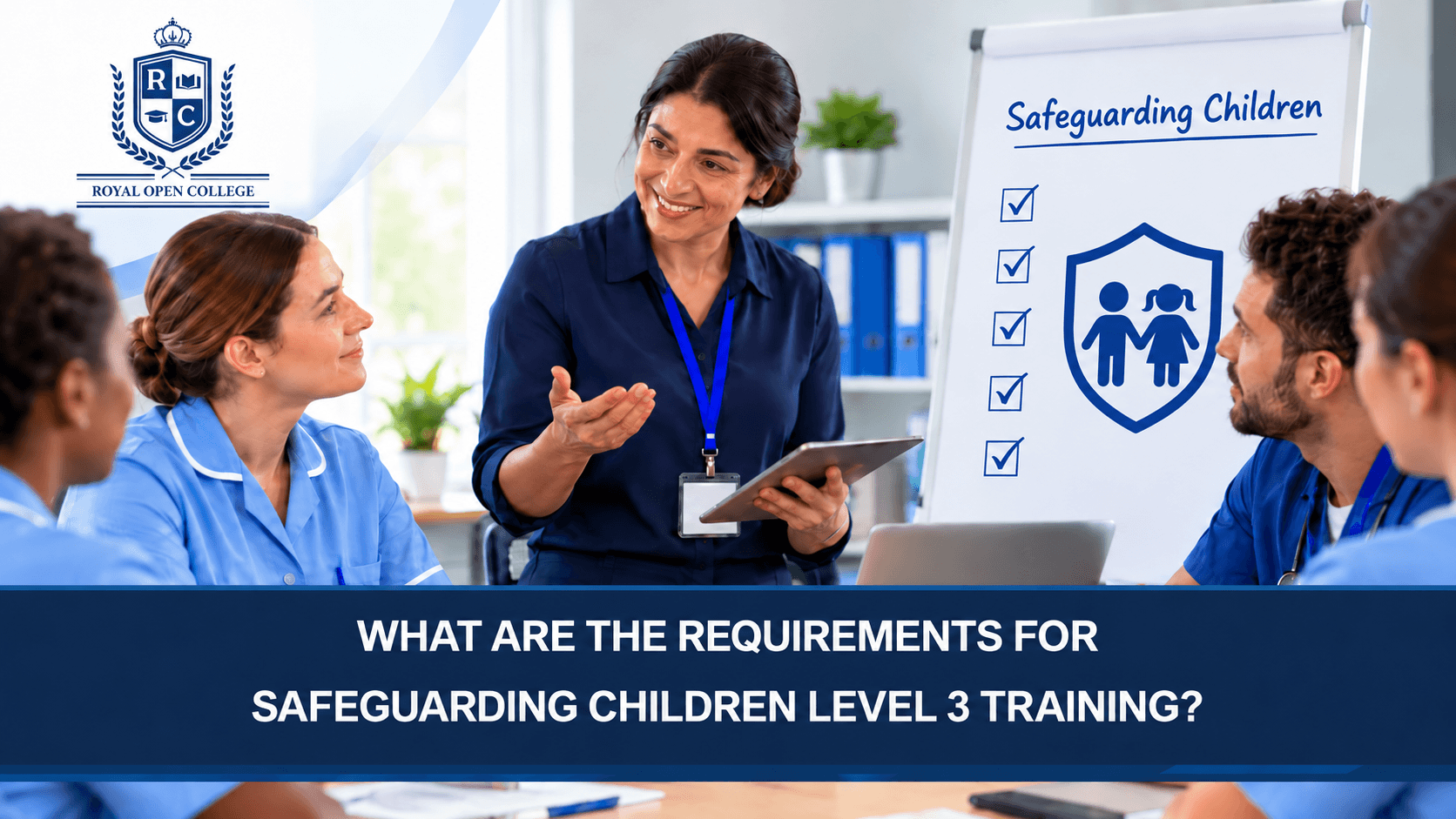


Requirements for safeguarding children Level 3 training depend on your role, setting and employer. Healthcare staff who deliver clinical services to children follow the 2025 Intercollegiate Document.
Designated safeguarding leads in English schools follow Keeping Children Safe in Education instead. No law sets Level 3 training for every worker, so your employer decides what your role needs.
When your employer confirms the level, a structured course helps you cover the knowledge. Our Safeguarding Children Level 3 course is CPD learning on abuse recognition, risk, referrals and multi-agency working. Employers still check competence in the workplace.
Quick Recap
- Level 3 competence applies to healthcare staff who deliver clinical services to children and young people.
- Not every worker needs Level 3, and each sector uses different frameworks.
- A course certificate shows completed learning, not proven workplace competence.
Who needs safeguarding children Level 3 training?
Healthcare staff who deliver a clinical service to children and young people need Level 3 competence. The 2025 edition also covers adult mental health and substance misuse services where children face significant risk. Examples include children’s nurses, midwives and health visitors. Level 3 staff also act as advocates for safeguarding children.
Do designated safeguarding leads need Level 3?
Designated safeguarding leads in English schools and colleges need DSL training under Keeping Children Safe in Education. The guidance does not use numbered levels. Schools and colleges must have regard to this statutory guidance. Early years and voluntary settings follow their own frameworks and local safeguarding partnership guidance.
Do care workers and social care managers need Level 3?
Care workers and managers need Level 3 only when their employer assigns this to the role. Leading referrals, assessing risk or supervising others makes Level 3 more likely. Check your job description and training policy.
Does Level 3 apply in Scotland, Wales and Northern Ireland?
The Intercollegiate Document is co-produced with Scottish and Welsh bodies, but role titles differ between nations. Keeping Children Safe in Education applies to schools and colleges in England only. Scotland, Wales and Northern Ireland use their own child protection guidance. Check the guidance for the nation where you work.
What does this look like in practice?
A children’s nurse follows the Intercollegiate Document and the trust’s training policy. A school DSL follows Keeping Children Safe in Education and local safeguarding partner guidance. A care manager follows the provider’s policy and local safeguarding procedures.
Practise these decisions with the Safeguarding Decision Tree. Select a concern type, answer the questions and review the report summary with your safeguarding lead.
What is the difference between Level 2 and Level 3 safeguarding training?
Level 2 suits staff who meet children but do not deliver clinical care. Level 3 applies to staff who deliver clinical services to children. The Intercollegiate Document builds each level on the one below. Staff trained and up to date at Level 3 count as competent at Levels 1 and 2.
Some course providers ask for Level 1 and Level 2 first, but this is a provider rule.
Is safeguarding children Level 3 training a legal requirement?
No law sets Level 3 training as a requirement for every worker. Statutory guidance such as Keeping Children Safe in Education does set training expectations for certain roles. The Intercollegiate Document is professional guidance for healthcare staff, not legislation.
How do Working Together and the Children Act 2004 apply?
Working Together to Safeguard Children is statutory guidance for agencies in England. Section 11 of the Children Act 2004 places safeguarding duties on named organisations. Each sets duties for organisations, so employers translate them into role-based training.
How often do you refresh Level 3 safeguarding training?
Your refresh period depends on your sector and employer policy. Designated safeguarding leads in English schools should update formal training at least every two years. Primary care guidance also asks general practice staff to complete an annual Level 3 update. The Intercollegiate Document recommends discussing Level 3 learning at annual appraisal.
Do employers accept online Level 3 safeguarding training?
Employers decide whether online training meets their own policy. Healthcare guidance expects a range of adult learning activities, including reflection. Ask your safeguarding lead whether e-learning needs supporting evidence such as case discussion.
What should you record after refresher training?
Record the date, the learning content and your reflection on practice. Employers and regulators look for training evidence matched to the role. Keep certificates with notes showing how you applied the learning.
What does safeguarding children Level 3 training cover and what doesn’t?
Level 3 training covers recognising abuse and assessing risk. The training also covers record keeping, referrals and multi-agency working. Learners also study domestic abuse, trafficking and managing allegations. The Intercollegiate Document describes Level 3 as action and expertise.
A knowledge course does not provide workplace competence on its own. Competence comes from applying learning in practice with supervision and reflection. A CPD-accredited course is also not an Ofqual-regulated qualification.
What are the common mistakes around Level 3 safeguarding training?
These mistakes matter because they leave gaps in training records and practice. Check each one against your role and your employer’s policy.
- Assuming every worker needs the same level.
- Treating employer policy as legislation.
- Using the 2019 framework, which the 2025 edition replaces.
- Applying England-only school guidance to the whole UK.
- Treating a certificate as proof of workplace competence.
- Expecting one course to satisfy a regulator or inspector.
- Ignoring role-specific duties such as referral and recording.
What should you do next?
Compare your job description with your employer’s safeguarding training policy first. Then read Keeping Children Safe in Education on GOV.UK. If you lead safeguarding in English schools. Record the outcome with your manager.
Studying through Royal Open College (CPD learning)
Royal Open College offers Safeguarding Children Level 3 as CPD-accredited online learning. The course covers abuse recognition, risk assessment and multi-agency working. Learners use the knowledge alongside workplace supervision and employer-set competence checks. The course also includes a safeguarding decision tree for use in practice discussion.
Check your employer’s training requirements and your role’s expectations before you enrol.