






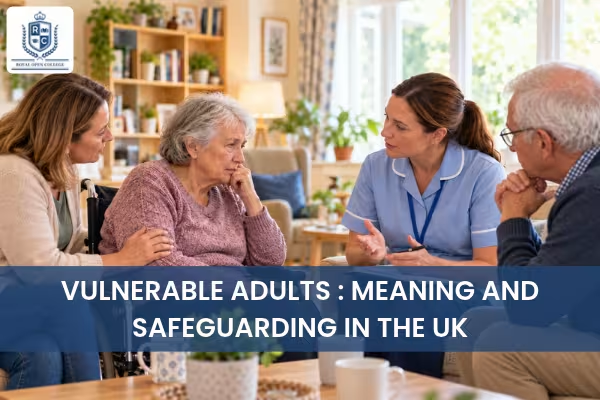



Vulnerable adults are people who may struggle to protect themselves from abuse or neglect. Their needs or circumstances can make this harder. The term describes potential risk rather than a diagnosis or a fixed personal characteristic. However, legal safeguarding definitions differ across the UK and require more specific conditions.
If you support someone who needs care, recognising those conditions helps you understand when concerns need attention. Royal Open College’s Safeguarding Vulnerable Adults Level 3 course offers CPD learning about recognising and responding to concerns. Consider how its content fits your responsibilities and your employer’s training requirements.
Quick Recap
- In England, safeguarding duties concern adults with care needs who cannot protect themselves against abuse or neglect.
- Age or disability alone does not establish that someone meets the relevant safeguarding criteria.
- An adult can need safeguarding support while still having capacity to make their own decisions.
In England, the safeguarding enquiry duty concerns adults meeting all three Care Act conditions below. The person must be aged 18 or over:
- They have care and support needs, whether or not the council meets those needs.
- They are experiencing abuse or neglect, or are at risk of either.
- Because of their care and support needs, they cannot protect themselves against that abuse or neglect.
The council must make enquiries when it has reasonable cause to suspect these conditions apply. Receiving paid care is not a requirement. Someone supported by relatives or paying for their own care can also meet these conditions.
This explains why safeguarding discussions often use “adult at risk” rather than “vulnerable adult”. The focus is on the person’s situation and protection needs, rather than labelling a whole group.
What Can Make Adults More Vulnerable To Abuse Or Neglect?
Care needs, isolation and dependence on others can increase an adult’s exposure to abuse or neglect. These factors can also make seeking help harder, particularly when someone relies on the person causing harm.
For example, imagine someone who depends on a relative to buy food. That relative takes their money but repeatedly leaves them without groceries. The concern involves possible financial abuse and neglect, alongside dependence that may limit access to help.
Looking at these details helps explain the risk more clearly than simply describing the person as elderly.
Does The Definition Differ Across The UK?
Adult safeguarding definitions differ across the UK, including the age at which particular protections apply.
Wales has its own Social Services and Well-being (Wales) Act 2014. Scotland’s criteria address difficulty safeguarding personal interests, risk of harm and increased vulnerability linked to specified conditions. Northern Ireland’s policy also distinguishes an adult at risk from an adult needing protection.
These differences matter when supporting someone near the boundary between children’s and adult services. Follow the safeguarding procedures for the nation where the person lives.
Does Being Vulnerable Mean Someone Cannot Make Decisions?
Being vulnerable does not automatically mean someone lacks capacity to make their own decisions. A person might understand their situation but need practical support to protect themselves.
In England and Wales, the Mental Capacity Act starts from the assumption that someone has capacity. People must receive support to decide before being treated as unable to do so. An apparently unwise choice does not, by itself, prove that capacity is lacking.
Capacity concerns a particular decision at a particular time. Someone might manage everyday spending but struggle to understand a complex financial agreement.
When discussing a concern, explain the available options in a way the person understands. Ask what they want to happen and allow time for their response. Needing help should not mean losing their voice in decisions about their life.
What Should You Do If You Are Worried About An Adult?
Raise concerns promptly through the appropriate safeguarding route and call 999 if someone faces immediate danger. You do not need to establish whether the person meets every legal condition before seeking advice.
If it is safe, speak privately with the person and listen without pressing for details. Ask what help they want and avoid promising complete secrecy. The NHS guidance on adult abuse and neglect explains warning signs and sources of help.
For staff, the next steps should follow workplace safeguarding procedures:
- Record what you observed and what the person told you.
- Report concerns to the designated person without investigating them yourself.
- Escalate concerns through another appropriate route if that person is implicated.
What Common Mistakes Should You Avoid?
Common mistakes include waiting for certainty and overlooking concerns because someone appears independent. Both can delay support when a person needs help.
Studying Through Royal Open College (CPD Learning)
Royal Open College offers Safeguarding Vulnerable Adults Level 3 to support CPD learning about adult safeguarding. Its content covers recognising concerns, communication and working with other agencies.
For care workers, these topics can help connect safeguarding knowledge with situations encountered during everyday support. Managers can review the content against their team’s responsibilities and identify where further learning is needed.
This course supports professional development rather than providing a regulated qualification. Completion does not replace workplace competency checks or automatically meet every employer’s requirements.
Before enrolling, discuss your responsibilities with your manager and compare the curriculum with your agreed learning needs.