







Safeguarding training courses comply with UK standards when their content aligns with relevant statutory guidance, sector competency frameworks and the responsibilities of the role. The appropriate course is usually selected by employers based on their safeguarding requirements, workforce responsibilities and the expectations that apply to their setting.
As part of this approach, Royal Open College provides safeguarding training designed for CPD learning, covering key areas such as safeguarding adults, safeguarding children and designated safeguarding lead responsibilities. The right course and level still depend on your role, employer and workplace setting. So, it is important to check what your organisation expects before enrolling.
Quick recap
- Employers choose suitable safeguarding courses based on sector guidance, workforce responsibilities and the needs of their setting.
- Training level varies by role, based on your responsibilities and contact with children or adults at risk.
- Completing a course builds useful knowledge, while employers separately confirm competence through their own checks.
What does "compliant" safeguarding training actually mean?
Compliant safeguarding training means the course content reflects recognised statutory guidance and sector standards relevant to your setting. In England, this may include alignment with the Care Act 2014 for adult social care, Keeping Children Safe in Education for education settings, and CQC regulatory expectations under Regulation 13 for registered providers.
Regulation 13 requires registered providers to have effective systems and processes that protect people from abuse and improper treatment. Providers must also ensure staff have appropriate safeguarding knowledge and receive suitable training for their responsibilities. Other settings, such as schools, charities and community organisations, follow the safeguarding guidance relevant to their sector.
Is safeguarding training a legal requirement in the UK?
Yes, safeguarding training is a legal requirement for many roles in the UK, though the specific duty comes through different routes depending on your sector: regulation for CQC-registered providers, statutory guidance in education settings, or employer policy elsewhere.
The Care Act 2014 places specific safeguarding duties mainly on local authorities and Safeguarding Adults Boards, while care providers meet their own duties through regulatory requirements, contractual arrangements and safeguarding procedures.
Requirements also vary across the UK. Wales operates under the Social Services and Well-being (Wales) Act 2014, while Scotland and Northern Ireland follow their own national safeguarding legislation and guidance.
Checking your national guidance alongside any England-based course content helps confirm the right fit for your setting.
Which competency framework applies to your training level?
Your safeguarding training level is usually guided by your role, responsibilities and the relevant competency framework for your sector. Intercollegiate frameworks, such as those from the Royal College of Paediatrics and Child Health and the Royal College of Nursing, help define the knowledge expected at different levels.
Safeguarding frameworks and guidance
Safeguarding children
Adult safeguarding
Wider workforce guidance
Each framework describes the knowledge and expectations at different levels, so checking course content against the relevant framework helps confirm whether the training matches your role.
Who needs safeguarding training, and at what level?
Most people working in health, social care or education settings need some level of safeguarding training, with the right level shaped mainly by day-to-day responsibilities and contact, more than by job title. Employers usually assess this by considering how much direct contact staff have with children or adults at risk, along with their decision-making responsibilities.
Care workers and healthcare assistants with regular contact will usually complete foundation-level safeguarding training, covering how to recognise signs of abuse and report concerns through the correct procedure.
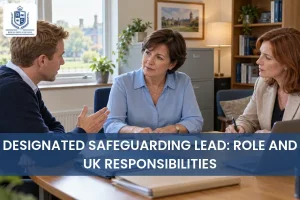
Managers, supervisors and designated safeguarding leads typically carry a higher level of responsibility: they assess risk, coordinate the response to a concern, and work with agencies such as social services. Because of this, they usually need a higher level of training than care workers, covering more than the basics of recognising and reporting a concern.
What are the common mistakes people make about safeguarding compliance?
Most mistakes happen when training gets treated as a box-ticking exercise, rather than something that needs judgement and context for each role. Common misunderstandings include:
Watch out for these
Common misunderstandings include:
Assuming every role needs the same training level, regardless of responsibility.
Treating a CPD course as a regulated qualification or professional licence.
Believing a certificate alone demonstrates competence in practice.
Assuming one course automatically satisfies CQC or Ofsted expectations.
Mistaking employer policy or sector guidance for a legal requirement.
Overlooking updates to safeguarding knowledge as guidance, workplace procedures or responsibilities change.
Studying through Royal Open College (CPD learning)
Royal Open College offers safeguarding courses, including Safeguarding Adults in Care Settings, designed to support CPD learning for people working in health and social care. Through this training, learners build an understanding of core safeguarding principles, recognising signs of abuse and reporting concerns appropriately.
This knowledge supports your existing role rather than replacing your employer’s own training, adding practical understanding that can be applied in day-to-day practice. Because it is a CPD resource and not a regulated qualification, it complements what your workplace already expects rather than standing in for it.
Before enrolling, check the level and content your employer expects for your role, and consider how the course fits alongside local safeguarding procedures or supervision arrangements already in place.