It can be enough if your aim is CPD learning, knowledge building, safeguarding awareness or career development. Online study is useful for busy care, healthcare and education staff who need flexible learning around shifts.
The cost of a Safeguarding Level 4 course depends on what type of training you choose. A self-paced online CPD course is usually more affordable, while live Level 4 safeguarding training or specialist DSL training often costs more because it includes trainer support, discussion and case-based learning.
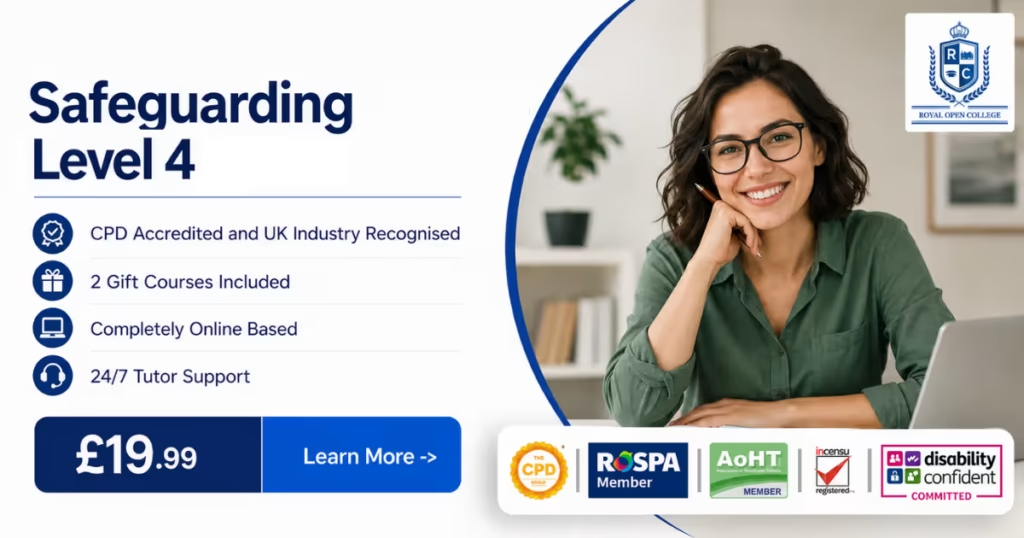
For learners comparing online options, Royal Open College’s Safeguarding Level 4 course provides CPD learning for those who want to strengthen their safeguarding awareness across children’s and adults’ services. It is useful for knowledge-building, but it does not replace employer-led training, workplace sign-off or regulated qualifications where these are required.
Quick recap
- Online CPD Level 4 safeguarding courses are usually cheaper than live specialist training.
- Payment may be by card, invoice, purchase order or team booking, depending on the provider.
- Group discounts can help employers train several staff, but always check what is included.
How much does a Safeguarding Level 4 course cost?
There is no single fixed fee for Safeguarding Level 4 training. A self-paced online CPD course is often the lower-cost option because learners study independently and do not need a live trainer.
Live virtual courses, advanced DSL training or named professional safeguarding courses usually cost more. These may include group discussion, case studies, trainer feedback, safeguarding scenarios and more direct interaction.
So, the real question is not only “How much is it?” It is also “What kind of training does my role need?”
Why do course fees vary so much?
Fees usually depend on the course format, length, delivery method, assessment style and target learner. A care worker refreshing safeguarding knowledge may not need the same training format as a school DSL, registered manager, senior practitioner or named nurse.
A lower-cost course is not automatically weak. A higher-cost course is not automatically necessary. The best choice depends on your role, setting, employer expectations and local safeguarding procedures.
What payment options are usually available?
👤
Individual Learners
For individual learners, payment is often made online by debit card, credit card or another checkout method. Access is usually provided after payment, which is useful if you want to start quickly.
💳 Debit Card
💳 Credit Card
🛒 Online Checkout
⚡ Access usually provided immediately after payment
🏢
Employers & Teams
For employers, schools, care homes, charities or larger teams, payment may be handled by invoice or purchase order.
📄 Invoice
📋 Purchase Order
💡
If your workplace is paying, ask your manager or finance team whether they need a PO number before the booking is made.
Are group discounts available?
Yes, many training providers offer group discounts for safeguarding courses. This is especially helpful for care homes, schools, nurseries, community groups, charities and health or social care teams.
Some discounts are applied automatically when several learners are added at checkout. Others need a custom quote. Before paying, check whether the fee is per learner, per course or per organisation. Also ask whether every learner receives their own login, assessment record and certificate.
What should be included in the course fee?
A good course page should make the fee clear. Check whether the price includes access to lessons, assessments, retakes, downloadable resources, tutor support and digital certification.
Also look for extras. Some providers charge separately for printed certificates, postage, VAT, extended access or admin support. These costs can make a cheap-looking course more expensive than expected.
Is a low-cost online Level 4 course enough?
But some roles need more than CPD. A DSL, named professional, safeguarding lead or registered manager may need training that matches employer policy, sector guidance, supervision arrangements or a regulated qualification requirement.
Employer policy
Sector guidance
Supervision
Regulated qualification
Is CPD Level 4 the same as a regulated qualification?
No, not automatically. CPD training supports professional development and awareness. A regulated qualification follows a formal awarding body framework.
This matters when applying for jobs. If an advert asks for a regulated Level 4 qualification, do not assume any CPD certificate will meet that requirement. Check with the employer before enrolling.
Common misunderstandings about Safeguarding Level 4 fees
💭
⚠️ Common Mistake
Thinking all Level 4 safeguarding courses are the same.
They are not. One may be a short online CPD course, while another may be a live specialist programme for senior safeguarding professionals.
Option A
Short online CPD course
Option B
Live specialist programme for senior safeguarding professionals
📜
⚠️ Misunderstanding
Thinking a certificate alone proves workplace competence.
It does not. Safeguarding practice also depends on:
Induction
Supervision
Accurate recording
Safe reporting
Escalation routes
Local procedures
🎯
Before booking, compare the full package, not just the headline price.
The right course should match your:
💷 Budget
👤 Your Role
🏢 Employer's Expectations