









Guidance_On_Safeguarding_Adults_Policies_For_UK_Care_Providers

Guidance On Safeguarding Adults Policies For UK Care Providers

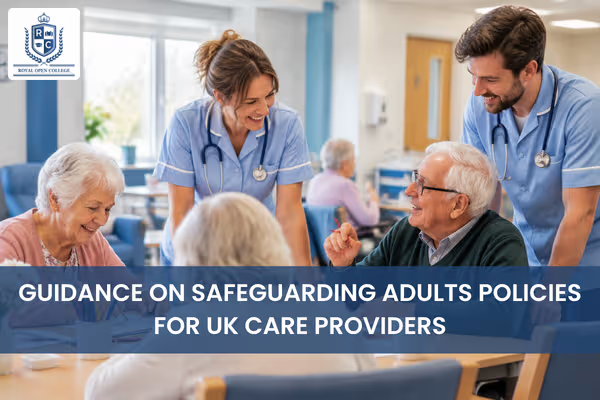
A useful safeguarding adults policy helps your team know what to do when concerns arise. For UK care providers, that means following guidance for your nation and service. With a focus on England, this guide explains what to include and how to clarify reporting steps. You’ll also learn how to help staff use the policy in everyday practice.

UK care providers should base safeguarding adults policies on national requirements and local reporting procedures. These policies need to explain how staff prevent abuse and act when concerns arise. The detailed requirements depend on your nation and service. This guide focuses on England’s Care Act and CQC framework.

Staff also need to understand the decisions behind those procedures. Royal Open College’s Level 3 Safeguarding Adults course supports CPD learning about recognising concerns and appropriate reporting. Match learning to each person’s responsibilities and your employer’s training requirements.

Quick recap

  • Care providers should use safeguarding guidance applicable to their nation and service.
  • Staff need safeguarding training suited to their roles and responsibilities.
  • Completing CPD learning does not, by itself, demonstrate workplace competence.

Which guidance should inform safeguarding adults policies?

In England, safeguarding adults policies should reflect Care Act statutory guidance and local multi-agency procedures. CQC-regulated providers must also meet Regulation 13’s requirements for preventing and responding to abuse.

Chapter 14 of the Care and Support Statutory Guidance explains England’s adult safeguarding framework. Its six principles are empowerment, prevention, proportionality, protection, partnership and accountability. They guide decisions about supporting adults and managing risks.

The distinction matters when drafting your policy. Regulation 13 creates legal duties for registered providers. CQC’s accompanying guidance explains how providers should meet those duties. Your internal procedure then tells staff how to act within your service.

Use these England-specific sources within their stated scope. Before adapting a template elsewhere in the UK, verify the framework applicable to your service.

What should your safeguarding adults policy include?

Your safeguarding adults policy should explain prevention, reporting routes, responsibilities and what happens after someone raises a concern. CQC’s safeguarding policy guidance provides a practical starting point for providers applying to register in England.

Include the following details

Make these instructions easy to find during a shift. For example, place reporting contacts beside the procedure rather than inside a separate management document.

How should staff respond to an adult safeguarding concern?

Staff should address immediate safety needs and report concerns promptly through the service’s safeguarding procedure. In England, CQC expects providers to act without delay when abuse is suspected or reported. The response should follow local safeguarding arrangements, including any necessary referral or investigation.

For example, a worker might report repeated missed support with eating. The manager should address immediate care needs while considering whether the pattern suggests neglect.

Records should capture the adult’s account and wishes alongside relevant observations. Include decisions and their reasons so colleagues can understand what happened and follow up appropriately.

How should the policy keep the adult involved?

The policy should explain how staff involve the adult in decisions about their safety. In England, Making Safeguarding Personal centres on the person’s wishes and desired outcomes. Ask what they want to happen and explain the available options clearly.

For example, someone worried about a relative controlling their money might still want contact with that relative. Explore how support could address the financial concern while respecting that relationship.

If the adult refuses help, their wishes still matter. However, refusal does not automatically prevent necessary information sharing or protective action. Risks to others and possible criminal offences can require further consideration. Seek appropriate safeguarding advice and record the reasons for decisions.

What training helps staff put the policy into practice?

Staff need safeguarding training that matches their responsibilities and explains how to apply local procedures. For CQC-regulated services in England, relevant safeguarding training forms part of induction. CQC also expects updates at appropriate intervals rather than specifying one timetable for every worker.

Start by identifying the decisions each role involves. A care worker needs to recognise concerns and understand where to report them. A manager also needs to understand referral arrangements and their responsibilities when responding to allegations.

Employers should connect learning with the service’s actual procedures. Discuss where staff find reporting forms and who provides support during difficult decisions. Include agency workers and others who need to understand the process.

How can managers check staff understanding?

Managers can check understanding by asking staff to work through realistic safeguarding situations. Use fictional examples that reflect their usual responsibilities.

For instance, ask a worker what they would do if their usual manager were unavailable. Then ask where they would record the concern and how they would seek further help.

Use their answers to identify specific gaps. Someone who recognises abuse but cannot find the reporting route needs practical guidance on your procedure. Record the support provided and revisit any unresolved uncertainty during supervision.

What common mistakes should care providers avoid?

Care providers should avoid generic templates, outdated contacts and procedures that staff cannot easily use. A policy needs to reflect how your service operates, including reporting concerns about management. CQC’s registration guidance specifically asks for this alternative reporting route.

What common mistakes should care providers avoid

Before approving the policy, ask a colleague unfamiliar with the draft to find the reporting steps. Use any difficulty they encounter to improve the wording or layout.

Studying through Royal Open College (CPD learning)

Royal Open College’s Level 3 Safeguarding Adults course supports CPD learning about recognising concerns and responding appropriately. Its supplied learning outcomes also cover information sharing and working with other agencies. These topics can help staff understand the reasoning behind safeguarding procedures.

Choose learning around a specific gap in your knowledge. For example, you might need a clearer understanding of what information to share when reporting a concern. Compare that need with the course content and discuss its relevance with your manager.

The course provides CPD learning rather than a regulated qualification. Workplace supervision and competency checks remain separate from course completion.

At your next policy review, identify one area where staff need further support. Agree who will arrange that support and how you will check its usefulness.

Recent Blogs

Affordable_Adult_Safeguarding_Software_Solutions_UK

Affordable Adult Safeguarding Software Solutions in the UK

Choosing affordable adult safeguarding software starts with understanding what your team needs. With a limited budget, focus on those essentials without paying for features they won’t use. For UK care services and charities, that means balancing cost with everyday reporting needs. This guide explains how to compare yearly costs and choose features that support your team.

Safeguarding Adults Explained: UK Meaning and Principles

Safeguarding Adults Explained: UK Meaning and Principles

Adult safeguarding means people and organisations working together to protect adults at risk from abuse and neglect. This guide explains who it applies to, the six principles and types of abuse. You’ll also learn what the Care Act 2014 requires in England, how to report concerns and why safeguarding training should fit your role.

Safeguarding Training Platforms for UK School Governors

Safeguarding Training Platforms for UK School Governors

School governors across the UK can choose from several safeguarding training platforms, including NSPCC Learning, GovernorHub Knowledge, NGA Learning Link and the National College. Course format varies between providers, and some suit individual governors better while others work for whole boards. This guide compares the options to help you find the right fit.