


How Often Does Level 4 Safeguarding Training Need Renewal in the UK?

Level 4 safeguarding training is commonly renewed every 3 years in the UK, but the exact rule depends on your role, employer policy, sector guidance and local safeguarding procedures.

In the UK, Level 4 safeguarding training is commonly renewed every 3 years, especially for people in senior, specialist or safeguarding lead roles. Still, the renewal date is not the same for everyone. Your employer, job responsibilities, local safeguarding procedures and sector expectations all matter.

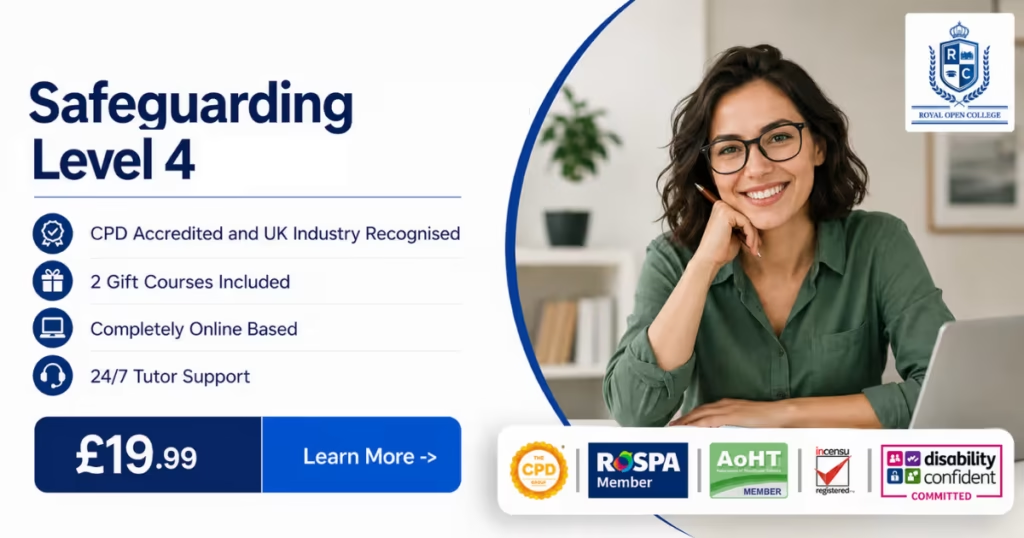
For learners who want to build or refresh their safeguarding knowledge, Royal Open College’s Safeguarding Level 4 course provides CPD learning in areas such as complex safeguarding decisions, disclosures, referrals, record keeping and multi-agency working. It is designed to support professional development, while employer-led training, workplace sign-off and local policy requirements remain separate.

Quick recap

  • Level 4 safeguarding is often refreshed every 3 years.
  • Annual CPD, supervision or appraisal updates may still be expected.
  • Your employer’s training matrix should always be checked first.

Is there one fixed renewal rule for Level 4 safeguarding?

No, and this is where many people get confused. A training provider may put an expiry date on a certificate, but that does not always mean there is a national legal expiry date. In health and social care, CQC expects safeguarding training to be suitable for the role and kept up to date, but it does not give one universal Level 4 renewal date for every worker.

So, if your certificate says 3 years but your employer asks for annual updates, follow your employer’s rule.

Why do people often say 3 years?

Three years is commonly used because many UK healthcare and safeguarding frameworks work around refresher cycles.

Skills for Health says the Core Skills Training Framework includes learning outcomes, refresher frequency and links to legislation or expert guidance. Many NHS and healthcare employers use this type of framework when planning staff training.

That is why "every 3 years" is a sensible general answer. But it should not be treated as the answer for every sector, every employer or every safeguarding role.

Does Level 4 safeguarding need annual updates too?

Often, yes. A full refresher may be every 3 years, but senior safeguarding knowledge should not sit untouched in between.

Level 4 is usually linked with leadership, advice, escalation, supervision, governance and complex safeguarding decisions. The RCPCH intercollegiate safeguarding framework describes Level 4 roles as senior or named professionals, safeguarding leads and others with extra responsibility.

In real workplaces, annual updates may include CPD, reflective practice, safeguarding supervision, team learning, policy updates, case review learning or appraisal discussion.

Who usually needs Level 4 safeguarding training?

🕵️

Level 4 is not basic safeguarding awareness. It is usually for people who help manage, advise on or oversee more complex safeguarding concerns.

This may include... (tap a card!)

🪪

Safeguarding leads

🔍

Fits Level 4!

🩺

Named professionals

🔍

Fits Level 4!

👩‍⚕️

Senior clinicians

🔍

Fits Level 4!

🏠

Care managers

🔍

Fits Level 4!

📋

Senior practitioners

🔍

Fits Level 4!

💬

Safeguarding advisers

🔍

Fits Level 4!

🤝

People involved in multi-agency working or escalation

🔍

Fits Level 4!

But wait, there's a catch...

Not every manager needs Level 4. A job title alone is not enough. What matters is what you actually do in the role.

Does the sector make a difference?

Yes. NHS services, adult social care, schools, charities, private care providers and community organisations may all set different expectations.

For example, schools and colleges have their own safeguarding guidance, and designated safeguarding lead training is usually updated at least every 2 years under education guidance.

Adult social care providers may look at CQC expectations, Skills for Care guidance, local safeguarding procedures and the needs of the people using the service.

What should Level 4 renewal cover?

A good Level 4 refresher should go beyond recognising signs of abuse.

It should usually include:

🧠 Complex Case Decision-Making ⚖️ Risk Assessment 📈 Escalation 📝 Recording Concerns 📤 Information Sharing 🤝 Multi-Agency Working 👁️ Safeguarding Supervision 🏛️ Governance ✅ Quality Assurance 📊 Learning from Incidents
Adult Safeguarding

For adult safeguarding, it may also include:

The Care Act
Mental Capacity Act
DoLS
Best Interests
Adults at Risk
Children's Safeguarding

For children's safeguarding, it may include:

Current Working Together Guidance
Thresholds
Referrals
Exploitation
Child Protection Procedures

What should you check before renewing?

Start with your employer. Ask for the safeguarding training matrix or speak to your safeguarding lead, HR team or manager.

Check whether you need a full Level 4 refresher, annual CPD, local safeguarding training, supervision evidence or multi-agency learning.

The safest approach is simple: plan around a 3-year renewal cycle, keep annual CPD evidence where your role needs it, and always follow your employer’s policy first.

Recent Blogs

Safeguarding Level 4 Course Fees, Payment Options and Group Discounts

Safeguarding Level 4 course fees vary by format, provider and role need. Online CPD courses are usually more affordable, while live DSL or named professional training costs more. Always check certificates, payment terms, group discounts and employer requirements before booking.

Cost of Safeguarding Level 4 Courses in the UK

Safeguarding Level 4 courses in the UK can cost from around £19–£35 for online CPD to £450+ for specialist live training. The right choice depends on your role, setting, employer policy, and whether you need flexible CPD learning or role-specific training.

How to Book Safeguarding Level 4 Certification Online

How to Book Safeguarding Level 4 Certification Online

Booking Safeguarding Level 4 certification online is usually simple. Choose a suitable course, check the certificate type, complete checkout, access your learning by email, and make sure it matches your role or employer’s expectations.