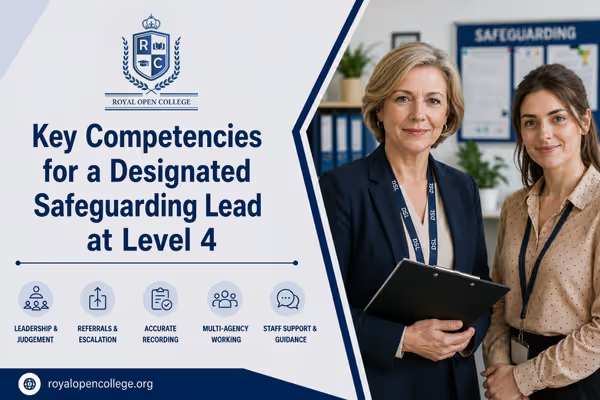


Key Competencies for a Designated Safeguarding Lead at Level 4

Key Competencies for a Designated Safeguarding Lead at Level 4

A Level 4 Designated Safeguarding Lead needs more than basic safeguarding awareness. This guide explains the key DSL competencies, including risk judgement, referrals, multi-agency working, staff support, recording concerns and safe escalation.

A Level 4 Designated Safeguarding Lead needs the confidence to guide others when safeguarding concerns become serious, sensitive or complex. The key competencies include professional judgement, safe reporting, accurate recording, staff support, escalation, information sharing and working with local safeguarding agencies.

For learners who want structured CPD learning in this area, Royal Open College’s Safeguarding Level 4 course is a useful way to build knowledge around complex safeguarding concerns, referrals, adult and child protection, and safeguarding leadership. It should sit alongside employer-led training, workplace policies and local safeguarding procedures, not replace them.

Quick recap

  • Level 4 DSL competency is about leading safeguarding, not just understanding the basics.
  • The right training level depends on your role, setting, employer policy and local procedures.
  • A strong DSL can advise staff, manage concerns, escalate risk and help create a safer culture.

What does Level 4 DSL competency mean?

Level 4 competency usually means a person has a deeper safeguarding role. They may not be the most senior person in the organisation, but they are often the person others turn to when a concern feels serious, unclear or difficult.

A good DSL can stay calm when emotions are high. They can listen to a disclosure, avoid asking leading questions, write accurate notes and decide what should happen next. That might mean speaking to a manager, contacting children’s social care, adult safeguarding, the police, the LADO, Prevent or another local agency.

Is Level 4 the same in every UK sector?

No, and this is where many people get confused.

In healthcare, safeguarding levels are often linked to competency frameworks. Level 4 can apply to named or senior safeguarding professionals with leadership responsibilities.

In schools, charities, youth work, care homes and community settings, the language may be different. Some employers say “Level 4 safeguarding”. Others say “advanced safeguarding”, “DSL training” or “safeguarding lead training”.

So, the safest answer is this: always check the job description, your employer’s safeguarding policy and local safeguarding procedures.

What should a Level 4 DSL know?

🛡️

A Level 4 DSL should understand the main types of abuse and neglect affecting children, young people and adults at risk.

Physical Abuse Emotional Abuse Sexual Abuse Neglect Exploitation Domestic Abuse Online Harm Trafficking Organisational Abuse

They should also understand key safeguarding ideas such as:

⚖️ Duty of Care ✍️ Consent 🔒 Confidentiality 📤 Information Sharing 🧑‍💼 Safer Recruitment 🧭 Professional Boundaries 🧠 Mental Capacity 🤝 Person-Centred Care
🧓
Adult Care Roles

Knowledge of the following may be useful:

The Care Act
Mental Capacity Act
DoLS
👧
Child-Focused Roles

The following may be relevant:

Working Together
Local Threshold Guidance
Education Safeguarding Duties

What practical skills does a Level 4 DSL need?

The most important skill is judgement. A DSL often has to decide whether a concern needs early help, internal support, a formal referral or urgent action.

They also need strong communication skills. Safeguarding conversations can be sensitive. Staff may feel anxious. Families may feel defensive. A child or adult at risk may feel frightened or unsure. The DSL must be clear, respectful and focused on safety.

Good record keeping is also essential. Notes should be factual, dated, secure and easy to follow. Poor records can make it harder to protect someone later.

How does a DSL support staff?

A Level 4 DSL should not simply take over every concern. They should help staff understand what to do, why it matters and how to follow procedure.

This may include:

Giving advice

Checking concern forms

Supporting referrals

Offering debriefs after difficult cases

Spotting training gaps

A strong DSL also knows when to challenge decisions if they believe someone remains at risk.

What does Level 4 training not replace?

Level 4 safeguarding training does not replace local induction, DBS checks, employer supervision, statutory role training, regulated qualifications or local safeguarding partnership rules.

A certificate can support learning, but employers decide what training is suitable for each role.

Common misunderstandings

⚠️ Biggest Misunderstanding

Thinking Level 4 means the same thing everywhere. It does not.

⚠️ Another Mistake

Thinking a course alone proves full workplace competence.

Real DSL competency shows in daily practice.

It shows when someone:

Records concerns properly

Follows up referrals

Supports staff

Challenges unsafe decisions

Keeps the person at risk at the centre of every action

How can you show Level 4 competency?

You can evidence it through CPD records, safeguarding logs, supervision notes, referral examples, policy reviews, reflective practice and training records.

For job applications, use real examples. Show how you handled a concern, supported a colleague, followed procedure or improved safeguarding practice. That is what Level 4 DSL competency looks like in real life.

Recent Blogs

Which Nursing Assistant Course Is Best in the UK?

Nursing assistant is not a regulated title in the UK, so no single official course exists. Four training routes serve the role, and each suits a different situation. This guide compares costs, duration, assessment and recognition across all four, explains what employers check under current NHS England guidance, and corrects the CNA, CQC and Care Certificate myths competitors keep repeating.

NHS Nursing Assistant Course: Is It a Real Course or a Job Route?

You do not need a course certificate to apply for an NHS nursing assistant job. The NHS provides structured training from day one, including the Care Certificate, now updated to 16 standards in March 2025. This guide explains how all of that works, what CPD courses genuinely offer, and how to decide your best route into the role.

Nursing Assistant Course NHS Free What Learners Should Know

Nursing Assistant Course NHS Free: What Learners Should Know

Free NHS nursing assistant training exists, but not in the way most people expect. The NHS trains its own staff. The government funds apprenticeships. Charities run free entry programmes. Each route has conditions. This guide explains all four, states the eligibility for each, and tells you what a CPD course gives you when funded options are out of reach.