Safeguarding Level 4 training usually covers recognising abuse and neglect, responding to disclosures, recording concerns, making referrals, assessing risk, sharing information, and working with other agencies.
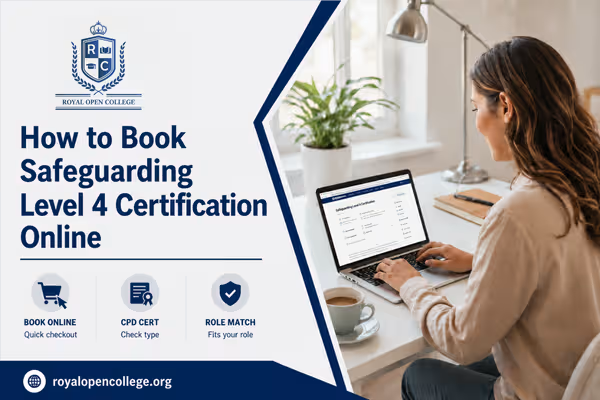
Booking Safeguarding Level 4 certification online is usually a simple process. You choose a suitable course, check what type of certificate it offers, add it to your basket, complete checkout, then use the email access details to start learning and complete the assessment.
A practical option for UK learners is Royal Open College’s Safeguarding Level 4 course, which offers CPD learning around child and adult safeguarding, disclosures, reporting concerns, referrals, risk assessment, and multi-agency practice. This can be useful for confidence and professional development, but it does not replace employer-led training, workplace sign-off, or local safeguarding rules.
Quick recap
- Book online through the course page, checkout, then check your email for access.
- Check whether the certificate is CPD training or a regulated qualification.
- Employer acceptance depends on your role, setting, and local safeguarding procedures.

How do you book Safeguarding Level 4 online?
The usual process is simple. Visit the course page, read the overview, check who the course is for, then add it to your basket or cart.
At checkout, enter your learner details and complete payment using the available method. After payment, most providers send login details by email. Once you log in, you can start the modules, complete the assessment, and follow the steps for your digital or printed certificate.
A small tip: use the correct email address when ordering. If the course access email does not arrive, check your spam or junk folder before contacting support.
What should you check before paying?
🚫
Do not book only because the title says "Level 4". Check what the course actually includes.
Look at:
📜
Certificate Type
📋
Course Topics
✍️
Assessment Method
⏱️
Access Period
🔁
Retake Rules
💷
Refund Policy
🏅
Certificate Fees
🖨️
Digital vs Printed
💡
Some providers include a digital certificate. Others charge extra for a printed copy.
Also check whether the course covers:
👶 Children
🧓 Adults
👶🧓 Both
If you work in:
🏠 Care
🏫 Education
🏥 Healthcare
💛 Charity Work
🌍 Community Support
Your safeguarding duties may not all be the same.
Is Safeguarding Level 4 certification a regulated qualification?
Not always. This is one of the biggest misunderstandings.
A CPD certificate shows that you have completed professional development training. It can support your knowledge and CPD record. A regulated qualification is different and is linked to a recognised awarding organisation and official qualification framework.
If your employer asks for a “regulated Level 4 qualification” or names a specific awarding body, check before booking. If they ask for CPD safeguarding training, an online CPD course may be suitable, depending on their policy.
Who usually needs Safeguarding Level 4?
Safeguarding Level 4 is usually for people with more responsibility than basic awareness roles. This may include safeguarding leads, deputy safeguarding leads, care managers, senior support workers, nurses, teachers, SENCOs, healthcare staff, social care staff, and charity or community workers involved in serious concerns.
If you are new to safeguarding, Level 1, Level 2, or Level 3 may be more suitable first. Some specialist roles may also require employer-led or sector-specific training.
What does the course usually cover?
Many UK-focused courses also include adult safeguarding, child protection, the Care Act, the Mental Capacity Act, DoLS, domestic abuse, exploitation, trafficking, duty of candour, and person-centred care.
The aim is not just to know the signs of harm. It is to understand what to do next, who to report to, and how to follow safe procedures.
Will my employer accept an online CPD certificate?
They might, but it is not guaranteed. Employers decide what training is suitable for each role.
Before booking, check your job advert, manager’s guidance, training matrix, or local safeguarding policy. CPD learning can be useful for confidence and awareness, but it does not automatically prove workplace competence or guarantee compliance.
Common mistakes to avoid
The main mistake is assuming every Level 4 safeguarding course is the same. It is not.
Check the certificate type, topic coverage, employer requirements, certificate cost, and whether the course matches your setting. A careful check before booking can save time, money, and frustration later.