


Student reviews of Health and Social Care Level 3 courses commonly mention flexible online access, career-relevant content and improved confidence. Royal Open College’s Health and Social Care Level 3 Diploma provides a CPD-accredited online learning option for people seeking to develop their knowledge of the care sector.
Reviews are most useful when their limitations are understood. Course type, recognition, assessment methods and individual circumstances can all affect whether a particular course is suitable for your goals.
Quick Recap
- Student reviews often highlight flexible, self-paced learning and career-relevant care content
- CPD-accredited courses and regulated RQF qualifications have different purposes and recognition
- A Level 3 title does not automatically confirm that a course is an officially regulated Level 3 qualification
- Reviews alone cannot confirm whether a certificate will meet an employer’s requirements
- Course completion does not automatically demonstrate practical workplace competence
What do student reviews commonly say about Level 3 Health and Social Care courses?
Student reviews commonly describe Level 3 Health and Social Care courses as flexible, clearly structured and relevant to care work. Learners often report gaining a better understanding of care responsibilities and feeling more confident after completing the course.
Workers already employed in care sometimes say the course helped them understand the reasons behind practices they had learned through workplace experience. Learners without previous care experience often describe the content as a useful introduction to subjects they may encounter during induction and employment.
The course pages examined display high learner ratings. These ratings should be interpreted carefully because providers collect, verify and present reviews in different ways. Feedback hosted directly by a course provider may not be verified in the same way as reviews published on an independent platform.
It is also important to distinguish course satisfaction from verified career outcomes. A learner who reports feeling more confident is describing a personal benefit. This does not independently prove that completing the course directly resulted in a job offer, promotion or career change.
Student Reviews - Quick Summary
Common positives
Flexible study, clear structure and better understanding of care responsibilities.
Who finds it useful
Care workers understand practices better; beginners gain a useful introduction.
Read reviews carefully
Ratings show satisfaction, not guaranteed jobs or career outcomes.
Review context matters. Provider reviews and independent platforms may use different verification methods.
What do learners say about flexibility and online study?
Learners often say that online Health and Social Care Level 3 courses make it easier to study around work, childcare and other responsibilities. The ability to pause and resume learning gives students greater control over their schedules than fixed classroom study.
Care workers particularly value fitting professional development around changing shift patterns. Learners also appreciate the option to study on a mobile device and revisit modules before assessments to refresh their understanding.
Self-paced study does not suit everyone. Some learners find online learning more isolating than expected, while those who prefer fixed deadlines, regular contact or face-to-face teaching may need greater self-motivation to remain engaged.
The learner experience can also depend on the support provided. Some course providers offer regular tutor feedback, while others focus mainly on technical or administrative assistance. Reviews that describe tutor availability, response times and feedback quality can therefore provide a clearer picture of what studying with a particular provider involves.
What career outcomes do reviews mention?
Learners commonly report that Health and Social Care Level 3 courses help them feel more prepared to enter care work or pursue greater responsibility. Reviews across the course pages examined mention roles such as care assistant, support worker, healthcare assistant and mental health support worker.
Entry into care and career progression
Some learners describe course completion as a useful step towards entering the care sector. A smaller number report progressing towards team leader or senior positions after gaining relevant workplace experience.
Provider-hosted testimonials do not independently prove that a course led directly to a job or promotion. Previous experience, personal qualities, local vacancies, employer requirements and individual circumstances can all affect career outcomes.
What does a CPD certificate demonstrate?
A CPD-accredited course can provide a record of completed professional-development learning and demonstrate a commitment to building knowledge. Whether the certificate meets an employer’s recruitment criteria depends on the role, its responsibilities and the type of course completed.
Do care roles require a Level 3 qualification?
Some entry-level care roles do not require applicants to hold a specific Level 3 qualification before applying. Employers may instead look for suitable values, communication skills and a willingness to complete role-specific training.
Senior or supervisory positions may have different requirements. Employers may ask applicants to hold a relevant regulated qualification and demonstrate appropriate workplace experience.
Anyone enrolling to meet the requirements of a particular job should check the vacancy details and speak to the employer before paying for a course.
What does “Level 3” mean in a CPD course title?
In a non-regulated CPD course title, “Level 3” may describe the intended depth or complexity of learning, but it does not mean that the course is a regulated Level 3 qualification or equivalent to one.
Non-regulated CPD courses and regulated Level 3 qualifications
A regulated Level 3 qualification is awarded through an awarding organisation recognised by the relevant qualifications regulator and appears on the relevant qualifications register. In England and Northern Ireland, learners can check regulated qualifications using the official Register of Regulated Qualifications on GOV.UK. Wales and Scotland have their own qualification regulatory systems and registers.
Why does the distinction matter?
The distinction can matter when applying for work or further study. Some employers specify a regulated qualification for certain roles. Others may accept CPD learning as evidence of professional development where no particular regulated qualification is required.
Universities and further education providers also set their own entry requirements. A CPD certificate should not be assumed to carry UCAS points or provide automatic entry to a regulated programme.
How can learners confirm regulated status?
Looking at the course title alone is not enough. The awarding organisation, qualification number and entry on the appropriate qualifications register are what confirm regulated status. Learners should therefore check the relevant official qualifications register rather than relying on the course title alone.
What do reviews say about course content?
Reviews commonly describe Health and Social Care Level 3 course content as practical and relevant to care work. Frequently mentioned subjects include safeguarding, person-centred care, communication, infection control, medication management, dementia awareness, mental health support and risk management.
Experienced care workers often say the content explains the reasons behind workplace policies and practices. Those without previous experience may find the structured modules a useful introduction to subjects encountered during induction and employment.
Content varies between providers. Courses with similar titles may have different modules, assessments, learning hours and practical requirements, so learners should examine the full curriculum before enrolling.
Some reviews mention Care Certificate content. Its 16 standards support the induction of workers who are new to health and adult social care in England. It is separate from the regulated Level 2 Adult Social Care Certificate qualification.
Online learning covering Care Certificate subjects does not demonstrate achievement of every standard. Workers must also be assessed on what they know and can do in practice. Workplace assessment remains necessary for demonstrating the required knowledge, skills and behaviours.
📘 Common Course Topics - Quick Overview
Key areas learners commonly explore
Core Care Skills
Safeguarding, person-centred care and communication.
Practical Care Knowledge
Infection control, medication awareness and risk management.
Specialist Awareness
Dementia awareness and mental health support topics.
Check Course Details
Similar titles may have different modules, assessments and requirements.
Care Certificate Reminder
Care Certificate topics may be covered, but achievement requires workplace assessment.
What criticisms appear in student feedback?
Common criticisms in student feedback include extra certificate costs, the discipline needed for self-paced study, limited tutor contact and a lack of practical assessment.
Some learners report separate charges for printed certificates, postage or optional endorsed credentials. Checking what the enrolment fee includes can help prevent unexpected costs.
Time management is another concern. Learners balancing shifts, family responsibilities or other studies may find self-directed learning requires more organisation than expected. Self-paced study still requires time, effort and motivation.
Tutor support varies between providers. Some learners expect regular academic guidance but receive less contact than anticipated. Reviews describing response times, feedback quality and communication methods can provide a clearer picture of the support available.
Many online CPD courses do not include placements, direct observation or practical assessment. Where workplace competence is required, an employer will normally need to assess practice separately through observation, supervision and role-specific checks before or during employment.
What are the common misunderstandings around Health and Social Care Level 3 reviews?
Reviews are most useful when readers understand what they are measuring. Several common misunderstandings can affect whether someone chooses the right course.
CPD Accreditation vs Regulated Qualification
CPD accreditation is the same as a regulated qualification.
A CPD-accredited Level 3 course and a regulated Level 3 qualification have different regulatory status, assessment requirements and potential uses. Employers and education providers may therefore treat them differently.
High Ratings vs Employer Acceptance
High ratings confirm employer acceptance.
A positive review reflects a learner's satisfaction with the course experience. It does not mean every employer, NHS organisation or care provider will accept the certificate for a specific role.
Course Completion vs Workplace Competence
Course completion is the same as workplace competence.
Completing training and passing a knowledge assessment can provide evidence of learning. Workplace competence normally requires an employer to assess how safely and effectively the worker applies that knowledge in practice.
Employer Requirement vs Legal Requirement
Employer requirements are the same as a legal requirement to complete a specific course.
In England, CQC Regulation 18 requires registered providers to ensure staff receive appropriate training, supervision, professional development and support for their duties. It does not specify a particular commercial Health and Social Care Level 3 course.
Certificate vs Guaranteed Employment
A certificate guarantees employment or progression.
Recruitment decisions may consider experience, values, references, checks, communication skills, regulated qualifications and role-specific competence alongside completed CPD.
What should you check before choosing a course?
Student feedback can support your decision, but it should not be the only information you consider.
✏️ Before enrolling, check
Whether the course is CPD learning or a regulated qualification
Whether the exact qualification appears on an official qualifications register
What the course curriculum covers
How the course is assessed
Whether practical observation or workplace evidence is required
Whether tutor support is academic, technical or both
The expected study time and access period
All assessment, certificate, postage and resit fees
Whether a placement is included
Whether your employer or prospective employer accepts the course
Whether the programme meets the entry requirements for any intended further study
Whether reviews are independently verified or hosted by the provider
Specific reviews are more useful than general praise. Feedback explaining the course structure, assessment process, tutor response time or unexpected costs can provide more practical information than a rating without supporting detail.
Studying through Royal Open College
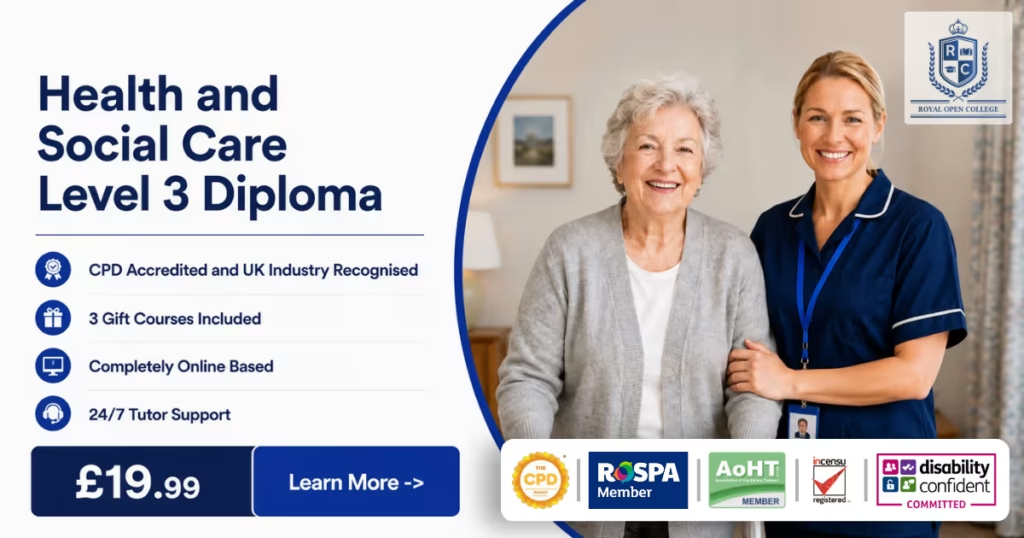
Royal Open College’s CPD-accredited Health and Social Care Level 3 Diploma supports people who want to develop their knowledge for current or future work in the UK care sector.
The online, self-paced course covers safeguarding, person-centred care, communication, infection control, mental health, care planning and medication management. Additional courses address Care Certificate standards, observational skills, record-keeping, equality, diversity and inclusion.
This is a CPD learning programme, not a regulated RQF qualification or an equivalent to a regulated diploma. It can support professional development, but it does not automatically meet the requirements of every employer, job or progression route.
Before enrolling, check whether the course meets your employer’s or prospective employer’s requirements. Learners planning further study should also confirm the relevant entry requirements. Its suitability depends on your goals and whether you need CPD learning or a regulated qualification. Reviewing the assessment, certificate and included materials can also support an informed choice.