

Safeguarding Courses with Child Protection & Adult Modules

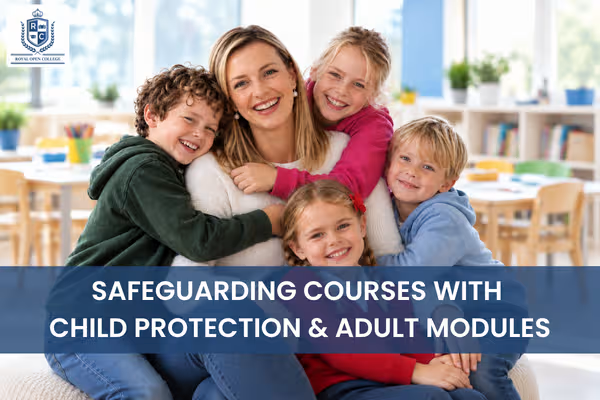
Safeguarding Courses with Child Protection & Adult Modules

Some safeguarding courses cover both child protection and adult safeguarding in one programme, helping staff who work across both areas avoid unnecessary duplication. However, the right level still depends on your role, responsibilities, and employer requirements. It is always worth checking what training is expected for your specific role and setting before you enrol.

Several UK safeguarding courses combine child protection and adult safeguarding into one programme, allowing learners to cover both areas together. Royal Open College’s Level 3 Safeguarding Children and Vulnerable Adults course takes this approach, helping learners develop awareness of safeguarding responsibilities relating to both groups.

The right course and level still depend on your role, responsibilities, and the setting you work in. A combined course can suit people whose work involves contact with both children and adults at risk, but always check your employer’s requirements and local safeguarding procedures before you enrol.

Quick recap

  • Combined safeguarding courses cover child protection and adult safeguarding together, making them useful for roles that involve supporting both groups.
  • The right safeguarding training level depends on job responsibilities, contact with children or adults at risk, and employer expectations.
  • Completing a course builds safeguarding knowledge but does not by itself demonstrate workplace competence or guarantee compliance.

What does a combined safeguarding course usually include?

A combined safeguarding course usually includes modules on recognising abuse and neglect in children and adults at risk, relevant legislation, and how to respond to concerns.

Typical topics include categories of abuse, indicators of neglect, safe reporting procedures, and the difference between a safeguarding concern and a safeguarding referral. Courses often reference the Children Act 1989 and the Care Act 2014, since these set out different safeguarding duties relating to children and adults in England.

Because the course covers two groups, it may not explore every specialist topic in the same depth as a course focused on just one area. Learners who need in-depth knowledge of one group, such as those working solely in adult social care, may still benefit from additional role-specific training afterwards.

Some specialist safeguarding topics may require additional learning depending on the sector, role, and employer expectations. Check your policy for any extra modules.

Who benefits from training that covers both children and adults?

Combined safeguarding training benefits people whose roles bring them into contact with both children and adults at risk, rather than focusing on only one group.

👥 This may include

🏥 GP practices 🤝 Community and family support services 🙋 Some voluntary sector roles 🔄 Workers moving between children's and adults' services
📋

It can provide a broad safeguarding foundation before someone specialises further in one area.

🧑‍⚕️

Adults only - more relevant

Adult safeguarding focus

Care workers, nurses, and healthcare staff who work exclusively with adults may find a course focused solely on adult safeguarding more directly relevant to their day-to-day responsibilities.

⚖️

Always check your role

Right choice depends on your role

The right choice depends on who you support and what your employer expects for your specific role.

For some staff, Level 3 safeguarding training that covers both areas may be suitable when their responsibilities involve supporting children and adults at risk. The appropriate level still depends on employer expectations and role requirements.

Is combined safeguarding training a legal requirement?

No single law names a combined child and adult safeguarding course as a legal requirement, though employers in regulated care settings must ensure staff receive training appropriate to their role.

In England, safeguarding duties come from legislation such as the Care Act 2014 and the Children Act 1989, and CQC-regulated providers are expected to show staff have suitable knowledge and training for their roles. Neither law specifies a named commercial course or training level.

Scotland, Wales, and Northern Ireland have their own safeguarding legislation and guidance, so requirements can differ from England. Employers typically decide the appropriate course and level based on risk, job role, and local safeguarding procedures, rather than following one fixed national standard.

CQC inspections may consider whether providers have systems in place to ensure staff are appropriately trained and supported for their safeguarding responsibilities, but this does not mean one course title is written into law.

How do employers decide the right level of safeguarding training?

Employers usually decide the right level of safeguarding training by looking at the risks linked to a role, rather than applying one fixed rule to everyone. The responsibilities involved and the level of contact someone has with children or adults at risk both influence the training they may need.

Because roles carry different levels of responsibility, the training required can vary even within the same organisation. A senior care worker or team leader may need broader training than someone in a purely administrative role, while managers and safeguarding leads often go further still, completing additional training that reflects their responsibility for responding to and managing concerns.

Role responsibilities are not the only factor, however. Local safeguarding procedures, sector guidance from organisations such as Skills for Care, and an organisation’s own policies all play a part in shaping these decisions and helping employers identify the right level of knowledge and skills for each role.

🛡️

Safeguarding Training Levels: Quick Scan

Key factors employers consider when choosing training levels.

🎯

Role Risks

Training matches duties and contact levels.

👥

Role Differences

Different roles need different training.

Higher Duties

Leads and managers need deeper learning.

📋

Guidance

Policies and frameworks guide decisions.

Do safeguarding leads need additional safeguarding training?

Safeguarding leads usually need more detailed training because they have additional responsibilities for managing concerns, supporting referrals, and advising colleagues. A general safeguarding awareness course can build useful knowledge, but it may not cover the full range of responsibilities expected of someone in a designated lead role.

What are common mistakes people make about safeguarding training?

Confusing different types of safeguarding training can lead to gaps in knowledge or false confidence about meeting requirements. Understanding these differences helps staff and managers choose the right course for their role and understand what the training does and does not provide.

⚠️

Common mistakes include:

Assuming everyone needs the same course level, regardless of their role or responsibility.

Treating a CPD certificate as proof of workplace competence rather than a record of learning completed.

Believing one combined safeguarding course automatically satisfies CQC or employer requirements.

Confusing CPD training with a regulated qualification.

Overlooking role-specific safeguarding responsibilities, such as those held by a designated safeguarding lead.

Studying through Royal Open College (CPD learning)

Royal Open College offers the Level 3 Safeguarding Children and Vulnerable Adults course as part of its CPD learning options. It covers areas such as recognising abuse, responding to concerns, safeguarding legislation, and reporting processes relating to children and adults at risk.

This CPD learning supports professional development but does not represent a regulated qualification. It does not replace employer-specific training or workplace competency checks, so learners should confirm what their employer requires for their particular role and setting before enrolling.

Recent Blogs

Safeguarding Course Duration by UK Training Level

Safeguarding Course Duration by UK Training Level

Safeguarding courses range from short awareness sessions to more detailed training for people with greater responsibilities. Course depth often reflects the role, setting and level of safeguarding knowledge required. This guide explains what shapes course length and helps you choose suitable safeguarding training for your work in the UK.

Safeguarding Training Courses and UK Standards

Safeguarding Training Courses and UK Standards

Safeguarding compliance in the UK depends on choosing training that aligns with statutory guidance, sector competency frameworks and the responsibilities of the role. Employers select suitable courses by weighing staff duties, workplace risks and safeguarding expectations, since the appropriate level and content can vary from one role to the next.

Best_Online_Safeguarding_Courses_for_UK_Schools

Best Online Safeguarding Courses for Schools in the UK

Choosing online safeguarding training for a school involves more than picking the shortest or most advanced course available. The right option depends on the learner’s responsibilities, the UK nation and the support available within their workplace. This guide shows how to compare course content, CPD status, provider features and employer expectations before making your choice.