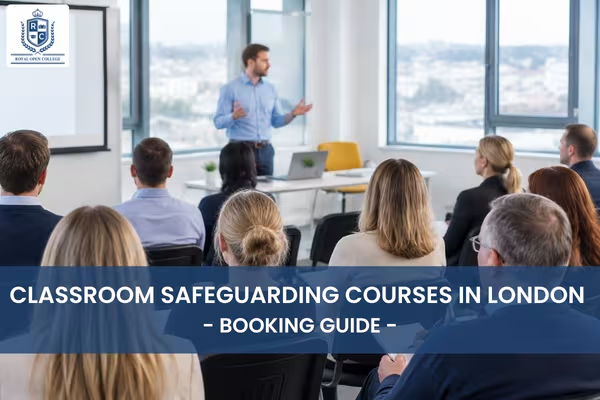

Classroom Safeguarding Courses in London: Booking Guide

Classroom Safeguarding Courses in London: Booking Guide

Find classroom-based safeguarding courses in London from borough safeguarding partnerships, national charities like the NSPCC, and private training providers. Availability depends on your employer, role and organisation type, and the right training level also depends on your specific responsibilities at work. Check which options and levels apply to your role before booking.

You can book classroom-based safeguarding courses in London from borough safeguarding partnerships, national charities such as the NSPCC, and private training providers who run in-person sessions across the city. Some local safeguarding workshops may be free for eligible staff, while private providers usually charge a fee for bookings.

Each of these options suits a different type of learner, depending on your role, employer and level of responsibility. If attending in person isn’t practical, Royal Open College offers online CPD safeguarding courses as a flexible alternative.

Quick recap

  • Classroom-based safeguarding training in London is available from several providers, including local safeguarding partnerships, national charities and private organisations.
  • Training needs vary by role. The right course depends on your responsibilities, level of contact and involvement in safeguarding decisions.
  • A safeguarding course builds knowledge, but competence also develops through workplace experience, supervision and employer support. 

Who Runs Classroom-Based Safeguarding Courses in London?

Three types of providers run classroom-based safeguarding courses in London: local safeguarding partnerships, national charities and private training companies. Each works differently, so knowing which option applies to you can save time when booking.

Local Safeguarding Children Partnerships, or LSCPs, coordinate local safeguarding arrangements and may provide training opportunities linked to their borough. Lambeth, Hammersmith and Fulham, Kensington and Chelsea, and Westminster each have local safeguarding arrangements, with access often depending on your employer or organisation type.

National charities step in too. The NSPCC, for example, runs face-to-face courses that may be open to individuals and organisations across London. Private training providers offer classroom sessions for small teams and may arrange on-site training for larger groups, usually for a fee.

Because each provider sets its own booking rules, it helps to check them before you commit. Your choice usually depends on eligibility, budget and the type of training your role requires.

What Does Classroom Safeguarding Training Usually Cover?

Classroom safeguarding training usually covers how to recognise signs of abuse, neglect or exploitation, along with how to respond and report concerns correctly. Courses often include case examples and interaction, which are key benefits of classroom learning.

Classroom sessions tend to focus on broader safeguarding principles, leaving the fine detail of each employer’s internal policy to workplace-specific induction. Employers may expect staff to combine external training with this induction and their own procedures.

A certificate shows that a course was completed, and it works alongside an employer’s own competency assessments, supervision arrangements and workplace safeguarding processes, which remain separate requirements.

🛡️

Safeguarding Training & Workplace Practice

🏫

Classroom Training

Safeguarding knowledge gained

• Abuse & neglect signs
• Reporting concerns
• Case examples

🏅

Certificate

Shows course completion

Works alongside workplace checks

📋

Employer Processes

Internal induction • Policies • Procedures • Competency assessments • Supervision

Safe practice combines training knowledge with workplace requirements.

What Level of Safeguarding Training Do You Need?

The right level of safeguarding training depends on your job role, your contact with children or adults at risk, and how much responsibility you hold for safeguarding decisions. The suitable level varies from person to person, based on these factors.

Frontline staff often receive safeguarding awareness training that matches their responsibilities, while staff with additional safeguarding duties may require more advanced learning, sometimes described as Level 3. A care worker with everyday contact and a manager who leads safeguarding responses will usually have different training needs.

A designated safeguarding lead role generally requires more detailed training because the person coordinates concerns, supports colleagues and works with external agencies. In England’s education sector, statutory guidance expects designated safeguarding leads to receive appropriate training for their responsibilities and update their knowledge regularly.

How Do Employers Decide Which Course Fits a Role?

Employers usually choose safeguarding training by considering the responsibilities and risks linked to each role, rather than applying the same course to everyone. This approach helps match the learning to what staff are expected to do in practice.

Care workers and support staff may receive role-specific training based on their contact with people at risk and their responsibilities. Managers and staff with safeguarding lead responsibilities may require more advanced training, since these roles often involve guiding colleagues, managing concerns and liaising with external safeguarding partners.

Healthcare employers, particularly in England, may also use sector-specific guidance, including intercollegiate safeguarding competency frameworks, to help identify appropriate learning for different staff groups. These frameworks provide professional guidance rather than a universal legal requirement for a particular commercial course level.

Is Classroom-Based Safeguarding Training a Legal Requirement

Is Classroom-Based Safeguarding Training a Legal Requirement?

Classroom-based safeguarding training is not a specific legal requirement in London. Safeguarding law and statutory guidance instead require organisations to have suitable arrangements in place, rather than naming a particular commercial course as mandatory for every worker.

In England, the Care Act 2014 supports adult safeguarding duties, while the Children Act 2004 provides the framework for local arrangements to protect children. Related statutory guidance supports organisations in ensuring people have suitable knowledge and skills for their safeguarding responsibilities.

The Care Quality Commission may assess whether providers have suitably trained staff and effective safeguarding arrangements. This reflects a regulatory expectation rather than a rule naming one specific course.

These examples mainly reflect the law and guidance that apply in England. Scotland, Wales and Northern Ireland have their own safeguarding legislation and local arrangements, which can differ in structure and terminology, so check the guidance that applies in your nation before booking.

What Should You Check Before Booking?

Before booking a classroom safeguarding course in London, check a few practical points so the course matches your responsibilities:

🎯

The right choice reflects what your role actually involves, rather than only the course level or delivery format.

What Are the Common Mistakes to Avoid?

Booking the wrong type or level of safeguarding training can leave a mismatch between what staff know and what their role actually requires.

⚠️

Avoid these common mistakes:

🛡️

Assuming every worker needs the same level of safeguarding training.

📜

Treating a CPD safeguarding course as a regulated qualification.

🏅

Believing a certificate alone proves someone is competent in practice.

⚖️

Confusing an employer's internal training policy with a legal requirement.

🔎

Choosing a course based only on its title or level, rather than checking what the learning content actually covers.

Studying through Royal Open College (CPD learning)

For learners who want to build safeguarding knowledge alongside other workplace learning, or who find in-person attendance impractical, Royal Open College offers online CPD safeguarding courses designed to build practical knowledge and support continuing professional development.

This is CPD learning rather than a regulated qualification, supporting ongoing safeguarding knowledge while employer requirements and regulatory expectations depend on the learner’s role, workplace and responsibilities. Induction, supervision and role-specific requirements remain part of the employer’s workplace processes alongside this learning.

These requirements vary by role, so learners should check their employer’s expectations or local safeguarding arrangements to confirm which training level suits their role.

Recent Blogs

Adult Safeguarding Training UK Levels and Requirements

Adult Safeguarding Training: UK Levels, Requirements and Course Choice

Safeguarding concerns can come up at any time, so knowing what to say or do matters from the start. That’s where the right training comes in, though courses can differ so much in level, certification and requirements. This guide covers the training, how it differs across the UK, where online CPD hits its limits, and which course fits your role.

Top-Rated Safeguarding Courses for UK Healthcare Workers

Top-Rated Safeguarding Courses for UK Healthcare Workers

UK safeguarding frameworks describe the knowledge and skills expected across different healthcare roles. They cover several levels, from basic awareness for general staff to specialist leadership for named professionals and safeguarding leads. Employers use these frameworks alongside their own policies and role requirements to decide the appropriate training level for each member of staff.

Safeguarding_and_Child_Protection_UK_Guide

Safeguarding and Child Protection: UK Guide

Safeguarding is one of the most important responsibilities you can hold, whether you work with children, young people or vulnerable adults. This guide walks you through how safeguarding differs from child protection, which UK guidance applies to your setting and the role of a Designated Safeguarding Lead. You will also learn how to report concerns and choose the right CPD learning without confusing it with a regulated qualification.