Affordable safeguarding training for volunteers can include free public learning, local safeguarding programmes, organisation-led sessions and paid online courses. The right option depends on the volunteer’s duties, who they support and the level of safeguarding responsibility involved.
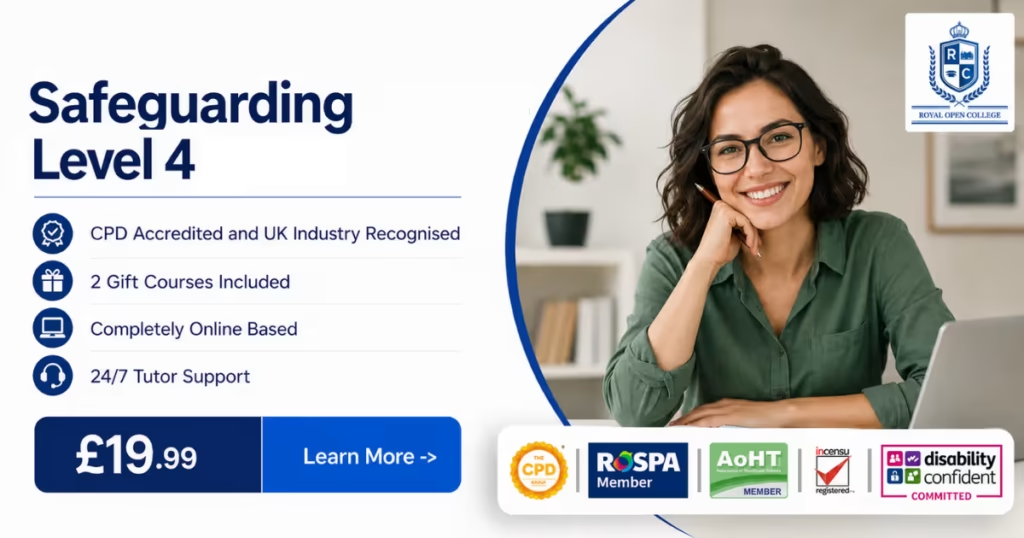
Volunteers who want to develop broader safeguarding knowledge may consider Royal Open College’s Level 3 Safeguarding Children and Vulnerable Adults course as a CPD learning option. Those with greater safeguarding, supervisory or leadership duties may need more advanced learning, such as Safeguarding Level 4, depending on their role. Before choosing either course, learners should check the training requirements set by their organisation.
Quick recap
- Safeguarding learning should match the volunteer’s duties, contact with children or adults at risk and the risks linked to the work.
- Introductory training may suit some roles, while safeguarding leads and people making safeguarding decisions may need more detailed learning.
- Completing a course shows that learning has taken place, but it does not by itself prove workplace competence or meet every organisation’s requirements.
Affordable safeguarding training for volunteers is free or low-cost training that still covers the safeguarding knowledge required for the volunteer’s specific role.
For some volunteers, a free introductory course may be suitable. Others may need more detailed paid training if they work closely with children or adults at risk, receive disclosures, supervise others or hold safeguarding responsibilities.
NCVO guidance recommends matching training to the organisation’s activities, the person’s role and the level of risk involved. The training should also reflect any legal, regulatory or organisational requirements that apply.
Because training needs to match the role, the cheapest option is not always the most suitable. Good value comes from choosing learning that covers the volunteer’s actual responsibilities without adding unnecessary content.
Is safeguarding training legally required for volunteers?
There is no single UK-wide law that makes every volunteer complete the same safeguarding course. Training can still be required by legislation, a regulator or the organisation’s own policies.
What applies depends on where they volunteer, who they support and what duties they carry out. Some settings have legal duties or statutory guidance to follow, while others set training rules based on the risks involved.
For charities in England and Wales, the Charity Commission’s guidance says that charities working with children or adults at risk should ensure staff and volunteers receive regular training. Volunteers should also know how to recognise, respond to, report and record concerns.
Before starting, volunteers should find out what training applies to their role and who to contact if they become worried about someone’s safety.
What applies to adult safeguarding in England?
In England, adult safeguarding duties for volunteers are guided by the Care Act 2014 and the Care and Support Statutory Guidance.
People who work or volunteer with adults at risk should understand their safeguarding responsibilities and know where to get advice or report concerns. Employers should also ensure volunteers receive training that matches the duties they perform.
The guidance recognises different levels of learning. Basic awareness may suit some roles, while people with greater safeguarding responsibilities may need more detailed or specialist training.
What if the volunteer works in a CQC-regulated service?
Volunteers in a CQC-regulated service need safeguarding training that is suitable for the work they do.
CQC guidance says training should help people recognise abuse and understand how to report concerns. The depth of learning should reflect the responsibilities attached to the role.
Under Regulation 19, CQC includes volunteers within its broad definition of a “person employed”. Providers must therefore consider whether volunteers have the skills, competence and experience needed for their duties.
Training can support this, but providers still need to make sure volunteers can carry out their work safely and appropriately.
Do the same rules apply across the UK?
No, safeguarding rules and procedures are not identical across England, Wales, Scotland and Northern Ireland.
The Charity Commission regulates charities in England and Wales. Scottish charities follow guidance from OSCR, while Northern Ireland has its own Charity Commission and safeguarding arrangements.
Volunteers should follow the guidance that applies where they work and understand their organisation’s own reporting procedures.

Safeguarding Training Requirements for Volunteers
Training depends on the role
There is no single safeguarding course for every volunteer. Requirements vary by duties, setting and risk.
Learning should match responsibilities
Volunteers need training that reflects who they support and what they do.
Follow local safeguarding processes
Volunteers should know how to report concerns, record information and escalate issues.
Guidance varies across nations
England, Wales, Scotland and Northern Ireland have different safeguarding arrangements.
What level of safeguarding training do volunteers need?
The level of safeguarding training a volunteer needs depends on their role, responsibilities and the risks involved.
Providers may use labels such as Level 1, Level 2 or Level 3 to describe the depth of their courses. These labels do not create one fixed training route for every volunteer.
NCVO guidance recommends choosing training that matches the organisation’s activities, the person’s role and the level of risk. It also points to more specific learning for designated safeguarding leads, trustees and people dealing with particular safeguarding concerns.
For this reason, volunteers and organisations should compare the course content with the duties involved rather than choosing by the level in the title alone.
General volunteers
General volunteers may need enough safeguarding knowledge to recognise a concern, respond appropriately and report it to the right person.
Useful learning can include signs of abuse and neglect, responding to disclosures, confidentiality, professional boundaries and the organisation’s reporting process.
For example, if a lunch-club volunteer hears a disclosure of financial abuse, they should listen, record the concern accurately and follow the organisation’s reporting procedure.
Volunteers with safeguarding responsibility
Volunteers with supervisory, management or safeguarding duties may need more detailed training because they carry greater responsibility.
Their learning may cover risk assessment, allegations, referrals, information sharing, record keeping, escalation and multi-agency working. A designated safeguarding lead may also need specific training for the responsibilities attached to that role.
The training should prepare the volunteer for the decisions and actions they are expected to handle. Organisation-specific induction, supervision and access to safeguarding advice may also be needed.
What should safeguarding training normally cover?
Safeguarding training should cover how to recognise abuse or neglect, respond to concerns and report them through the correct route.
It may also include responding to disclosures, recording information, confidentiality, professional boundaries, online risks and safer working. The exact content should reflect the volunteer’s role and the setting where they work.
For child safeguarding in England, Working Together to Safeguard Children 2026 is the current statutory guidance on multi-agency working to help, support and protect children.
A general volunteer may only need awareness and reporting knowledge. Someone with safeguarding lead responsibilities may need more detailed learning about referrals, information sharing or case management.
What does training not provide?
Completing safeguarding training does not by itself prove that someone is competent to carry out every safeguarding duty.
Competence also involves applying knowledge correctly, following local procedures and understanding the limits of the role. In CQC-regulated services, providers must consider whether people have the competence, skills and experience needed for their work.
Training is also separate from safer recruitment. Depending on the role, organisations may need references, suitability checks or an appropriate DBS check. Not every volunteer role is eligible for the same level of DBS check.
A course certificate records completed learning. It is not a professional licence, a regulated qualification or proof that every workplace requirement has been met.
Which affordable safeguarding training options are available?
Volunteers can access affordable safeguarding training through free government e-learning, local safeguarding programmes, organisation-led sessions and low-cost online courses.
For volunteers in out-of-school settings in England, the Department for Education provides free safeguarding e-learning. It is designed for providers, staff and volunteers, and learners receive a digital certificate after successfully completing the test.
Free local training may also be available. Lambeth offers safeguarding training to partner agencies and non-profit organisations. Southwark also provides free multi-agency safeguarding training for eligible local volunteers and organisations.
Local eligibility varies, so volunteers should check what is available in their area.
Paid online options
Paid online courses can provide structured learning when suitable training is not available through the volunteer’s organisation.
Artswork offers Safeguarding for Volunteers for people in settings such as galleries, museums and theatres. The course covers recognising concerns, responding to disclosures, professional boundaries and reporting concerns without expecting volunteers to investigate them.
NSPCC Learning also offers an online package for the UK voluntary, community and charity sectors. It covers introductory safeguarding, online safety, safer recruitment, and safeguarding young people and young adults.
Before enrolling, volunteers should compare the course content with their duties and their organisation’s expectations.
Organisation-led training
Organisation-led training can be useful because it focuses on the safeguarding procedures volunteers will follow in their own setting.
For example, internal training can explain who receives concerns, how incidents should be recorded, when a matter should be escalated and where volunteers can get support.
Some organisations may combine this induction with external safeguarding training when a role needs wider or more specialist knowledge.
This can help volunteers connect general safeguarding principles with the procedures they are expected to follow in practice.
How should an organisation choose suitable training?
An organisation should choose safeguarding training by looking at the volunteer’s role, the risks involved and the responsibilities they may need to take on.
Start by considering who the volunteer works with, how often contact takes place, whether they work alone, whether they supervise others and whether they may receive or manage safeguarding concerns. Then compare these duties with the course content.
For example, A museum volunteer at occasional family activities may need basic awareness, while a regular youth activity leader may need deeper child safeguarding knowledge and a clearer understanding of professional boundaries.
A designated safeguarding lead may need focused learning on referrals, allegations, record-keeping and multi-agency working. NCVO also identifies designated safeguarding lead training as a separate role-based option.
Because roles and safeguarding risks can change over time, training should be reviewed when responsibilities change, procedures are updated, or new risks arise.
What are the common mistakes around safeguarding training for volunteers?
Common mistakes include choosing training that does not match the volunteer’s role and assuming a certificate proves they are competent to handle safeguarding concerns. Training works best alongside clear procedures, suitable supervision and support.
Common mistakes to avoid
Important considerations when planning volunteer safeguarding training
Giving every volunteer the same training, even when their duties, level of contact and safeguarding risks differ.
Treating CPD as a regulated qualification. CPD supports learning and professional development, but regulated qualifications have a separate formal status.
Assuming a certificate proves competence. Volunteers may still need induction, supervision and opportunities to show they can apply what they have learned.
Leaving out organisation-specific procedures, such as who receives concerns and how information should be recorded or escalated.
Using training as a substitute for safer recruitment. Depending on the role, charities may also need references, DBS checks or other suitability checks.
Overlooking local arrangements, especially where reporting procedures or safeguarding systems differ by nation, local authority or service.
Studying through Royal Open College (CPD learning)
Safeguarding responsibilities vary from one role to another, which is why Royal Open College offers a wider range of safeguarding CPD courses for different learning needs.
For learners developing broader safeguarding knowledge, the Level 3 Safeguarding Children and Vulnerable Adults course covers areas such as recognising concerns, responding to abuse, referrals and record-keeping.
Where a role involves greater responsibility for managing safeguarding concerns, Safeguarding Level 4 explores more advanced areas such as risk assessment, multi-agency referrals, information sharing and safeguarding leadership.
Both are CPD learning options rather than regulated safeguarding qualifications. Learners should check which course best matches their duties and whether their organisation expects any additional induction, supervision or competency assessment.