A strong course should go beyond basic signs of abuse. It should help you understand how safeguarding concerns move from recognition to action.
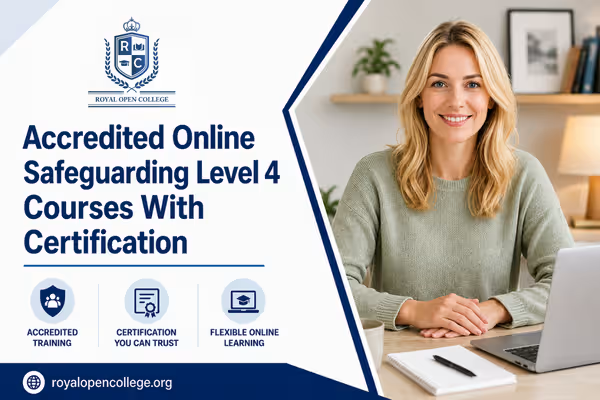
Accredited online Safeguarding Level 4 courses with certification are usually designed for people who already have safeguarding responsibilities, or those preparing to step into a more senior safeguarding role. This type of training is often chosen by DSLs, deputy DSLs, care managers, senior practitioners, healthcare staff, education staff and safeguarding leads who need a stronger understanding of risk, reporting, escalation and multi-agency working.
For learners who want flexible CPD learning, Royal Open College’s Safeguarding Level 4 course can support knowledge and awareness around advanced safeguarding practice for both children and adults. It is important to treat this as CPD training, not a regulated qualification or a guarantee of employer acceptance, as training requirements can depend on your role, workplace, sector and local safeguarding procedures.
Quick recap
- Level 4 safeguarding is usually linked to senior, lead or decision-making responsibilities.
- Online CPD courses can help you build knowledge and provide certificate evidence.
- The right course depends on your role, setting, employer policy and local safeguarding procedures.

What does an accredited online Safeguarding Level 4 course mean?
This is where many learners feel unsure, and that is completely understandable. The word “accredited” can mean different things on different course pages.
Some courses are CPD-accredited, which means they support continuing professional development. Some are regulated qualifications, which means they are awarded through a formal regulated qualification framework. These are not the same thing.
A CPD certificate can be useful for your learning record, CV, appraisal or professional development file. But it should not be treated as a licence to practise or a guarantee that every employer will accept it.
Who usually needs Safeguarding Level 4 training?
Level 1
Level 4
Safeguarding Level 4 is normally aimed at people with more responsibility than basic awareness or frontline reporting. It may suit:
🪪
Designated Safeguarding Leads
🪪
Deputy DSLs
🪪
Safeguarding Leads
🪪
Care Managers
🪪
Registered Managers
🪪
Senior Practitioners
🪪
Education Staff
🪪
Healthcare Staff
🪪
Social Care Staff
🪪
People Involved in Complex Safeguarding Decisions
Not Everyone Needs Level 4
Many workers only need Level 1, Level 2 or Level 3 depending on their job.
Level 4 May Be More Relevant If Your Role Involves:
- Leading concerns
- Advising others
- Managing referrals
- Checking safeguarding practice
What does the certificate actually show?
A certificate usually shows that you completed the course and passed the provider’s assessment. For online courses, this may be a multiple-choice test, knowledge check or similar assessment.
It can show that you have taken time to study safeguarding at a higher level. That can be helpful when applying for jobs, updating CPD records or showing commitment to safer practice.
However, a certificate does not automatically make you a DSL, safeguarding lead or named professional. Those roles depend on your employer, experience, job description and local safeguarding arrangements.
What should a good Level 4 safeguarding course cover?
Useful topics include:
- Child protection
- Adults at risk
- Abuse and neglect
- Domestic abuse
- Disclosure
- Record keeping
- Reporting concerns
- Referrals
- Risk assessment
- Information sharing
- Multi-agency working
- Escalation
- Mental Capacity Act
- DoLS
- Professional boundaries
- Safeguarding culture
For health and social care roles, it should also connect learning to person-centred care, dignity, duty of care, confidentiality and safe decision-making.
Can online-only Safeguarding Level 4 training be enough?
Sometimes, yes. Online CPD training is helpful when you need flexible study, refresher learning or extra confidence before taking on more responsibility.
But some roles may need more than online learning. Senior healthcare, school, local authority or named professional roles may expect live discussion, supervision, local training, case-based learning or employer-approved training.
The safest answer is to check your job advert, manager, HR team or safeguarding policy before enrolling.
What should you check before choosing a course?
Check what kind of accreditation the course has. Look at the curriculum, certificate rules, assessment method, course access, learner support and whether the course covers children, adults or both.
Also check the language used by the provider. A trustworthy course page should explain the limits clearly. Be careful if a provider makes it sound like one online certificate guarantees compliance, employment or automatic approval by every organisation.
Common misunderstandings
“Accredited” does not always mean regulated.
“Level 4” does not mean every course is equal.
A CPD certificate does not replace employer training, local safeguarding procedures or workplace competency checks.
The best course is the one that matches your actual responsibility.
For some learners, that may be online CPD training. For others, it may need to be a regulated qualification, employer-led programme or live safeguarding course. Always match the training to your role, sector and safeguarding duties.