You’ve just started a new care job. You’ve completed your induction, been shown around the workplace, and now you’re handed a Care Certificate workbook. The questions look simple at first but when you sit down to write your answers, you’re not sure what assessors actually want to see.
That’s why so many care workers search for Care Certificate answers or workbook answers. Not to cheat, but to understand how to explain what they do at work in the right way.
In this guide, we cover it all. How to write assessor-ready Care Certificate answers that reflect real practice, meet current UK standards, and match the updated 16-standard Care Certificate framework. It does not provide copy-and-paste responses. Instead, it shows how to structure your answers, use workplace examples, and provide evidence that demonstrates safe, person-centred care in your role.
TL; DR. Key Takeaways
- The Care Certificate has 16 standards as of March 2025. Older 1–15 guides no longer reflect current requirements.
- Care Certificate answers must match your job role, setting, and workplace policies. One answer never fits everyone.
- Assessors look for evidence of practice, not perfect wording. Real examples matter more than theory.
- Workbooks test competence and safe working, not memory or academic writing.
- Standard 16 focuses on learning disability and autism, including communication needs and reasonable adjustments.
- Copying answers from the internet often leads to rejection during assessment.
- This guide shows how to structure answers and use evidence. It does not provide text to copy.
Care Certificate Course – Standards (1 to 16)
What Is the Care Certificate in Health and Social Care?
The Care Certificate is a set of national standards used across the UK to support the induction and assessment of people who are new to health and social care roles. It helps ensure workers understand how to deliver safe, compassionate, and person-centred care in real workplace settings.
The Care Certificate applies to people working in roles such as care assistants, support workers, healthcare assistants, and adult social care workers. Employers usually start the Care Certificate once a worker has begun their role, often during the first weeks of employment. This means people do not need to complete the Care Certificate before getting a care job. Instead, it forms part of supervised induction while they are already working.
The standards focus on practical care skills, values, and behaviours. They cover areas such as communication, dignity, safeguarding, health and safety, infection prevention, and equality. Each standard links learning directly to day to day care tasks rather than classroom theory.
The Care Certificate is not an accredited qualification. It does not sit on a qualification framework and it does not replace diplomas such as Level 2 or Level 3 in Care. It is a standards framework used by employers to confirm competence and safe practice.
Skills for Care oversees the Care Certificate framework in England and provides official guidance on standards, assessment, and updates. Employers are responsible for delivering the Care Certificate, assessing evidence, and confirming completion.
The aim is simple. The Care Certificate helps new care workers start safely, understand expectations, and develop confidence in providing quality care from the beginning.
How Many Care Certificate Standards Are There Now?
As of March 2025, the Care Certificate consists of 16 standards, not 15. A new standard on learning disability and autism awareness was added to reflect modern care priorities and changes in the sector.
If you still see “Care Certificate answers 1–15” online, treat it as out of date. The official Skills for Care page is clear that the standards were updated in March 2025, and it also warns that older Care Certificate resources were not refreshed to match the update. That’s one reason learners get confused when their workbook or assessor mentions Standard 16 but a blog list stops at 15.
What changed (and why it matters for your answers)
- A new Standard 16 was added to capture awareness of learning disability and autism.
- The update also aligns with wider sector developments
Quick takeaway for learners
When you write your “answers,” make sure your workbook covers all 16 standards. If you use an older guide, you risk missing a whole standard, using older wording, or leaving gaps that show up in a workplace assessment or professional discussion. Your assessor expects your portfolio of evidence to match the current framework.
Table: Care Certificate Standards Overview
Standard Number | Official Standard Title | Focus Area |
1 | Understand your role | Duties, boundaries, agreed ways of working |
2 | Your personal development | Learning, feedback, supervision, PDP |
3 | Duty of care | Safe practice, dilemmas, reporting concerns |
4 | Equality, diversity, inclusion and human rights | Fair treatment, protected characteristics, rights |
5 | Work in a person-centred way | Choice, independence, individual needs |
6 | Communication | Verbal, non-verbal, aids, confidentiality |
7 | Privacy and dignity | Respect, consent, confidentiality |
8 | Fluids and nutrition | Hydration, diet, food safety |
9 | Awareness of mental health, dementia and learning disabilities | Understanding conditions, inclusive support |
10 | Safeguarding adults | Abuse, neglect, Care Act duties |
11 | Safeguarding children | Child protection, reporting concerns |
12 | Basic life support | CPR, emergencies, AED awareness |
13 | Health and safety | Risk, PPE, moving and handling |
14 | Handling information | Data protection, records, GDPR |
15 | Infection prevention and control | Hygiene, PPE, reducing infection |
16 | Awareness of learning disability and autism | Communication differences, reasonable adjustments |

How Are Care Certificate Answers Assessed in Practice?
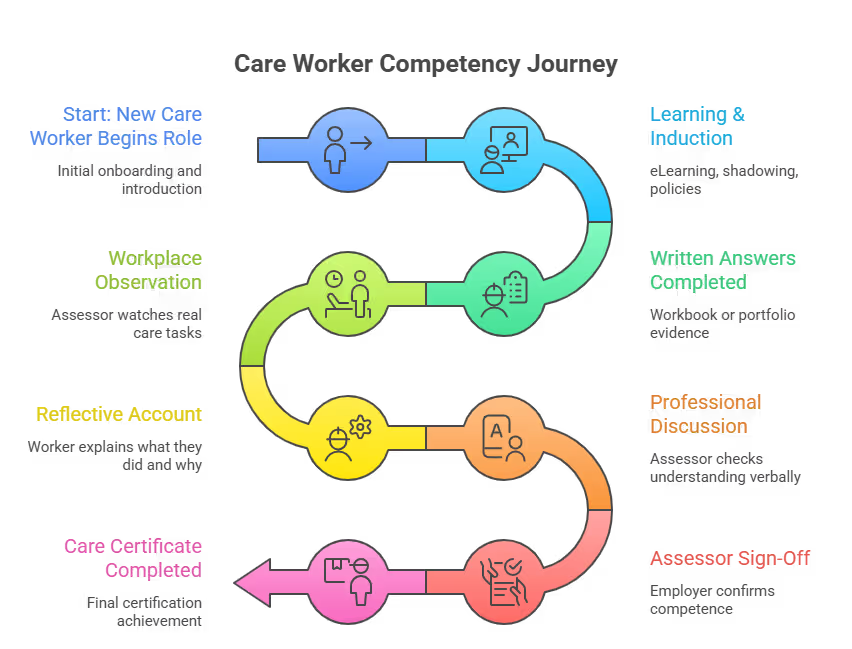
Care Certificate answers are assessed through a combination of written evidence, workplace observation, and professional discussion. Employers hold responsibility for confirming that learning is applied safely, consistently, and appropriately in real care situations, not only understood in theory.
Assessment starts with knowledge evidence. This usually appears as written answers in a workbook or portfolio of evidence. These answers show that you understand each standard and the principles behind safe care. However, written answers alone are never enough to complete the Care Certificate.
Next comes the workplace assessment. An assessor observes you carrying out real care tasks during your normal duties. This might include personal care, communication with individuals, following care plans, or responding to concerns. Observation confirms that your answers reflect what you actually do in practice.
You may also be asked to complete a reflective account. This is a short written explanation where you describe what you did, why you did it, and what you learned. Reflective accounts help assessors see your judgement, awareness, and ability to learn from experience.
A professional discussion often follows. This is a structured conversation where the assessor asks questions to check understanding, decision-making, and safe practice. It supports evidence that may not be fully visible during observation.
Finally, the process ends with the assessor’s sign-off. The employer-appointed assessor confirms that all standards are met and recorded correctly. This sign-off confirms competence, not just completed paperwork.
The Care Certificate is about providing safe practice through evidence, not passing a written test. Below is a clear, real-world assessment flow that reflects how the Care Certificate is actually completed and signed off in UK workplaces.
Why this matters
- Care Certificate assessment is not exam-based
- Written answers alone are never enough
- Competence must be shown through real practice
- Employers are responsible for the final sign-off
How Should You Write Care Certificate Answers That Assessors Accept?
Strong Care Certificate answers show understanding, application, and evidence. Assessors do not judge writing style or academic language. They check whether you understand safe care practice and apply it correctly in your own role, setting, and daily work with real people.
When you write answers, focus on what you do at work and why it matters. Link your response to your job role, your workplace policies, and the people you support. Use clear examples from normal care tasks such as personal care, communication, record keeping, or reporting concerns. This shows competence rather than memory.
Avoid trying to sound technical or copying phrases from online guides. Simple language that reflects real practice works best. If your answer sounds like it could belong to anyone in any setting, assessors usually ask for more detail or reject it.
Care Certificate answers work best when they sound like you, your role, and your workplace.
What Is the Best Structure for Care Certificate Answers?
A clear structure helps assessors quickly see your understanding. The best answers explain the principle, apply it to your role, and show evidence from your workplace.
A simple structure that works well is:
- Explain: Briefly explain what the standard means in practice using your own words.
- Apply: Describe how this standard applies to your role and the care setting where you work.
- Evidence: Give a short, real example from your workplace that shows what you do in practice.
This structure keeps answers focused and easy to assess. It also helps you avoid vague statements. Even short answers become strong when they follow this pattern consistently across all standards.
Why Do Care Certificate Answers Get Rejected?
Answers are commonly rejected when they are too generic, copied from the internet, or not supported by workplace examples.
Common reasons include:
- Copy and paste wording that does not reflect the learner’s role
- No real example from day to day care work
- Sharing identifiable or confidential information
- Using outdated terms or missing Standard 16
- Writing theory without showing practice
- Answers that do not match workplace policies
Assessors need to see safe practice, not perfect sentences. Personalised answers with simple examples almost always pass more easily than long generic responses.
Care Certificate Answers by Standard 1 to 16
This section breaks down Care Certificate answers for all 16 standards, using the official UK order and titles. Each standard follows the same clear structure so you know what assessors expect, how to explain your understanding, and what evidence to use from your own workplace.
These are guidance examples, not answers to copy. Every standard must reflect your role, your setting, and your daily care practice.
Use the table of contents below to jump to the standard you are completing.
Care Certificate Standards Table of Contents
- Care Certificate Standard 1 Answers – Understand Your Role
- Care Certificate Standard 2 Answers – Your Personal Development
- Care Certificate Standard 3 Answers – Duty of Care
- Care Certificate Standard 4 Answers – Equality, Diversity, Inclusion and Human Rights
- Care Certificate Standard 5 Answers – Work in a Person-Centred Way
- Care Certificate Standard 6 Answers – Communication
- Care Certificate Standard 7 Answers – Privacy and Dignity
- Care Certificate Standard 8 Answers – Fluids and Nutrition
- Care Certificate Standard 9 Answers – Awareness of Mental Health, Dementia and Learning Disabilities
- Care Certificate Standard 10 Answers – Safeguarding Adults
- Care Certificate Standard 11 Answers – Safeguarding Children
- Care Certificate Standard 12 Answers – Basic Life Support
- Care Certificate Standard 13 Answers – Health and Safety
- Care Certificate Standard 14 Answers – Handling Information
- Care Certificate Standard 15 Answers – Infection Prevention and Control
- Care Certificate Standard 16 Answers – Awareness of Learning Disability and Autism
Care Certificate Standard 1 Answers: Understand Your Role
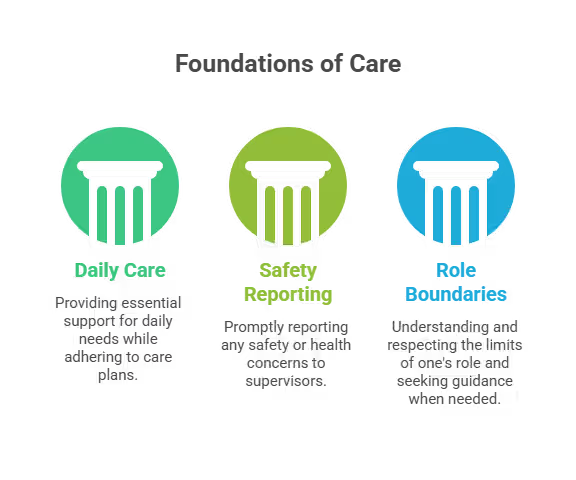
This standard checks that you understand your job role, responsibilities, and limits. It focuses on how you work within agreed ways of working, follow policies, and contribute to safe, consistent care as part of a wider care team.
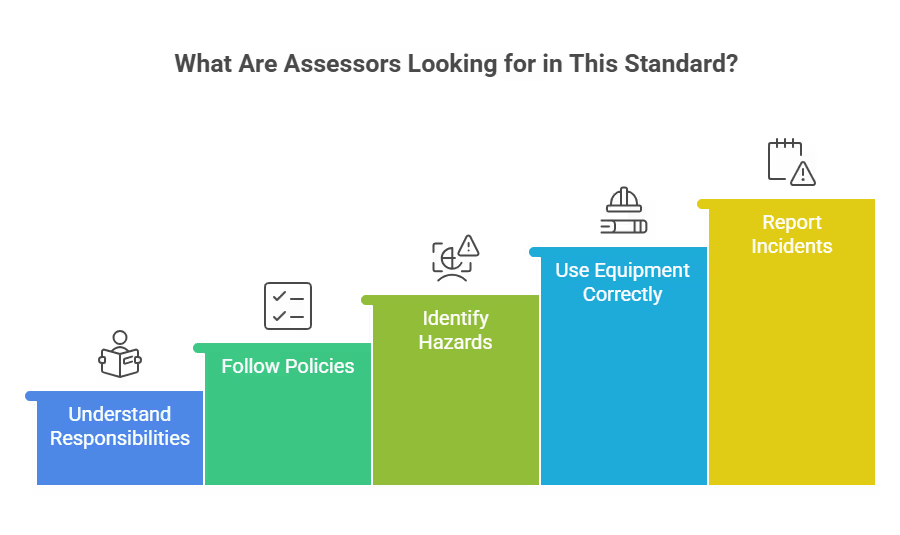
What Are Assessors Looking for in This Standard?
- Clear understanding of your job description
- Awareness of your duties and boundaries
- Knowledge of who you report to and why
- Ability to follow policies and procedures
- Knowing when to ask for help or raise concerns
Assessors want to see safe working and accountability in your role.
Example Answers (Guide Only)
What Workplace Evidence Can You Use?
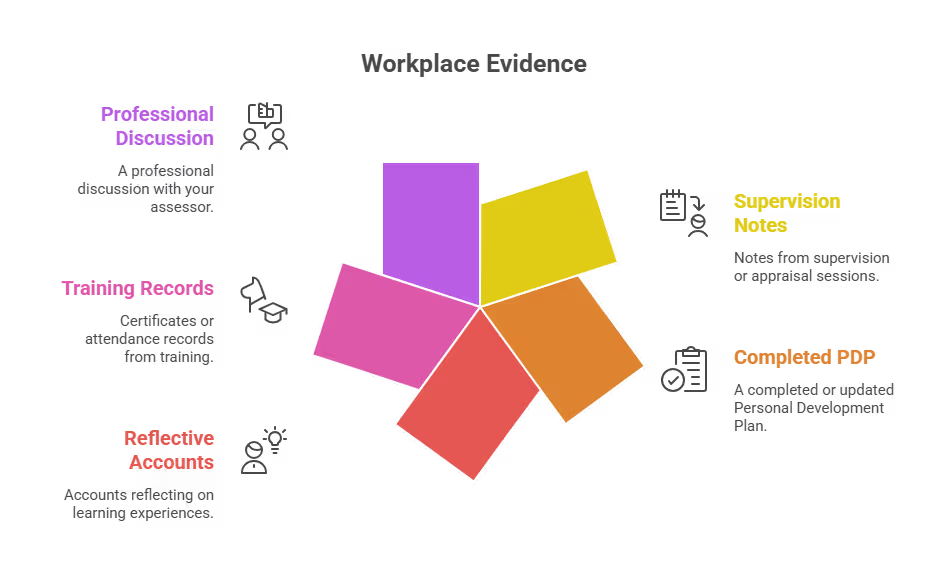
You can support this standard with:
- Observation of you carrying out care tasks safely
- Reflective account about working within your role
- Supervision notes discussing responsibilities
- Job description or induction records
- Professional discussion with your assessor
Evidence must reflect your own practice.
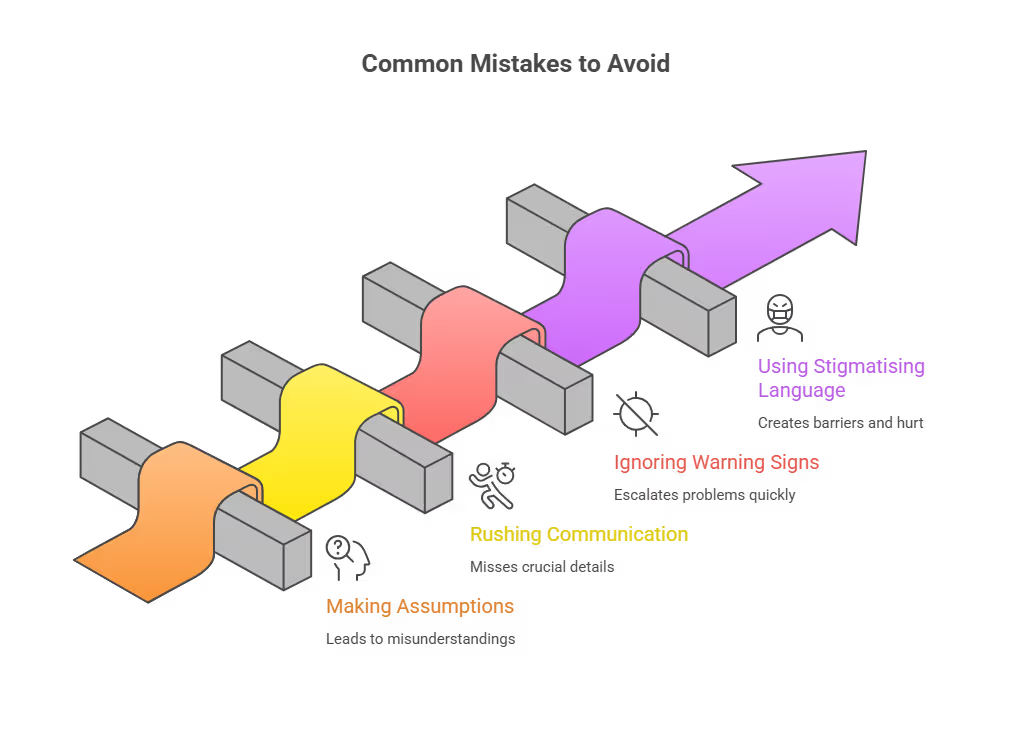
Common Mistakes to Avoid
- Listing duties without explaining how you carry them out
- Describing roles that do not match your job
- Ignoring boundaries or escalation procedures
- Copying generic job descriptions
- Using outdated terms or policies
Care Certificate Standard 2 Answers: Your Personal Development
This standard focuses on how you develop your skills, knowledge, and confidence over time. It checks that you understand the importance of learning, using feedback, and planning your development so you can provide safe and effective care.
What Are Assessors Looking for in This Standard?
- Understanding why ongoing learning matters in care
- Ability to reflect on your own practice
- Awareness of supervision and feedback
- Use of a personal development plan (PDP)
- Willingness to improve skills and knowledge
Assessors want to see commitment to safe, improving practice.
Example Answers (Guide Only)
These examples show structure only. Adapt them to your own role and workplace.
- I use supervision to reflect on my work and identify areas where I can improve.
- I keep a personal development plan to set goals and review my progress.
- I attend training and use feedback to improve how I support individuals.
These examples are for guidance only and should not be copied.
What Workplace Evidence Can You Use?
Care Certificate Standard 3 Answers: Duty of Care
This standard is about your responsibility to keep people safe while respecting their rights and choices. It focuses on recognising risk, responding to concerns, and acting in a way that protects wellbeing in everyday care situations.
What Are Assessors Looking for in This Standard?
- Clear understanding of what duty of care means in practice
- Ability to balance safety with individual choice
- Awareness of risk, harm, and unsafe practice
- Knowledge of how to report concerns and incidents
- Understanding when to ask for support or guidance
Assessors look for safe decision-making, not perfection.
Example Answers (Guide Only)
These examples show how to explain duty of care in your own words.
- I have a duty to keep individuals safe while respecting their choices.
• If someone refuses care, I explain the risks and report concerns if needed.
• I follow workplace procedures and report unsafe practice immediately.
These examples are for guidance only and must reflect your role.
What Workplace Evidence Can You Use?
You may use:
- Incident or concern reporting records
- Reflective accounts on managing risk or dilemmas
- Observation of safe practice
- Supervision notes discussing duty of care situations
- Professional discussion with your assessor
Evidence should show how you apply duty of care in real situations.
Common Mistakes to Avoid
- Confusing duty of care with control
- Ignoring individual choice without explanation
- Failing to report risks or concerns
- Using vague examples with no workplace context
- Copying policy wording without showing understanding
Care Certificate Standard 4 Answers: Equality, Diversity, Inclusion and Human Rights
This standard focuses on treating every person fairly and with respect. It covers equality, diversity, inclusion, and human rights in day-to-day care. The aim is safe, respectful support that reflects individual needs, beliefs, and backgrounds.
What Are Assessors Looking for in This Standard?
Assessors want to see that you:
- Understand equality, diversity, and inclusion in care
- Respect differences in culture, religion, identity, and ability
- Challenge discrimination through correct reporting
- Support equal access to care and services
- Follow workplace policies that protect human rights
They look for behaviour shown in practice, not theory.
Example Answers (Guide Only)
These examples show how to explain this standard in your own words.
- I treat everyone with respect and adapt care to meet individual needs.
- I support personal beliefs and report any unfair treatment I see.
- I follow equality policies to help people feel safe and included.
These are examples only. Your answers must reflect your role and setting.
What Workplace Evidence Can You Use?
You may include:
- Observation of inclusive care practice
- Reflective accounts about supporting individual needs
- Supervision notes discussing equality issues
- Anonymised care records showing reasonable adjustments
- Professional discussion with your assessor
Evidence should show respect in real care situations.
Common Mistakes to Avoid
- Using general statements with no example
- Confusing equality with treating everyone the same
- Ignoring discrimination or not reporting it
- Using outdated or incorrect terms
- Writing answers that do not link to your workplace
This standard is about fairness in action, not opinion.
Care Certificate Standard 5 Answers: Work in a Person-Centred Way
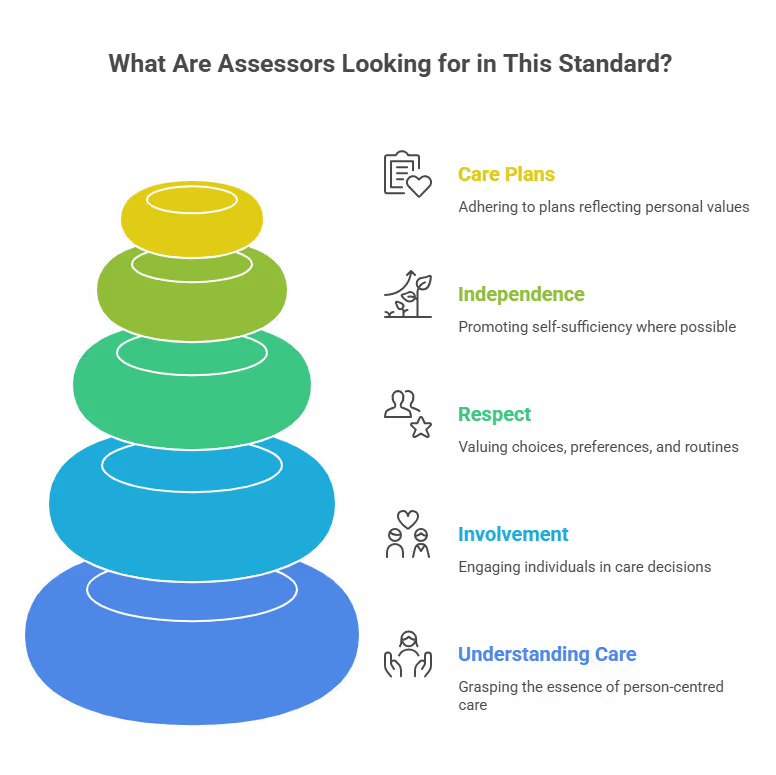
This standard focuses on putting the individual at the centre of all care and support. It means seeing the person first, not the task. Care should reflect the person’s wishes, needs, values, and choices in everyday practice.
What Are Assessors Looking for in This Standard?
Example Answers (Guide Only)
These examples show how person-centred care can be explained clearly.
- I ask people how they prefer support and follow their care plan.
- I encourage independence by supporting what the person can do themselves.
- I involve individuals in decisions and respect their choices.
These are examples only. Your answers must be based on your role and setting.
What Workplace Evidence Can You Use?
You may include:
- Observation of person-centred care during daily tasks
- Reflective accounts about supporting choice or independence
- Care plans showing individual preferences
- Supervision notes discussing person-centred practice
- Professional discussion with your assessor
Evidence should show how care is shaped around the individual.
Common Mistakes to Avoid
- Focusing only on tasks, not the person
- Saying “we do it this way for everyone”
- Ignoring personal preferences or routines
- Using generic examples with no workplace link
- Confusing person-centred care with independence only
Person-centred care means support that fits the person, not the service.
Care Certificate Standard 6 Answers: Communication
This standard focuses on how you communicate with people you support, colleagues, and professionals. Clear communication supports safety, dignity, and trust. It includes verbal, nonverbal, written, and digital methods used in daily care.
What Are Assessors Looking for in This Standard?
Assessors expect you to show that you:
- Understand why communication matters in care
- Adapt communication to individual needs and preferences
- Use verbal and non-verbal communication appropriately
- Promote understanding and check meaning
- Follow confidentiality and data protection rules
They look for safe communication in real care situations.
Example Answers (Guide Only)
These examples show suitable ways to explain your practice.
- I speak clearly and use simple language to support understanding.
- I observe body language and adjust my approach if someone seems unsure.
- I share information accurately with colleagues during handover.
These examples are guidance only. Use your own role and setting.
What Workplace Evidence Can You Use?
You may include:
- Observation of communication during care tasks
- Reflective accounts about adapting communication
- Supervision notes discussing communication skills
- Care records showing accurate information sharing
- Professional discussion with your assessor
Evidence should show effective communication in practice.
Common Mistakes to Avoid
- Using jargon or complex language
- Ignoring non-verbal cues
- Not checking understanding
- Sharing information in public areas
- Writing vague or incomplete records
Good communication supports safety, respect, and quality care.
Care Certificate Standard 7 Answers: Privacy and Dignity
This standard focuses on respecting each person’s right to privacy, dignity, and control. It guides how you support people in a way that protects self-respect, personal space, and confidentiality during daily care tasks.
What Are Assessors Looking for in This Standard?
Assessors expect you to show that you:
- Understand what privacy and dignity mean in care
- Respect personal space and individual choice
- Protect confidential information at all times
- Promote independence wherever possible
- Communicate respectfully during personal care
They want evidence of dignity in everyday actions.
Example Answers (Guide Only)
These examples show acceptable ways to explain your practice.
- I knock and wait before entering a person’s room.
- I close doors and curtains during personal care.
- I explain each step before supporting someone.
These examples are guidance only. Adapt them to your role.
What Workplace Evidence Can You Use?
You may include:
- Observation during personal care tasks
- Reflective accounts on maintaining dignity
- Supervision notes discussing respectful practice
- Care plans showing individual preferences
- Professional discussion with your assessor
Evidence should link to real care situations.
Common Mistakes to Avoid
- Rushing care without explanation
- Discussing personal details in public areas
- Ignoring individual preferences
- Treating people as tasks, not individuals
Respecting privacy and dignity builds trust and promotes person-centred care.
Care Certificate Standard 8 Answers: Fluids and Nutrition
This standard focuses on supporting people to eat and drink safely. It covers hydration, nutrition, food safety, and recognising signs of poor intake. Good practice helps maintain health, comfort, and wellbeing in daily care.
What Are Assessors Looking for in This Standard?
Assessors expect you to show that you:
- Understand why nutrition and hydration matter
- Recognise signs of dehydration or poor nutrition
- Follow food safety and hygiene procedures
- Respect dietary needs, choices, and preferences
- Record and report concerns accurately
They look for safe support linked to individual care plans.
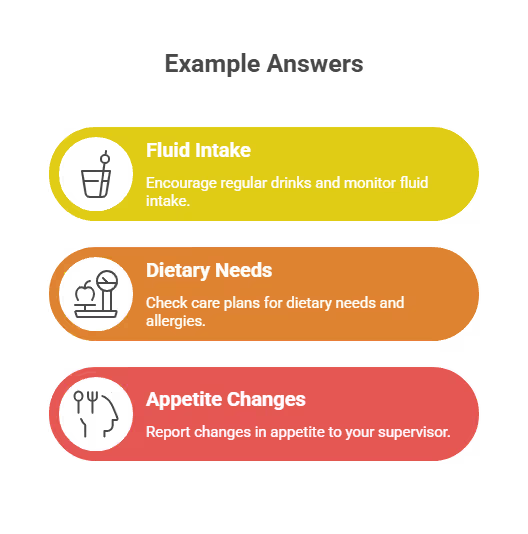
Example Answers (Guide Only)
What Workplace Evidence Can You Use?
You may include:
- Observation during meal or drink support
- Reflective accounts on supporting eating and drinking
- Fluid or food charts with personal details removed
- Supervision notes discussing nutrition concerns
- Professional discussion with your assessor
Evidence should show safe and person focused care.
Common Mistakes to Avoid
- Ignoring signs of dehydration
- Not following food safety rules
- Serving food without checking care plans
- Failing to record intake or concerns
Safe nutrition and hydration support dignity, health, and recovery.
Care Certificate Standard 9 Answers: Awareness of Mental Health, Dementia, and Learning Disabilities
This standard focuses on understanding how mental health conditions, dementia, and learning disabilities affect daily life. It supports respectful, patient, and person-centred care by recognising individual needs, strengths, and challenges.
What Are Assessors Looking for in This Standard?
Assessors expect you to show that you:
- Understand basic features of mental health conditions, dementia, and learning disabilities
- Recognise how these conditions affect communication and behaviour
- Support people with empathy and patience
- Challenge stigma and promote inclusion
- Report changes in behaviour or wellbeing
They look for understanding applied in real care settings.
Example Answers (Guide Only)
These examples show suitable ways to explain your practice.
- I remain calm and give extra time for responses.
- I support routines to reduce distress and confusion.
- I report changes in mood or behaviour promptly.
These examples are guidance only. Adapt them to your role.
What Workplace Evidence Can You Use?
You may include:
- Observation of supportive communication
- Reflective accounts on responding to distress
- Care plans showing personalised support
- Supervision notes discussing mental wellbeing
- Professional discussion with your assessor
Evidence should focus on respect and safety.
Common Mistakes to Avoid
Care Certificate Standard 10 Answers: Safeguarding Adults
This standard focuses on protecting adults from abuse, neglect, and harm. It explains your responsibility to recognise risks, respond appropriately, and report concerns. Safeguarding adults supports safety, dignity, and the right to live free from harm.
What Are Assessors Looking for in This Standard?
Assessors expect you to show that you:
- Understand what safeguarding adults means in practice
- Recognise different types of abuse and neglect
- Know how to report concerns correctly
- Follow local safeguarding procedures
- Act promptly and responsibly when risks appear
They look for clear action linked to your role and setting.
Example Answers (Guide Only)
These examples show suitable ways to explain your practice.
- I report safeguarding concerns to my manager without delay.
- I record facts clearly and follow safeguarding procedures.
- I support individuals by listening and reassuring them.
These examples are guidance only. Use your own workplace experience.
What Workplace Evidence Can You Use?
You may include:
- Observation of safe care practice
- Reflective accounts on raising concerns
- Incident or safeguarding records, anonymised
- Supervision notes discussing safeguarding
- Professional discussion with your assessor
Evidence should show timely and appropriate action.
Common Mistakes to Avoid
- Ignoring early signs of abuse
- Promising to keep concerns secret
- Delaying reports
- Making personal investigations
Safeguarding adults is everyone’s responsibility in care.
Care Certificate Standard 11 Answers: Safeguarding Children
This standard explains your responsibility to protect children from abuse, neglect, and harm. It applies to all care roles, even when children are not your main focus. Safeguarding children means staying alert, reporting concerns, and following clear procedures to keep children safe.
What Are Assessors Looking for in This Standard?
Assessors expect you to show that you:
- Understand what safeguarding children means
- Recognise signs of abuse and neglect
- Know your duty to report concerns immediately
- Follow child safeguarding procedures
- Act in the child’s best interests at all times
They want clear actions, not theory.
Example Answers (Guide Only)
These examples show suitable ways to explain your understanding.
- I report concerns about a child to the safeguarding lead straight away.
- I record concerns clearly and only share them with authorised staff.
- I stay alert to changes in behaviour or unexplained injuries.
These examples are guidance only. Always link answers to your role.
What Workplace Evidence Can You Use?
You may include:
- Observation of safe and professional practice
- Reflective accounts about reporting concerns
- Supervision notes discussing safeguarding
- Incident or concern records, anonymised
- Professional discussion with your assessor
Evidence must show timely and accurate reporting.
Common Mistakes to Avoid
- Thinking safeguarding children is not your role
- Waiting for proof before reporting
- Discussing concerns with unauthorised people
- Failing to record facts clearly
Safeguarding children is everyone’s responsibility in care.
Care Certificate Standard 12 Answers: Basic Life Support
This standard focuses on how you respond during a medical emergency. It checks that you understand basic life support procedures and know how to act quickly, safely, and within your role. The aim is to protect life until trained medical help arrives.
What Are Assessors Looking for in This Standard?
Assessors expect you to show that you:
- Recognise an emergency situation
- Know the basic steps of life support
- Follow workplace emergency procedures
- Stay calm and act safely
- Understand the importance of regular training
They look for safe awareness, not advanced clinical skill.
Example Answers (Guide Only)
These examples show acceptable ways to explain your understanding.
- I check for danger, shout for help, and follow emergency procedures.
- I start CPR if trained and continue until help arrives.
- I use an AED if available and follow spoken instructions.
These examples are guidance only. Always adapt them to your role and training.
What Workplace Evidence Can You Use?
You may include:
- Observation of emergency response practice
- Reflective account after training or drills
- Training certificates for life support
- Supervision notes discussing emergency readiness
- Professional discussion with your assessor
Evidence should show safe awareness and correct response.
Common Mistakes to Avoid
- Acting outside your training
- Delaying emergency response
- Forgetting to call for help
- Ignoring refresher training
Basic life support knowledge helps protect lives in urgent situations.
Care Certificate Standard 13 Answers: Health and Safety
This standard focuses on keeping people safe at work. It checks that you understand how to reduce risks, follow safety procedures, and protect yourself and others. Health and safety in care means preventing harm before it happens.
What Are Assessors Looking for in This Standard?
Example Answers. Guide Only
These examples show suitable ways to explain your understanding.
- I check the environment for hazards before starting care tasks.
- I use PPE and safe moving techniques as trained.
- I report spills, faults, or risks to my supervisor straight away.
These examples are guidance only. Always relate them to your setting.
What Workplace Evidence Can You Use?
You may include:
- Observation of safe working practice
- Reflective account about managing risks
- Accident or incident reports, anonymised
- Supervision notes covering safety topics
- Professional discussion with your assessor
Evidence should show prevention, not reaction.
Common Mistakes to Avoid
- Ignoring small hazards
- Not using PPE correctly
- Failing to report near misses
- Rushing tasks instead of working safely
Health and safety protect everyone in the care environment.
Care Certificate Standard 14 Answers: Handling Information
This standard focuses on how you keep personal information safe and confidential. It checks that you understand your responsibility to handle records correctly and protect people’s privacy in line with workplace policies and UK data protection law.
What Are Assessors Looking for in This Standard?
Assessors want to see that you:
- Understand what confidentiality means in your role
- Handle written and digital records securely
- Share information only with authorised people
- Follow workplace policies for data protection
- Know when information may need to be shared for safety reasons
They are checking safe, lawful information handling.
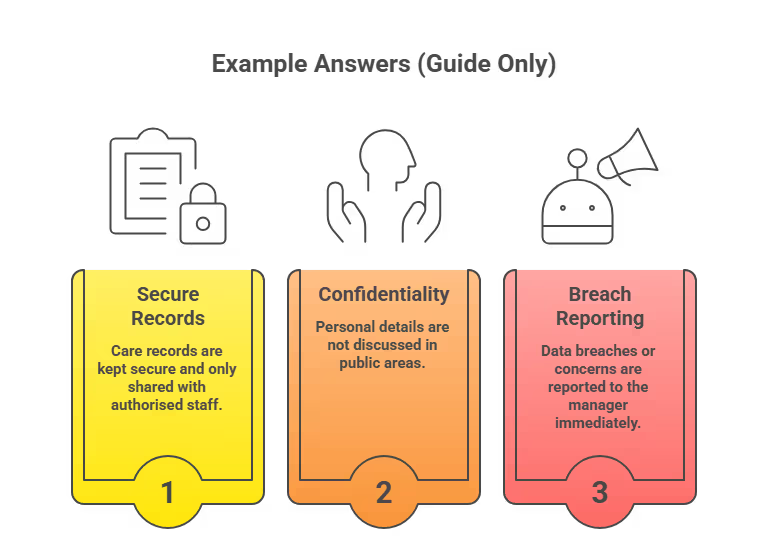
Example Answers (Guide Only)
What Workplace Evidence Can You Use?
You can include:
- Observation of correct record handling
- Reflective account on confidentiality decisions
- Supervision notes discussing data protection
- Anonymised care records or reports
- Professional discussion with your assessor
Evidence must show confidentiality in daily practice.
Common Mistakes to Avoid
- Sharing information without permission
- Leaving records unsecured
- Discussing individuals in public areas
- Using outdated data protection terms
Handling information correctly builds trust and protects people.
Care Certificate Standard 15 Answers: Infection Prevention and Control
This standard focuses on reducing the spread of infection in care settings. It checks that you understand how infections spread, how to use hygiene practices correctly, and how your actions protect individuals, colleagues, and yourself during everyday care tasks.
What Are Assessors Looking for in This Standard?
Assessors want to see that you:
- Understand how infections are spread
- Follow correct hand hygiene procedures
- Use personal protective equipment (PPE) properly
- Dispose of waste safely
- Follow workplace infection control policies
- Report risks or incidents promptly
The focus is safe, consistent practice.
Example Answers (Guide Only)
These examples show how understanding may be explained.
- I wash my hands before and after care tasks using approved hand hygiene steps.
- I wear gloves and aprons when there is a risk of contact with bodily fluids.
- I follow cleaning and waste disposal procedures to reduce infection risk.
These examples must be adapted to your role.
What Workplace Evidence Can You Use?
Suitable evidence includes:
- Observation of correct hand hygiene and PPE use
- Reflective account on infection control practice
- Supervision notes discussing hygiene standards
- Cleaning schedules or infection control checklists
- Professional discussion with your assessor
Evidence should show infection prevention in action.
Common Mistakes to Avoid
- Skipping hand hygiene between tasks
- Incorrect PPE use
- Not reporting infection risks
- Ignoring workplace infection control guidance
Good infection control protects everyone in care settings.
Care Certificate Standard 16 Answers: Awareness of Learning Disability and Autism
Standard 16 was added in March 2025 to improve how care workers support people with learning disabilities and autism. This standard focuses on understanding communication differences, sensory needs, and reasonable adjustments. The aim is inclusive, person-centred care that supports dignity, safety, and independence in daily practice.
Learning disability and autism are not medical conditions to fix. They describe how a person learns, communicates, and experiences the world. Support must adapt to the individual. Care must never rely on assumptions or labels.
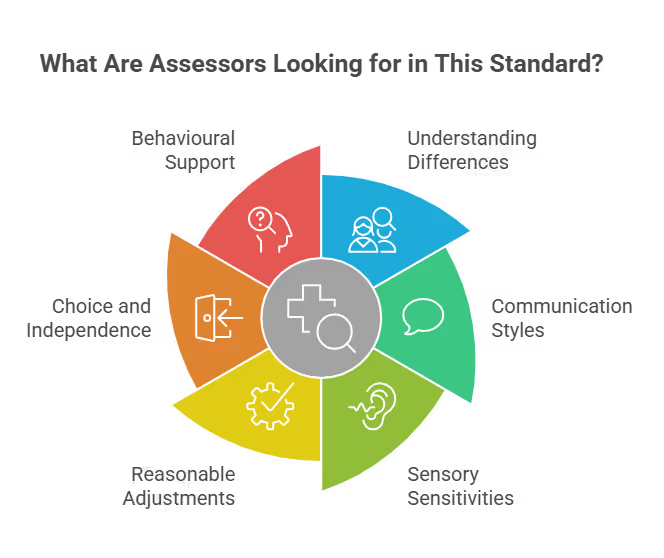
What Are Assessors Looking for in This Standard?
Example Answers (Guide Only)
These examples show suitable approaches.
- I adjust how I speak by using short sentences and allowing time to respond.
- I reduce noise and avoid sudden changes when someone becomes distressed.
- I follow care plans that explain triggers, routines, and preferred support.
Use your own role and setting when writing answers.
Practical Care Examples
Reasonable adjustments may include:
- Offering quiet spaces during personal care
- Using pictures or objects to explain tasks
- Keeping routines consistent
- Giving one instruction at a time
- Asking before physical contact
What Workplace Evidence Can You Use?
You may include:
- Observation of adapted communication
- Reflective account on inclusive care
- Care plans showing adjustments
- Supervision notes
- Professional discussion records
Common Mistakes to Avoid
- Treating everyone the same
- Ignoring sensory distress
- Using labels instead of person-focused language
- Rushing care tasks
This standard supports inclusive care built on understanding, respect, and adjustment.
Can You Download Care Certificate Answers as a PDF?
No. Many learners search for Care Certificate answers in PDF form because they want quick help with their workbook. This approach often causes problems. Generic PDFs rarely reflect real care settings, job roles, or employer policies. Assessors regularly reject this type of evidence because it shows copied wording rather than genuine understanding and practice.
PDF answer packs fail for clear reasons. They use fixed wording that does not match your role. They do not include workplace evidence. They often rely on outdated standards, especially those written before Standard 16 was added in March 2025. Many also include language that assessors recognise from public websites, which raises concerns about authenticity.
Care Certificate assessment focuses on competence, not memorisation. Written answers must link to what you do at work. A PDF written for everyone cannot show this. Even well written PDFs lack personal reflection, observation evidence, and professional discussion records.
Safer alternatives give better results and protect your assessment.
Useful options include:
- Answer templates that guide structure without providing wording
- Planning sheets that prompt you to link answers to your role
- Checklists that show what assessors expect for each standard
- Reflection prompts to help you describe real situations
- Supervisor feedback notes added to your portfolio
These tools help you write your own answers while keeping assessment safe. They support understanding, not copying. Using structured guidance instead of PDFs helps you show real competence and meet assessor expectations with confidence.
What Are Care Certificate Workbook Answers, and How Are They Used?
Care Certificate workbooks are evidence records, not exams. They help assessors see how you understand each standard and how you apply it safely in your care role. The workbook links learning to real work, not to test-style answers.
Workbook answers show three things. First, your understanding of the standard. Second, how you use this understanding during care tasks. Third, what evidence supports your learning in practice? The wording matters less than the meaning and the example behind it. Assessors want to see that you know why a standard exists and how it affects the people you support.
A strong workbook answer usually connects the written explanation with workplace evidence. This evidence might include observed care tasks, reflective accounts, supervision discussions, or anonymised records. The workbook helps bring all this information together in one place. It becomes part of your portfolio of evidence rather than a set of right or wrong answers.
Employers hold responsibility for Care Certificate assessment. They decide how workbooks are used, who assesses them, and how evidence is checked. The employer also confirms when all standards are met and signs off on completion. This means each workbook reflects local policies, procedures, and job roles.
Because of this, workbook answers should always match your setting. A care home answer may differ from a hospital answer. Both remain valid if they show safe practice. Copying generic answers often causes problems because they fail to match employer expectations or real tasks.
Used correctly, the workbook supports learning, reflection, and confidence. It shows how knowledge turns into safe, person-centred care at work.
Summary & Key Takeaways for Learners and Employers
- The Care Certificate now includes 16 standards, following the March 2025 update. Older guidance that lists only 15 standards is no longer current.
- Care Certificate answers must reflect the worker’s own role, setting, and daily responsibilities. Generic or copied responses often fail assessment.
- Assessors focus on evidence of safe practice, not polished wording. Real workplace examples matter more than perfect sentences.
- Workbooks and written answers support assessment, but observation, reflective accounts, and professional discussion confirm competence.
- Standard 16 strengthens understanding of learning disability and autism, including communication needs, sensory awareness, and reasonable adjustments.
- Employers remain responsible for assessment, evidence review, and final sign-off. The Care Certificate supports induction and safe practice, not academic testing.
- Used correctly, Care Certificate answers build confidence, consistency, and person-centred care across health and social care settings.
Care Certificate Course – Standards (1 to 16)
Frequently Asked Quesions
Q: What are Care Certificate answers?
A: Care Certificate answers are written explanations showing how you understand each standard and use it in your care role. Assessors use them as evidence of safe practice, so they must link to real tasks and experiences at work.
Q: What is the Care Certificate?
A: The Care Certificate is a set of national standards for people starting work in health and social care. It supports safe, compassionate, and person-centred care during induction and early practice.
Q: How many Care Certificate standards are there now?
A: There are 16 Care Certificate standards. The framework changed in March 2025 with the addition of a new standard on learning disability and autism awareness.
Q: Is the Care Certificate a qualification?
A: No, the Care Certificate is not an accredited qualification. It is an induction framework that supports competence and may help progression to diplomas in care.
Q: Is the Care Certificate mandatory in the UK?
A: The Care Certificate is not a legal requirement. Many employers still expect it to be completed by staff who are new to care roles.
Q: Who is the Care Certificate for?
A: The Care Certificate is for new health and social care workers such as care assistants and support workers. Employers may also use it when staff move into a new care setting.
Q: Who assesses Care Certificate answers?
A: An employer appoints an assessor who is occupationally competent. They review written answers and confirm competence through observation and discussion.
Q: How are Care Certificate answers assessed?
A: Assessment uses written evidence, workplace observation, reflective accounts, and professional discussion. The focus stays on safe practice, not academic writing.
Q: Can I copy Care Certificate answers from the internet?
A: No, copied answers often lead to rejection because they do not reflect your role or workplace. Assessors expect personal examples supported by evidence.
Q: What are Care Certificate workbook answers?
A: Workbook answers are written records that show how you meet each standard. They link learning to real care tasks and support assessor decisions.
Q: How long does it take to complete the Care Certificate?
A: Most people complete the Care Certificate within their first 12 weeks at work. The time depends on hours worked and access to assessment.
Q: Can the Care Certificate be completed online?
A: Some learning can take place online. Workplace assessment and observation must happen in a real care setting.
Q: Is the Care Certificate recognised by the CQC?
A: Yes, the Care Quality Commission refers to the Care Certificate as good practice for staff induction and competence.
Q: Can you fail the Care Certificate?
A: There is no formal fail result. If standards are not met, further support and reassessment take place until competence is shown.
Q: Does the Care Certificate expire?
A: The Care Certificate does not expire. Employers may still require refresher learning after role changes or long breaks from care work.
Q: Do I need the Care Certificate if I already have an NVQ or Diploma?
A: Employers may map existing learning to the standards. They decide if further evidence or assessment is needed.
Q: What changed in the Care Certificate in 2025?
A: A new standard on learning disability and autism awareness was added in March 2025. This update reflects inclusive and person centred care priorities.
Q: What is Care Certificate Standard 16 about?
A: Standard 16 focuses on learning disabilities and autism. It covers communication needs, sensory awareness, and reasonable adjustments.
Q: What evidence should I include with my Care Certificate answers?
A: Evidence may include observation notes, reflective accounts, supervision records, and anonymised care documents. Evidence must show how you apply learning at work.
Q: Are Care Certificate answers the same for everyone?
A: No, answers differ by role and setting. Assessors expect responses to match your duties and workplace policies.
Q: What is the difference between Care Certificate answers and reflective accounts?
A: Answers explain knowledge and understanding. Reflective accounts focus on learning from experience and improving practice.
Q: Can I download Care Certificate answers as a PDF?
A: Generic PDF packs often fail assessment because they lack personal context. Templates and planners help you write your own answers safely.
Q: What happens if I change employers?
A: A new employer may ask you to complete the Care Certificate again. There is no central body that transfers assessment records.
Q: Where can I find official guidance on the Care Certificate?
A: Official guidance comes from Skills for Care. They publish standards, updates, and assessment information for the UK care sector.