

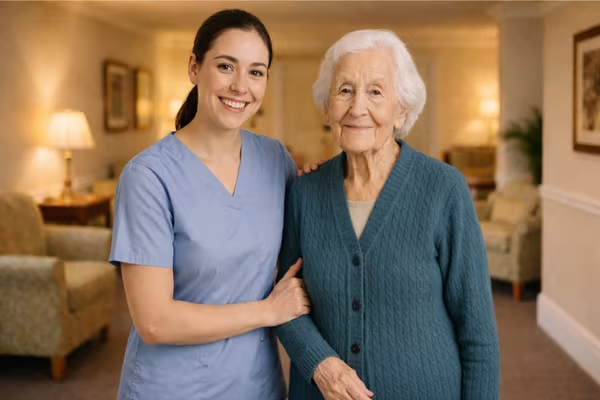

Care Certificate Standard 6 answers should match the updated 2025 standards, not old workbook pages. Strong answers explain communication in plain language, use short care examples, and show safe practice, privacy, and respect for each person.
Skills for Care says the standards changed in March 2025. It also says the old workbooks were not updated and will not be replaced. That means learners need clear guidance that fits the current standard and real care work.
What are the key takeaways from Care Certificate Standard 6?
Care Certificate Standard 6 covers how workers communicate well, meet individual needs, reduce barriers, protect privacy, and use aids safely. The 2025 update also adds clearer points on digital tools and behaviour as communication.
TL;DR
- Standard 6 focuses on communication in care and support.
- The Care Certificate standards changed in March 2025.
- There are now 16 standards in the updated Care Certificate.
- Standard 6 now names assistive technologies and digital communication tools more clearly.
- Standard 6 now states that behaviour can be a form of communication.
- Skills for Care says the older workbooks were not updated.
- Good answers need short explanation, real examples, and safe practice.
- This guide supports learning. It is not an official answer sheet.
Care Certificate Course – Standards (1 to 16)
What is Care Certificate Standard 6 and why is communication so important in care?
Care Certificate Standard 6 explains how workers communicate with people, families, and colleagues in safe and respectful ways. It matters because communication shapes trust, choice, safety, teamwork, and the quality of care each person receives.
Communication sits at the centre of care. When you listen well and speak clearly, you learn what the person wants, what they fear, and what support helps them most. Clear communication also helps teams share the right facts at the right time. That keeps care joined up and person centred.
What does Standard 6 require care workers to demonstrate?
Standard 6 asks workers to understand different ways people communicate. It also asks them to spot needs, reduce barriers, check understanding, respect privacy, and use verbal, non-verbal, and technical support in the right way. Those points fit the wider induction aim of safe and compassionate care.
How do people communicate in care settings?
People communicate through speech, writing, facial expression, body language, touch, signs, symbols, pictures, and digital tools. Workers need to read both spoken and unspoken messages so they can respond well and avoid confusion.
Many people think communication means talking. In care, it means far more. A person may say yes while their face shows fear. Another person may stay silent but use eye contact, movement, or gesture to share a need. Good workers notice those signals and adjust.
What are the main types of communication used in care?
Common types include verbal communication, written communication, sign language, Makaton, Braille, gestures, facial expression, eye contact, pictures, symbols, and body position. The updated standard also gives more weight to assistive technologies and digital tools.
What is the difference between formal and informal communication?
Formal communication usually happens in work tasks such as handovers, records, care plans, emails, and reports. Informal communication happens in day to day support, such as a short chat or reassurance during care. Both matter. Workers still need to stay respectful and clear in both settings.
How does communication affect relationships at work?
Communication affects trust, teamwork, and safety every day. Good communication helps people feel heard and respected, while poor communication causes confusion, weak handovers, damaged trust, and care mistakes that workers could prevent.
When staff share clear facts, each person knows what to do next. That supports safer care and smoother teamwork. When staff miss details, rush a handover, or speak in unclear ways, tension grows fast. The person receiving care may also lose trust if messages clash or change without warning.
How does good communication improve teamwork and care quality?
Good communication helps staff pass on accurate updates, agree next steps, and support each other with fewer gaps. It also helps the person feel safe because the team gives steady messages and consistent care. That leads to better experience and fewer avoidable errors.
How can poor communication cause problems in care settings?
Poor communication leads to missed medicine, missed consent, weak records, and mixed messages. It can also make the person feel ignored or pushed aside. In care, small gaps can grow into serious problems because people depend on workers to explain and act clearly.
Why is it important to notice reactions when communicating?
You need to notice reactions because they show whether the person feels calm, confused, worried, or ready to continue. When you spot those signs early, you can change your approach and keep the conversation safe and respectful.
People often tell you a lot without words. A person may look away, tense up, fidget, or pull back when they do not understand or do not agree. A worker who spots those signs can slow down, ask a better question, or offer another method. That helps the person stay involved and heard.
What signs show communication is not understood?
Common signs include silence, a blank look, repeated questions, sudden laughter, looking away, turning sideways, fidgeting, or nodding without action. These signs do not always mean refusal. They often mean the worker needs to pause and explain in a new way.
How should care workers respond to reactions?
Care workers should pause, notice the change, and respond with care. They can use simpler words, offer pictures, move to a quieter place, or ask what feels unclear. That response shows respect and helps the person feel more in control of the moment.
How do you identify an individual’s communication needs, wishes, and preferences?
You identify communication needs by asking the person, checking records, watching how they respond, and speaking with people who know them well. This helps you shape communication around the person instead of forcing one method on everyone.
Start with the person whenever you can. Ask what helps and what gets in the way. Then check the care plan, risk notes, and any communication passport. Family, carers, and other workers may add useful detail, but their view should support the person’s own wishes rather than replace them.
What sources help identify communication needs?
Useful sources include the individual, care plans, communication passports, family members, carers, colleagues, interpreters, advocates, and speech and language therapists. Each source adds part of the picture. Together they help workers choose methods that fit the person’s daily life and care needs.
What communication methods, styles, and aids support individuals?
Different people need different communication methods. Workers may use plain speech, writing, signs, symbols, pictures, touch, or aids to help the person understand information, share choices, and stay involved in their own care.
A person-centred approach means you adapt. One person may need short spoken steps. Another may use Makaton or BSL. Someone else may prefer large print, symbols, or extra time. Good workers do not guess. They test what helps, then keep using what works.
Which communication methods are commonly used in care?
Common methods include verbal communication, written prompts, BSL, Makaton, Braille, pictures, symbols, objects of reference, gesture, eye contact, and touch used with care. Workers choose the best method based on the person’s ability, condition, and preference.
What communication aids and assistive technologies are used?
Workers may use hearing aids, hearing loops, text phones, communication boards, symbol boards, speech tools, magnifiers, and voice-to-text software. The 2025 update also makes digital communication tools more visible in Standard 6, so current answers should include them.
How do assistive technologies and digital communication tools improve communication?
Assistive technologies and digital tools help people share choices, ask for help, and understand care information when speech, hearing, sight, or processing creates a barrier. Workers need to use these tools safely and in ways that suit the person.
This area matters more now because the updated standard names digital communication tools and assistive technologies more clearly. That change reflects real care practice. Many services now use electronic records, speech tools, text support, and other digital systems to support communication.
What does safe and appropriate use of communication tools involve?
Safe use means the tool works, stays clean, suits the person, and protects privacy. Workers should report faults or hygiene issues to the right person. They should also make sure digital tools do not expose private information or create new barriers.
What are the main barriers to communication in care settings?
Communication barriers come from the environment, the person’s condition, the worker’s style, or the situation itself. Common barriers include noise, pain, fear, sensory loss, rushed care, poor privacy, and language or cultural differences.
The workbook view still helps here because it lists practical barriers workers see every day. Those include attitude, poor body position, lack of time, weak access to technology, poor body language, stereotype based assumptions, noise, lighting, and substance misuse. In care, barriers often overlap.
Common barriers to communication
Noise can block hearing. Pain can block focus. Fear can block speech. A rushed worker can shut a person down without meaning to. Jargon can confuse. Lack of privacy can stop honest talk. Good workers look at both the person and the setting when they spot a barrier.
How can communication barriers be reduced in care settings?
You reduce barriers by changing what you can control. Use a quieter space, clearer words, better timing, useful aids, and more time to respond. Person-centred communication helps people feel safer, calmer, and more able to join in.
Small changes often work best. Turn off the television. Sit at eye level. Slow down. Break the message into short parts. Use pictures or writing if they help. Ask what works best for the person. These steps support understanding and lower stress in the moment.
Practical ways to reduce communication barriers
Workers can reduce barriers by using open body language, a calm tone, and the right tool for the right person. Communication passports can also help because they bring key needs and preferences into one clear format that the team can use.
How can behaviour be a form of communication in care?
Behaviour can be communication when a person cannot find the words, does not feel safe, or wants to show pain, fear, confusion, or refusal. The 2025 standard now makes that point clear in Standard 6.
A person may pace, shout, stay silent, turn away, pull a blanket up, or refuse care for a reason. That reason may be pain, overload, shame, fear, or lack of understanding. Good workers ask what the behaviour means before they judge it. That response protects dignity and improves care.
How can you check that communication has been understood?
You check understanding by asking the person to explain back, by summarising key points, and by watching their reaction. A quick yes is not enough if the person still looks unsure or confused.
The workbook highlights summarising as a key skill. Open questions also help because they invite a fuller reply. Instead of asking, “Do you understand?”, ask, “Can you tell me what will happen next?” That gives you a clearer view of what the person has taken in.
Where can workers get support to communicate effectively?
Workers can get help from managers, colleagues, interpreters, advocates, therapists, counsellors, and specialist services. Asking for support early helps workers meet needs better and keeps care safe when communication feels hard.
No worker needs to manage every communication issue alone. A speech and language therapist may help with speech or swallowing linked communication needs. An advocate may help the person express choices. An interpreter or translator may help when language blocks understanding. Managers and colleagues also guide day to day practice.
What does confidentiality mean in Care Certificate Standard 6?
In Standard 6, confidentiality means keeping personal information private and sharing it only with the right people for the right reason. This protects dignity, trust, safety, and lawful practice in daily care work.
Privacy is part of communication. Workers should hold private talks in private places, keep notes secure, and use approved systems for records and devices. The workbook also points to data protection duties, informed consent, and the Human Rights Act. In current practice, UK GDPR and the Data Protection Act 2018 shape how organisations handle personal data.
When should confidential information be shared?
Sometimes workers need to share confidential information to protect someone. Examples include serious risk of harm, safeguarding concerns, or risk to others. In those cases, staff should follow workplace policy and seek advice from a manager or senior colleague at once
How should verbal and non-verbal communication be used appropriately?
Workers should match their tone, pace, position, eye contact, body language, and chosen method to the person and the situation. Appropriate communication feels calm, clear, respectful, and safe for the person receiving care.
Verbal communication includes the words you choose and how you say them. Non-verbal communication includes posture, facial expression, touch, signs, symbols, writing, and objects of reference. Touch needs special care because it can comfort one person and distress another. Workers should seek consent where possible and follow workplace rules on infection control and safe practice.
How does the Accessible Information Standard support communication in care?
The Accessible Information Standard helps services identify, record, share, meet, and review communication support needs. It supports communication in care by turning good intentions into a clear process that services should follow.
NHS England says this standard applies to NHS and publicly funded adult social care services. It aims to make sure disabled people and people with impairment or sensory loss can access information and get the communication support they need. That fits Standard 6 because both focus on clear, person-centred communication.
Are Care Certificate standards the same as the Level 2 Adult Social Care Certificate qualification?
No. The Care Certificate standards form an induction framework, while the Level 2 Adult Social Care Certificate is an Ofqual-regulated qualification with formal assessment requirements. Learners need to know which route they are actually following.
The qualification launched to the sector in June 2024 and sits apart from the Care Certificate standards. Skills for Care says it is accredited, portable, and designed to give a baseline standard for care. It also expects observational assessment, which shows it is not the same as a simple answer guide.
What do most Care Certificate Standard 6 answer pages get wrong?
Many pages lean on old workbook wording, skip the 2025 update, and focus on copy-ready answers instead of real understanding. That leaves learners with weaker guidance and a poorer fit with current Standard 6 content.
The biggest gap is freshness. Skills for Care says the old workbooks were not updated and will not be replaced. Another gap is depth. Many pages cover barriers and confidentiality but give thin detail on digital tools, assistive technologies, and behaviour as communication. Those areas now matter more in the updated standard.
What are the most common myths about Care Certificate Standard 6 answers?
The most common myths say there is one official answer sheet, old workbook pages stay fully current, and copied answers prove competence. Current official guidance does not support those claims.
Good preparation builds understanding, safe practice, and role-based examples. Skills for Care says eLearning can help people gain and show knowledge, but it does not fully achieve the standards on its own because workers also need workplace practice and assessment.
Care Certificate Course – Standards (1 to 16)
Care Certificate Standard 6 FAQs
These FAQs answer the questions learners search most often. Each answer stays close to current guidance and keeps the focus on safe communication, clear understanding, and person-centred care rather than copy-and-paste workbook lines.
Are there official Care Certificate Standard 6 answers?
No. Skills for Care does not provide a current official answer bank for Standard 6. The FAQ document says the older workbooks were not updated and will not be replaced. Employers and training providers decide how learners show knowledge, so your answer should show understanding and fit your role.
What changed in Standard 6 in 2025?
The 2025 update adds clearer wording on communication aids, assistive technologies, and digital communication tools. It also states that behaviour can be a form of communication. Those changes make older answer pages less reliable when they ignore these newer points.
Are old workbook answers still useful?
Yes, they can still help with the basic topic flow. They are not enough on their own now. Skills for Care says the workbooks were not updated for the 2025 standards, so learners need to add current points such as digital tools and behaviour as communication.
Why does Standard 6 matter so much in care work?
Standard 6 matters because care depends on clear and respectful communication. Workers need it to build trust, explain care, check consent, reduce worry, and share accurate information with colleagues. When communication fails, safety and dignity can fail with it.
What types of communication should I mention in an answer?
You should mention more than speech. Strong answers may include verbal communication, writing, sign language, Makaton, Braille, gesture, body language, pictures, symbols, touch, and digital tools. The best answer also explains when a method helps and why it suits the person.
What is the difference between formal and informal communication?
Formal communication links to work tasks such as care notes, handovers, reports, and emails. Informal communication happens in normal support, such as friendly talk or reassurance. Both matter in care, but workers still need to stay respectful, clear, and accurate in each setting.
Why should I watch body language and reactions?
You should watch reactions because they show how the person feels during the conversation. Body language may show fear, pain, confusion, or lack of consent even when the person says little. When you notice that early, you can pause and change your approach.
How do I identify someone’s communication needs?
Start by asking the person what helps them most. Then check care records, watch how they respond, and speak with family, carers, or specialists when needed. A communication passport can also help because it brings key needs and preferences into one simple guide.
What communication methods should I name for different needs?
Useful methods include plain language, short spoken steps, pictures, symbols, Makaton, BSL, Braille, large print, communication boards, and written prompts. Good answers show that you choose the method that fits the person, not the method that feels easiest for staff.
What communication aids can I mention in Standard 6?
You can mention hearing aids, hearing loops, text phones, magnifiers, symbol boards, speech tools, and voice-to-text software. Current answers should also mention digital communication tools because the 2025 update makes them part of the stronger and more current Standard 6 picture.
What are the main barriers to communication?
Common barriers include noise, pain, sensory loss, language differences, fear, low mood, lack of time, poor privacy, jargon, stereotype based assumptions, and weak access to technology. Strong answers show that barriers can come from the setting, the person, or the worker.
How can I reduce communication barriers in practice?
You can reduce barriers by changing the setting and your method. Move to a quieter space, sit at eye level, slow down, use shorter words, offer pictures or writing, and allow more time. Then check what works best for the person and keep using it.
How can behaviour count as communication?
Behaviour can count as communication when the person uses actions to show pain, fear, confusion, or refusal. A person may pace, go quiet, pull away, or refuse care because something feels wrong. The 2025 update now makes this point clear in Standard 6.
How do I check that someone understands me?
A good way to check understanding is to summarise what you said and ask the person to tell you what will happen next. Open questions work better than a quick yes or no because they show what the person has really understood.
Where can I get help if communication is hard?
You can ask managers, experienced colleagues, advocates, interpreters, translators, counsellors, or speech and language therapists for help. The right support depends on the barrier. Asking early helps you meet needs better and stops small misunderstandings from growing into safety risks.
What does confidentiality mean in this standard?
Confidentiality means keeping personal information private and sharing it only when there is a proper reason and the right people need to know. It also means secure notes, private talks, protected devices, and respect for informed consent wherever that is possible.
When can confidential information be shared?
Confidential information may need to be shared when there is a safeguarding concern, serious risk of harm, or another lawful reason to act. The workbook gives examples such as risk to self, risk to others, serious crime, or significant harm to a child or vulnerable adult.
Which laws or rules matter for confidentiality?
Current practice links confidentiality to data protection law, workplace policy, and lawful information handling. The workbook refers to data protection duties and the Human Rights Act. Workers should also follow agreed ways of working in their own service and seek advice when a case feels unclear.
Does the Accessible Information Standard apply to adult social care?
Yes. NHS England says the Accessible Information Standard applies to NHS and publicly funded adult social care services. It asks services to identify, record, flag, share, meet, and review communication support needs so people can access care information in ways they understand.
Is the Care Certificate the same as the Level 2 Adult Social Care Certificate qualification?
No. The Care Certificate standards support induction. The Level 2 Adult Social Care Certificate is an Ofqual-regulated qualification with formal assessment and wider recognition. Skills for Care says the qualification launched to the sector in June 2024 and sits apart from the Care Certificate standards.
Does eLearning alone complete the Care Certificate?
No. Skills for Care says eLearning can support learning and help show knowledge, but it does not fully achieve the standards on its own. Workers still need supervised practice, observation, and employer sign-off because the Care Certificate links knowledge to safe work in real care settings.
Where can you get support for Care Certificate training?
Most learners need more than model answers. Good support gives clear teaching, current guidance, workplace examples, and help with the wider Care Certificate so workers build confidence and use the standard well in real care settings.
The strongest support mixes updated learning with supervision and real practice. CQC says providers must give staff the induction, training, learning, and support they need for their role. Royal Open College can support that journey with clear explanations, fresh examples, and broader study help across communication and other care topics.