









Development in Health and Social Care Explained (UK)

What Is Development In Health And Social Care?

Development in health and social care refers to ongoing change and improvement across the lifespan. This guide explains what development means, how it differs from growth, the four key areas of development, and why understanding development helps deliver safe, person-centred care in UK settings.

Every day in care, people change in small but meaningful ways. A care worker supports an older adult to regain confidence after illness. A child develops new skills with the right help. These moments sit at the heart of development in health and social care.

Development in health and social care describes how people change and progress across life, and why understanding these changes helps care workers support needs, independence, and wellbeing in safe, appropriate ways.

This blog breaks development down using real UK care examples, focusing on the questions people genuinely ask in practice and study, and the points that often get missed elsewhere.

TL;DR

  • Development in health and social care means ongoing change and improvement, not one-off progress.
  • It includes human development, professional development, and service development.
  • Growth and development are linked, but they are not the same thing.
  • Development covers physical, intellectual, emotional, and social areas.
  • Development continues across the entire lifespan, from childhood to older age.
  • Ongoing development improves quality, safety, and person-centred care.
  • Understanding development helps carers respond to changing individual needs.

Health and Social Care Level 3 Diploma

Learn to promote Health and Social Care Level 3 Diploma!

What Is Development in Health and Social Care?

Development in health and social care is about ongoing improvement. It helps individuals, staff, and services deliver safe, effective, person-centred care. It focuses on change over time, not one-off progress.

In simple terms, the definition of development describes continuous improvement. People’s needs change. Staff build skills. Services adapt how they work. Development keeps care relevant and responsive, rather than fixed or outdated.

Development in health and social care links directly to person-centred care and better quality of care. When individuals grow, staff learn, and services improve together, care stays safe and effective. It also stays focused on what matters most. The person receiving support.

What Does Development Mean in Health and Social Care Practice?

In practice, development shows up in everyday care. It’s not abstract. It’s what changes, improves, and adapts over time.

People receiving care

 Development means support changes as needs change. People build skills, confidence, or independence at their own pace. Example: An older adult regains mobility after illness, so care shifts from hands-on support to encouragement.

Care workers

 Development means learning through experience and training. Skills improve. Confidence grows. Practice becomes safer and more person-centred. Example: A support worker learns better communication techniques. They adapt how they explain choices so people understand and feel more involved.

Care organisations

 Development means services review and improve how they work. Policies, routines, and support adjust to meet real needs. Example: A care home updates routines to give residents more choice over daily activities.

Development in practice stays practical. It responds to real people, real settings, and real change.

What Is Growth in Health and Social Care?

Growth in health and social care refers to physical or measurable change over time. It usually links to size, ability, or capacity, rather than skills or understanding.

In simple terms, the growth definition in health and social care focuses on what you can see or measure. Height increases. Strength improves. Physical abilities change. Growth often appears in childhood, but it can also show in adults through recovery or physical improvement.

Growth in health and social care does not describe emotional, social, or cognitive change. That difference matters. Growth supports care planning, but it doesn’t explain how people think, feel, or adapt. Development covers that side instead.

What Is the Difference Between Growth and Development in Health and Social Care?

Growth focuses on physical, measurable change. Development focuses on overall change across a person’s whole life.. Both terms appear often in health and social care, but they describe different things.

What Is the Difference Between Growth and Development in Health and Social Care

In short, growth measures change, while development explains how people adapt, learn, and live well over time. Both matter, but development gives the fuller picture in health and social care.

Human Growth and Development in Health and Social Care

Human growth and development change across life, and care needs shift with them. When staff understand these changes, support feels timely, relevant, and more personal.

Life often begins with rapid physical growth. Movement improves. Speech develops. Emotional bonds form. Development shows through learning, play, and early relationships. At this stage, care planning focuses on safety, routine, and learning. Consistent support builds confidence and wellbeing, while gentle encouragement helps independence grow.

As time passes, physical change continues, but emotions and identity take on greater importance. People begin to question who they are and what they want. Support needs often centre on emotional reassurance and clear boundaries. Care planning starts to involve more choice, helping individuals feel heard and respected. This involvement supports confidence and emotional wellbeing.

Later, physical growth usually steadies. Development continues through relationships, work, and life experience. Independence often increases, but new challenges can appear. Care planning focuses on personal goals and health management. Support adapts to changing circumstances, while involvement and choice protect autonomy and balance.

With age, physical ability may slow or decline. Development doesn’t stop. It shifts towards adaptation and coping. Care planning responds to changes in health and mobility. Support focuses on comfort, dignity, and meaningful activity. Maintaining choice remains essential for wellbeing and identity.

Across every stage, understanding growth and development helps care stay person-centred. Support evolves with the individual, not against them.

Human Growth and Development in Health and Social Care

Human growth and development change across life, and care needs change with them. When staff understand these shifts, support feels more relevant and personal.

Early life and childhood

Early life brings rapid physical growth and constant learning. Movement improves. Speech develops. Emotional bonds form. Development shows through play, routine, and relationships. In care settings, planning focuses on safety and structure, while support helps children feel secure. Small choices and encouragement support early independence and wellbeing.

Adolescence

As children move into adolescence, physical growth continues. Emotional and social development become more important. Identity begins to form. Confidence can rise and fall. Care planning starts to reflect a need for greater involvement and privacy. Support often focuses on emotional reassurance and clear boundaries. It also gives people chances to make choices that feel meaningful.

Adulthood

In adulthood, physical growth usually stabilises, but development continues through life experience. Relationships deepen. Responsibilities change. Care planning often centres on personal goals, health management, and lifestyle choices. Support adapts to work, family life, or long-term conditions. Independence and wellbeing remain key priorities.

Older age

Later in life, physical ability may slow or decline, but development still happens through adaptation and coping. Care planning responds to changes in health and mobility. Support focuses on dignity, comfort, and meaningful activity. Choice and involvement remain vital for wellbeing and sense of self.

Across every stage, understanding growth and development helps care stay person-centred. Support works best when it evolves alongside the individual.

The Four Areas of Development in Health and Social Care

Development in health and social care covers four connected areas. These are physical, intellectual, emotional, and social. Each one affects how people manage care, make choices, and maintain wellbeing.

The Four Areas of Development in Health and Social Care

Physical Development in Health and Social Care

Physical development in health and social care refers to how well a person’s body supports daily living. Mobility affects how someone moves safely around their home or care setting. Health influences energy, comfort, and recovery. Independence relates to managing personal care, eating, or moving with less support. Supporting physical development helps people stay safe, active, and involved in daily life.

Intellectual Development in Health and Social Care

In care settings, intellectual development looks at how people understand their care. It also shapes how they take part in decisions about it. Learning helps individuals gain new skills, such as using equipment or managing medication. Thinking supports problem-solving and judgement. Understanding allows people to follow care plans. Decision-making enables informed choices about treatment and support.

Emotional Development in Health and Social Care

Emotional development affects how people cope with care and change. Emotional awareness helps individuals recognise how they feel about their care. Emotional control supports calm responses during stress. Empathy improves relationships with staff and others. Resilience helps people adapt to illness, loss, or changing needs.

Social Development in Health and Social Care

Social development shapes how people connect within care environments. Communication supports sharing needs and preferences. Relationships build trust between service users and staff. Teamwork helps individuals engage with carers and services. Social skills reduce isolation and encourage participation in community or group activities.

Together, these areas guide person-centred care. They help services respond to changing needs with clarity and respect.

Personal Development in Health and Social Care

Personal development in health and social care looks at how care workers build skills and confidence over time. It also supports self-awareness in everyday practice. It supports safer care and better relationships, day to day.

Self-awareness

 Self-awareness helps care workers understand their strengths, limits, and reactions. It supports reflection on practice and helps staff recognise how their behaviour affects others. This awareness improves professionalism and emotional balance at work.

Communication skills

Strong communication skills help care workers listen, explain, and respond clearly. Clear communication reduces mistakes and builds trust with service users, families, and colleagues. It also supports teamwork across care settings.

Confidence

Confidence allows care workers to speak up, make decisions, and follow care plans correctly. It grows through experience, feedback, and learning. Confident staff provide care calmly and consistently, even in challenging situations.

Managing emotional demands of care

Care work can feel emotionally demanding. Managing these demands means recognising stress, setting boundaries, and seeking support when needed. This protects wellbeing and helps staff stay compassionate without burning out.

Personal development helps care workers stay effective, resilient, and person-centred. It supports both quality of care and long-term wellbeing at work.

Professional Development in Health and Social Care

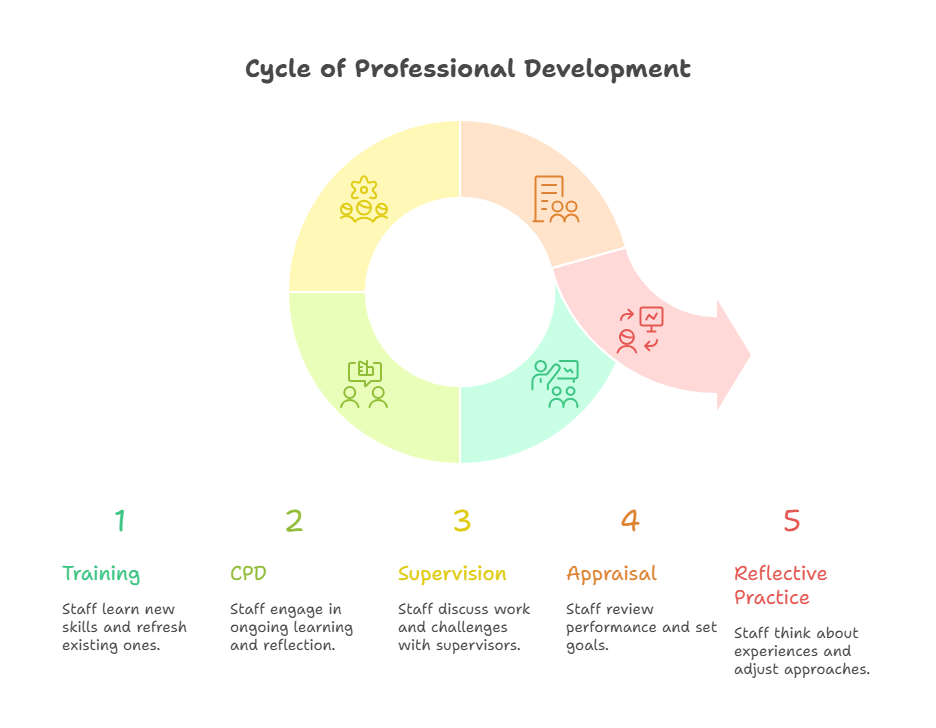
Professional development in health and social care helps staff build the skills they need to do their job well. It also helps them keep those skills up to date so care stays safe and effective. It supports good practice and ongoing improvement, not just career progression.

Professional Development in Health and Social Care

Together, these elements keep practice safe, skilled, and responsive to people’s needs.

Skills Challenges in Health and Social Care

Skills challenges affect care quality across the UK. They usually come from day-to-day pressures rather than a lack of commitment from staff.

Limited access to training

 In many UK care homes, staff work long shifts with minimal cover. A care assistant may miss manual handling training. The service can’t release them without risking safe staffing levels. Online modules help, but they don’t always replace practical training.

Workforce pressures

NHS wards and domiciliary care services often operate with staff shortages. A community support worker may cover extra visits due to sickness or vacancies. When this happens, staff focus on essential care, not skill development.

Changing care needs

 More people now live longer with dementia or multiple long-term conditions. A home care worker may support someone with advanced dementia. They may not have recent specialist training. This can leave staff unsure how to respond to behaviour changes.

Skill gaps

 Many UK services now use digital care records. A support worker may receive a tablet but little guidance. They learn by trial and error, which can affect record accuracy and confidence.

These examples show why skills development needs realistic planning and proper support in UK care settings.

How Is Development Measured in Health and Social Care?

Services measure development through everyday practice and real outcomes. It’s not just about paperwork. Simple methods show whether care improves over time.

How Is Development Measured in Health and Social Care?

Observation

Managers and senior staff observe daily care. They look at how staff support people, follow care plans, and communicate. Observation shows how skills translate into practice.

Feedback

Feedback comes from service users, families, and staff. Comments, conversations, and surveys highlight what works and what needs change. Honest feedback often reveals issues early.

Training records

 Training records show what learning staff complete and when. They help services identify gaps and plan updates. Records also support consistent practice across teams.

Appraisals and reviews

 Appraisals and reviews give structured time to reflect. Staff discuss progress, challenges, and goals. These conversations guide personal and professional development.

Outcomes for individuals

 Positive outcomes show real development. People manage tasks better, feel more confident, or need less support. These changes show that care and development work together.

Together, these methods help services track progress. They improve care in practical, meaningful ways.

Why Is Development Important in Health and Social Care?

Development matters because care never stands still. People change. Needs change. Practice has to keep up.

Better quality of care

 Development helps staff improve how they support people. Skills grow. Understanding deepens. Care feels more consistent and responsive, not rushed or routine.

Safer practice

Ongoing development supports safer care. Staff stay up to date with guidance and procedures. They spot risks earlier and respond with more confidence.

Person-centred support

 Development helps staff see the person, not just the task. Care plans reflect real preferences, routines, and abilities. People feel heard and respected.

Improved wellbeing for staff and individuals

 When staff develop, confidence improves. Stress reduces. People receiving care benefit too. Calm, skilled staff create safer and more supportive environments.

Ability to adapt to change

Health and social care constantly change. Development helps staff adapt to new needs, tools, and ways of working without feeling overwhelmed.

In short, development keeps care safe, flexible, and focused on people, not just processes.

Summary & Key Takeaways for Learners and Providers

  • Development in health and social care is lifelong and continuous.
  • It applies to individuals, care workers, and services.
  • Growth and development are different, but both matter in care.
  • Growth focuses on physical change, while development looks at the whole person
  • Ongoing development improves quality and safety in care settings.
  • Understanding development supports person-centred care and independence.

Understanding development helps care move forward. When support grows with people, care feels safer, more respectful, and truly centred on what matters most.

Health and Social Care Level 3 Diploma

Learn to promote Health and Social Care Level 3 Diploma!

FAQs

What is development in health and social care?

Development in health and social care means ongoing improvement in how people grow, learn, cope, and live. It applies to individuals receiving care, care workers, and services. Development supports safe, effective, and person-centred care across the lifespan.

Development means positive change over time. In care settings, it refers to improvements in physical ability, understanding, emotional wellbeing, and social skills. It also includes how staff and services improve practice to meet changing needs.

The definition of development in health and social care is continuous improvement that supports wellbeing, independence, and quality of care. It involves individuals, professionals, and services growing and adapting over time.

Development in health and social care is the process of ongoing change that improves how people function, cope, and receive support. It focuses on person-centred care, safety, and quality across all stages of life.

Growth in health and social care refers to physical and measurable change. It often involves height, weight, strength, or physical ability. Growth mainly appears in childhood but can also relate to recovery or physical improvement in adults.

Growth is defined as physical change that can be measured. In health and social care, it usually relates to body size, strength, or physical development rather than learning or emotional change.

The key difference is that growth focuses on physical change, while development looks at the whole person. Development includes emotional, intellectual, and social change and continues throughout life, not just childhood.

Human growth and development describes how people change physically, emotionally, intellectually, and socially across life. In care settings, understanding this helps staff plan support that matches changing needs and abilities.

The four areas of development are physical, intellectual, emotional, and social. Together, they explain how people move, think, feel, and interact. Care considers all four to support wellbeing and independence.

Physical development refers to movement, health, and independence. In care settings, it affects mobility, personal care, and safety. Supporting physical development helps people stay active and manage daily life.

Intellectual development involves learning, thinking, understanding, and decision-making. In care, it affects how people understand information, follow care plans, and make informed choices about support.

Emotional development relates to recognising feelings, managing emotions, empathy, and resilience. In care settings, it supports confidence, coping with change, and positive engagement with staff and services.

Social development involves communication, relationships, teamwork, and social skills. In health and social care, it supports interaction, reduces isolation, and improves overall wellbeing.

Personal development focuses on how care workers build self-awareness, confidence, communication skills, and emotional resilience. It supports safe practice, wellbeing, and effective person-centred care.

Services measure development through observation, feedback, training records, appraisals, and outcomes for individuals. These methods show whether care improves skills, confidence, independence, and quality over time.

Recent Blogs

5 Skills Every UK Care Employer Wants (and How to Prove You Have Them)

5 Skills Every UK Care Employer Wants (and How to Prove You Have Them)

UK care employers do not hire based on good intentions. Under CQC Regulation 18, they must evidence staff competence at every inspection. This guide covers the 5 skills every UK adult social care employer screens for, why each one has a regulatory basis, and how to prove yours through your CV, interview, the Care Certificate, and workplace evidence.

CQC Standards and Training What Care Staff Need to Know in 2026

CQC Standards and Training: What Care Staff Need to Know in 2026

CQC does not publish a mandatory training list. Under Regulation 18, every registered provider must ensure staff are demonstrably competent, properly inducted, and continuously supported. This guide explains the legal basis for training in 2026, the 16 Care Certificate standards, Oliver McGowan Mandatory Training, training matrices, and the competence evidence CQC inspectors look for.