



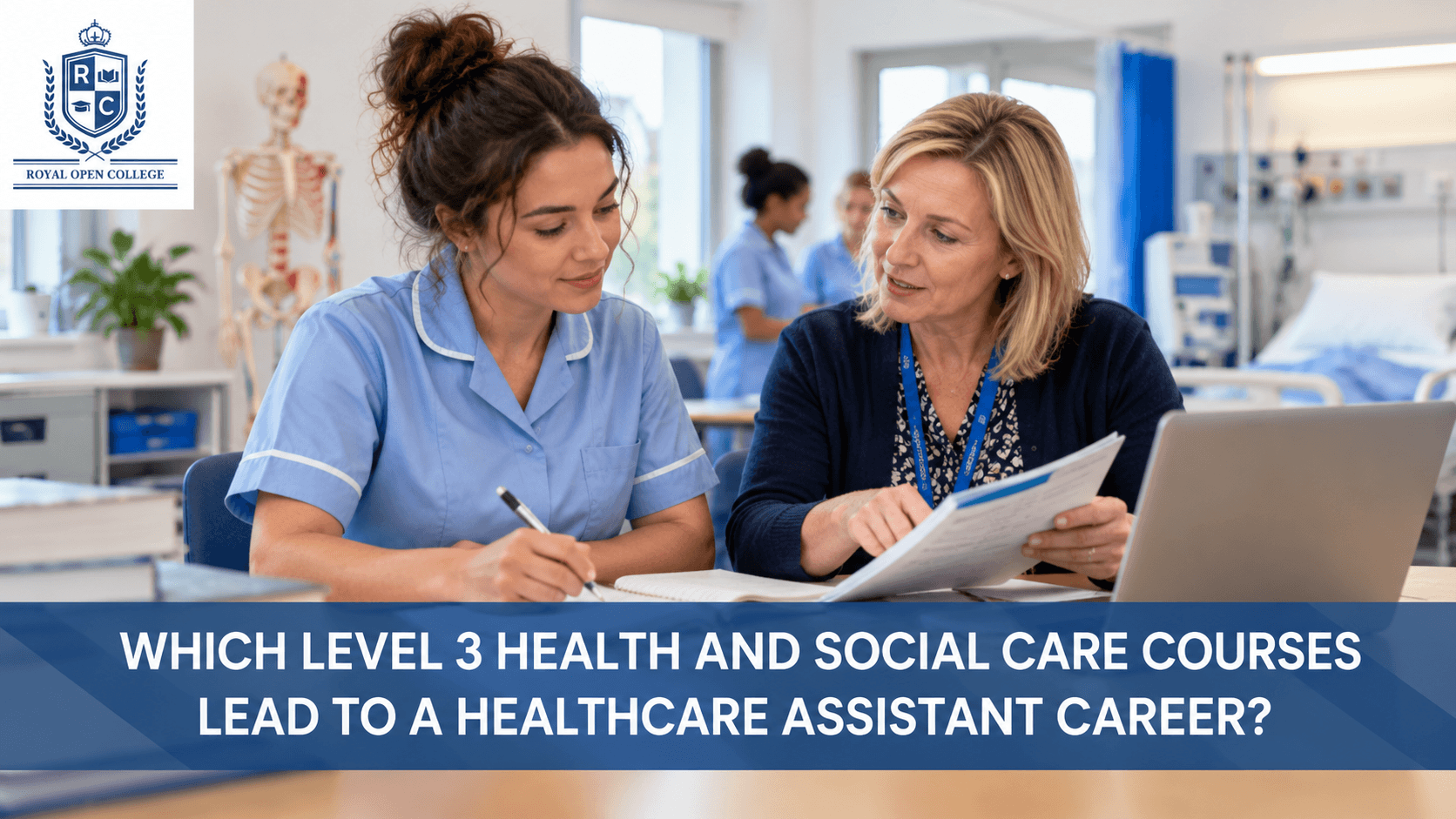




Four Level 3 routes lead towards healthcare assistant work, but none is usually compulsory. Two suit school leavers: the T Level in Health and the Level 3 Extended Diploma. Two suit working staff: the Level 3 Diplomas in Healthcare Support and Adult Care.
NHS Health Careers lists no set entry requirements, so employers decide what they ask for. The right route depends on your age, current job and setting.
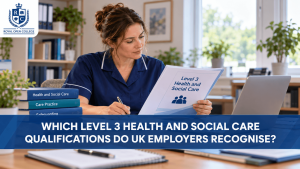
Aspiring future healthcare assistants can start with little formal knowledge of safeguarding or infection control. The Health and Social Care Level 3 Diploma from Royal Open College adds CPD learning in both. The diploma is not a regulated qualification, so check employer requirements first.
Quick Recap
- NHS healthcare assistant roles have no set entry requirements, so Level 3 study is usually optional.
- Different Level 3 routes suit school leavers, working healthcare assistants and senior care workers.
- A CPD course adds knowledge, but workplace assessment and employer checks confirm competence.
Do you need a Level 3 course to become a healthcare assistant?
You do not need a Level 3 course to become a healthcare assistant in the NHS. NHS Health Careers states there are no set entry requirements for the role. Employers expect good literacy and numeracy. Some ask for English and maths GCSEs or a healthcare qualification such as a BTEC or NVQ.
They also expect some paid or voluntary experience of care work. NHS applicants also show how the NHS values apply to their everyday work. NHS trusts usually appoint new healthcare assistants at Band 2 on Agenda for Change.
No law names a Level 3 course for this job either. In England, Regulation 18 requires providers to give staff the training their role needs. The regulation names no course level.
What does the Care Certificate add?
The Care Certificate is an induction standard in England, not a qualification. Since March 2025, the Care Certificate has 16 standards. Standard 16 covers learning disability and autism awareness. Employers deliver and assess the standards in the workplace.
How to get a care certificate? Here we bring the answers to you.
Which Level 3 courses lead to a healthcare assistant career?
Your age and current job decide which Level 3 route fits best. This guide covers England. Scotland, Wales and Northern Ireland use different frameworks. Each route has different entry rules and assessment methods.
Which courses suit school leavers?
School leavers usually take the T Level in Health or a Level 3 Extended Diploma. Both include placements in real care settings. The National Careers Service lists both as college routes into the role. A T Level usually needs four or five GCSEs, including English and maths. Both routes lead to work, an apprenticeship or university.
Which course suits people already working in healthcare?
The Level 3 Diploma in Healthcare Support suits people already working in healthcare support. Pathways include adult nursing support, maternity support, theatre support and mental health. An assessor observes your practice and reviews a portfolio of evidence. Some NHS employers offer the diploma through an apprenticeship, which combines paid work with structured training. Ask your manager which standard applies.
Where does a Level 3 course lead after healthcare assistant work?
Level 3 study leads towards senior healthcare assistant, assistant practitioner and nursing associate roles. NHS Health Careers lists these as next steps with experience and further training.
Assistant practitioners work above healthcare support worker level, and the NHS pays them at Band 4. Some nursing associate apprenticeships ask for a Level 3 qualification and Level 2 English and maths. Entry rules differ by employer, so ask your training lead. Registered nursing needs an approved degree and Nursing and Midwifery Council registration.
What is the difference between a regulated diploma and a CPD course?
A regulated diploma is a qualification on the Regulated Qualifications Framework, overseen by Ofqual. A CPD course records learning and professional development instead.
Awarding organisations such as NCFE, City & Guilds and Pearson offer regulated Level 3 diplomas. Assessment methods differ between them. Some, such as the Level 3 Diploma in Healthcare Support, use workplace observation. Others use written assignments. Employers decide whether either meets their needs. Check the qualification number on the Ofqual register before you enrol in any course.
What are the common mistakes when choosing a Level 3 course?
Level 3 appears in many course titles, but the label does not prove regulation. Misreading the title wastes money and study time.
- Many learners assume every Level 3 title is a regulated qualification.
- Workplace-assessed diplomas need a current care job, so some learners enrol too early.
- Others treat the Care Certificate as a qualification, when employers deliver the standards as induction.
- A certificate alone does not prove competence, because employers assess practice in the workplace.
- Employer requirements are not laws, so check each job advert.
Studying through Royal Open College
Royal Open College offers the Health and Social Care Level 3 Diploma as CPD learning. Topics include safeguarding, person-centred care, infection control, communication and record keeping. This learning helps you prepare for interviews and Care Certificate induction.
Workplace assessment stays separate, and employers decide which training they accept. Check your employer’s training requirements and the expectations for your role before you enrol.
What should you do next?
Choose your route by your current job, then confirm requirements with the employer you want to join. A school leaver with no care experience applies for healthcare assistant posts first. A senior care worker in a care home asks about the Level 3 Diploma in Adult Care. Compare the NHS Health Careers healthcare assistant guidance with one live job advert for your area.