Safeguarding children training levels can feel confusing, especially if you are trying to choose the right course for your role. Many learners see terms such as Level 1, Level 2 and Level 3 safeguarding training but are unsure what each level means.
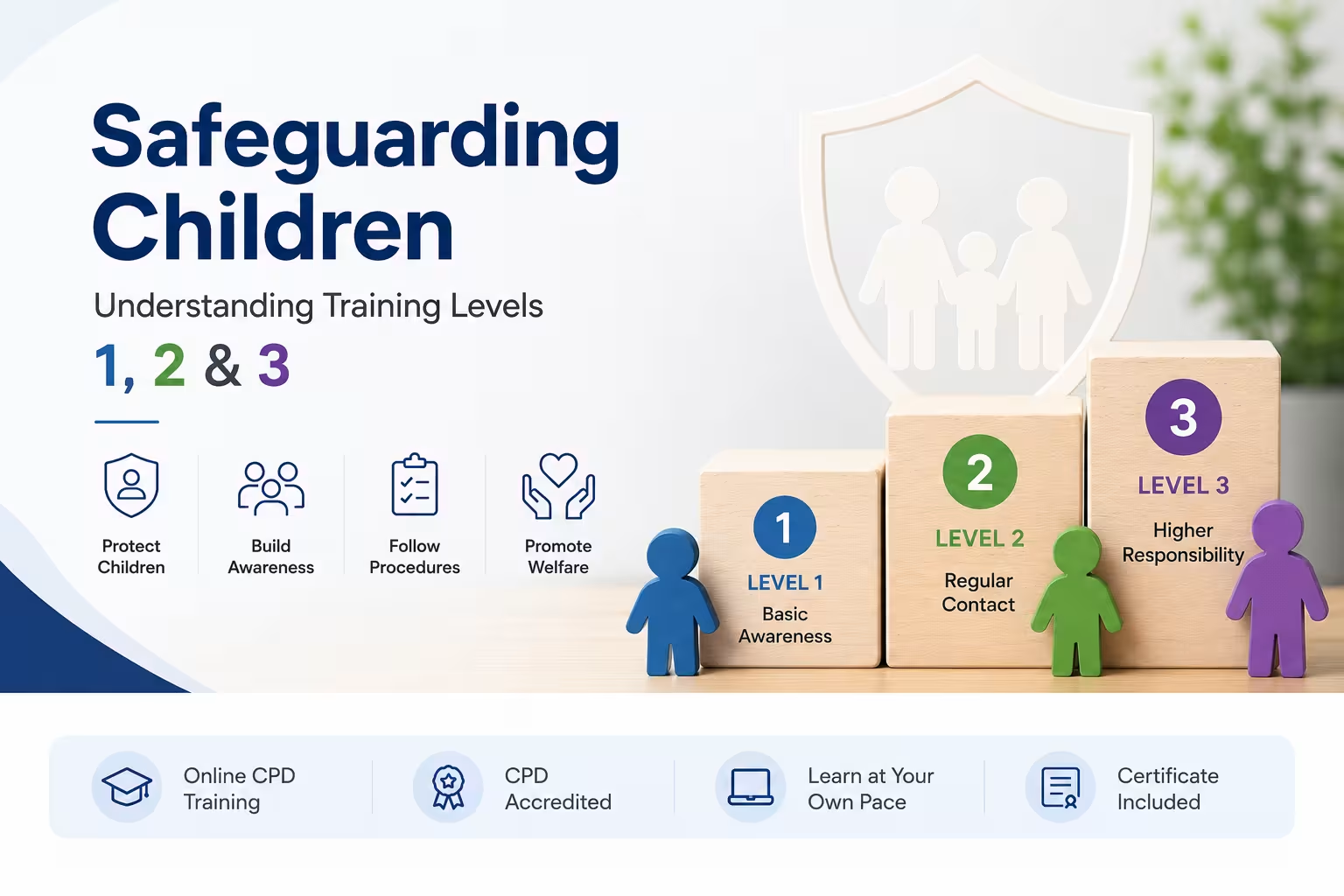
In simple terms, safeguarding children training levels usually show how much knowledge and responsibility a learner may need. Level 1 is often introductory, Level 2 gives more detailed knowledge, and Level 3 is usually aimed at people with greater safeguarding responsibilities.
However, safeguarding training requirements can vary between sectors, employers, UK nations and workplace policies. This means the course title alone should not be the only thing you check. You should also look at the course aims, learning outcomes and whether the training matches your role.
Safeguarding Children
Level 1, 2 and 3
Online CPD Training
UK Learners
What Are Safeguarding Children Training Levels?
Safeguarding children training levels are commonly used to match training depth with a person’s role and responsibility. They help learners understand whether they need basic awareness, more detailed knowledge or advanced safeguarding understanding.
Safeguarding children means taking action to help protect children from harm and promote their welfare. Organisations that work with, or come into contact with, children should have safeguarding policies and procedures in place to help keep them safe.
Although many providers use Level 1, Level 2 and Level 3 labels, these levels are not always defined in exactly the same way everywhere. A Level 3 course from one provider may not cover the same content as another provider’s Level 3 course.
Important: Always check the course learning outcomes, certificate details and your employer or organisation’s requirements before enrolling.
- Level 1 is usually for basic safeguarding awareness.
- Level 2 is usually for people with more regular contact with children.
- Level 3 is usually for people with higher safeguarding responsibility.
Why Safeguarding Children Levels Can Be Confusing
Safeguarding children levels can be confusing because different sectors and organisations may use them differently. A learner’s required training may depend on their role, contact with children, supervision level and workplace safeguarding policy.
For example, staff in schools, childcare settings, healthcare, sports clubs, voluntary organisations and community settings may all need safeguarding knowledge. But the depth of training needed can differ depending on what the person does.
Schools and colleges in England should follow the Department for Education’s Keeping Children Safe in Education guidance. Wider multi-agency child safeguarding practice is also supported by Working Together to Safeguard Children.
A volunteer with supervised contact may need a different level of training from a nursery manager, teacher, team leader or designated safeguarding officer. Someone who works independently with children may also need more detailed training than someone who has only occasional contact.
The most important question is not only “Which level is this course?” but also “Does this course match my safeguarding responsibilities?”
Safeguarding Children Level 1 Explained
Safeguarding Children Level 1 training is usually an introductory course for people who need basic safeguarding awareness. It helps learners understand what safeguarding means and how to recognise and report possible concerns.
Level 1 training is often suitable for people who may come into contact with children but do not hold advanced safeguarding responsibilities. It is commonly used as a starting point for new learners, volunteers or support staff.
What does Level 1 usually cover?
- What safeguarding children means
- Why child welfare matters
- Types of abuse and neglect
- Possible signs that a child may be at risk
- Basic duty of care
- How to respond to a concern
- Who to report concerns to
- Why concerns should be recorded and passed on appropriately
Who is Level 1 suitable for?
Level 1 may be suitable for volunteers, new starters, reception or admin staff, support staff, community group helpers, people with occasional contact with children, people working under supervision, or learners who need a basic safeguarding introduction.
If you are new to safeguarding and need a simple starting point, the Safeguarding Children Level 1 course can help you build essential awareness before moving to a higher level.
Safeguarding Children Level 2 Explained
Safeguarding Children Level 2 training usually gives more detailed knowledge than Level 1. It is often suitable for people who work or volunteer with children more regularly and need stronger safeguarding awareness.
Level 2 training normally builds on the basics. It does not only explain what safeguarding is; it also helps learners understand how concerns may appear in practice and how to respond in a safer, more structured way.
What does Level 2 usually cover?
- Safeguarding responsibilities in more detail
- Different types of abuse and neglect
- Possible signs and indicators of harm
- Responding to a disclosure or concern
- Recording information clearly
- Reporting concerns through the correct route
- Understanding duty of care
- Safer working practice
- What may happen after a concern is raised
Who is Level 2 suitable for?
Level 2 may be suitable for teaching assistants, childcare workers, early years practitioners, youth workers, sports coaches, care workers supporting children or families, volunteers with regular contact, staff with a duty of care towards children, or people who need more than basic awareness.
If your role involves regular contact with children, the Safeguarding Children Level 2 course may be a more suitable option than basic awareness training.
Safeguarding Children Level 3 Explained
Safeguarding Children Level 3 training is usually more advanced and is commonly aimed at people with greater safeguarding responsibility. It supports learners who may need to respond to, record, escalate or help manage safeguarding concerns.
Level 3 is often the level searched by people who need a stronger understanding of safeguarding practice. It may be relevant for staff who work more independently, support others in their team or have additional responsibility for recognising and reporting concerns.
What does Level 3 usually cover?
- Advanced safeguarding awareness
- Recognising higher-risk safeguarding situations
- Responding to concerns with confidence
- Recording and sharing information appropriately
- Understanding referral routes
- Escalating concerns when needed
- Multi-agency safeguarding awareness
- Safer organisational practice
- Supporting others to follow safeguarding procedures
- Understanding role boundaries in safeguarding decisions
Who is Level 3 suitable for?
Level 3 may be suitable for senior childcare staff, nursery managers, school staff with extra safeguarding responsibility, team leaders, managers, designated safeguarding officers, staff working more independently with children, people who support others with safeguarding concerns, or learners who need advanced safeguarding knowledge for their role.
If you need advanced safeguarding knowledge for a higher-responsibility role, the Safeguarding Children Level 3 course can help you develop a stronger understanding of recognising, responding to and escalating concerns.
Safeguarding Level 1 vs Level 2 vs Level 3
The main difference between Safeguarding Children Level 1, Level 2 and Level 3 is the depth of knowledge and responsibility. Level 1 is basic awareness, Level 2 is more practical, and Level 3 is more advanced.
| Training Level |
Main Purpose |
Typical Learner |
Common Topics |
Responsibility Level |
| Level 1 |
Basic safeguarding awareness |
Volunteers, new starters, support staff or people with occasional contact |
What safeguarding means, signs of abuse, basic reporting |
Introductory |
| Level 2 |
More detailed safeguarding knowledge |
Staff or volunteers with regular contact with children |
Recognising, responding, recording and reporting concerns |
Intermediate |
| Level 3 |
Advanced safeguarding understanding |
Senior staff, managers or people with greater responsibility |
Escalation, referral awareness, information sharing and safer practice |
Advanced |
This comparison is only a general guide. The right level depends on your role, sector, supervision level and employer requirements.
Which Safeguarding Children Level Do I Need?
The right safeguarding children level depends on your role, contact with children and level of responsibility. Someone with occasional supervised contact may need Level 1, while regular or higher-responsibility roles may need Level 2 or Level 3.
Level 1
Basic Awareness
Choose Level 1 if you need a simple introduction to safeguarding children and your role involves occasional, supervised or limited contact.
Level 2
Regular Contact
Choose Level 2 if you work or volunteer with children more regularly and need stronger knowledge of recognising and reporting concerns.
Level 3
Higher Responsibility
Choose Level 3 if you have greater safeguarding responsibility, work more independently or support others with safeguarding concerns.
A learner who is new to safeguarding may start with Level 1. A person working directly with children may need Level 2. A senior member of staff, manager or safeguarding officer may need Level 3.
Some roles may also involve regulated activity with children. GOV.UK provides guidance on regulated activity with children, including activities and roles that may be eligible for specific DBS checks.
Is Level 3 Safeguarding Children Training the Same as DSL Training?
Level 3 safeguarding children training is not always the same as Designated Safeguarding Lead training. Level 3 can support advanced safeguarding knowledge, but DSL training may include more role-specific leadership duties.
A Designated Safeguarding Lead, often called a DSL, usually has specific safeguarding responsibilities within an organisation. These can include overseeing safeguarding procedures, supporting staff with concerns and helping ensure concerns are managed through the correct routes.
A Level 3 safeguarding children course may be useful for learners who need advanced knowledge, but it may not automatically replace a DSL-specific course. This depends on the course content and the organisation’s requirements.
If your role specifically requires DSL-focused training, you may want to review the Safeguarding Children Level 3 Designated Safeguarding Lead DSL course and check whether it matches your workplace needs.
Can I Complete Safeguarding Children Training Online?
Yes, online safeguarding children training can be suitable for many learners who need flexible CPD or workplace learning. However, acceptance depends on your employer, organisation and the responsibilities linked to your role.
Online training can help learners study at their own pace and revisit key topics when needed. It can be especially useful for people who need to update their knowledge, train around work or access safeguarding content without attending a classroom session.
Before choosing an online course, check:
- The course level
- The learning outcomes
- Whether the course focuses on children
- Whether assessment is included
- What certificate is provided
- Whether CPD recognition is included
- Whether the course matches your role
- Whether your employer accepts online training
What Should a Good Safeguarding Children Course Include?
A good safeguarding children course should be clear, practical and suitable for the learner’s role. It should help learners understand what safeguarding means, how concerns may appear and what steps to take.
- Clear learning outcomes
- Child-focused safeguarding content
- Signs and indicators of abuse or neglect
- Reporting and recording procedures
- Practical workplace examples
- Accessible online study
- Assessment or knowledge checks
- Certificate of completion
- CPD recognition where applicable
- Learner support
- Up-to-date course content
The course should also explain role boundaries. Safeguarding training should help learners understand when to act, when to report and when to seek help from the appropriate person or service.
How Often Should Safeguarding Children Training Be Refreshed?
There is no single refresher period that applies to every safeguarding children role. Renewal times can vary depending on employer policy, sector guidance, role responsibility and local safeguarding expectations.
Some organisations ask staff to refresh safeguarding training every year. Others may use a different training cycle depending on the type of role and level of risk. Higher-responsibility roles may need more frequent updates or additional training.
- Check your employer’s training policy.
- Check local safeguarding guidance where relevant.
- Check your sector requirements.
- Review whether your role has changed.
- Refresh your knowledge if new guidance or procedures are introduced.
Study Safeguarding Children Training Online with Royal Open College
Royal Open College offers online safeguarding children training for learners who want clear, flexible and role-relevant CPD study. Courses are designed to help learners understand safeguarding responsibilities and build confidence in safer practice.
Before enrolling, learners should check the course description and make sure the level matches their role, employer requirements and safeguarding responsibilities.
FAQs
What is Safeguarding Children Level 1 training?
Safeguarding Children Level 1 is introductory training that helps learners understand basic safeguarding principles. It usually covers what safeguarding means, possible signs of abuse or neglect and how to report a concern.
What is Safeguarding Children Level 2 training?
Safeguarding Children Level 2 gives more detailed safeguarding knowledge for people who work or volunteer with children more regularly. It usually covers recognising, responding, recording and reporting concerns in more depth.
What is Safeguarding Children Level 3 training?
Safeguarding Children Level 3 is more advanced training for people with greater safeguarding responsibility. It may cover escalation, referral awareness, information sharing, recording and safer safeguarding practice.
Which safeguarding children level do I need?
The right level depends on your role, contact with children and responsibility. Level 1 is usually basic awareness, Level 2 is for more regular contact, and Level 3 is for higher safeguarding responsibility.
Who needs Level 3 safeguarding children training?
Level 3 may suit senior staff, managers, designated safeguarding officers or people who work more independently with children. Always check your employer or organisation’s requirements before choosing a course.
Is Level 3 safeguarding children training suitable for school staff?
It may be suitable for some school staff depending on their role and responsibilities. Schools should follow their own safeguarding policy and relevant statutory guidance when deciding staff training requirements.
Is Level 3 safeguarding the same as DSL training?
Not always. Level 3 safeguarding training can support advanced safeguarding knowledge, but Designated Safeguarding Lead training may include additional role-specific responsibilities depending on the setting.
Can I complete safeguarding children training online?
Yes, online safeguarding children training can support CPD and workplace learning. However, you should check whether your employer, organisation or sector accepts the course before enrolling.
How long does safeguarding children training last?
There is no single renewal period for every role. Many organisations set their own refresher training cycle based on role, risk level, policy and sector guidance.
Is safeguarding children training the same as child protection training?
They are closely linked, but safeguarding is broader. Safeguarding focuses on promoting welfare and preventing harm, while child protection usually focuses on action taken when a child may be at risk of harm.