




How to Promote Empowerment in Health and Social Care

How to Promote Empowerment in Health and Social Care

Empowerment in health and social care means supporting people to make choices, stay involved, and feel confident in their care. This guide explains what empowerment is, why it matters, and how care workers promote it through shared decision-making, clear communication, and everyday person-centred practice.

Situations regarding How to Promote Empowerment in Health and Social Care often show up in everyday moments. Picture a home care visit where a support worker asks, “What would you like help with today?” rather than taking over. That pause matters. It gives control back to the person receiving care.

Empowerment in health and social care means helping people make choices, stay involved, and feel confident about their care. It applies across settings, from care homes and home care to GP-linked community support. It turns care into something done with people, not to them.

This blog looks at empowerment as a practical part of person-centred care. It explains what empowerment means, why it matters, and how staff can promote it in real settings. You’ll find clear examples, simple actions, and common pitfalls to avoid. If you’re looking for practical guidance that answers your questions clearly, you’re in the right place.

TL;DR

  • Empowerment means supporting people to make choices and stay involved in their own care.
  • Empowerment matters because it builds confidence, independence, and trust in care relationships.
  • Service users benefit from greater control, while staff benefit from clearer communication and cooperation.
  • Care workers promote empowerment through choice, involvement, and respectful support.
  • Shared decision-making helps people shape care that fits their needs and preferences.
  • Accessible information allows people to understand options and make informed decisions.
  • Empowerment applies in real care settings, including care homes, home care, and community services.

Health and Social Care Level 3 Diploma

Learn to promote Health and Social Care Level 3 Diploma!

What Is Empowerment in Health and Social Care?

Empowerment in health and social care is supporting service users to have choice, control, and active involvement in decisions about their care. It focuses on helping people make informed decisions by providing clear information, practical support, and real opportunities, as part of person-centred care.

In everyday practice, empowerment means care happens with people, not to them. NHS England promotes this approach through shared decision-making and personalised care. Staff listen, explain options clearly, and respect what matters to the individual. Skills for Care also places empowerment at the centre of good care, where service users shape support instead of fitting into fixed routines.

Here’s a simple example. A support worker explains care options in plain language and checks understanding. The person chooses what works best for them. That choice, supported and respected, shows empowerment in action.

Why Is Empowerment Important in Health and Social Care?

Empowerment matters because it shapes everyday care experiences. It affects dignity, involvement, and the quality of care people receive. When empowerment guides practice, care feels respectful and personal.

Why Empowerment Is Important for Service Users

  • Empowerment helps people feel heard and respected. Their views influence decisions about their care.
  • Choice and involvement build confidence. People feel more able to speak up and shape their support.
  • Active involvement supports independence, even in small daily choices.
  • Empowerment improves the overall experience of care, making it more dignified and responsive.

The Care Quality Commission (CQC) expects care providers to support autonomy, independence and involvement as part of dignity and respect in good quality care. This means people must be offered real opportunities to shape their care and life choices.

Why Empowerment Is Important for Staff

  • Empowerment gives staff confidence in decision-making. Clear conversations support better choices for everyone.
  • It improves communication between staff and service users.
  • Empowered practice increases job satisfaction. Work feels meaningful and respectful.
  • It improves the quality of care delivered, because care aligns more closely with what people value.

Skills for Care promotes workforce development that supports person-centred approaches. Their programmes encourage staff to adopt skills and values that make empowerment part of everyday practice.

How to Promote Empowerment in Health and Social Care (Step-by-Step Guide)

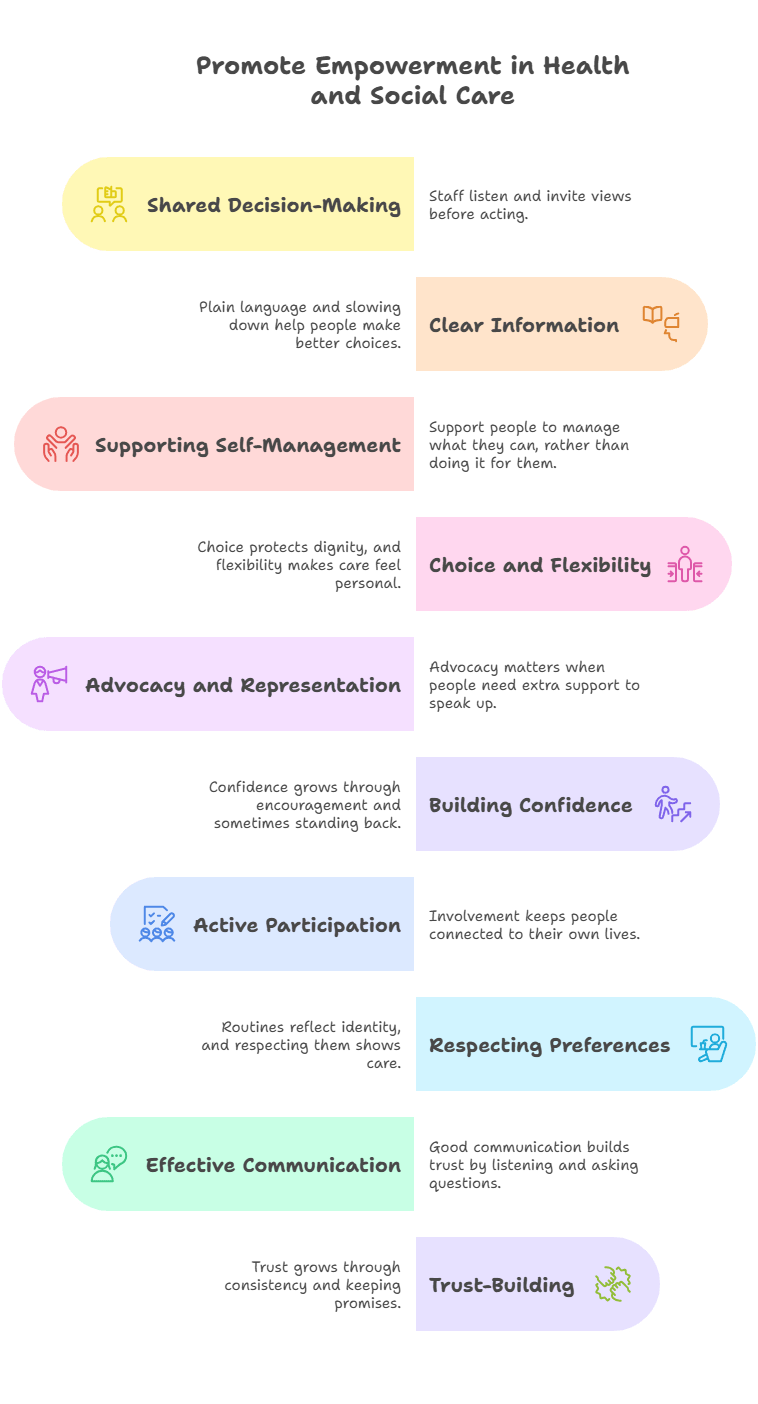
Promoting empowerment works best when staff turn values into everyday actions. Below are practical strategies that care workers and services can use in real settings.

How to Promote Empowerment in Health and Social Care (Step-by-Step Guide)

Empowerment doesn’t rely on complex systems. It grows through thoughtful actions, repeated daily, with respect at the centre.

How to Empower Patients and Service Users in Practice

Empowerment takes shape in everyday interactions. It shows in how staff plan care, set goals, listen, and build trust across health and social care settings.

Care planning involvement
Involve people in their care plans from the start. Ask what matters to them and include their views in decisions.
Example: A GP-linked support worker reviews a care plan with the person and agrees next steps together.

Goal setting
Set goals that feel realistic and personal. Small goals count and build confidence.
Example: A care worker agrees a short daily walk that fits the person’s routine.

Feedback conversations
Create space for honest feedback. Listen without defensiveness and act on what you hear.
Example: A nurse asks what’s working well and what could change, then follows up.

Trust and relationships
Build trust through consistency and respect. Keep promises and explain changes early.
Example: A key worker checks in regularly and updates the person before appointments change.

These actions empower patients and service users in real ways. They turn care into a shared effort, grounded in respect and involvement.

Examples of Empowerment in Health and Social Care

Empowerment shows up in practical, everyday moments. Often small. Still important.

Here are clear, real-world examples across health and social care settings.

  • An older person chooses when to get up and go to bed in a care home.
  • A service user helps write their own care plan and agrees priorities.
  • A patient asks questions about treatment options during a GP appointment.
  • A person with a learning disability uses pictures to understand choices.
  • A disabled adult chooses who supports them with personal care.
  • A young person takes part in decisions about mental health support.
  • A person with a long-term condition manages parts of their own routine.
  • A care worker offers choices instead of making assumptions.
  • A service user uses their preferred communication method, such as text or symbols.
  • A person decides what to eat and when, rather than following a set menu.
  • A patient agrees goals for recovery after hospital discharge.
  • A support worker encourages independence, even if tasks take longer.
  • A carer explains options clearly and checks understanding.
  • A person gives feedback about care and sees changes made.
  • A resident keeps personal routines, cultural habits, and preferences.

These examples show empowerment in action. Across ages, abilities, and needs. Care feels more respectful, personal, and effective when people stay involved.

Factors That Affect the Empowerment of Individuals

Empowerment doesn’t happen in isolation. Several factors shape how much choice, control, and involvement a person really has in care.

Communication barriers

Communication barriers limit empowerment quickly. When people don’t understand information, they can’t make informed decisions. Language differences, hearing loss, or complex wording often stand in the way.

Confidence and self-esteem

Low confidence reduces involvement. People may avoid speaking up if they doubt themselves or fear getting things wrong. Supportive encouragement helps rebuild confidence and independence over time.

Access to information

 Empowerment relies on access to clear information. When services don’t share options openly, people lose control. Accessible formats make a real difference here.

Organisational culture

 Culture shapes everyday practice. A task-focused culture limits empowerment. A person-centred culture encourages choice, flexibility, and shared decision-making.

Staff attitudes

 Staff attitudes influence empowerment directly. Respectful, open attitudes invite involvement. Rushed or dismissive behaviour shuts it down.

These factors often overlap. When services address them together, empowerment becomes part of daily care, not an added extra.

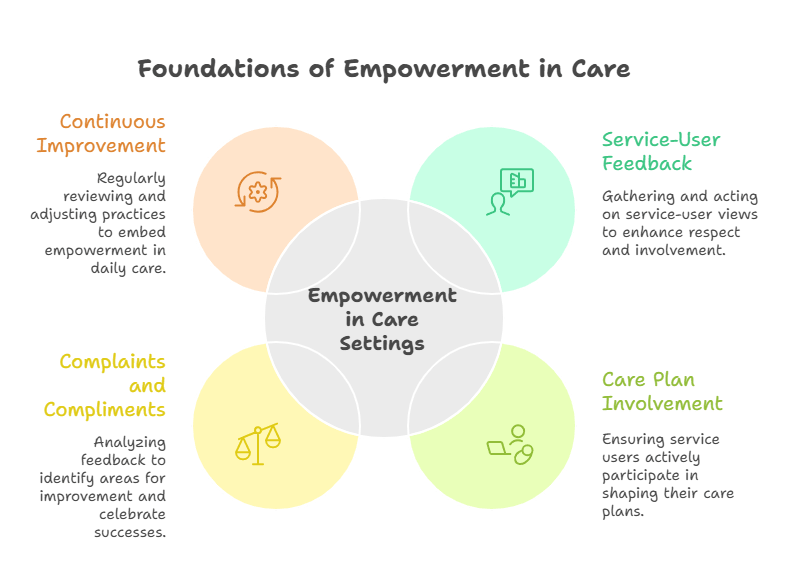
Measuring and Supporting Empowerment in Care Settings

Services support empowerment by actively checking how involved people feel in their own care. They review what happens in practice, not just what appears in policies.

Measuring and Supporting Empowerment in Care Settings

These methods keep empowerment visible and accountable in care settings.

Summary & Key Takeaways for Learners and Providers

  • Empowerment supports choice, control, and involvement in everyday care.
  • It works best when staff apply it through daily actions, not theory.
  • Empowerment improves dignity, confidence, and quality of care.
  • Care workers promote empowerment through listening, communication, and trust.
  • Organisational culture and staff attitudes shape how empowerment works in practice.
  • Feedback and review help services maintain and improve empowerment.

Empowerment doesn’t require perfect systems or complex tools. It grows through everyday care that listens, respects choice, and treats people as active partners, not passive recipients.


Health and Social Care Level 3 Diploma

Learn to promote Health and Social Care Level 3 Diploma!

Frequently Asked Questions

What is empowerment in health and social care?

Empowerment in health and social care means supporting people to have choice, control, and involvement in their care. It helps service users make informed decisions through clear information and support. Empowerment treats people as active partners, not passive recipients, across health and social care settings.

Empowerment means involving people in decisions that affect their care. Staff explain options, listen to views, and respect preferences. This approach builds confidence and independence, while recognising that people may still need guidance or support to take part fully.

Empowerment is important because it protects dignity and improves care experiences. When people feel heard and respected, they engage more with support. Empowerment also builds trust and confidence, which leads to better involvement and higher quality care overall.

The difference is that empowerment includes support, while autonomy focuses on independence. Empowerment helps people make choices with guidance and information. Autonomy assumes people act independently. In care settings, empowerment allows choice even when support remains necessary.

You empower individuals by involving them in decisions and offering real choices. Clear communication matters. So does listening. Simple actions, such as respecting routines and explaining options, help people feel confident and involved in their own care.

Staff promote empowerment by listening, explaining choices, and encouraging involvement. They respect preferences and keep people informed. Consistent behaviour builds trust. Over time, these actions help service users feel confident to speak up and take part in decisions.

Strategies used to empower individuals include shared decision-making, clear communication, goal setting, and supporting independence. These strategies help people understand choices and take part in care. Small, everyday actions often have the strongest impact on empowerment.

Strategies include involving people in care planning, offering choice, and building confidence. Staff also support independence and communicate clearly. These strategies turn person-centred values into daily practice and help people stay involved in decisions about their care.

Examples of empowerment include choosing daily routines, helping write care plans, asking questions about treatment, and using preferred communication methods. Supporting independence and respecting personal choices also show empowerment in everyday care situations.

You empower service users by valuing their views and involving them in decisions. Explain options clearly and respect choices. When people see their input shape care, they feel more confident, involved, and willing to engage with support.

Patients feel empowered when professionals involve them in decisions. Clear explanations, shared decision-making, and time for questions help. When patients understand options and feel listened to, they take a more active role in their care.

Factors include communication, confidence, access to information, organisational culture, and staff attitudes. Poor communication or limited information reduces involvement. Supportive staff and person-centred environments help empowerment grow.

Factors such as communication and confidence shape empowerment directly. Unclear information reduces informed decisions. Low confidence limits involvement. In contrast, positive staff attitudes and supportive cultures encourage participation, independence, and shared responsibility in care.

Barriers include language difficulties, time pressures, poor communication, low confidence, and digital exclusion. These barriers limit understanding and choice. Without support, people may agree to care without feeling genuinely involved or empowered.

Empowerment is supported through feedback, care plan reviews, and open communication. Services that listen and act on views strengthen involvement. Ongoing review and improvement help embed empowerment into everyday practice.

Empowering individuals matters because it supports dignity, confidence, and wellbeing. People feel respected and involved rather than managed. Empowerment also leads to care that fits individual needs, improving satisfaction and overall quality of care.

Empowerment improves quality of care by aligning support with personal needs and preferences. When people take part in decisions, care feels more appropriate and respectful. This approach strengthens relationships and reduces misunderstandings.

Yes, empowerment applies to everyone. The approach adapts to individual needs and abilities. Even when people need high levels of support, staff can still offer choice, involvement, and respect in meaningful ways.

Recent Blogs

5 Skills Every UK Care Employer Wants (and How to Prove You Have Them)

5 Skills Every UK Care Employer Wants (and How to Prove You Have Them)

UK care employers do not hire based on good intentions. Under CQC Regulation 18, they must evidence staff competence at every inspection. This guide covers the 5 skills every UK adult social care employer screens for, why each one has a regulatory basis, and how to prove yours through your CV, interview, the Care Certificate, and workplace evidence.

CQC Standards and Training What Care Staff Need to Know in 2026

CQC Standards and Training: What Care Staff Need to Know in 2026

CQC does not publish a mandatory training list. Under Regulation 18, every registered provider must ensure staff are demonstrably competent, properly inducted, and continuously supported. This guide explains the legal basis for training in 2026, the 16 Care Certificate standards, Oliver McGowan Mandatory Training, training matrices, and the competence evidence CQC inspectors look for.