










how_to_become_a_nursing_assistant_in_the_uk

How to Become a Nursing Assistant in the UK

This guide explains how to become a Nursing Assistant without confusion or misleading claims. Learn what the role involves, what employers expect, how the Care Certificate 2025 update fits in, when DBS checks apply, and how NHS Band 2 and 3 roles work. Clear supervision rules, regulation facts, and progression to Nursing Associate are mapped step by step.

At 6:45am, a Healthcare Assistant arrives on an NHS ward. She attends handover. She helps a patient wash and dress. She records temperature, pulse, and respirations. She reassures a worried daughter at the bedside. She notices a change in breathing and reports it to the registered nurse. She follows infection prevention procedures. She documents every action clearly.

Many people call this role a nursing assistant. In the UK, the title causes confusion. It is not a licensed profession. It is not NMC registered. So what does it mean in practice, and how do you enter this role?

This guide separates fact from myth. It explains regulation, supervision, qualifications, and progression. You will see the real pathway, not shortcuts or sales claims.

TL;DR Quick Summary

  • In the UK, nursing assistant usually means Healthcare Assistant or Healthcare Support Worker.
  • There is no national licence and no NMC registration for HCAs.
  • Employers require competence, safe practice, and supervision. There is no single mandatory qualification set by law.
  • The Care Certificate was updated in March 2025 and now includes 16 standards. It is an induction framework, not a regulated qualification.
  • Most NHS roles start at Band 2 or Band 3 under Agenda for Change.
  • Progression routes include Nursing Associate, which is NMC regulated, and registered nurse training pathways.

Nursing Assistant Level 3 Diploma

Learn to promote Nursing Assistant Level 3 Diploma!

Authority Clarification

This guide reflects UK regulatory context including:

  • NHS employment structures
  • Skills for Care Care Certificate standards updated March 2025 with 16 standards
  • Care Quality Commission Fundamental Standards
  • Health and Social Care Act 2008 Regulated Activities Regulations 2014
  • Nursing and Midwifery Council for Nursing Associate clarification

This page clearly separates:

  • Law
  • Regulatory expectation
  • Employer preference
  • Optional development

What Is a Nursing Assistant in the UK?

In the UK, nursing assistant usually refers to a Healthcare Assistant or Healthcare Support Worker who provides hands on care under the supervision of a registered nurse. It is not a separately regulated profession.

In the UK, the term nursing assistant does not describe a licensed role. Most employers use Healthcare Assistant HCA or Healthcare Support Worker HCSW.

You may also see:

  • Clinical Support Worker
  • Ward Support Worker
  • Therapy Assistant
  • Maternity Support Worker

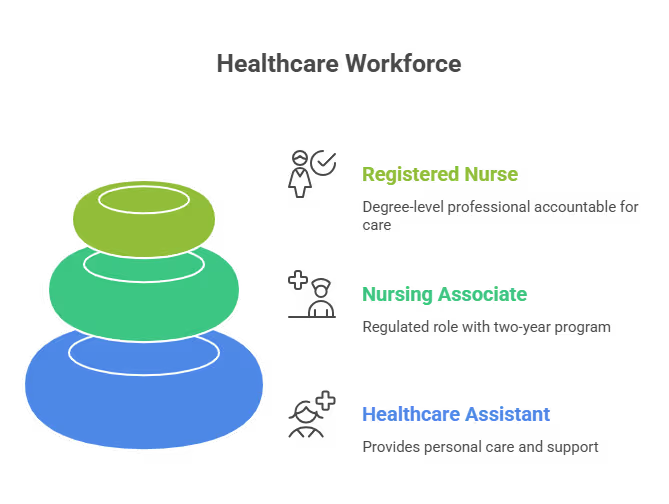
These roles sit within the non-regulated workforce. They support registered professionals. It is important to separate three roles:

what_is_a_nursing_assistant_in_the_uk

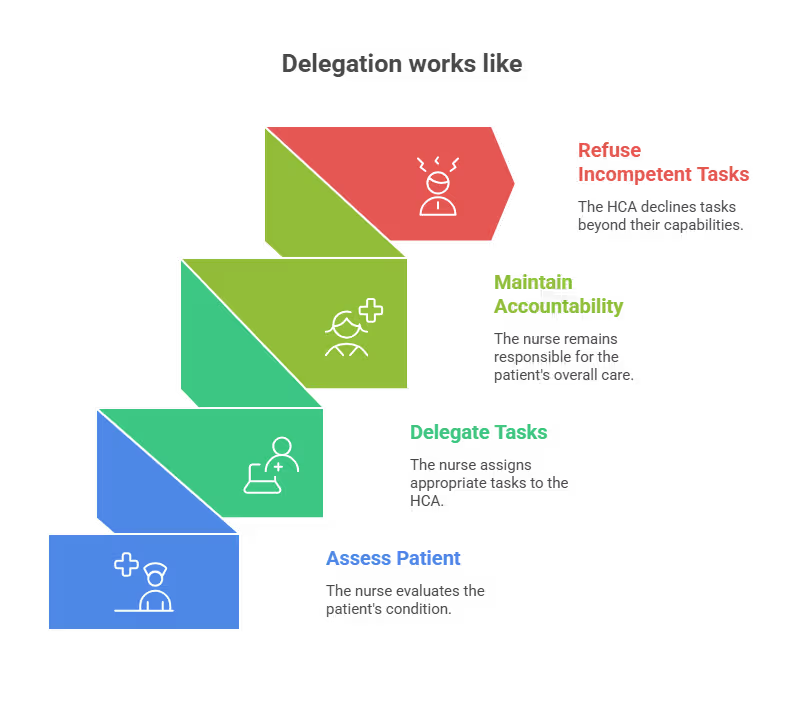
HCAs work under delegation. A nurse decides which tasks are appropriate to delegate. The nurse keeps overall accountability. The HCA remains responsible for carrying out tasks safely within their competence.

Example in an NHS ward:

  • Help a patient wash and dress
  • Take and record vital signs
  • Report changes in condition
  • Support mobility
  • Follow care plans

Example in a care home:

  • Assist with meals
  • Support continence care
  • Monitor wellbeing
  • Record observations
  • Escalate safeguarding concerns

HCAs cannot:

  • Diagnose conditions
  • Prescribe medication
  • Lead care planning independently
  • Work outside delegated scope

There is no UK regulated title called Certified Nursing Assistant. That is a US term.

Is a Nursing Assistant a Regulated Role?

No. Healthcare Assistants in the UK are not regulated by the Nursing and Midwifery Council. Employers must ensure staff are competent, trained, and supervised under statutory and CQC staffing regulations.

Healthcare Assistants are part of the non-regulated workforce. They are not registered with the Nursing and Midwifery Council. Regulation sits at the service level, not the individual licence level.

Under the Health and Social Care Act 2008 Regulated Activities Regulations 2014, providers must ensure:

  • Regulation 18 Staffing: Staff must have the qualifications, competence, skills, and experience necessary.

  • Regulation 19 Fit and Proper Persons: Staff must be of good character and physically and mentally fit.

This means employers carry responsibility for recruitment, training, supervision, and competence assessment.

Law sets minimum requirements. CQC inspects services against those requirements. Employers design induction and supervision systems to meet those standards.

Common myth: You must register nationally to work as an HCA.
Fact: No national HCA register exists in England.

Nursing Associates differ because they are NMC-regulated. They hold registration and professional accountability.

What Qualifications Do You Need to Become a Nursing Assistant?

There are no legally mandated qualifications to become a Healthcare Assistant in the UK. Employers often prefer GCSEs in English and Maths and may expect a Care Certificate or a Level 2 or Level 3 health and social care qualification.

There is no single mandatory qualification required by law. Employers commonly look for:

  • GCSE English and Maths
  • Functional Skills Level 2 as an equivalent
  • Level 2 Diploma in Health and Social Care
  • Level 3 Diploma for more advanced roles

GCSEs are often preferred, not always required. Some employers accept relevant experience instead. Functional Skills Level 2 often meets literacy and numeracy expectations.

  • Level 2 Diploma: Introduces care principles, safeguarding, and communication.
  • Level 3 Diploma: Supports progression to Band 3 roles and additional delegated tasks.

The Care Certificate is different from a diploma. It is an induction framework, not a regulated qualification. NHS employers often:

  • Provide structured induction
  • Require Care Certificate completion during probation
  • Assess competence through observed practice

Private sector requirements vary. Some care homes prioritise experience. Others require Level 2. Employers assess competence, not certificates alone.

What Is the Care Certificate Updated 2025?

what_is_the_care_certificate_updated_2025

The Care Certificate is an employer led induction framework for health and social care support workers. Updated in March 2025, it now includes 16 standards and is widely used to evidence baseline competence.

The Care Certificate was introduced in 2015 after the Cavendish Review. It aimed to standardise induction for support workers. In March 2025, the framework was revised and now includes 16 standards.

The 16 standards cover:

  • Understand your role
  • Personal development
  • Duty of care
  • Equality and diversity
  • Work in a person centred way
  • Communication
  • Privacy and dignity
  • Fluids and nutrition
  • Awareness of mental health
  • Safeguarding adults
  • Safeguarding children
  • Basic life support
  • Health and safety
  • Infection prevention and control
  • Handling information
  • The updated additional standard

The Care Certificate:

  • Is not a qualification
  • Is not a licence
  • Is not legally mandated by CQC
  • Is usually completed during probation

Assessment happens in the workplace.

How Sign Off Works

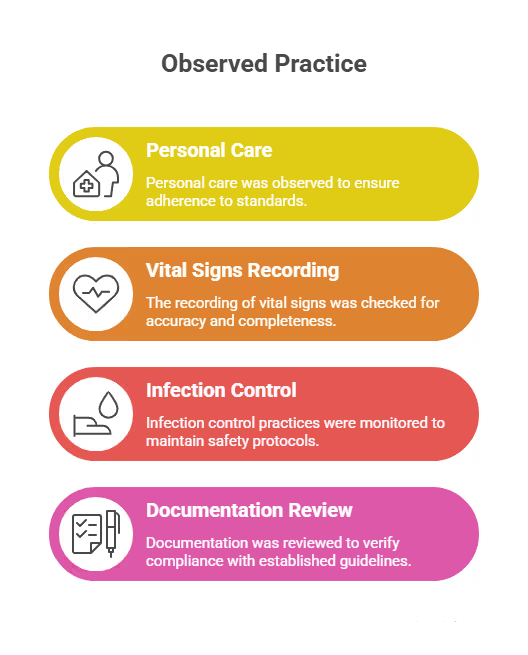
  • Observed practice
  • Questioning by assessor
  • Review of documentation
  • Portfolio evidence
  • Final sign off by a competent assessor

Common mistake online: Saying there are 15 standards. The current framework includes 16 standards after the March 2025 update.

Do You Need a DBS Check?

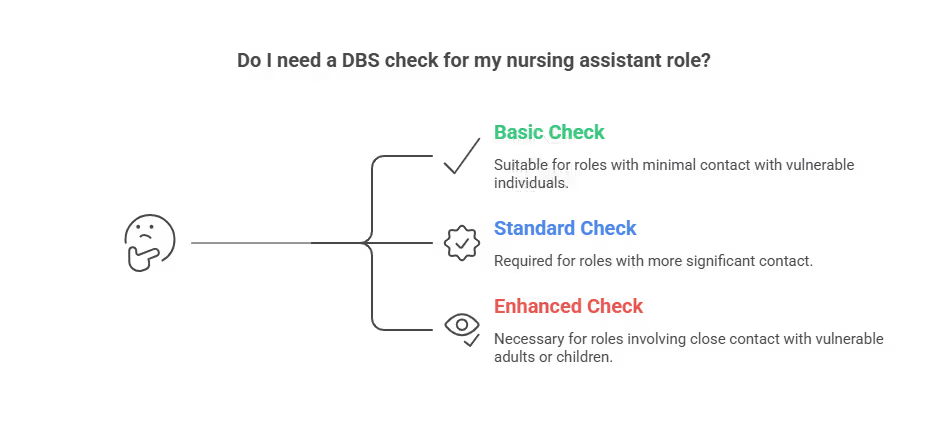
Most nursing assistant roles require a Disclosure and Barring Service check because the role involves working with vulnerable adults or children. The level of check depends on duties and setting.

Healthcare Assistants usually require an Enhanced DBS check. There are different levels:

do_you_need_a_dbs_check

In regulated activity, employers request the appropriate level.

Important:

You do not normally apply for Enhanced DBS on your own before employment. The employer initiates the check during recruitment. Employers may also request:

  • References
  • Occupational health clearance
  • Right to work evidence

DBS supports safeguarding. It does not replace supervision and safe recruitment processes.

How Do You Gain Experience Before Applying?

You can gain experience through volunteering, apprenticeships, care home roles, or entry-level support work. Employers value practical exposure to care tasks and safeguarding awareness more than certificates alone. Experience builds confidence and employability.

Options include:

Volunteering

  • Hospital volunteer roles
  • Care home activities support
  • Community support roles

Apprenticeships

  • Healthcare Support Worker apprenticeship
  • Earn while you learn
  • Combine workplace practice and study

Entry level care roles

  • Domiciliary care
  • Residential care assistant
  • Support worker

NHS Bank

Some Trusts allow new staff to join the staff bank after meeting criteria. Bank shifts show reliability and competence. Employers often look for:

  • Evidence of teamwork
  • Communication skills
  • Safeguarding awareness
  • Basic life support knowledge

Competence in real settings outweighs short online courses alone.

What Does Workplace Assessment and Supervision Look Like?

Healthcare Assistants are supervised by registered nurses and assessed in practice. Competence is demonstrated through observed tasks, documentation, and feedback rather than online tests alone. Supervision is ongoing.

Delegation

  • Nurse assesses patient
  • Nurse delegates safe tasks
  • HCA accepts within competence
  • HCA reports back clearly

Escalation

HCAs must report:

  • Deterioration
  • Safeguarding concerns
  • Medication errors
  • Unusual observations

Documentation

Clear, accurate records protect patients and staff. Online diplomas alone do not replace workplace assessment. Employers judge readiness through real practice.

How Much Does a Nursing Assistant Earn in the UK?

In the NHS, Healthcare Assistants typically start on Agenda for Change Band 2. Progression to Band 3 depends on experience and added responsibilities. Pay differs in private and social care settings. Agenda for Change sets NHS pay bands nationally.

  • Band 2: Entry level HCA roles.
  • Band 3: Often senior or more experienced HCAs with wider competencies.

Band progression depends on:

  • Experience
  • Demonstrated competence
  • Additional training
  • Trust workforce structure

Private sector pay varies. It may depend on region, employer size, and contract type. Avoid unrealistic salary claims. Pay reflects band, hours, and setting.

Can You Progress to Nursing Associate or Registered Nurse?

Yes. Many Healthcare Assistants progress to Nursing Associate through an apprenticeship pathway. Some continue to registered nurse training via degree apprenticeship or university routes.

Nursing Associate

  • Two year programme
  • NMC regulated
  • Blended learning and practice
  • Registered title

Registered Nurse

  • University degree route
  • Degree apprenticeship route
  • Employer sponsored options in some Trusts

Progression is not automatic. It depends on:

  • Performance
  • Academic readiness
  • Employer support
  • Vacancy availability

HCAs who show competence and commitment often access structured development routes.

What Changed Recently in This Career Path?

Recent updates include the March 2025 revision of the Care Certificate to 16 standards and continued implementation of the NHS Long Term Workforce Plan, which supports development pathways for support workers.

The Care Certificate update reflects modern practice and safeguarding expectations. The NHS workforce strategy emphasises:

  • Support worker development
  • Apprenticeship pathways
  • Structured supervision
  • Retention through career progression

Outdated blogs often:

  • Refer to 15 standards
  • Suggest national licensing
  • Promote short courses as sufficient

Current practice focuses on competence, supervision, and structured development.

What Are Common Myths About Becoming a Nursing Assistant?

Common myths include believing the role is NMC regulated, that a Certified Nursing Assistant licence exists in the UK, or that an online diploma alone guarantees employment.

Myth vs Fact

  • Myth: You must register nationally.
    • Fact: No national HCA register exists.
  • Myth: Certified Nursing Assistant is a UK title.
    • Fact: CNA is a US term.
  • Myth: Care Certificate is a legal licence.
    • Fact: It is an employer led induction framework.
  • Myth: A short online diploma makes you job ready.
    • Fact: Employers assess competence in practice.
  • Myth: You must arrange DBS yourself before applying.
    • Fact: Employers initiate Enhanced DBS during recruitment.

Is This Role Right for You?

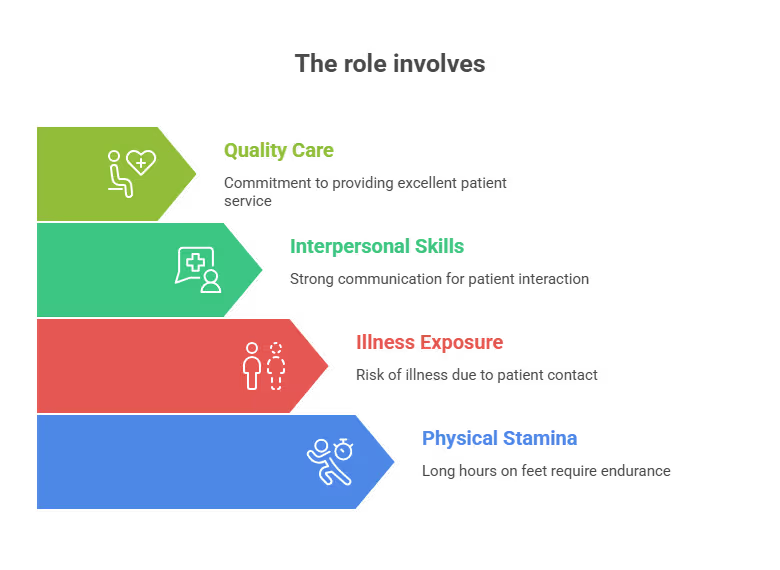
This role suits people who show compassion, resilience, attention to detail, and the ability to work under supervision in demanding healthcare environments.

Ask yourself:

  • Can you work early, late, or night shifts
  • Can you handle emotional situations
  • Can you follow procedures strictly
  • Can you escalate concerns confidently


If you value teamwork, structure, and patient support, the role may fit you.

Practical Application Section

A Healthcare Assistant (HCA) starts the shift with a handover led by the registered nurse. The nurse outlines patient needs, risks, and priorities. Tasks are delegated clearly. The nurse remains accountable for overall care. The HCA works within agreed limits of competence.

Morning

The nurse delegates personal care for two patients. The HCA assists with washing, dressing, and mobility support. Before helping a patient stand, she checks the mobility plan and uses the correct moving and handling technique.

She takes vital signs as delegated. She records temperature, pulse, respirations, and blood pressure. If a reading falls outside the expected range, she escalates immediately to the nurse. She does not interpret results independently. She reports facts.

Supervision is active. The nurse checks documentation and remains available for guidance. The HCA asks questions when unsure. Safe care depends on this relationship.

Midday

Every task is documented in the patient record. Observations are entered into the electronic system. Care delivered is recorded clearly and in real time. Accurate records protect the patient and the staff member.

A patient becomes confused and tries to leave the ward. The HCA recognises this as a potential safeguarding concern. She follows local policy. She informs the nurse. She stays with the patient to prevent harm. Safeguarding is everyone’s responsibility, but decisions sit with the registered professional.

Afternoon

Afternoon

The HCA cleans equipment according to infection prevention procedures. She uses personal protective equipment correctly. She disposes of waste safely. Infection control is not optional. It protects patients and staff.

Before the end of the shift, she updates the nurse about each patient. She shares changes, concerns, and completed tasks. The nurse reviews and plans next steps.

This is the role in practice. It involves hands-on care, clear delegation, accurate documentation, and strong safeguarding awareness. It is supervised, accountable, and team-based.

Here’s a Quick Flowchart as example

06:45: Arrive and attend handover. Review care plans.

07:15: Assist patients with washing and dressing.

08:30: Record temperature, pulse, respirations.

09:00: Report abnormal reading to nurse.

11:00: Support mobility and nutrition.

13:00: Document care given.

15:00: Escalate concern about confusion.

17:00: Handover to next shift.

Throughout the shift:

  • Follow infection control rules
  • Work under nurse supervision
  • Document clearly
  • Maintain dignity and privacy

Summary and Key Takeaways for Learners and Practitioners

  • The title “Nursing Assistant” in the UK refers to a support role that delivers hands on care under the direction of a registered nurse.
  • You do not need NMC registration to work as a Healthcare Assistant, but you must work within your competence and under supervision.
  • Employers hold legal responsibility for safe staffing, training, and oversight under health and social care regulations.
  • The Care Certificate forms part of workplace induction and is assessed in practice, not through online tests alone.
  • Safe delegation, accurate documentation, and timely escalation define professional practice in this role.
  • Career progression depends on experience, structured development, and employer support, not automatic promotion.

Nursing Assistant Level 3 Diploma

Learn to promote Nursing Assistant Level 3 Diploma!

FAQs

Q: Is a Nursing Assistant the same as a Healthcare Assistant?

A: In the UK, the term Nursing Assistant usually refers to a Healthcare Assistant or Healthcare Support Worker. It is not a separate regulated profession. Employers use different titles, but the role involves supporting registered nurses with hands on patient care under supervision.

A: No national licence exists for Healthcare Assistants in the UK. The role is not regulated by the Nursing and Midwifery Council. Employers must ensure you are competent, trained, and supervised in line with statutory staffing and safety requirements.

A: The Care Certificate is not a legal requirement set out in primary legislation. Many NHS and care providers use it as part of induction to evidence baseline competence. Employers decide how they meet training and supervision duties.

A: Timeframes vary. Some people enter the role with no prior experience and complete workplace induction within the first few months. Others gain experience through apprenticeships or care roles before applying. Competence in practice matters more than course length.

A: Many employers prefer GCSEs in English and Maths or equivalent Functional Skills. They are not legally required. Some providers offer support to achieve Functional Skills during employment if you meet other suitability criteria.

A: Band 2 Healthcare Assistants provide core personal care and basic observations under supervision. Band 3 roles involve greater responsibility, additional competencies, and less direct supervision. Progression depends on assessed competence and local workforce structures.

A: International applicants can apply for Healthcare Assistant roles if they have the right to work in the UK and meet employer requirements. The role itself does not require NMC registration, but immigration rules and employer policies still apply.

A: Healthcare Assistants do not prescribe medication. In some settings, they may administer medication after specific training and competency sign off. The registered nurse remains accountable for delegation and overall care.

A: The registered nurse remains accountable for the decision to delegate. The Healthcare Assistant is accountable for carrying out the task safely within their competence. Clear communication and documentation protect both staff and patients.

A: NHS Professionals often expects prior healthcare experience, though requirements vary by Trust. Many new starters gain experience in substantive NHS roles or care settings before applying to join the staff bank.

A: If an employer uses the Care Certificate as part of induction, you are expected to complete it within the agreed timeframe. Failure to complete required induction standards can affect continued employment or progression.

A: A Level 3 Diploma in Health and Social Care is not legally required to work as a Healthcare Assistant. Some employers prefer it for Band 3 roles or progression. Many staff develop qualifications while employed.

A: Healthcare Assistants work in NHS hospitals, GP practices, community services, mental health units, residential care homes, and private hospitals. Duties vary by setting, but supervision and competence remain central to practice.

A: Healthcare Assistants work under the direction of a registered nurse or other regulated professional. Supervision includes task delegation, observed practice, feedback, and escalation routes. The nurse oversees care planning and remains accountable.

A: A Healthcare Assistant is a non regulated support role. A Nursing Associate is regulated by the Nursing and Midwifery Council and completes a structured two year training programme. Nursing Associates have a defined scope of practice and registration requirements.

Recent Blogs

5 Skills Every UK Care Employer Wants (and How to Prove You Have Them)

5 Skills Every UK Care Employer Wants (and How to Prove You Have Them)

UK care employers do not hire based on good intentions. Under CQC Regulation 18, they must evidence staff competence at every inspection. This guide covers the 5 skills every UK adult social care employer screens for, why each one has a regulatory basis, and how to prove yours through your CV, interview, the Care Certificate, and workplace evidence.

CQC Standards and Training What Care Staff Need to Know in 2026

CQC Standards and Training: What Care Staff Need to Know in 2026

CQC does not publish a mandatory training list. Under Regulation 18, every registered provider must ensure staff are demonstrably competent, properly inducted, and continuously supported. This guide explains the legal basis for training in 2026, the 16 Care Certificate standards, Oliver McGowan Mandatory Training, training matrices, and the competence evidence CQC inspectors look for.

Mental Health Awareness in Care What Level 3 Learners Need to Know

Mental Health Awareness in Care: What Level 3 Learners Need to Know

Most guides treat mental health awareness as a general topic. For Level 3 care learners, it is a regulated workforce skill. This guide explains what Care Certificate Standard 9 now requires, where Level 3 learners sit in the competency framework, which laws apply, and how to recognise and escalate concerns in a care setting.