You search for the highest-paying healthcare administration jobs in the UK. Some websites quote salaries above £200,000. Others mix US figures with NHS data. Meanwhile, NHS Jobs lists many “administrator” roles at £24,000 to £31,000. So what is the truth?
The answer depends on one key distinction. Not all healthcare administration roles are equal. Executive leadership and operational administration sit at opposite ends of the pay scale. Most online guides blur this line and leave you with false expectations.
This guide sets the record straight. It explains how UK pay frameworks work, which roles carry genuine six-figure potential, and what progression into senior healthcare administration actually requires.
TL;DR
- The highest-paying healthcare administration jobs in the UK are executive-level roles under NHS Very Senior Manager contracts or private provider boards
- Most NHS “Administrator” titles fall within Agenda for Change Bands 2 to 5
- Six-figure salaries attach to board-level leadership
- Pay depends on employer framework, contract type, and organisational scale
- Not all high-paying roles carry the word “administration” in their title
Health and Social Care Level 3 Diploma
What Are the Highest Paying Healthcare Administration Jobs in the UK?
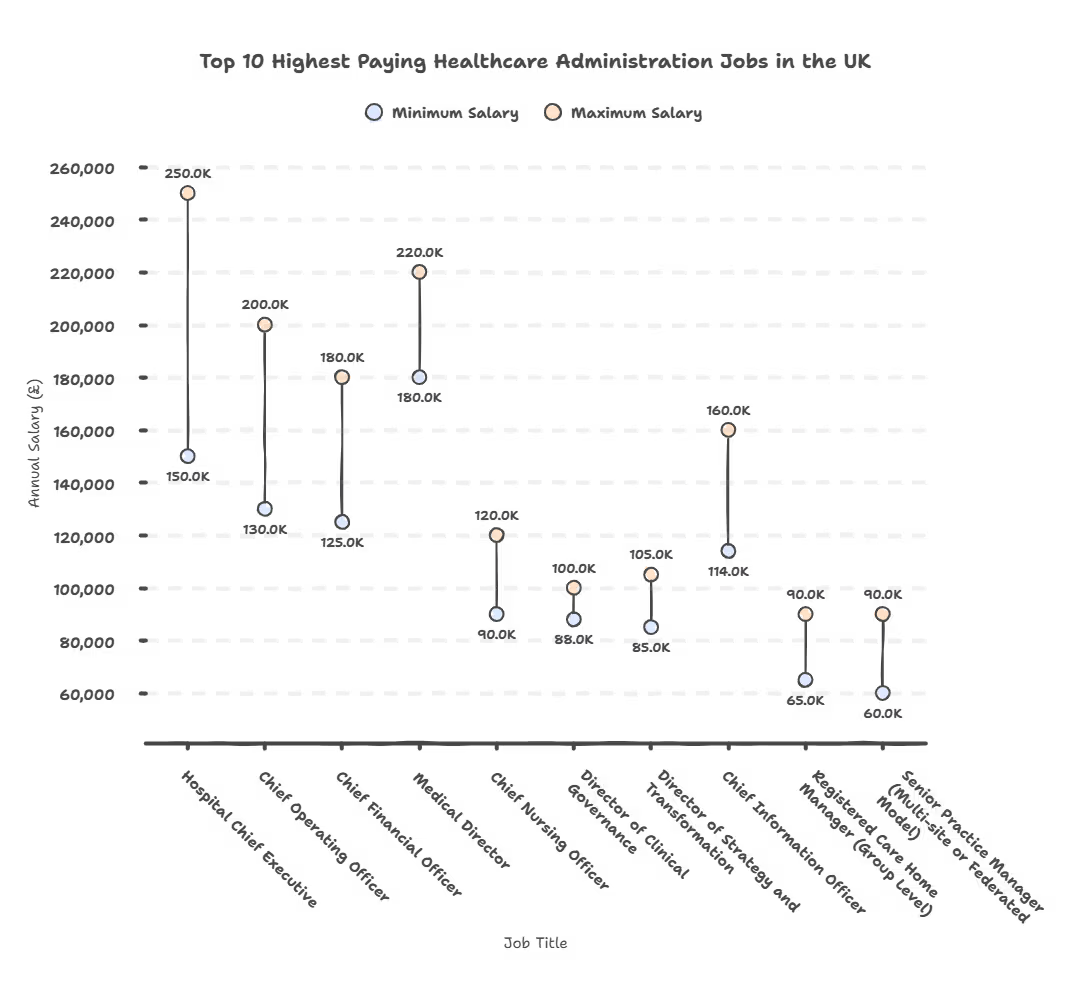
The highest-paying healthcare administration jobs in the UK are board-level roles. Think Chief Executive Officer, Chief Operating Officer, Chief Financial Officer, and Medical Director. Organisations appoint these leaders under NHS Very Senior Manager contracts or private-sector executive agreements.
Executive Roles vs Operational Administration
A big gap exists between what people expect and what NHS job boards show. That gap exists because healthcare administration splits into two clear tiers.
Operational administrators work within Agenda for Change Bands 2 to 5. Their roles cover ward administration, team administration, medical secretarial work, and reception. These posts keep services running. They are not executive appointments.
Senior managers sit within Bands 7 to 9. They hold budget responsibility, lead teams, and manage defined service areas. Pay reflects that accountability.
Very Senior Managers sit above the banding structure. Organisations appoint these leaders to board-level positions with individually negotiated salaries. NHS job titles do not label them “administrators,” but these are the roles that drive the salary figures seen online.
Private-sector healthcare executives work outside NHS frameworks. Independent hospital groups, care home providers, and corporate services set their own pay. Salaries at this level can beat NHS equivalents, especially in large commercial organisations.
Top 10 Highest Paying Healthcare Administration Jobs in the UK
What Does "Administrator" Actually Mean in NHS Job Titles?
In NHS job listings, “Administrator” refers to operational support roles within Agenda for Change Bands 2 to 5, not executive leadership. These roles cover ward administrators, team administrators, and reception staff.
Real NHS Salary Reality
NHS operational administrator roles cover a defined pay range. Band 2 covers entry-level clerical and reception work. Band 3 covers support roles with more independence. Band 4 covers team leaders and specialist administrative posts. Band 5 sits at the upper edge of operational administration and includes coordination and supervisory work.
London weighting applies through the High Cost Area Supplement. This adds a percentage uplift to base pay for staff working in inner, outer, or fringe London zones. Not all NHS staff receive it.
Bank contracts differ from permanent employment. Bank workers fill temporary vacancies. They may lack the guaranteed hours, pension access, and progression routes available to permanent post-holders.
Healthcare Administration vs NHS Administrator
Many online guides conflate “healthcare administration” as a career field with “Administrator” as a specific NHS job title. These are not the same thing.
Healthcare administration as a field spans everything from Band 2 reception work to VSM-level chief executive appointments.
“Administrator” as an NHS job title almost always refers to operational support work at Bands 2 to 5. Using this title to imply executive-level pay misleads readers.
Understand this distinction. It prevents false salary expectations and helps you search for roles accurately on NHS Jobs.
How Do NHS Pay Bands and VSM Contracts Affect Salary?
Most NHS management roles fall under Agenda for Change bands. Executive board roles fall under the Very Senior Manager framework, which sits outside standard banding structures.
Agenda for Change
Agenda for Change covers the majority of NHS staff in England, Wales, and Northern Ireland. Scotland runs its own equivalent. The framework sets structured pay bands from Band 1 through Band 9 with defined pay points within each band.
AfC is an employer-led framework, not a law. NHS Employers maintains the framework through trade union negotiation. Individual NHS organisations apply it to substantive posts.
Progression through pay points within a band has traditionally been time-based. Some elements have shifted toward competency-based advancement. Movement between bands requires a competitive recruitment process.
Band 8 splits into four sub-bands: 8a, 8b, 8c, and 8d. These represent a wide pay range from senior operational management through to director-level roles. Band 9 sits at the top of the banded structure and carries trust-wide or system-wide leadership responsibility.
Very Senior Manager Framework
The VSM framework applies to chief executives, medical directors, chief operating officers, chief financial officers, and other board-level appointments. NHS England publishes guidance on VSM pay, but salaries within the framework are individually determined.
VSM roles sit outside AfC banding. The organisation’s remuneration committee sets pay. Performance-related pay may apply. Total compensation can include pension contributions and other contractual benefits.
VSM salaries vary based on the size and complexity of the organisation. A chief executive at a small community trust earns less than a chief executive at a large acute foundation trust.
Private Sector Variability
Independent hospital groups, care home providers, and corporate health services each set their own pay structures. These organisations are not bound by AfC or VSM frameworks.
Private employers may offer higher base salaries, performance bonuses, and share options unavailable in NHS roles. They may also offer fewer long-term benefits such as the NHS Pension Scheme.
This distinction matters for career planning. NHS roles offer transparent pay, defined progression, and a strong pension. Private roles may offer higher short-term earnings with different risk and benefit profiles.
Separate what is legally required from what employers choose to offer. NHS pay frameworks are not law. They are contractual arrangements governed by collective agreements and employer governance. No legislation mandates that NHS staff receive specific band-level pay.
Which Roles Legally Require Registration or Regulatory Approval?
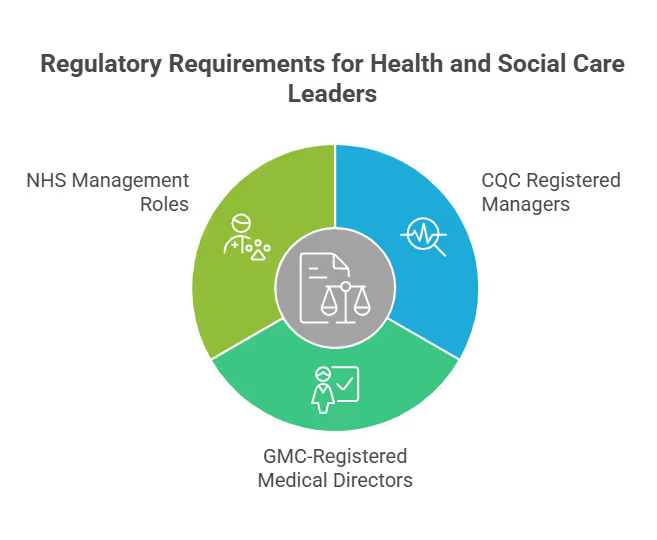
Certain leadership roles in regulated health and social care services require regulatory or professional registration. CQC registered managers in adult social care and GMC-registered Medical Directors are clear examples. Most NHS management roles carry no statutory registration requirement.
CQC Registered Manager in Adult Social Care
Under the Health and Social Care Act 2008 and associated regulations, providers of regulated activities must appoint a registered manager. This applies where the provider is not an individual who manages the service. It covers care homes, domiciliary care agencies, and other regulated adult social care services.
The Care Quality Commission approves registered managers through an application and assessment process. The registered manager must meet CQC’s fit person criteria, which cover competence, character, and qualifications.
This requirement is a legal obligation under secondary legislation, not guidance. Failing to have a registered manager in post can trigger CQC enforcement action.
The registered manager carries personal accountability. If a provider breaches regulations, CQC can take action against the registered manager independently of the provider organisation.
Professional Registration for Clinical Executives
Medical Directors must hold GMC registration. They are practising clinicians who take on executive leadership responsibilities. GMC registration requires revalidation, meaning continued clinical practice and annual appraisal.
Chief Nursing Officers in NHS trusts typically hold NMC registration. Their clinical background informs their leadership of nursing and midwifery workforces. NMC registration is not a statutory requirement for the administrative role itself, but registrants in leadership must uphold the standards of their register.
What Carries No Legal Requirement
A Master’s in Healthcare Administration is not a statutory requirement for any NHS management role, including chief executive appointments. NHS Employers guidance may state employer preferences, but these are not legal mandates.
Pay band level is not a legal requirement. No legislation requires employers to pay at specific AfC bands. The framework is contractual.
CQC registration as a regulator differs from registration as a provider manager. NHS executives do not need to register personally with CQC unless they hold a regulated position such as nominated individual or registered manager.
What Changed Recently in UK Healthcare Leadership Structures?
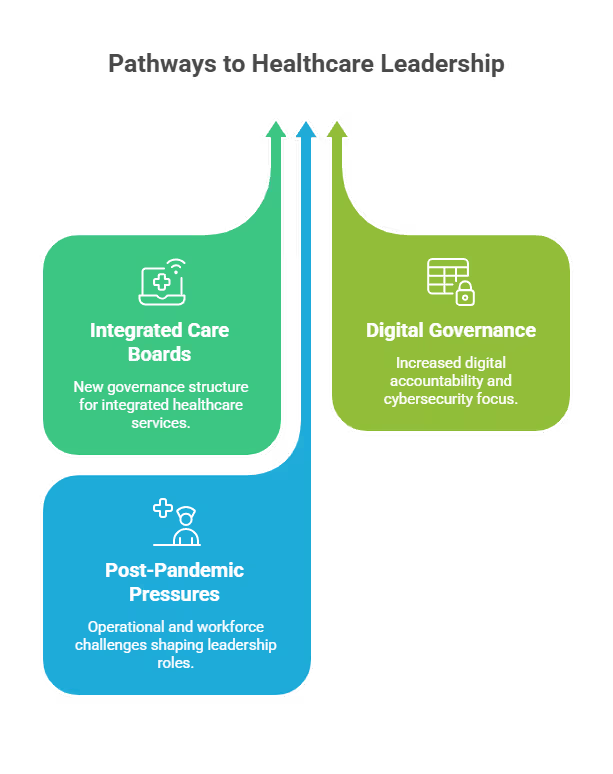
Recent structural reforms, including the formation of Integrated Care Boards and growing digital governance expectations, have reshaped senior management pathways and system-level roles within NHS organisations.
Integrated Care Board Formation
Clinical Commissioning Groups were abolished in July 2022. Integrated Care Boards replaced them under the Health and Care Act 2022. This created a new layer of system-level governance across 42 Integrated Care Systems in England.
ICBs hold statutory functions for planning NHS services within their geography. Many CCG leadership roles became redundant. New ICB executive positions emerged at system level. This created both job losses at CCG level and new appointments at system level.
ICB leadership roles include chief executives, chief financial officers, chief medical officers, and chief nursing officers operating across larger geographies. These roles carry greater strategic scope than most trust-level equivalents.
The shift toward place-based integrated care changed what senior managers do. System-level collaboration, population health management, and partnership working with local authorities and voluntary organisations now feature prominently in leadership role profiles.
Digital Governance Expectations
NHS England’s What Good Looks Like framework and the NHS Digital Transformation programme have raised expectations for digital capability across NHS organisations. Boards now carry digital accountability as a standard expectation.
Chief Information Officers and Chief Digital Officers have become more common at trust and ICB level. Data Security and Protection Toolkit compliance has become a board-level concern, not a back-office task.
Cybersecurity sits on the senior leadership agenda following a series of high-profile incidents affecting NHS services. Boards must demonstrate assurance over cyber risk. This has strengthened demand for senior digital leaders.
Post-Pandemic Operational Pressures
The NHS elective recovery programme addressed the backlog created by the pandemic. It placed significant demands on operational leadership. Directors of operations, elective recovery leads, and transformation directors gained increased scope and profile.
Workforce pressures, including vacancy rates, agency spend, and retention challenges, have elevated HR and workforce directors at board and sub-board level.
Integrated system accountability means senior leaders now account for outcomes across entire pathways, not just within their own organisation. This changed the competencies boards seek and what salaries they pay to secure them.
How Do You Progress Into High-Paying Healthcare Administration Roles?
Progression into high-paying healthcare administration roles requires senior leadership experience, governance responsibility, financial accountability, and board-level exposure. No single qualification unlocks these roles.
What Employers Actually Assess
Boards and remuneration committees look beyond job titles. They assess several clear areas of competency.
Leadership capability means evidence of leading significant change, managing large teams, and influencing at system level. Candidates must show how they responded to challenge and uncertainty.
Budget responsibility is a threshold requirement for roles at Band 8c and above. Executive appointments require experience managing substantial budgets, setting financial strategy, and delivering cost improvement.
Transformation outcomes require candidates to show change that produced measurable results. This may include service redesign, digital implementation, or operational recovery programmes.
Risk management requires fluency in governance frameworks, understanding of regulatory expectations, and experience presenting risk to boards or committees.
Governance reporting includes board paper writing, performance reporting, and accountability to regulators. Candidates who produce clear and accurate governance reporting stand out for senior appointments.
Education Pathways
A Master’s in Healthcare Administration or Healthcare Management holds value with many NHS employers. It demonstrates commitment to the field and familiarity with policy, governance, and management theory. It is not mandatory.
An MBA suits roles with significant commercial or financial scope. Private sector employers and large foundation trusts often list it as desirable.
Level 5 Diplomas in Leadership for Health and Social Care directly support those pursuing registered manager roles in adult social care. Skills for Care endorses programmes that align with CQC expectations.
Finance qualifications including ACCA, CIMA, and ACA are standard requirements for CFO-track roles. Project management credentials such as PRINCE2 and MSP support director-level appointments in transformation and strategy.
Employer preference for qualifications differs from legal requirement. Candidates who demonstrate outcomes and accountability through experience can reach senior roles without postgraduate degrees.
The Qualification Myth
A qualification does not guarantee executive pay. Online guides often imply that a specific degree unlocks a salary tier. This overstates education and understates the importance of career-stage experience and demonstrable accountability.
The difference between a Band 8a and a Band 8d salary reflects scope, responsibility, and risk managed, not the presence or absence of a degree.

Are Six-Figure Salaries Common in Healthcare Administration?
Six-figure salaries in UK healthcare administration exist at senior executive and board level. Most operational and mid-level management positions sit well below this threshold.
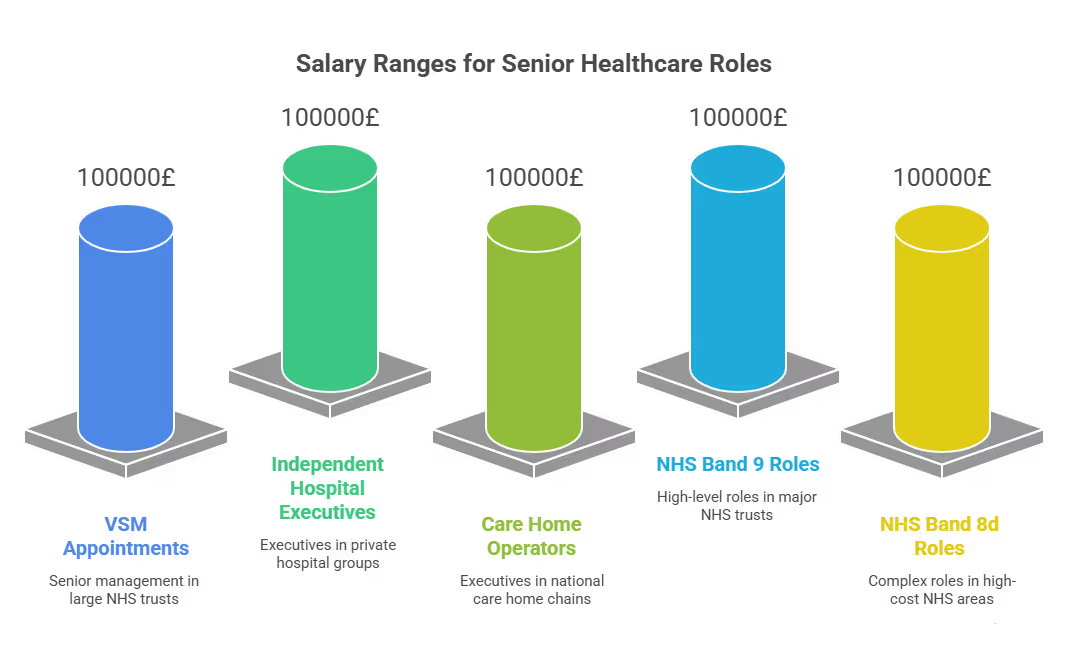
Where Six-Figure Salaries Exist
Where Six-Figure Salaries Do Not Exist
The majority of NHS administrator roles are Bands 2 to 5. These roles earn between £24,000 and £38,000. London weighting applies but does not push these roles close to six figures.
Practice managers in single-site GP surgeries typically earn within Band 7 or lower, depending on the size and structure of the practice. Multi-site federated models at significant scale command higher rates, but these are not typical.
Early-career management roles in NHS trusts, including service managers and operational leads, typically sit within Bands 5 to 8a. Six-figure earnings are not accessible at these levels through AfC banding alone.
Realistic Expectations
Online salary guides present maximum or aspirational figures as typical earnings. Figures cited for roles such as Medical Director or Hospital CEO represent large, complex organisations. Most trusts appoint at lower points within the VSM range.
Private sector figures are harder to verify because private organisations face no equivalent transparency requirement to the NHS. Treat high-end private sector salary claims with caution unless supported by verifiable sources.
Practical Career Application: Choosing the Right Path
Choosing a pathway in healthcare administration requires understanding whether you aim for operational management, corporate governance, digital leadership, or regulated service management. Each carries distinct responsibilities and progression routes.
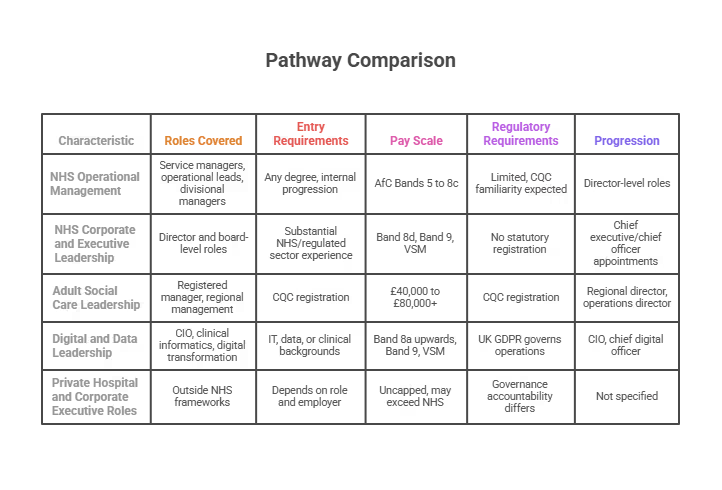
Pathway Comparison
NHS Operational Management covers service managers, operational leads, and divisional managers within NHS trusts. Entry is possible from any degree background or through internal progression from Band 5 and 6 roles. Pay sits within AfC Bands 5 to 8c depending on scope. Regulatory requirements are limited, though CQC familiarity is expected. Progression leads to director-level roles within trusts or ICBs.
NHS Corporate and Executive Leadership covers director and board-level roles in strategy, finance, workforce, and operations. Entry requires substantial NHS or regulated-sector management experience. Pay sits at Band 8d, Band 9, or VSM level. No statutory registration is required, but professional qualifications in finance, strategy, or governance are expected. Progression leads to chief executive or chief officer appointments.
Adult Social Care Leadership covers registered manager and regional management roles within CQC-regulated providers. CQC registration is a legal requirement for regulated activities. Pay varies significantly by provider, from £40,000 for single-site managers to £80,000-plus for large group-level roles. A Level 5 Diploma is widely expected. Progression leads to regional director or operations director appointments.
Digital and Data Leadership covers CIO, clinical informatics, and digital transformation roles. Entry is accessible from IT, data, or clinical backgrounds. Pay sits at Band 8a upwards, with senior roles reaching Band 9 or VSM. No statutory registration applies, though UK GDPR governs how these roles operate. Progression leads to CIO or chief digital officer appointments.
Private Hospital and Corporate Executive Roles sit outside NHS frameworks. Pay is uncapped and may exceed NHS equivalents at equivalent seniority. Governance accountability differs from NHS regulated environments. Professional background requirements depend on the role and the employer.
Health and Social Care Level 3 Diploma
Frequently Asked Questions
1. What is the highest-paying healthcare administration job in the UK?
The Hospital Chief Executive Officer sits at the top of UK healthcare administration pay. Salaries typically range from £150,000 to £250,000-plus under the NHS Very Senior Manager framework. Pay depends on trust size and complexity. Large private healthcare groups can offer higher packages. Total compensation varies significantly across organisations and sectors.
2. Are NHS administrators paid six figures?
NHS administrators in operational Bands 2 to 5 do not earn six figures. Band 8d and Band 9 roles in large or high-cost organisations can approach £100,000. VSM appointments at chief executive level regularly exceed it. The term "administrator" spans a very wide pay range, so the answer depends on which specific role you mean.
3. What is the difference between AfC and VSM?
Agenda for Change is a structured pay framework covering most NHS staff from Bands 1 to 9. Very Senior Manager contracts sit outside this structure and apply to board-level executive appointments. AfC pay points are defined by the framework. VSM pay is agreed individually by the organisation's remuneration committee. Both operate within NHS governance but apply to different roles.
4. Do you need an MHA to become a CEO?
No. A Master's in Healthcare Administration is not a mandatory qualification for NHS chief executive appointments. Boards assess leadership experience, governance accountability, financial track record, and strategic capability. Postgraduate qualifications hold value but do not guarantee appointment. Many NHS chief executives hold MBAs or sector-specific degrees alongside significant management experience.
5. Is healthcare administration regulated?
Healthcare administration as a field has no single regulatory body. Providers of regulated activities must comply with CQC requirements. Clinicians who hold administrative roles remain subject to their professional regulators. Data-related roles fall under ICO oversight. NHS pay frameworks are contractual, not statutory. No single regulator licenses healthcare administrators as a professional class.
6. What does a CQC registered manager do?
A CQC registered manager holds personal accountability for a regulated service under the Health and Social Care Act 2008. They ensure the service meets CQC fundamental standards, manage inspections, and address regulatory requirements. The role carries direct accountability to CQC. Registration is a legal requirement for regulated adult social care services where the provider does not manage the service personally.
7. Can you earn £200,000 in NHS management?
NHS Very Senior Manager pay for chief executives of large, complex foundation trusts can reach or approach £200,000 in total compensation. This is not common across the NHS as a whole. NHS England publishes VSM remuneration data annually. Most VSM appointments sit below this figure. Private sector executive roles may exceed it depending on organisational scale and performance incentives.
8. Are Medical Directors administrators?
Medical Directors are clinically qualified executives who hold board-level leadership roles. They combine GMC registration and clinical experience with governance and strategic responsibility. Within the wider field of healthcare administration, they operate at executive level. NHS organisations do not label them "administrators" in job title terms. They are clinical leaders who carry executive accountability alongside professional registration.
9. How does London weighting affect salary?
London weighting applies through the High Cost Area Supplement, which adds a percentage uplift to AfC pay based on whether the employer sits in inner, outer, or fringe London. The supplement reflects higher living and working costs in the capital. It calculates as a percentage of basic pay. VSM and privately negotiated salaries may or may not reflect London market rates depending on individual negotiation.
10. What is the salary range for Band 8 roles?
Band 8 splits into four sub-bands: 8a, 8b, 8c, and 8d. Each sub-band carries a defined pay range under the current AfC agreement. Salaries progress from senior operational management at 8a through to director-level roles at 8d. London weighting increases effective pay for staff in qualifying areas. Consult NHS Employers directly for current figures, as pay scales update annually.
11. What changed with Integrated Care Boards?
Integrated Care Boards replaced Clinical Commissioning Groups in July 2022 under the Health and Care Act 2022. They hold statutory responsibility for planning NHS services across 42 Integrated Care Systems in England. ICB formation created new executive roles at system level and restructured commissioning functions. It also changed how organisations account for population health outcomes across larger geographies.
12. Is private healthcare management paid more than NHS?
Private healthcare management often offers higher base salaries at equivalent seniority, especially in commercial hospital groups and large care providers. NHS roles offer structured pay, a stronger pension, and greater job security. Private roles may include performance bonuses and variable terms. Many professionals move between sectors to balance income and benefits. Neither sector is better for every individual.
13. Do you need clinical experience for executive roles?
Clinical experience is not a universal requirement for NHS executive roles. Organisations appoint chief financial officers, chief information officers, and strategy directors from non-clinical backgrounds. Medical Directors and Chief Nursing Officers require clinical registration. Chief executives come from both clinical and non-clinical routes. Governance experience and leadership accountability matter most at board level regardless of clinical background.
14. How long does it take to reach Band 8 or above?
There is no fixed timeline. Progression depends on career choices, available roles, scope of experience, and the size of organisations you work in. Some professionals reach Band 8a within five to eight years of entering NHS administration. Seeking roles with greater accountability and budget responsibility accelerates progression. Waiting for pay point increments alone does not achieve movement between bands.
15. What qualifications help with progression?
Postgraduate degrees in healthcare management, public health, or business administration support progression. Finance qualifications such as ACCA or CIMA suit CFO-track roles. PRINCE2 or MSP credentials support transformation leadership. Level 5 Diplomas are expected in adult social care. Digital and informatics credentials support CIO-track roles. Employers assess qualifications alongside the experience and accountability a candidate demonstrates in practice.
16. Is healthcare administration future-proof?
Healthcare administration at senior level is likely to stay in demand. Structural complexity, regulatory accountability, digital transformation, and population health management all require experienced leadership. Routine operational administration is more exposed to restructuring. Professionals who build leadership, governance, and digital competence hold stronger long-term career positions than those whose skills remain narrowly operational or task-based.
17. Are healthcare consultants part of NHS banding?
NHS consultants in a clinical context, meaning medical or surgical consultants, are paid under Medical and Dental pay scales, not Agenda for Change. Management consultants working as contractors within NHS organisations are not on AfC contracts. They may hold interim roles on fixed-term or day-rate contracts. The term "consultant" covers multiple distinct employment types in the NHS context.
18. What is the role of a Chief Information Officer in the NHS?
A Chief Information Officer leads digital infrastructure, electronic patient record strategy, cybersecurity, and data governance across an NHS organisation or Integrated Care System. The role spans technology, compliance, and strategic planning. NHS CIOs report to the board and carry accountability for digital maturity. The role is accessible from IT, data, or clinical informatics backgrounds and sits at Band 9 or VSM level.
19. Does CQC regulate NHS executives?
CQC does not regulate NHS executives as individuals in a professional licensing sense. It regulates providers of regulated activities. NHS trust boards are accountable to CQC for the services their organisations deliver. The chief executive and chair may face accountability for organisational failures. CQC does not issue individual licences to NHS managers unless they hold a defined regulated position such as nominated individual or registered manager.
20. What is the difference between administrator and manager in the NHS?
In NHS job title terms, "administrator" refers to operational support roles at Bands 2 to 5, covering clerical, secretarial, and coordination functions. "Manager" covers a broader range from Band 5 service coordinators through to Band 8 and 9 directors with strategic accountability. Both sit within the wider field of healthcare administration, but they represent very different levels of responsibility, pay, and career trajectory.