






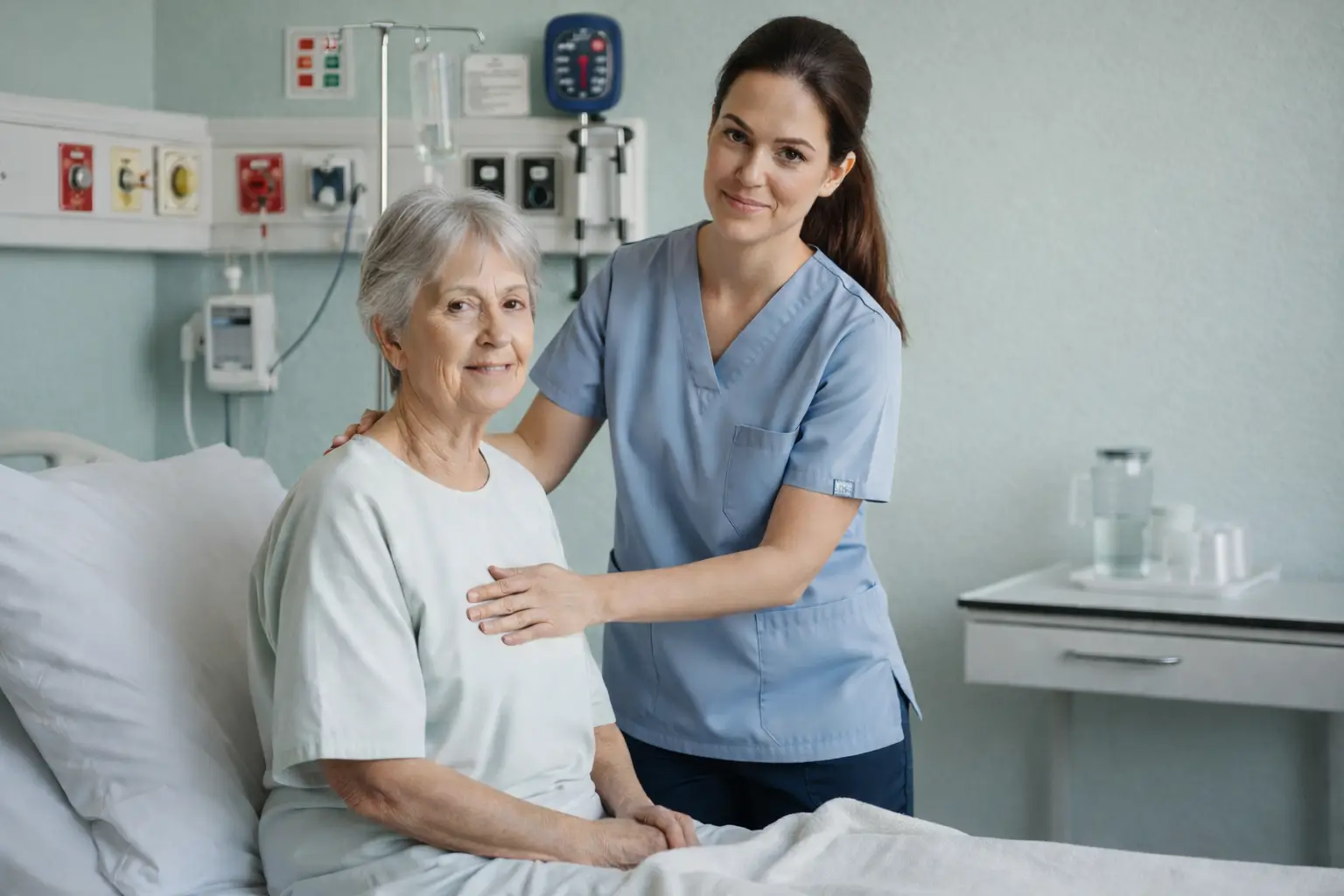


A patient feels unwell and books a GP appointment. The GP arranges tests and refers the patient to hospital. After treatment, the patient goes home with follow up from district nursing and an outpatient clinic. That short path shows a simple truth.
Healthcare in the UK does not happen in one building. People move through linked settings based on need, urgency, and the type of care required. NHS England describes care as an integrated system, with patients moving between providers and continuity of care shaping the patient experience.
Some settings sit clearly inside healthcare, such as GP surgeries, hospitals, and urgent treatment centres. Other settings overlap with social care, such as care homes and home based support. That overlap causes confusion for learners, jobseekers, and general readers.
This guide explains the main healthcare settings in plain UK English, shows how they differ, and separates NHS service language from regulator service types.
TL;DR:
- In the UK, healthcare mainly runs through four broad service groups: primary care, secondary care, tertiary care, and community healthcare. NHS England uses those broad categories to explain how care is organised.
- Primary care acts as the NHS front door and includes general practice, community pharmacy, dentistry, and eye health services.
- Secondary care covers specialist and hospital based care, including planned care, urgent and emergency care, and mental health care. Tertiary care covers highly specialist treatment such as neurosurgery and transplants.
- Community healthcare delivers care closer to home, often in homes, care homes, clinics, schools, community hospitals, and hospices. Community services also handle about 200,000 patient contacts a day, about 13 percent of daily NHS activity in England.
- Urgent care, rehabilitation, virtual wards, same day emergency care, and mental health crisis services often sit within or alongside those pathways rather than forming one separate master category.
- No single UK wide body publishes one master list of healthcare settings. NHS service language and regulator service types are linked, though they are not the same thing. Healthcare settings and social care settings also overlap in places, though they are not identical.
Health and Social Care Level 3 Diploma
What Are Healthcare Settings?
Healthcare settings are the places and service environments where healthcare is delivered. A setting might be a GP surgery, hospital ward, outpatient clinic, urgent treatment centre, community clinic, patient home, or virtual ward pathway.
The phrase is descriptive. The phrase does not name one single legal category used in the same way across the whole UK.
That point matters because many readers picture a building only. In practice, a healthcare setting also includes service environments beyond one fixed site.
CQC guidance explains that regulated care may operate from different kinds of locations, including health centres, community centres, and private homes.
NHS England also describes community care as care delivered across homes, care homes, clinics, schools, community hospitals, and hospices.
A simple way to think about healthcare settings is this. A healthcare setting answers three questions. Where does care happen. Who provides the care.
What level of care does the person need. Once those points are clear, the rest of the system makes more sense.
A GP surgery and a transplant unit both count as healthcare settings, though they serve different needs, use different staff, and sit at different points in the patient pathway.
What Are The Main Types Of Healthcare Settings In The Uk?
The main UK service categories are primary care, secondary care, tertiary care, and community healthcare. Those broad groups help readers understand how care is organised. They are service organisation terms, not a neat list of every clinic, ward, or provider a person might meet.
Primary Care
Primary care is usually the first point of contact. NHS England describes primary care as the front door of the NHS. Typical examples include GP surgeries, community pharmacies, dentists, and opticians. Primary care deals with common health issues, prevention, routine monitoring, and referral into wider services when needed.
Secondary Care
Secondary care usually involves specialist or hospital based care. A patient often reaches secondary care through referral, though urgent and emergency routes also sit here. NHS England includes planned hospital care, urgent and emergency care, and mental health care within secondary care. Examples include outpatient clinics, inpatient wards, emergency departments, and hospital based diagnostic services.
Tertiary Care
Tertiary care covers highly specialist treatment for complex conditions. NHS England gives examples such as neurosurgery, transplants, plastic surgery, and secure forensic mental health services. Tertiary services are often regional or national, so a patient may travel beyond local services for that level of care.
Community Healthcare
Community healthcare delivers care outside the main acute hospital setting and often closer to home. Services include district nursing, health visiting, child health services, sexual health services, rehabilitation, palliative care, and support in community hospitals or homes. The King’s Fund describes community services as a major part of the NHS, not a side service.
Urgent care, same day emergency care, rehabilitation, hospice services, mental health support, and virtual wards often sit within or across those pathways.
How Do Primary, Secondary, Tertiary And Community Care Differ?
The main difference lies in access, complexity, place, and role in the patient journey. Primary care is usually direct access and handles first contact, prevention, and many common health needs. Secondary care handles specialist assessment and treatment, often in hospitals or specialist clinics.
Tertiary care handles rare, complex, or highly specialised treatment. Community care focuses on care closer to home, recovery, long term management, and support outside acute hospital wards.
Comparison Table
Inpatient, outpatient, and day case care fit mainly within hospital and specialist pathways. NHS.uk explains that outpatients do not stay overnight, day patients use a hospital bed for tests or treatment without an overnight stay, and inpatients stay at least one night.
Which Services Sit Within Each Healthcare Setting?
A short service map helps readers see where common NHS services usually fit. Some services overlap, so this section should guide rather than force every service into one fixed box.
- Primary care: GP surgeries, community pharmacies, dental practices, opticians, routine monitoring, repeat prescriptions, first contact advice.
- Urgent and emergency pathways: NHS 111, ambulance services, urgent treatment centres, emergency departments, same day emergency care. NHS England states that NHS 111 directs people to the right local service, and urgent treatment centres give urgent medical help for non life threatening issues.
- Hospital and specialist care: outpatient clinics, day surgery, inpatient wards, diagnostics, maternity services, neonatal care, cancer services, specialist units. Community diagnostic centres also add testing in settings outside traditional hospital sites, with 170 approved sites in England and 165 operational by August 2024.
- Community healthcare: district nursing, health visiting, school nursing, child health services, sexual health, community rehabilitation, community hospitals, hospice at home, palliative care, urgent community response.
- Mental health and specialist support: community mental health teams, crisis services, liaison mental health, inpatient mental health units, secure forensic services. Urgent mental health access in England now also routes through 111.
Home based clinical care: virtual wards, hospital at home, follow up after discharge, therapy at home, nursing care at home. Virtual wards support people who would otherwise be in hospital to receive care in their own home or usual place of residence.
Are Care Homes And Home Care Healthcare Settings?
Not always. A care home is mainly a social care setting. Some care homes include nursing care and regular NHS input, which creates overlap with healthcare.
Home care is also often social care, though community nursing, rehabilitation, palliative care, and virtual wards bring healthcare into the home. A careful answer matters here because many learners blur health and social care.
Where Residential Care Overlaps With Healthcare
CQC separates care home services with nursing from care home services without nursing. A nursing home includes nursing care alongside accommodation and personal care. A residential care home without nursing mainly provides accommodation and personal care.
Healthcare overlap grows when registered nurses, therapists, GPs, specialist teams, or hospice services deliver clinical care within the home.
Where Home Based Support Is Mainly Social Care
Home care, also called domiciliary care, often focuses on personal care and day to day support in a person’s own home. CQC lists domiciliary care under personal care services. That does not make every home care visit a healthcare setting.
The picture changes when district nurses, therapists, community mental health teams, or hospital at home staff provide clinical care in the same place.
The safest way to explain this topic is simple. The building or home address does not decide the answer on its own. The type of service and the type of care decide the answer.
Who Defines And Regulates Healthcare Settings In The Uk?
No single UK wide body publishes one master list of healthcare settings. NHS bodies explain service categories and patient pathways. Regulators inspect and classify services through their own service types.
Those two systems connect, though they do not match word for word. That point is one of the biggest gaps in weak competitor pages.
NHS Service Categories
NHS England uses broad service language such as primary care, secondary care, tertiary care, community health, urgent and emergency care, and primary care networks. That language helps readers understand how care is organised and how patients move through the system. England also works through 42 Integrated Care Systems, which bring providers and partners together around local care pathways.
Regulators And Nation Specific Differences
In England, CQC regulates and inspects services such as hospitals, GPs, dentists, hospices, home care agencies, ambulances, and care homes. CQC also states that regulated locations include every hospital, care home, GP, dentist, and home care agency in England, along with other services such as ambulances and hospices.
Across the UK, structures differ. Northern Ireland uses an integrated Health and Social Care system and describes ICS NI as a framework for planning health and social care services. A UK wide article should note those differences and avoid treating England only wording as universal.
Authority Box
Trusted bodies to reference in this topic:
- NHS England for service organisation
- NHS.uk for patient facing service explanations
- CQC for regulated service types in England
- HSC Northern Ireland for integrated health and social care context
- The King’s Fund for system level context on community services and care pathways
How Do Patients Move Between Healthcare Settings In Practice?
Patients often move through settings in steps rather than staying in one place from start to finish. A person with chest symptoms might start in primary care through a GP or pharmacy.
If the symptoms raise concern, the GP may refer the person to hospital for outpatient assessment and tests. If the condition needs urgent review, NHS 111, ambulance services, same day emergency care, or A and E may enter the pathway instead.
After treatment, the patient may leave hospital and move into follow up care. That follow up might involve an outpatient clinic, cardiac rehabilitation, district nursing, medication review, or monitoring through community services.
In some cases, a virtual ward or hospital at home pathway lets a patient receive acute level monitoring at home rather than remain in hospital. NHS England also uses same day emergency care to assess, diagnose, and treat suitable patients on the same day without a standard admission.
This pathway shows why continuity of care matters. The core issue is not only where care happens. The core issue is how referral, transfer, discharge, and follow up join the services around the patient.
What Does This Mean For Learners, Assignments And Careers?
This topic matters because learners often mix up three things. First, broad NHS service categories. Second, real workplaces such as hospitals, clinics, and patient homes.
Third, regulator service types. Once those three layers are clear, coursework becomes easier and placement settings make more sense.
A strong assignment answer usually covers five points:
- What the setting is
- Who uses the setting
- What care happens there
- How people access the setting
- How the setting differs from a similar one
That simple structure also helps jobseekers compare roles across settings. A healthcare assistant, nurse, therapist, pharmacist, administrator, or support worker may work in primary care, hospitals, community teams, mental health services, care homes, or home based services, though the day to day work changes with the setting. CQC’s service list also shows how wide the range of regulated health and care services is in England.
Common learner confusion points
- Primary care versus secondary care
- Urgent care versus emergency care
- Community healthcare versus social care
- Care home with nursing versus care home without nursing
- Outpatient versus inpatient versus day case
Summary
Healthcare settings are best understood as connected parts of a care pathway rather than one fixed list or one building type. The main broad groups are primary care, secondary care, tertiary care, and community healthcare, with urgent care, mental health, rehabilitation, diagnostics, hospice services, and home based clinical care sitting within or across those pathways.
The clearest way to read the system is simple. Ask where care happens, what type of care happens there, how patients reach the setting, and where the setting sits in the wider pathway. Keep one final point in mind. Healthcare settings and social care settings sometimes overlap, though they are not the same thing.
Health and Social Care Level 3 Diploma
FAQ
Q: What are healthcare settings?
A: Healthcare settings are the places and service environments where healthcare happens, such as GP surgeries, hospitals, clinics, community services, and some home based clinical services. The term describes care environments rather than one single UK legal category.
Q: What are the main healthcare settings in the UK?
A: The broad service groups are primary care, secondary care, tertiary care, and community healthcare. Urgent care, mental health, rehabilitation, and home based clinical care sit within or across those pathways.
Q: What is the difference between primary and secondary care?
A: Primary care is usually the first point of contact and includes GPs, pharmacies, dentists, and opticians. Secondary care is specialist or hospital based care, often reached through referral or urgent access routes.
Q: What is tertiary care?
A: Tertiary care means highly specialised treatment for complex or rare conditions. NHS England gives examples such as neurosurgery, transplants, plastic surgery, and secure forensic mental health services.
Q: What is community healthcare?
A: Community healthcare means healthcare delivered outside the main acute hospital setting, often closer to home. Examples include district nursing, health visiting, rehabilitation, community hospitals, and palliative care in homes or local clinics.
Q: What is the difference between inpatient and outpatient care?
A: An outpatient attends hospital or clinic for an appointment, treatment, diagnosis, or procedure without staying overnight. An inpatient stays in hospital for at least one night, while a day patient uses a hospital bed without an overnight stay.
Q: Is urgent care the same as emergency care?
A: No. Urgent care deals with health problems that need prompt attention but are not life threatening, while emergency care deals with serious or life threatening illness or injury. NHS 111, urgent treatment centres, ambulance services, and A and E all sit within wider urgent and emergency pathways.
Q: Is a care home a healthcare setting?
A: Not in every case. A care home is usually a social care setting, though nursing homes and homes with strong NHS clinical input overlap with healthcare more closely.
Q: Is home care a healthcare setting?
A: Home care is often social care because many services focus on personal care and daily support. The picture changes when district nurses, therapists, palliative care teams, or virtual ward staff deliver clinical care in the home.
Q: What is the difference between healthcare and social care settings?
A: Healthcare settings focus on clinical assessment, treatment, monitoring, and rehabilitation. Social care settings focus more on personal care, daily living, support, and independence, though overlap appears in places such as nursing homes and home based services.
Q: Who regulates healthcare settings in the UK?
A: Regulation depends on the nation and the service type. In England, CQC regulates hospitals, GPs, dentists, home care agencies, hospices, care homes, and other services, while NHS bodies explain service pathways and organisation.
Q: Are healthcare settings the same across the UK?
A: No, not exactly. The broad ideas are similar, though structures, service language, and regulatory arrangements differ across England, Scotland, Wales, and Northern Ireland. Northern Ireland uses an integrated Health and Social Care model.
Q: What healthcare jobs are found in different settings?
A: Different settings employ different mixes of staff, including GPs, nurses, pharmacists, therapists, healthcare assistants, dentists, paramedics, mental health staff, and administrators. The role changes with the setting, the patient group, and the level of care.
Q: Why do patients move between different settings?
A: Patients move because health needs change over time. A person may need first contact advice, specialist assessment, hospital treatment, discharge planning, rehabilitation, and long term follow up at different stages of one care journey.