A domiciliary care worker supports a person with diabetes at home. A medication change has just been made. The worker must administer insulin safely, document the dose correctly, recognise early signs of hypoglycaemia, and escalate concerns without delay. One missed symptom or unclear record could place the person at serious risk.
This situation reflects daily practice across England. Staff training is not optional support. It protects safety, dignity, and lawful care delivery.
In England, training expectations are shaped by the Health and Social Care Act 2008 Regulated Activities Regulations 2014, CQC Fundamental Standards, health and safety law, and Department of Health and Social Care workforce policy. Devolved nations operate under separate legislation.
Training supports three core outcomes: safe care, regulatory compliance and workforce stability. This guide separates law from guidance and explains how structured training strengthens inspection outcomes, governance, and care quality.
TL;DR - Key Takeways
- Staff training protects safety and reduces avoidable risk in health and social care settings.
- In England, providers have a legal duty to ensure staff are trained, supervised, and competent for their role.
- CQC inspects evidence of training, competence, and governance oversight.
- Structured learning improves person-centred care and safe decision-making.
- Role-based training strengthens inspection outcomes and regulatory compliance.
- Clear development pathways improve staff confidence, retention, and workforce stability.
Health and Social Care Level 3 Diploma
Authority Clarification
In England, staff training expectations are shaped by:
- Health and Social Care Act 2008 Regulated Activities Regulations 2014
- CQC Fundamental Standards
- Health and Safety at Work legislation
- Department of Health and Social Care workforce policy
- Skills for Care workforce frameworks
The law requires providers to ensure staff receive appropriate training, supervision, and support. The word appropriate matters. It means training must match the risks, responsibilities, and complexity of the service. There is no fixed national checklist written into legislation. Providers must assess risk and align learning to real practice.
CQC does not inspect certificates alone. Inspectors assess competence, supervision, and governance. They look at training matrices, induction records, competency sign offs, refresher cycles, and how learning translates into safe care. Attendance without evidence of applied skill is not sufficient.
Workforce frameworks such as the Care Certificate and the Care Workforce Pathway support implementation. They provide structure, consistency, and progression routes. They help providers demonstrate good practice. They are not statutes. They guide how organisations meet legal duties, but they do not replace the law.
Is Staff Training a Legal Requirement in Health and Social Care?
Yes. In England, providers must ensure staff receive appropriate training, supervision, and support to perform their roles safely. The law requires competence aligned to service risks and responsibilities, not attendance alone.
Regulation 18 Staffing requires providers to ensure staff receive suitable training, supervision, and appraisal. Regulation 12 Safe Care and Treatment requires staff to have the qualifications, competence, skills, and experience to keep people safe. Regulation 17 Governance requires oversight systems to monitor training and competence.
The Management of Health and Safety at Work Regulations 1999 require employers to provide health and safety training. The Infection Prevention and Control Code of Practice reinforces this obligation.
Appropriate means role-based and risk-assessed. A support worker assisting with insulin requires medicines training and competence sign-off. A cook requires food safety training.
Training alone does not meet the legal standard. Providers must assess competence through observation, supervision, and audit.
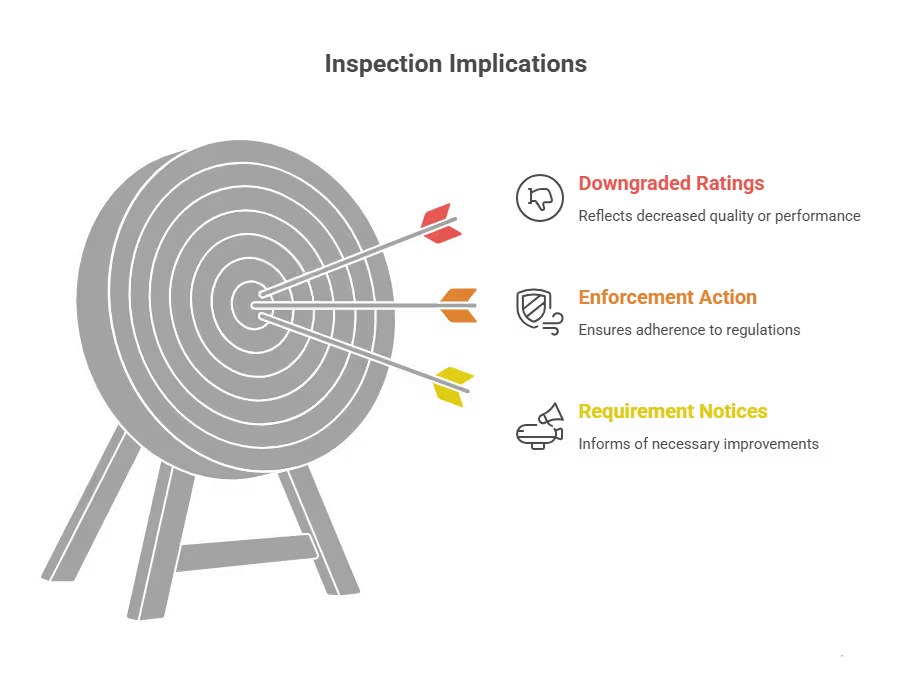
Inspection implications include:
Training is a legal safeguard, not a marketing feature.
What Does the Care Quality Commission Expect Regarding Staff Training?
CQC expects providers to show that staff are trained, competent, supervised, and supported to deliver safe and effective care. Inspectors review training records, competency evidence, governance systems, and how learning translates into safe daily practice.
CQC regulates against the Fundamental Standards. These include safe care and treatment, safeguarding, staffing, dignity and respect, and good governance. Training underpins each of these standards.
Under the current Single Assessment Framework, which replaced the former KLOE structure, inspectors assess quality statements across the safe, effective, caring, responsive, and well led domains. Staff competence sits within safe and effective care and is closely linked to governance under well led.
Inspectors may review:
- Training matrix aligned to roles
- Induction records, including Care Certificate evidence
- Supervision and appraisal notes
- Competency sign offs for high risk tasks
- Refresher training tracking
- Incident learning documentation
Attendance does not equal competence. A certificate for manual handling is insufficient without observed safe practice. Medicines training must link to real administration checks and audits. Safeguarding training must translate into correct escalation when concerns arise.
Blended learning is often required. Theory through eLearning may support knowledge, but practical elements such as manual handling, basic life support, and moving and assisting require in person assessment and validation.
Inspectors connect training to outcomes. They may examine:
- Medicines management audits for errors
- Safeguarding referrals and documentation
- Infection control audits and outbreak responses
If records show training completion but unsafe practice continues, governance may be questioned under Regulation 17.
CQC expects providers to demonstrate a clear link between training, competence, supervision, and safe care delivery. Training must be embedded in practice, not isolated in a spreadsheet.
What Is the Difference Between Statutory and Mandatory Training?
Statutory training is required by law or regulation. Mandatory training is set by the employer to manage risk and meet regulatory expectations. The two often overlap, but they are not legally the same.
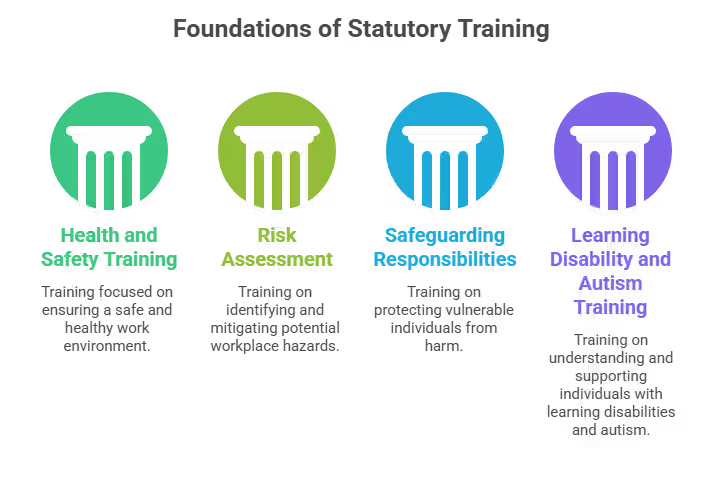
Statutory training arises from legal duties placed on employers and providers. Examples include:
Mandatory training, by contrast, is defined by the organisation. Providers create training matrices based on service risk, care complexity, and workforce roles. A residential dementia service may include behaviour support and MCA training as mandatory. A homecare service may include lone working and medicines management.
In NHS settings, the NHS Statutory and Mandatory Training Framework provides a structured reference list. It helps standardise topics such as fire safety, infection prevention, and safeguarding. However, it is a framework, not legislation, and social care providers are not bound to adopt it in full.
Risk-based determination is essential. Providers must assess:
- Who they support
- What tasks staff perform
- What clinical or safeguarding risks exist
- What inspection standards apply
A common misconception is that there is one national mandatory training list written into law. This is inaccurate. The law requires appropriate training. It does not publish a universal checklist.
What Is the Care Certificate? And Is It a Qualification?
The Care Certificate sets out standards expected of new care workers during induction. It is not a qualification. It is a structured framework designed to support consistent, safe entry level practice in health and social care.
The Care Certificate was developed to create a common baseline for new care staff. It applies across health and social care settings in England.
As of the March 2025 update, the Care Certificate includes 16 standards:
- Understand your role
- Your personal development
- Duty of care
- Equality and diversity
- Work in a person centred way
- Communication
- Privacy and dignity
- Fluids and nutrition
- Awareness of mental health, dementia and learning disability
- Safeguarding adults
- Safeguarding children
- Basic life support
- Health and safety
- Handling information
- Infection prevention and control
- Learning disability and autism
The standards combine knowledge and workplace assessment. Staff must demonstrate understanding and show safe practice in real care settings.
The Care Certificate aligns closely with induction. Many providers embed it within probation periods and structured onboarding. It supports consistency, especially for new entrants to the workforce.
It is important to clarify that the Care Certificate is not written into law as a compulsory qualification for all roles. However, CQC expects providers to ensure staff are properly inducted and competent. For this reason, the Care Certificate is widely adopted and often inspected as evidence of safe induction.
The Level 2 Adult Social Care Certificate Qualification builds on the Care Certificate standards. Unlike the Care Certificate, it is an accredited qualification. It includes formal assessment and observed practice. It also improves portability when staff move between employers.
Some competitors incorrectly describe the Care Certificate as a qualification. This is inaccurate. It is a framework. The Level 2 Certificate is the qualification designed to strengthen recognition and consistency across the sector.
What Changed Recently in Staff Training Requirements? 2023–2025 Updates
Recent reforms include updates to the Care Certificate standards, introduction of the Care Workforce Pathway, revised delegated healthcare principles, and rollout of the Level 2 Adult Social Care Certificate Qualification supported by national funding schemes.
Between 2023 and 2025, workforce reform focused on strengthening consistency, portability, and professional recognition across adult social care in England. These updates support providers in meeting existing legal duties. They do not replace legislation.
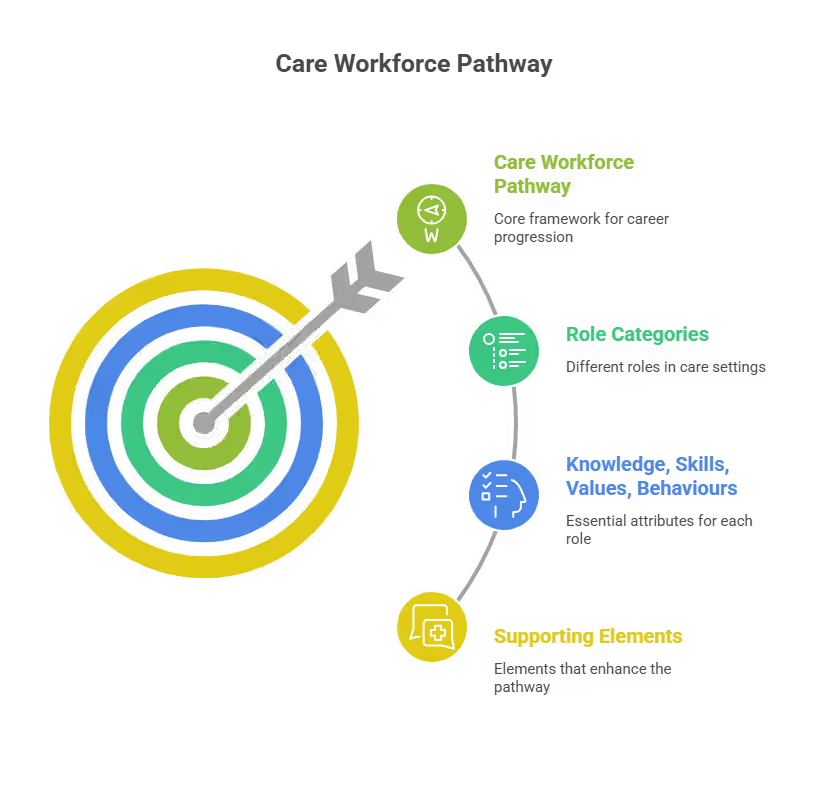
Care Workforce Pathway
The Care Workforce Pathway provides a structured career progression framework. It outlines role categories across care settings and defines expected knowledge, skills, values, and behaviours at each level. It supports:
It gives providers a shared reference point when planning training and development.
Delegated Healthcare Principles, November 2024 Update
Revised delegated healthcare principles clarify safe delegation of certain healthcare tasks to care workers. They emphasise:
- Clear accountability
- Competence validation
- Supervision and oversight
- Person centred decision making
This update strengthens governance in community and home based care.
Level 2 Adult Social Care Certificate Qualification
This accredited qualification builds on the Care Certificate standards. It provides a recognised entry level award with formal assessment and observed practice. It improves portability when staff move between employers and reduces repeat retraining.
Learning and Development Support Scheme
The Learning and Development Support Scheme provides time limited funding for eligible employers to claim back costs for approved training and qualifications, including the Level 2 Certificate. Funding encourages uptake and workforce stability.
Quality Assured Care Learning Service
The Quality Assured Care Learning Service supports providers in identifying learning providers that meet defined quality standards. It strengthens confidence in course quality and value for money.
These reforms aim to increase consistency and professionalisation across the sector. They build structure around career development and training quality. They do not introduce new legal duties. Providers must still meet the core statutory requirement to ensure staff are competent and appropriately supported.
How Does Staff Training Improve Safety and Reduce Risk?
Staff training reduces risk by equipping workers with the knowledge and skills to recognise hazards, deliver care safely, escalate concerns correctly, and follow evidence based procedures that protect both service users and staff.
Safety in health and social care depends on informed action. Training strengthens judgement, awareness, and consistency in daily tasks.
Medication administration
Medicines errors can lead to serious harm. Training helps staff understand dosage, timing, storage, and documentation. It supports the five rights of medication practice and reinforces when to escalate concerns to a nurse or GP. Competency sign off and audit checks reduce preventable errors.
Infection prevention
Infection control training teaches correct hand hygiene, use of personal protective equipment, and cleaning procedures. It supports compliance with infection prevention codes and reduces transmission risk in care homes and community settings.
Safeguarding recognition
Safeguarding training enables staff to recognise signs of abuse or neglect. It clarifies reporting pathways and reinforces the duty to act. Early recognition protects people at risk and reduces escalation failures.
Manual handling
Improper moving and assisting techniques can injure both staff and service users. Practical training improves posture, equipment use, and teamwork during transfers. Observed competence prevents musculoskeletal injury and supports safe care delivery.
Mental Capacity Act and DoLS awareness
Training in the Mental Capacity Act and Deprivation of Liberty Safeguards helps staff understand consent, decision making, and lawful restriction. It protects rights and reduces unlawful practice.
Risk assessment link
Training must align with risk assessment. Providers should identify service specific risks, map them to roles, and assign relevant training. High risk tasks require higher levels of validation and supervision.
Risk identification
↓
Training assignment
↓
Competence validation
↓
Ongoing supervision
When training connects directly to identified risks, safety becomes systematic rather than reactive.
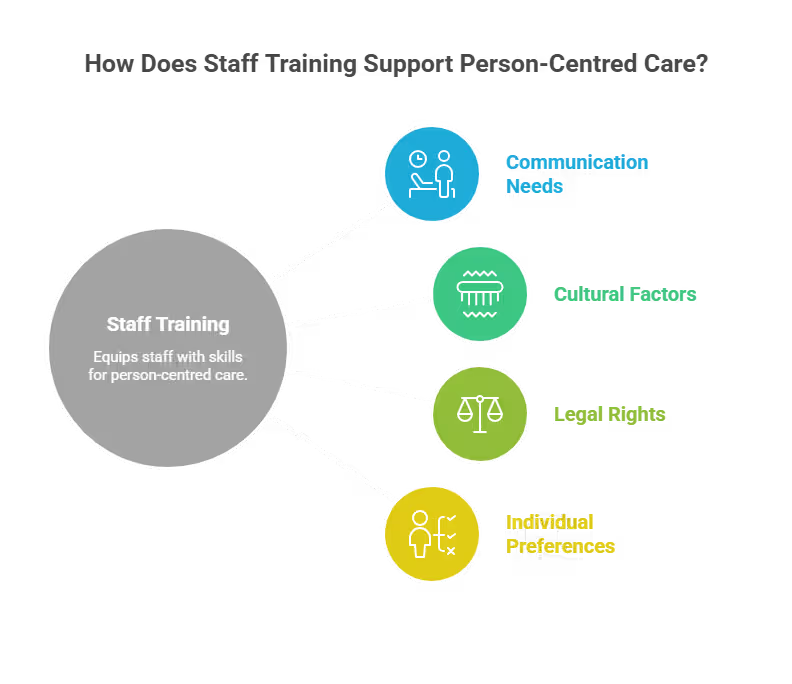
How Does Staff Training Support Person-Centred Care?
Communication training
Effective communication training helps staff adapt language, tone, and approach to meet individual needs. This includes supporting people with sensory loss, learning disability, speech difficulties, or limited English. Clear communication reduces misunderstanding and strengthens trust.
Equality and diversity
Equality and diversity training promotes inclusive practice. Staff learn to respect cultural identity, religion, gender identity, and personal beliefs. This supports dignity and reduces discriminatory practice. It also aligns with legal duties under equality legislation.
Mental capacity
Training in the Mental Capacity Act helps staff assess decision making ability and understand best interest decisions. It reinforces the presumption of capacity and the least restrictive principle. Staff learn to balance safety with autonomy.
Dementia-specific approaches
Dementia training supports understanding of cognitive change, behaviour as communication, and personalised routines. Staff learn to reduce distress through structured support and familiarity. This improves wellbeing and reduces escalation.
Delegated healthcare within community care
In community settings, staff may support delegated healthcare tasks such as insulin administration or catheter care. Training ensures these tasks are delivered safely while respecting independence and choice. Clear delegation protocols protect both the individual and the worker.
Person-centred care depends on knowledge applied in practice. Training strengthens awareness, legal understanding, and confidence. When staff understand the individual behind the care plan, support becomes respectful, consistent, and safe.
How Should Providers Assess Training Needs?
Providers should assess training needs through risk assessments, role analysis, supervision, incident review, and inspection feedback. Training plans must reflect service complexity and regulatory expectations.
Effective training begins with risk. Providers must identify what could cause harm in their service and ensure staff are trained to manage those risks. A training matrix maps roles to required training and refresh cycles. Here’s a training needs analysis table:
Role | Core Risks | Required Training | Competence Check | Refresh Cycle |
Care Worker | Medicines, moving | Medicines, manual handling | Observed practice | Annual |
Senior Carer | Delegation, records | Leadership, MCA | Supervisor sign-off | 2 yearly |
Cook | Food safety | Food hygiene | Kitchen audit | 3 yearly |
Training matrix supports governance oversight. Training Flow:
Risk Assessment
↓
Role Mapping
↓
Training Assignment
↓
Competency Sign-Off
↓
Supervision Review
↓
Audit and Refresh
Why one size fits all is unsafe
A generic training list ignores service differences. A homecare agency supporting complex clinical needs requires different training from a residential home supporting low dependency residents. Risk varies. Staff skill mix varies. Service user needs vary.
A one-size approach may appear organised but can leave high-risk tasks unsupported. Risk-based assessment protects people, supports staff confidence, and strengthens inspection outcomes.
Training needs assessment should be dynamic. Services change. Risks change. Training plans must evolve with them.
What Happens If Staff Training Is Inadequate?
Inadequate training can lead to unsafe care, safeguarding failures, medication errors, poor inspection outcomes, enforcement action, reputational harm, and increased staff turnover.
Consequences include:
- Requirement notices
- Regulatory enforcement
- Insurance scrutiny
- Increased complaints
- Low staff confidence
Poor training weakens morale and increases turnover. Recruitment costs rise. Agency dependency increases. Inadequate governance often reflects lack of training oversight rather than lack of courses.

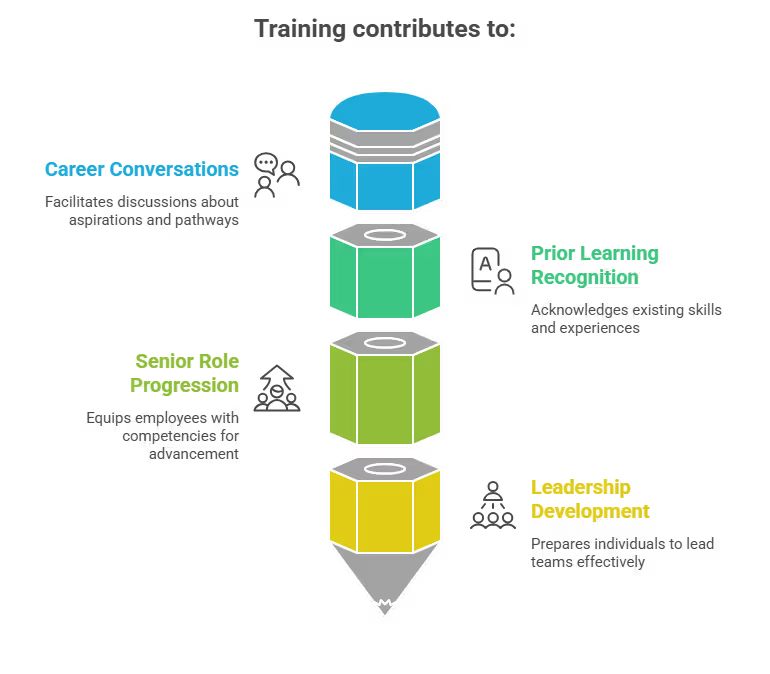
How Does Staff Training Improve Recruitment and Retention?
Structured learning pathways improve confidence, career progression, and professional recognition. This supports retention and strengthens recruitment in a workforce facing ongoing shortages.
Training contributes to:
The Care Workforce Pathway supports structured growth. Retention improves when staff feel supported, supervised, and valued. Training communicates investment.
While workforce pressures are complex, consistent training, structured pathways, and meaningful development discussions form a core part of sustainable recruitment and retention strategies in health and social care.
How Can Care Providers Build an Effective Training Strategy?
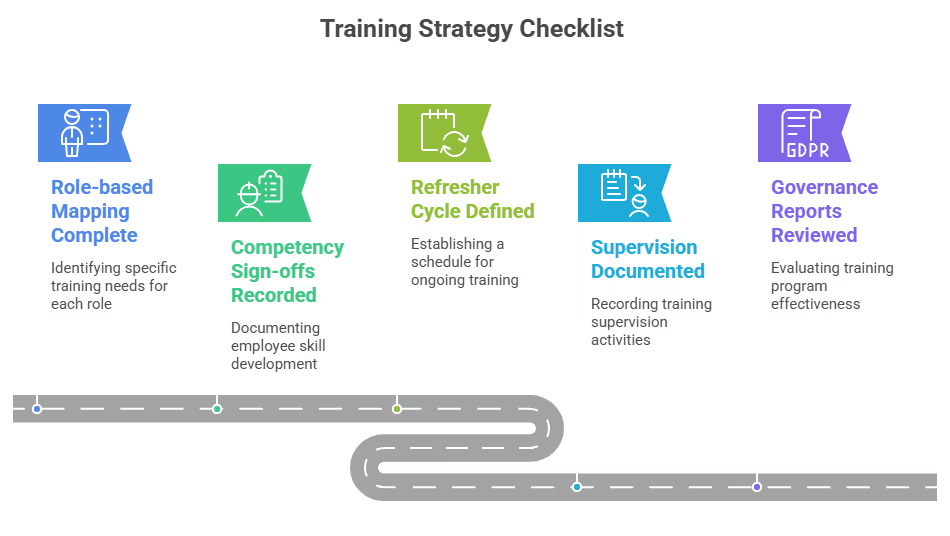
An effective training strategy in health and social care must be structured, risk-based, and governance-led. It should align with legal duties, regulatory expectations, and the real needs of people receiving care. Training must not exist in isolation. It must connect to risk, supervision, and quality assurance systems. Below is a practical framework that can be followed.
Governance-Led Model
- Map service risks
- Develop role-based training matrix
- Deliver blended learning
- Validate competence through observation
- Record evidence
- Audit and refresh
Key Components
- Induction with structured onboarding
- Supervision integration
- Cross-training for resilience
- Leadership development
- Incident-driven learning
- Audit readiness
Blended delivery combines:
- eLearning
- Practical validation
- Reflective supervision
- Mentoring
Training Strategy Checklist
Effective training is systematic, not reactive. When embedded properly, training becomes part of organisational culture rather than a compliance exercise.
Summary and Key Takeaways for Learners and Practitioners
- The law requires providers to ensure staff have appropriate training, supervision, and support to deliver safe care aligned to their role and service risks.
- Regulators assess how training links to competence, governance oversight, and real-world practice, not course completion alone.
- Statutory duties and employer-mandated training often overlap, but providers must determine requirements through structured risk assessment.
- Induction frameworks such as the Care Certificate support safe entry-level practice, while newer qualifications strengthen consistency across employers.
- Workforce reforms introduced between 2023 and 2025 aim to improve career structure, delegated healthcare safety, and training quality assurance.
- A robust training strategy connects risk mapping, competency assessment, supervision, and audit systems to protect people who use services and support workforce stability.
Health and Social Care Level 3 Diploma
FAQs
Q: Is staff training mandatory in all care settings?
A: Yes. In England, providers must ensure staff are appropriately trained, supervised, and competent under the Health and Social Care Act 2008 (Regulated Activities) Regulations 2014. The law does not set a fixed national course list, but it requires providers to assess risks and ensure staff can perform their duties safely. This applies across domiciliary care, residential care, supported living, and other regulated services.
Q: What training does CQC require?
A: CQC does not publish a single mandatory training list. Instead, it expects providers to ensure staff are competent and supported under the Fundamental Standards. Inspectors review training matrices, supervision records, competency assessments, and governance systems. Training must reflect service risk, such as medicines management, safeguarding, infection control, and moving and handling where relevant.
Q: How often should mandatory training be refreshed?
A: There is no universal legal timeframe. Refresher frequency should be risk-based and aligned to employer policy, sector guidance, and service complexity. Many providers refresh high-risk areas such as safeguarding, infection control, and manual handling annually or biannually. Governance systems should track expiry dates and ensure timely updates to maintain competence.
Q: Is the Care Certificate compulsory?
A: The Care Certificate is not a law. However, it is widely adopted across England as the expected induction standard for new care workers. CQC inspectors often look for evidence that new staff have completed or are working towards it. It provides structured induction across 16 standards to support safe entry-level practice.
Q: What is the Level 2 Adult Social Care Certificate Qualification?
A: The Level 2 Adult Social Care Certificate Qualification is a formal qualification developed to standardise entry-level training across the sector. It builds on the Care Certificate standards and improves portability between employers. Unlike the Care Certificate framework, this is a recognised qualification that supports professional development and skill transfer.
Q: What is statutory training?
Statutory training refers to training required to meet legal duties. Examples include health and safety responsibilities under the Management of Health and Safety at Work Regulations 1999 and safeguarding responsibilities under relevant legislation. Statutory training ensures providers comply with law rather than internal policy alone.
Q: What is mandatory training?
A: Mandatory training is determined by the employer to manage risk and meet regulatory expectations. It often overlaps with statutory requirements but may include additional topics such as dementia care, mental capacity awareness, or organisation-specific policies. Mandatory training reflects the provider’s risk assessment and service profile.
Q: How is competency assessed in care settings?
A: Competency should be assessed through observed practice, supervision discussions, skills checklists, scenario-based questioning, and probation reviews. Completion of a course alone is not enough. CQC expects providers to demonstrate that staff can apply learning safely in real care situations.
Q: What happens if training expires?
A: If required training lapses, providers risk non-compliance and increased safety concerns. Governance systems should flag expiry dates and schedule refreshers. During inspection, expired training records may raise questions about oversight and risk management. Prompt corrective action helps reduce regulatory concern.
Q: Does eLearning alone meet regulatory expectations?
A: eLearning can support knowledge development but may not be sufficient for practical skills. High-risk topics such as moving and handling or basic life support usually require practical assessment. Blended learning, combined with competency sign-off, better demonstrates safe practice.
Q: What training is required for delegated healthcare activities?
A: Where care workers undertake delegated healthcare tasks, training must align with delegated healthcare principles. Staff must be trained, assessed as competent, and supervised appropriately. The delegating professional remains accountable for ensuring safe delegation. Documentation of competence is essential.
Q: Who funds staff training in social care?
A: Funding may come from employers, local authority contracts, apprenticeship funding, or sector support schemes such as the Learning and Development Support Scheme. Eligibility varies. Providers should review current workforce funding programmes through official guidance and Skills for Care updates.
Q: What is a training matrix?
A: A training matrix is a governance tool that records required training for each role, completion dates, expiry dates, and competency status. It helps providers monitor compliance, schedule refreshers, and prepare for inspection. A live, accurate matrix demonstrates oversight under Regulation 17.
Q: Can training transfer between employers?
A: Some training can transfer, especially accredited qualifications. Historically, the Care Certificate was not always accepted between employers. The introduction of the Level 2 Adult Social Care Certificate Qualification aims to improve portability and reduce repeat training when staff change roles.
Q: How does training affect inspection ratings?
A: Training directly impacts the Safe, Effective, and Well-led domains under CQC inspection. Inspectors assess whether staff are competent, supported, and supervised. Weak training oversight may contribute to lower ratings, while structured learning systems support stronger governance outcomes.
Q: What training is required for safeguarding?
A: Safeguarding training should reflect the provider’s client group and level of responsibility. Staff must understand how to recognise signs of abuse, escalate concerns, and document appropriately. Safeguarding competence is closely linked to regulatory compliance and safe care delivery.
Q: What is person-centred care training?
A: Person-centred care training helps staff understand communication needs, cultural considerations, mental capacity principles, and individual preferences. It supports care planning that respects dignity, autonomy, and rights. Training in this area strengthens compliance with equality and human rights expectations.
Q: How does infection control training support compliance?
A: Infection prevention and control training supports compliance with the Code of Practice on infection control. It ensures staff understand hygiene procedures, PPE use, outbreak response, and documentation requirements. Proper training reduces risk of transmission and supports safe care environments.