




Career Paths After a Level 3 Diploma in Health and Social Care

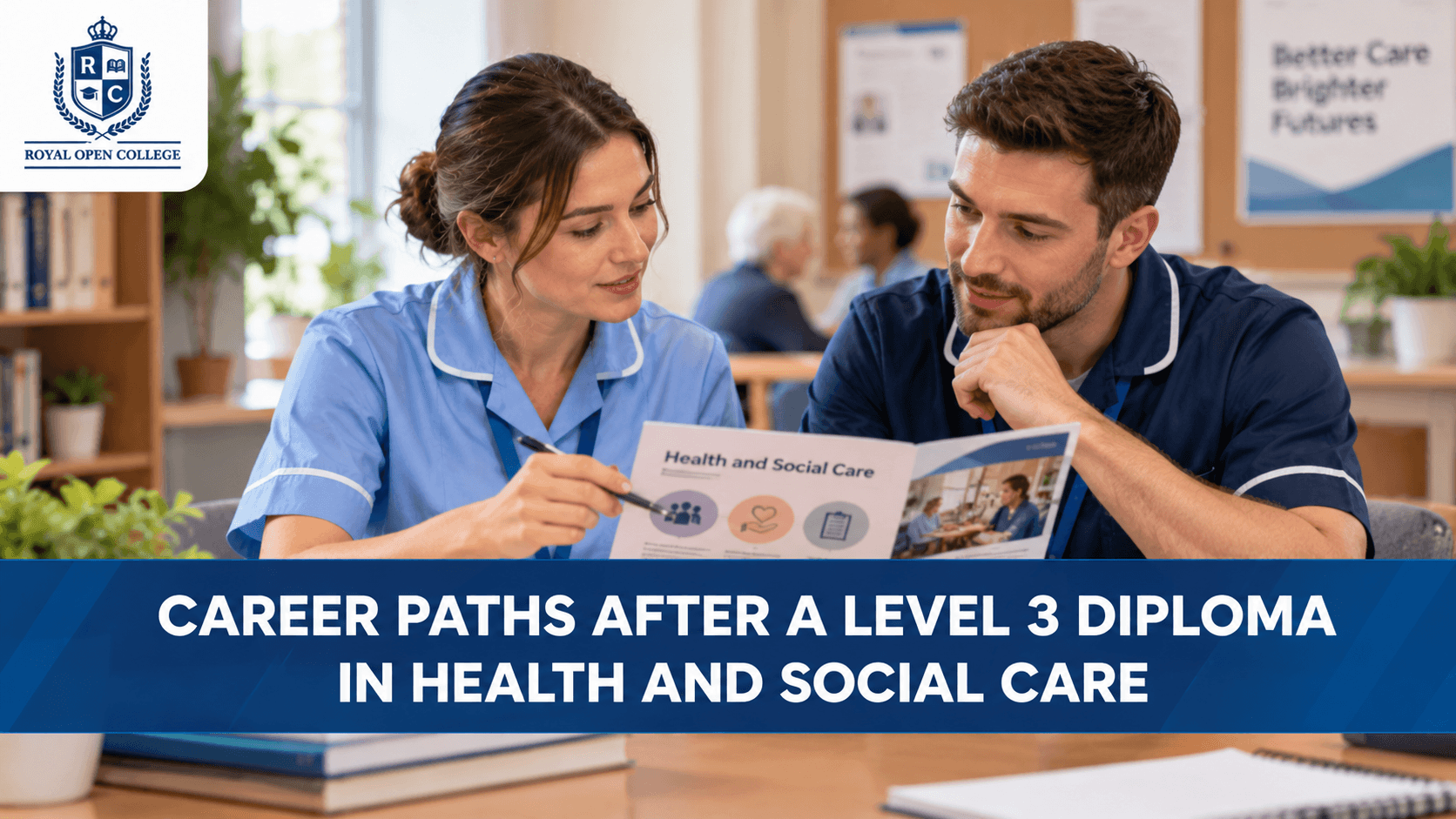
Career paths after a Level 3 Diploma in Health and Social Care include entry-level roles, workplace progression, specialisation, or further study. This UK guide explains realistic job options, NHS opportunities, progression routes, salary expectations, and what the qualification does and doesn’t lead to—helping you plan your next step with clarity.

Career Paths After a Level 3 Diploma in Health and Social Care often feel unclear at first, especially when you’re balancing work, training, and future plans. You’ve finished a recognised qualification. Now you’re asking the practical question. What comes next, really?

After a Level 3 Diploma, learners can move into entry-level care roles, build workplace experience, progress to senior support positions, or continue into higher study through recognised UK pathways.

This guide explains what the qualification leads to, and what it doesn’t. We’ll look at realistic job options, progression routes, and where experience matters. You’ll also see how further study fits in, and how employers view Level 3 training. By the end, you’ll have a clearer picture of your options, and how to plan your next step with confidence.

TL;DR

  • A Level 3 Diploma supports entry-level roles in health and social care.
  • Common jobs include Care Assistant, Support Worker, and Healthcare Support Worker.
  • Employers usually require DBS checks and workplace induction training.
  • Leadership or senior roles need experience, not the qualification alone.
  • The diploma can support further study, but it doesn’t qualify you for nursing or social work.
  • It’s used across care homes, community care, and some NHS support roles.
  • It suits career starters and people changing into care work.
Health and Social Care Level 3 Diploma
Learn to promote Health and Social Care Level 3 Diploma!

What Is a Level 3 Diploma in Health and Social Care?

A Level 3 health and social care diploma is a foundation qualification for people starting or developing a career in care. It builds core knowledge and practical understanding used across UK care settings.

Learners study key areas of care work. This includes safeguarding, person-centred care, communication skills, and health and safety. The focus stays on day-to-day practice, not theory alone.

The qualification supports skills used in real roles. Things like supporting individuals, working with others, and following professional standards. It also helps learners understand their responsibilities in care environments.

It’s important to be clear. This diploma is not a professional licence. It doesn’t qualify you for regulated roles on its own. It provides a solid base for entry-level work, experience, and further progression.

What Jobs Can You Get With a Level 3 Health and Social Care Diploma?

A Level 3 Health and Social Care Diploma supports entry-level roles across UK care settings. These jobs focus on direct support, supervised practice, and learning how care works day to day. It’s about getting started, not stepping straight into senior responsibility.

What Jobs Can You Get With a Level 3 Health and Social Care Diploma?

These roles offer a starting point. Experience matters. Progression comes gradually, through practice, training, and growing responsibility over time.

Can You Work in the NHS With a Level 3 Qualification?

Yes, a Level 3 qualification can support some NHS support roles. These roles sit alongside clinical teams and focus on basic care, assistance, and day-to-day support.

Most opportunities appear at entry support levels, often linked to Band 2 or Band 3 roles. This depends on the role, setting, and employer. Nothing is automatic.

The NHS looks beyond qualifications. Experience matters. So do DBS checks, training, and local induction requirements. Some roles also ask for specific skills or previous care work.

A Level 3 Diploma helps you meet baseline expectations. It doesn’t guarantee a role. Employers decide based on the full picture, including your experience and readiness to work in an NHS setting.

What UK Employers Typically Ask For

UK employers usually look at more than the qualification alone. A Level 3 Diploma often meets entry requirements or sits as a preferred starting point. It shows commitment and baseline knowledge.

From there, checks come next. DBS clearance is standard across UK care roles. Employers can’t move forward without it, whether the role sits in a care home, supported living, or home care.

Once appointed, induction matters. Employers provide workplace training on safeguarding, health and safety, and local procedures. This helps new staff work safely and consistently from day one.

As time goes on, experience takes the lead. Employers expect you to build skills in role before progressing. Added responsibility comes with practice, not speed.

The pattern stays steady. Qualifications open the door. Induction supports entry. Experience drives progression.

Career Progression After Level 3 Health and Social Care

Career progression after Level 3 usually starts in the workplace. Experience shapes the next step, not the certificate alone. Time in role matters.

As confidence grows, responsibility often follows. Employers look for reliability, good judgement, and consistent care practice before offering progression.

Common progression roles appear after experience builds. These include Senior Care Assistant, Lead Support Worker, Team Leader, and Care Coordinator. Each role adds responsibility, not just a new title.

Senior Care Assistants often support newer staff. They help maintain standards on shift and act as a point of contact. This role sits close to practice.

From there, Lead Support Workers and Team Leaders take on coordination tasks. They support rotas, communication, and quality checks. Trust matters here.

Care Coordinators focus on planning and organisation. They link care delivery with schedules and records. Experience makes this possible.

Progression into leadership roles depends on experience, employer trust, and additional training — not the qualification alone.

Each step builds gradually. Slow progression isn’t failure. It’s how sustainable care careers grow

Specialisation Pathways After Level 3

After Level 3, some people choose to specialise. This doesn’t mean a new profession. It means building greater skills through experience and further training.

One option is dementia care. Workers develop skills in communication, behaviour support, and daily routines. This usually happens within care homes or community services.

Another pathway is learning disabilities support. This work focuses on independence, routine, and personalised support. Experience in supported living often leads the way.

Autism support builds on this. Staff learn structured approaches and communication methods. Training supports practice, but experience remains key.

Mental health support is another route. Roles focus on emotional support and recovery-based care. Employers expect awareness training and supervised experience.

Some move into children and young people’s services. This requires specific training and safeguarding checks. Experience matters more than speed.

Each pathway builds gradually. Training supports progression. Experience makes it sustainable.

Can a Level 3 Diploma Lead to University Degrees?

A Level 3 Diploma doesn’t directly qualify you for a university degree. Universities set their own entry rules, and most require additional qualifications beyond Level 3.

That said, it can still form part of a longer route into higher study. Progression depends on planning, experience, and meeting course criteria.

Common routes include:

  • Completing an Access to Higher Education course
  • Taking further Level 3 study with an academic focus
  • Gaining relevant work experience alongside study

Entry requirements vary by university and subject. Courses like nursing, social work, and midwifery often have extra conditions, such as GCSEs, health checks, DBS clearance, and care experience. Always check requirements early.

What You Can — and Cannot — Do With a Level 3 Qualification

A Level 3 qualification gives you a solid starting point, but it isn’t a catch-all. Understanding what it supports, and where it stops, helps you make realistic plans.

What it supports

  • Entry-level care roles in health and social care, working under supervision.
  • Progression over time, once you’ve built experience and employer trust.
  • Further study routes, such as additional Level 3 learning or Access to Higher Education courses.

What it does not qualify you for

  • Registered Nurse roles, which require an approved degree and professional registration.
  • Social Worker roles, which need an accredited degree and regulatory approval.
  • Midwifery roles, which involve specific academic and clinical training pathways.
  • Counsellor or Therapist roles, which require specialist training and supervised practice.
  • Occupational Therapist roles, which need a recognised degree and registration.

Clear boundaries matter. They protect learners, employers, and the people receiving care.

Salary Expectations After Level 3

Salary expectations after Level 3 sit within entry-level care ranges. Pay increases over time, but it depends on the role, setting, and experience. There’s no single figure that applies to everyone.

Location plays a part. Roles in cities or high-demand areas often sit at the higher end of local ranges. Rural areas can look different.

Sector matters too. NHS support roles follow set pay bands. Private and voluntary care providers set their own ranges, based on funding and service type.

Shifts affect earnings. Night work, weekends, or bank shifts can increase take-home pay. Standard daytime roles usually sit lower.

Experience shapes progression. Time in role, added responsibility, and extra training all influence pay movement. Qualifications open doors. Experience moves you forward.

Is a Level 3 Health and Social Care Diploma Worth It?

For career starters, a Level 3 Diploma offers a clear entry point. It builds basic knowledge and skills used in real care settings. It helps learners understand what the work involves.

For career changers, it provides structure and direction. The qualification supports people moving into care from other sectors. It also helps employers see commitment and readiness.

For existing care workers, Level 3 can formalise experience. It strengthens understanding of standards, safeguarding, and communication. It can support progression over time.

For long-term progression, the diploma works as a foundation. It doesn’t promise fast promotion. It supports steady growth through experience, further training, and responsibility.

Essential Skills Employers Look For in Health and Social Care

Employers look for skills that keep people safe and supported. Qualifications help, but day-to-day behaviour matters just as much. Small actions show readiness for care work.

Essential Skills Employers Look For in Health and Social Care

Summary & Key Takeaways for Learners and Providers

  • A Level 3 Diploma supports entry-level roles in health and social care, not regulated professions.
  • Most career progression depends on experience, trust, and further training.
  • Employers look beyond qualifications to reliability, skills, and readiness for care work.
  • NHS and private providers offer support roles, with requirements set locally.
  • Further study routes exist, but university entry depends on meeting specific criteria.
  • The qualification suits career starters, changers, and existing care workers building foundations.

With realistic expectations and steady experience, a Level 3 Diploma can become the first step in a sustainable and rewarding care career.

Health and Social Care Level 3 Diploma
Learn to promote Health and Social Care Level 3 Diploma!

FAQs​

What jobs can you do with a Health and Social Care Level 3?

With Health and Social Care Level 3, you can move into entry-level care roles across the UK. These include Care Assistant, Support Worker, and Domiciliary Carer. The work focuses on day-to-day support, personal care, and supervised practice in care homes, supported living, or community services.

A Level 3 Health and Social Care diploma supports entry-level support roles. Employers use it to confirm basic training, safeguarding awareness, and readiness to work under supervision. Job titles vary by setting, but the focus stays on direct care, routine support, and building experience over time.

Health and Social Care Level 3 allows you to start working in care, gain experience, and understand professional standards. It also supports progression into senior roles over time and access to further study. It’s a foundation, not an end point, for long-term career development.

After Level 3, most learners focus on gaining workplace experience. Some progress to Level 4 or Level 5 qualifications. Others take Access to Higher Education routes. The next step depends on goals, experience, and employer or course entry requirements.

The main benefits are practical knowledge, recognised training, and employability support. It helps learners understand safeguarding, communication, and care standards. Employers see it as proof of commitment. For many, it provides a structured way to enter or formalise work in care.

A Level 3 diploma supports entry-level roles across health and social care. These roles involve assisting individuals, following care plans, and working within teams. Job availability depends on setting and experience, but the diploma shows readiness to begin supervised care work.

Yes, a Level 3 qualification can support some NHS support roles. These usually sit within Band 2 or Band 3. Entry depends on experience, DBS checks, training, and local employer requirements. The qualification helps, but it doesn’t guarantee NHS employment.

A Level 3 diploma doesn’t directly qualify you for university. Some learners progress through Access to Higher Education courses or additional Level 3 study. Entry depends on the university, course, GCSE requirements, experience, and sometimes interviews or placement expectations.

No, a Level 3 Diploma alone doesn’t qualify you to become a nurse or social worker. Both professions require approved degrees, placements, and professional registration. Level 3 can form part of a longer route, but further study and experience are essential.

The best course depends on your aim. Some choose Level 4 or Level 5 Health and Social Care. Others take Access to Higher Education courses. Some focus on specialist training while working. There’s no single path that suits everyone.

Demand varies by sector and location. Diplomas linked to frontline care, safeguarding, and support work are widely recognised. Employers value qualifications that show practical understanding and readiness to work, rather than specialist titles without workplace relevance.

After a diploma, learners usually gain experience in care roles. Over time, they may progress into senior positions, coordination roles, or further study. Progression depends on performance, employer trust, and access to training, not the qualification alone.

Yes, many learners progress to Level 5 after Level 3. Entry usually depends on experience, previous study, and meeting course criteria. Level 5 focuses on leadership, management, and deeper understanding of care systems, rather than entry-level practice.

Yes, experience is essential after Level 3. Employers expect skills to develop through practice. Experience helps build confidence, judgement, and reliability. It also supports progression into senior or specialist roles over time.

Health and Social Care Level 3 suits career changers entering care. It provides structure, recognised training, and a clear introduction to care work. Many employers welcome career changers who show commitment and willingness to learn on the job.

No, they aren’t the same. NVQ Level 3 is competence-based and assessed mainly in the workplace. Other Level 3 diplomas may include more written work. Both sit at the same level, but assessment methods and focus differ.

Career paths often start with support roles. With experience, people move into senior care, team leadership, coordination, or specialist support. Progression is gradual and experience-led, supported by training and employer trust.

A Level 3 qualification doesn’t allow work as a Registered Nurse, Social Worker, Midwife, Therapist, or Occupational Therapist. These roles require approved degrees, placements, and professional registration. Level 3 alone isn’t enough.

There’s no fixed timeline. Progression depends on experience, performance, and opportunities within the workplace. Some move forward within a few years. Others take longer. Care careers usually grow steadily, not quickly.

Health and social care can offer a stable long-term career. Demand spans many settings, from care homes to community services. Progression relies on experience and training, making it suitable for people committed to developing their skills over time.

Recent Blogs

5 Skills Every UK Care Employer Wants (and How to Prove You Have Them)

5 Skills Every UK Care Employer Wants (and How to Prove You Have Them)

UK care employers do not hire based on good intentions. Under CQC Regulation 18, they must evidence staff competence at every inspection. This guide covers the 5 skills every UK adult social care employer screens for, why each one has a regulatory basis, and how to prove yours through your CV, interview, the Care Certificate, and workplace evidence.

CQC Standards and Training What Care Staff Need to Know in 2026

CQC Standards and Training: What Care Staff Need to Know in 2026

CQC does not publish a mandatory training list. Under Regulation 18, every registered provider must ensure staff are demonstrably competent, properly inducted, and continuously supported. This guide explains the legal basis for training in 2026, the 16 Care Certificate standards, Oliver McGowan Mandatory Training, training matrices, and the competence evidence CQC inspectors look for.