






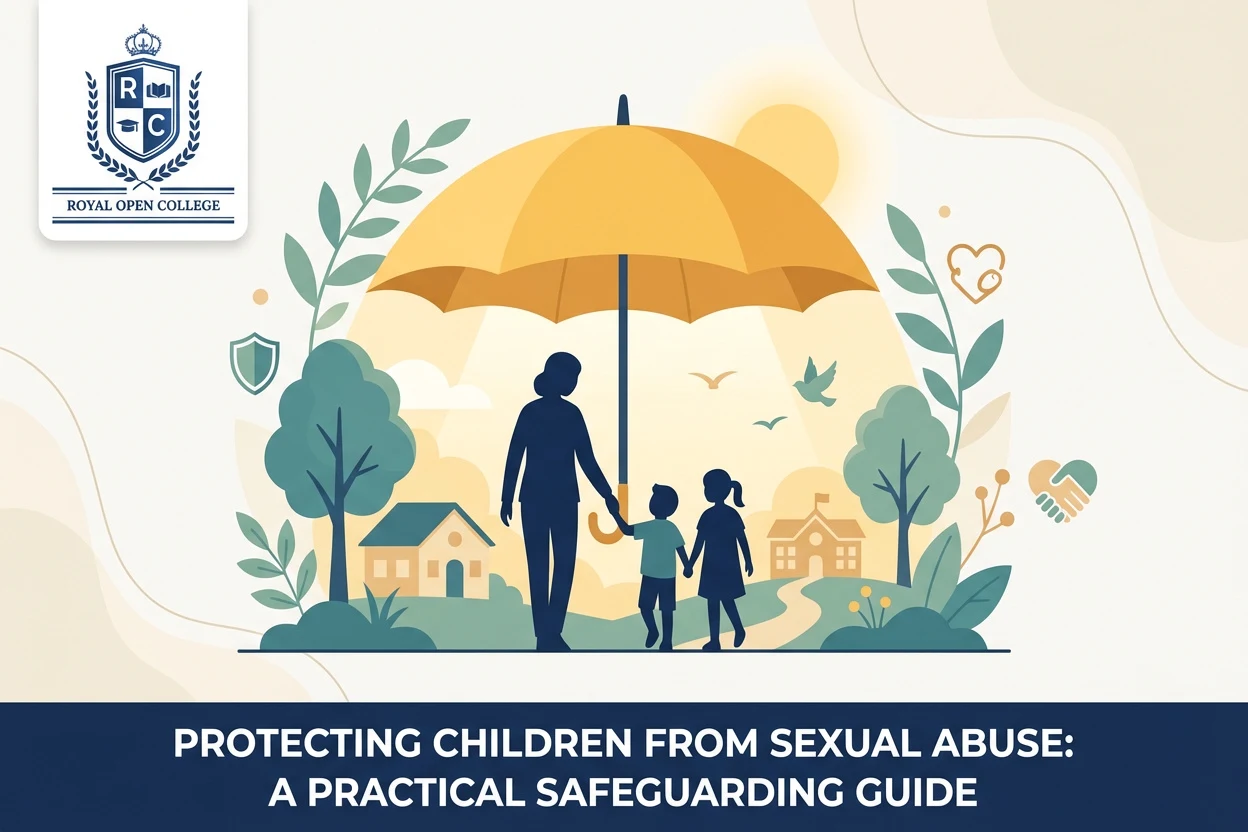


1 in 20 children in the UK experience sexual abuse each year. You can play an important role in protecting children by helping them understand their personal boundaries and making sure they feel safe talking to you. It’s also important to know the warning signs of abuse, how to reduce risks and when to seek help.
Whether you are a parent, teacher or care worker, it can be difficult to know how to respond to certain safeguarding concerns. At Royal Open College (ROC), Our Child Sexual Exploitation and Interventions course offers an opportunity to develop your knowledge of exploitation and safeguarding interventions.
This guide takes you through the practical steps you can take to keep children safe. It also explains how to respond to disclosures, report abuse and understand your legal responsibilities.
Quick Overview
- Child sexual abuse can occur with or without physical contact, both online and offline.
- A child may show physical, emotional or behavioural changes, but the warning signs are not always obvious.
- You can reduce safeguarding risks through open conversations, body safety education and appropriate supervision.
- If a child tells you about abuse, listen calmly and reassure them without asking leading questions.
- You do not need proof to report a safeguarding concern. If a child is in immediate danger, call 999.
What Is Child Sexual Abuse?
Child sexual abuse (CSA) happens when someone forces, persuades or manipulates a child into sexual activity. The child may not understand what is happening or realise that the behaviour is abusive. This abuse can happen in different forms, such as:
Contact and Non-Contact Sexual Abuse
Sexual abuse does not always involve physical contact. The NSPCC explains two main forms of child sexual abuse:
Type of abuse | What it involves |
Contact sexual abuse | Physical sexual contact with a child, such as sexual touching or assault. |
Non-contact sexual abuse | Sexual activities without physical contact, such as exposing a child to sexual material. |
Both forms of abuse can cause lasting emotional and psychological harm.
Child Sexual Exploitation and Grooming
Child sexual exploitation (CSE) happens when someone uses their power over a child for sexual gain through coercion, manipulation or an exchange.
Grooming is a process through which someone builds trust or influence to facilitate abuse. A child may believe the relationship is genuine and struggle to recognise the exploitation.
How to Recognise the Signs of Child Sexual Abuse
How can you tell if a child is experiencing sexual abuse? The signs are not always easy to spot, but changes in their health, behaviour or emotions may raise concerns.
Physical Warning Signs
A child may experience physical symptoms that suggest something is wrong. Look out for the following signs:
- Unexplained bruising or bleeding
- Pain around private body parts
- Sexually transmitted infections
- Unexplained toileting difficulties
- Pregnancy in a child
These symptoms do not always indicate sexual abuse. Some children who experience abuse may have no visible injuries.
Emotional and Behavioural Changes
You may notice changes in how a child behaves at home, at school or around other people. Possible warning signs include:
- Sudden withdrawal or anxiety
- Fear of certain people or places
- Frequent nightmares
- Unusual sexual knowledge or behaviour
- Unexplained mood changes or self-harm
You need to pay attention to changes that seem unusual for the individual child.
Signs of Abuse in Babies and Young Children
Very young children may not have the words to tell you what has happened. Instead, they may express distress through changes in their behaviour.
For example, a child may become unusually upset during nappy changes or lose skills they had already learnt. Seek safeguarding advice if these changes raise concerns.
What Makes Children Vulnerable to Sexual Abuse?
Sexual abuse can affect any child. However, some circumstances increase a child’s vulnerability or make it harder for them to recognise abusive behaviour, speak about their experiences or seek help.
Abuse Within Families and Trusted Relationships
Many adults teach children to be careful around strangers. However, sexual abuse can also involve relatives, family friends or other trusted individuals.
A child may care about the person responsible or fear what will happen to their family if they speak up. Never dismiss concerns because you know or trust someone.
Child-on-Child Sexual Abuse
It can be difficult to accept that children may sexually abuse other children. However, sexual harassment, coercion and assault can occur between peers.
If you notice harmful sexual behaviour, do not dismiss it as a joke or harmless curiosity. Both children may need safeguarding support, although the affected child’s safety comes first.
Safeguarding Children with Special Educational Needs and Disabilities
Children with special educational needs and disabilities (SEND) may face extra safeguarding challenges. Some rely on adults for personal care, while others have communication difficulties.
You can help reduce their vulnerability through accessible communication and individual support. Never assume that a child’s disability explains every change in their mood or behaviour.
How to Protect Children from Sexual Abuse
You do not need to wait until something goes wrong to take safeguarding action. Everyday conversations, clear boundaries and suitable supervision can help you create a safer environment for children.
Build Open and Trusting Relationships
Make time to talk to children about their day, friendships and anything that worries them. If a child shares a concern, listen without judgement, even if it seems minor.
These conversations help children feel comfortable asking for help. Encourage them to identify other trusted adults they can speak to as well.
Teach Children About Body Safety and Personal Boundaries
Children need to understand that their bodies belong to them. Use simple, age-appropriate language to explain private body parts, personal space and unwanted contact.
If you are unsure where to start, the NSPCC’s Talk PANTS approach offers a useful way to introduce body safety without causing unnecessary fear.
Encourage Age-Appropriate Conversations About Consent
You can introduce consent through everyday situations. For example, ask a child if they would like a hug rather than expecting them to accept one.
As children grow older, talk about respect, healthy relationships and personal boundaries. Always make it clear that adults remain responsible for protecting children from abuse.
Recognise and Address Concerning Behaviour
If someone’s behaviour around a child makes you uncomfortable, take your concerns seriously rather than waiting for something more serious to happen.
The government’s guidance on keeping children safe from sexual abuse offers practical prevention advice. Seek specialist support if you have concerns about someone’s behaviour towards a child.
Create Safe Environments for Children
Think about the places where children spend their time and the people responsible for their care. Whether at home, school or a childcare setting, children need clear safety arrangements.
Make sure adults understand appropriate boundaries, children receive suitable supervision and everyone knows who to contact if a safeguarding concern arises.
How to Protect Children from Online Sexual Abuse?
Children use the internet to learn, play and stay in touch with friends. Rather than relying on restrictions alone, you need to help them understand online risks and develop safe digital habits.
Recognising Online Grooming and Sexual Exploitation
Online grooming can take place through social media, gaming platforms and messaging apps. Children may face pressure to share private images or take part in sexual activities.
If a child becomes upset after using their device or receives unwanted sexual messages, talk to them calmly and seek help.
Establishing Safe Digital Habits
You can help children stay safer online through a few practical measures:
- Set age-appropriate privacy settings.
- Use suitable parental controls.
- Discuss the risks of sharing personal information.
- Show children how to block and report unwanted contact.
- Talk regularly about their online experiences.
Make sure children feel comfortable asking for help without fear of punishment.
Reporting Online Sexual Abuse
If you suspect online grooming or sexual exploitation, report your concerns to CEOP or the police. You can also report child sexual abuse material to the Internet Watch Foundation (IWF).
Never download, copy or share abusive images yourself. If a child is in immediate danger, call 999.
How Can Schools and Professionals Help Prevent Child Sexual Abuse?
If you work with children, you have a responsibility to help keep them safe. Your workplace should provide clear safeguarding procedures, suitable training and support when concerns arise.
Effective Safeguarding Policies and Procedures
Every school needs clear procedures so staff know what to do when a child may be at risk.
In England, Keeping Children Safe in Education 2026 sets out safeguarding duties for schools and colleges. Staff need to understand these duties and know how to contact their designated safeguarding lead (DSL).
Safer Recruitment and Professional Boundaries
If you employ people to work with children, you need to make sure they are suitable for their roles. This is where safer recruitment comes in.
Employers should carry out relevant background checks and obtain suitable references. Clear professional boundaries, regular supervision and effective reporting procedures also help protect children.
Safeguarding Training and Early Intervention
Would you know how to respond if a child’s behaviour raised safeguarding concerns? The right training can help you recognise risks and understand when to take action.
How to Respond When a Child Discloses Sexual Abuse
A child may find it difficult to tell you about sexual abuse. Your response matters because it can affect how safe they feel and whether they continue to share their concerns.
Listening, Reassuring and Supporting the Child
Give the child time to speak without interruptions. Try to remain calm, even if what they tell you is upsetting.
Reassure them that they have done the right thing by telling you and that the abuse is not their fault. Explain what you need to do next.
Recording and Sharing Safeguarding Concerns
Once the child has spoken to you, make an accurate record of what they said. Include the date, time and relevant details, and use their own words where possible.
Keep the information secure and share it with the appropriate safeguarding professionals. Follow your workplace procedures without delaying necessary action.
Common Mistakes to Avoid
You may feel a strong urge to ask questions or find out exactly what happened. However, some responses can cause further distress or affect an investigation.
Here are some mistakes to avoid:
- Asking leading or repeated questions
- Showing disbelief or blaming the child
- Promising complete confidentiality
- Confronting the suspected abuser
- Investigating the allegation yourself
- Delaying a safeguarding referral
How to Report Suspected Child Sexual Abuse in the UK
You do not need to investigate abuse or gather proof before making a report. The right reporting route depends on the situation, the level of danger and where the child lives.
Reporting Immediate Danger and Safeguarding Concerns
If you are unsure who to contact, use the following table as a guide.
Situation | Who to contact |
A child is in immediate danger | Emergency services on 999 |
Suspected child sexual abuse | Children’s social services or the police on 101 |
Safeguarding concerns at school | Designated safeguarding lead (DSL) |
Online grooming or exploitation | CEOP or the police |
Never let internal reporting procedures delay urgent action.
Helplines and Specialist Support Services
You can also contact specialist organisations if you need advice or support.
Organisation | Telephone | Support available |
NSPCC | 0808 800 5000 | Advice for adults with safeguarding concerns |
Childline | 0800 1111 | Support for children and young people |
Stop It Now | 0808 1000 900 | Specialist child sexual abuse prevention advice |
Stop It Now provides preventative support rather than a formal abuse reporting service.
How to Support Children After Sexual Abuse
A child may need ongoing support even after the immediate danger has passed. You can help by respecting their needs, providing a safe environment and seeking specialist care where necessary.
Understanding the Impact of Sexual Abuse
Sexual abuse can affect how children feel, behave and relate to others. Some children experience anxiety, depression or post-traumatic stress disorder (PTSD), while others may struggle with trust or schoolwork.
Every child responds differently to trauma. Try not to make assumptions about how they should feel or behave.
Providing Trauma-Informed Care and Ongoing Support
Trauma-informed care takes account of how past experiences can affect a child’s behaviour and emotional wellbeing. You can support children through predictable routines, patience and respect for their personal boundaries.
Depending on their needs, children may also benefit from counselling, specialist healthcare or support from sexual assault referral centres (SARCs).
What Are the UK Laws and Guidelines on Child Sexual Abuse?
If you work with children, you need to understand the laws and safeguarding guidance that apply to your role. These requirements vary across England, Scotland, Wales and Northern Ireland.
Key Child Protection Legislation
Several pieces of legislation help protect children from sexual abuse across England and Wales.
Legislation | Purpose |
Children Act 1989 | Establishes child welfare and protection duties. |
Children Act 2004 | Strengthens safeguarding arrangements and cooperation. |
Sexual Offences Act 2003 | Defines sexual offences against children and adults. |
Safeguarding Vulnerable Groups Act 2006 | Establishes barring arrangements for regulated activities. |
Scotland and Northern Ireland have their own relevant legislative frameworks.
Statutory Safeguarding Guidance and Reporting Responsibilities
In England, Working Together to Safeguard Children 2026 and Keeping Children Safe in Education 2026 guide professional safeguarding practice.
The Crime and Policing Act 2026 also contains new mandatory reporting provisions for England and Wales. Check when these provisions take effect and stay familiar with the latest government guidelines on safeguarding children.
Common Myths About Child Sexual Abuse
You may have heard certain beliefs about child sexual abuse that do not reflect reality. These misconceptions can make it harder to spot abuse or recognise when a child needs help.
Here are some common myths and the facts behind them.
Myth | Reality |
Children are mainly at risk from strangers. | Abuse can involve someone they know and trust. |
Sexual abuse always involves physical contact. | Abuse can happen without physical contact. |
Children always disclose abuse immediately. | Some children may take years to speak about abuse. |
Abuse always leaves physical injuries. | Many children have no visible injuries. |
Only adults sexually abuse children. | Abuse can occur between children. |
You need proof before reporting abuse. | You can report suspected abuse. |
Frequently Asked Questions
At What Age Should Children Learn About Body Safety?
You can introduce body safety during the early years through simple conversations about personal boundaries. As children grow older, explain consent and healthy relationships in more detail.
Can a Child Experience Sexual Abuse Without Physical Contact?
Yes, a child can experience non-contact sexual abuse through sexual exposure or online exploitation. These forms of abuse can affect their emotional wellbeing and psychological development.
Why Do Children Find It Difficult to Disclose Sexual Abuse?
Children may fear punishment, feel ashamed or worry about what will happen after disclosure. Some children also lack the words or understanding to explain their experiences.
Can I Report Suspected Child Sexual Abuse Without Proof?
Yes, you can report suspected child sexual abuse without having proof. Safeguarding professionals can assess your concerns and decide what action they need to take.
What Is Sarah’s Law and How Does It Protect Children?
Sarah’s Law allows people in England and Wales to request information about someone who has contact with a child. Police decide whether disclosure is necessary.
Is Reporting Child Sexual Abuse Mandatory in the UK?
Reporting duties vary across UK nations and professional roles. The Crime and Policing Act 2026 sets out new mandatory reporting provisions for England and Wales.
How Can Safeguarding Training Help Prevent Child Sexual Abuse?
Safeguarding training helps you recognise warning signs, understand risk factors and respond to disclosures. It also helps you identify when children may need specialist safeguarding interventions.
Strengthen Your Child Safeguarding Skills with Royal Open College
Would you feel confident if a child came to you with a safeguarding concern? The more you understand about child development and sexual abuse, the better prepared you can be to respond.
At Royal Open College, you can develop your knowledge through flexible, self-paced online CPD training. Our Childhood Moral, Personality and Sexual Development course offers an opportunity to explore children’s development.
You can study at your own pace and fit your learning around your existing work and personal commitments.
Explore our online courses today and build the knowledge you need to better support and protect children.