
1
For Lead Safeguarding Roles
Level 3 safeguarding training applies to professionals with lead or supervisory safeguarding responsibilities, including DSLs, registered managers, senior healthcare staff, and social care practitioners.







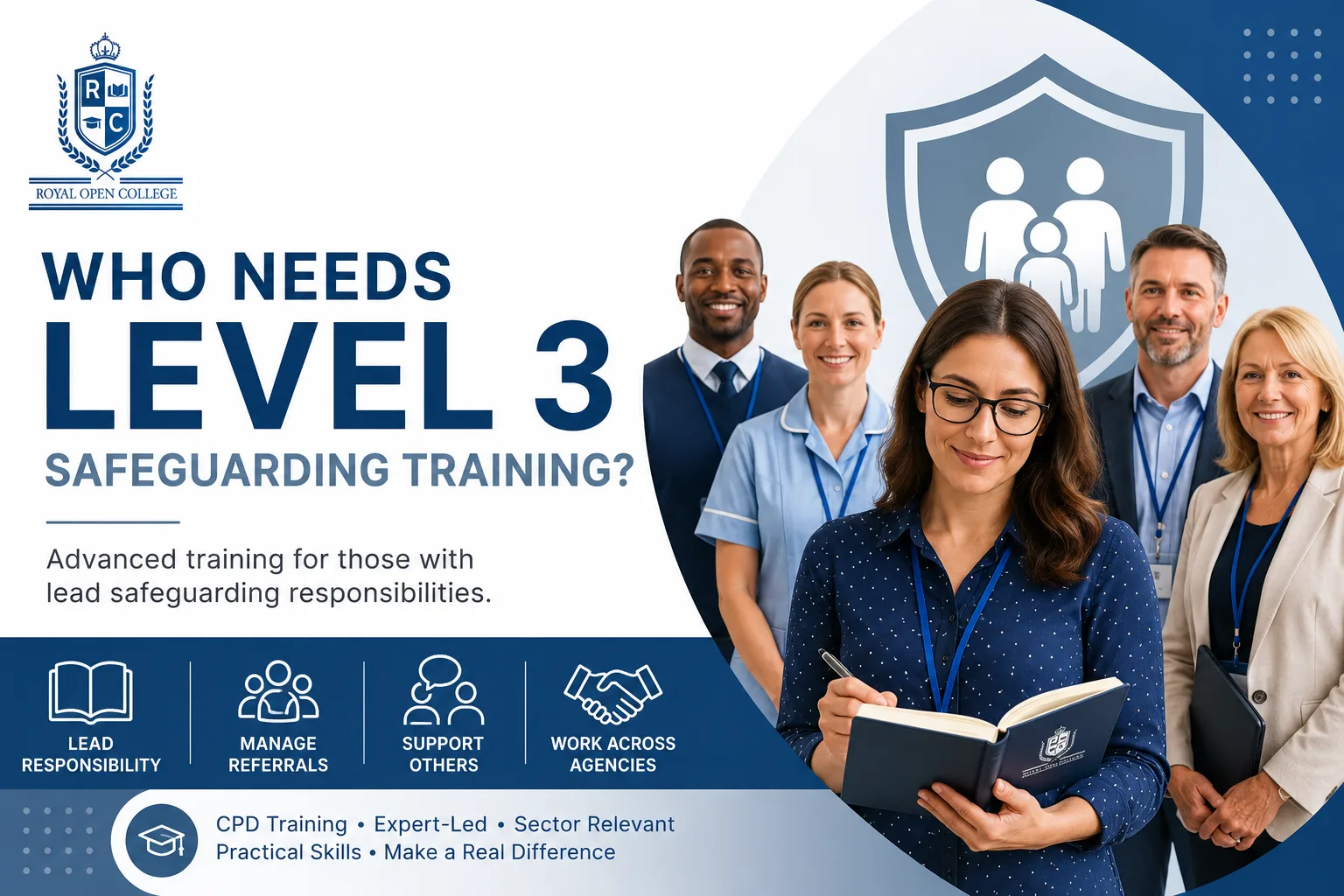
Level 3 safeguarding training applies to professionals who hold lead or supervisory responsibility for protecting children or vulnerable adults. It goes beyond basic awareness. It is designed for those who investigate concerns, manage referrals, or act as the named safeguarding contact within their setting.
A simple summary of who Level 3 training applies to, why it matters, and how often it should be refreshed.
Level 3 safeguarding training applies to professionals with lead or supervisory safeguarding responsibilities, including DSLs, registered managers, senior healthcare staff, and social care practitioners.
No single law mandates Level 3 by name, but statutory guidance, CQC expectations, and sector frameworks make it an effective requirement for these roles.
Refresher training is recommended every two to three years in most settings, with DSLs in education required to update every two years under KCSIE 2024.
Level 3 safeguarding training is most relevant when your role involves leading, managing, coordinating, or supervising safeguarding practice.
Safeguarding training in the UK is structured across levels. Each level reflects the type and depth of responsibility a role carries.
Level 1 covers basic awareness for all staff. Level 2 builds on this for those who work directly with children or adults at risk. Level 3 is for those who lead, manage, and coordinate safeguarding responses. It requires a much deeper level of knowledge than the introductory levels.
The level framework is referenced in key UK guidance. This includes Working Together to Safeguard Children (2023), Keeping Children Safe in Education (KCSIE 2024), and the Intercollegiate Document: Safeguarding Children and Young People – Roles and Competencies for Healthcare Staff. These documents outline training expectations across different roles and sectors.
Level 3 is not a formal regulated qualification. It is a training level within a professional framework. Courses at this level are commonly delivered as CPD programmes. They help professionals meet the learning expectations associated with their role.
This is worth understanding clearly before looking at who needs it.
Level 1 training covers the basics. It teaches all staff how to recognise signs of abuse and who to report concerns to. It is suitable for anyone with minimal contact with children or adults at risk.
Level 2 builds on this. It is for those who work more closely with vulnerable groups. It covers recognising indicators of harm and understanding the referral process. It is not enough for those who lead safeguarding practice.
Level 3 is different in scope and purpose. It builds the skills to manage complex situations. It trains professionals to attend child protection conferences, make formal referrals, oversee investigations, and guide others. A professional cannot lead a safeguarding process using only Level 1 or 2 knowledge.
The distinction matters because some providers blur these lines. Completing a basic awareness course does not meet the expectations of a lead safeguarding role, regardless of how it is presented.
Level 3 safeguarding training is aimed at people in lead, managerial, supervisory, or coordinating safeguarding positions.
Designated Safeguarding Leads and Deputy DSLs in schools, nurseries, and colleges.
Registered managers and deputy managers in care homes and residential settings.
Senior social workers and qualified social work practitioners involved in safeguarding decisions.
Nurses, GPs, midwives, and allied health professionals involved in assessment or care planning.
Childminders and lead practitioners in early years and daycare settings.
Managers with oversight of safeguarding policy, procedures, and staff practice.
Youth workers and sports coaches with named lead safeguarding responsibilities.
Housing professionals working in dedicated safeguarding or resident support roles.
Volunteers who hold a lead, named, or coordinating safeguarding role within an organisation.
This list is not exhaustive. Roles vary across sectors and organisations. The right training level depends on your specific responsibilities. Always check your employer’s safeguarding policy and the relevant sector guidance for your area.
Yes. DSLs in education settings are expected to hold Level 3 training. Keeping Children Safe in Education (KCSIE 2024) sets this out clearly. This statutory guidance applies to all schools and colleges in England.
The DSL manages safeguarding referrals to children’s social care. They liaise with external agencies. They advise and train staff. They attend or support child protection conferences. This level of responsibility demands the knowledge that Level 3 provides.
Deputy DSLs carry the same expectation. They must be able to act fully in the DSL’s absence.
KCSIE 2024 also states that DSLs must update their training every two years. Safeguarding guidance changes regularly, and the update requirement exists to keep knowledge current.
Level 3 applies to many healthcare professionals, but not all. It depends on the nature of the clinical role and the level of safeguarding responsibility involved.
The Intercollegiate Document sets out safeguarding training expectations for healthcare staff based on their role, level of involvement, and safeguarding responsibilities.
Named nurses and named doctors for safeguarding are commonly expected to hold Level 3 knowledge.
GPs and practice nurses with lead safeguarding duties may require Level 3 training.
Midwives and health visitors often work closely with vulnerable children, parents, and families.
Allied health professionals may need Level 3 when directly involved in child or adult protection work.
Mental health practitioners supporting vulnerable individuals or families may need advanced safeguarding knowledge.
Professionals involved in assessment, referrals, or care planning may need deeper safeguarding training.
Not every nurse or doctor requires Level 3. A healthcare professional with limited safeguarding responsibility may only need Level 2. Your employer, professional body guidance, and the Intercollegiate Document will clarify what applies to your specific role.
Registered managers in adult social care and children’s services are expected to have a thorough understanding of safeguarding at a senior level. Level 3 training supports this.
The Care Act 2014 places a legal duty on local authorities to make enquiries when an adult is at risk of abuse or neglect. Managers must ensure their teams understand and fulfil this duty. Knowing how to oversee that process requires more than awareness training.
The Children Act 1989 and the Children Act 2004 form the legal basis for child protection in England. Senior practitioners and managers in children’s services must understand how these frameworks apply in practice.
Qualified social workers will have covered safeguarding as part of their degree programme. CPD training at Level 3 helps refresh and consolidate that knowledge. It also addresses changes in guidance and practice standards.
This is a common source of confusion. It is worth being precise.
The duty to safeguard children and adults at risk is set in law. Key legislation includes the Children Act 1989, the Children Act 2004, and the Care Act 2014. These place legal duties on certain bodies and professionals.
However, no single UK law specifically names Level 3 safeguarding training as a mandatory requirement in all cases. The expectation to train at this level comes from statutory guidance and sector frameworks, not one overarching piece of legislation.
Examples of where the expectation is set:
In practice, most employers treat Level 3 as a requirement for lead safeguarding roles. CQC inspectors assess whether staff have appropriate knowledge. Failing to meet sector training expectations can affect inspection outcomes and employer compliance with statutory guidance.
So while a single law does not mandate Level 3 by name, the combined weight of legal duties, statutory guidance, and professional expectations makes it effectively essential for those with lead roles.
There is no single rule that applies to every sector or role.
For DSLs and deputy DSLs in education, KCSIE 2024 sets a clear expectation of updating every two years.
For health and social care professionals, the general recommendation is a refresher every two to three years. The Intercollegiate Document and CQC expectations support this timeline. Safeguarding guidance changes. Refresher training keeps knowledge aligned with current standards.
Some Local Safeguarding Children Partnerships set their own update expectations for professionals in their area. Always check with your employer or local partnership for role-specific guidance.
Level 3 training covers the knowledge needed to lead safeguarding practice. Common topics include:
The depth of this content reflects the complexity of the roles that Level 3 training serves.
If you want to build or strengthen your safeguarding knowledge at this level, Royal Open College offers a CPD-accredited Safeguarding Level 3 course designed for UK professionals.
The course covers child protection principles, multi-agency working, safeguarding legislation, diversity in practice, mental health and wellbeing, and professional responsibility. It is fully online and self-paced, with 12 months of access and ongoing learner support.
This course supports your CPD. It is not a regulated qualification. It is designed to deepen your understanding, support your professional development record, and build the practical confidence that lead safeguarding roles demand.
All Categories
Top Courses

Health Care

Health and Social Care

Finding your first phlebotomy job in the UK starts with knowing where to look. Trainee posts appear on NHS portals, trust websites, blood services and GP boards. Learn which phrases to search, how to read job adverts, what the latest NHS pay looks like and how to build an application without blood-taking experience. Official NHS figures anchor the pay numbers.

The order of draw sets the sequence for filling blood tubes. Learn why the sequence exists, how additive carryover changes results, what research shows for vacuum tubes and syringes and why UK hospital charts differ. Butterfly and capillary rules and the steps after a mistake follow.

Venepuncture takes a blood sample, and the needle comes out. Cannulation leaves a small tube in the vein for treatment. This guide compares what each procedure involves, what needs checking afterwards and how long a cannula stays in. You also learn who is allowed to perform each in the UK, and how training and workplace sign-off usually work in practice.








Royal Open College provides high-quality online courses covering a variety of topics along with certificates issued by top organisations.
Quickly and easily check the validity of your
Royal Open College course certificates with Royal Open College’s Course Certificate Validator tool.


Payment methods possible


Copyright © 2026 Royal Open College. All Right Reserved.
Offer Ends In!
Copy Your Coupon
Added to cart
Check out our shop to see what's available
Not a member yet? Register now
Are you a member? Login now