Completing a Level 3 in health and social care opens clear pathways in the UK. You can step into senior roles, specialise in areas like dementia or mental health, or progress to higher qualifications. Your next step depends on your goals, experience, and the type of Level 3 you hold.
Finishing a Level 3 in health and social care is a real achievement. It shows you are committed to delivering safe, person-centred care. Now the key question is: what comes next?
The answer depends on two things. It depends on which type of Level 3 you completed. It also depends on whether you want to grow your career, build specialist skills, or move into further education. This guide covers the main pathways available to you in the UK.
First, Which Type of Level 3 Do You Hold?
This is one of the most important things to understand before you plan your next steps. Not all Level 3 health and social care qualifications are the same.
There are two main types in the UK.
The first is a regulated Level 3 Diploma, also known as an RQF or NVQ Level 3. This is a workplace-based qualification regulated by Ofqual. It sits on the Regulated Qualifications Framework. To complete it, you must be working in a care setting. It involves portfolio evidence and workplace assessments signed off by a qualified assessor. This is the qualification recognised by the Care Quality Commission (CQC) for registered roles and by most regulated care employers when hiring for senior positions.
The second is a CPD-accredited Level 3 Diploma. This is an online learning qualification that demonstrates Continuing Professional Development. It covers core care knowledge such as safeguarding, communication, person-centred care, and health and safety. It is not a regulated qualification and does not replace the RQF Level 3 Diploma in roles that specifically require it. However, it is widely valued by employers for knowledge development and professional growth.
Knowing which type you hold gives you a much clearer picture of what you can do next.
Health and Social Care Level 3 Diploma
Learn to Promote Health and Social Care Level 3 Diploma!
A Level 3 in health and social care prepares you for a wide range of roles across UK care settings. Both regulated and CPD-qualified workers can apply for positions in residential care homes, domiciliary care services, supported living, NHS services, and community health settings.
Common roles you can pursue include Care Assistant, Support Worker, Domiciliary Carer, Healthcare Support Worker, and Residential Care Worker. These roles involve supporting individuals with personal care, medication prompts, mobility assistance, and daily living activities. You will work within an agreed care plan and uphold the values of dignity, respect, and inclusion.
Requirements vary depending on the employer and the specific setting. Some roles require a regulated qualification. Others accept CPD training as part of a broader skills profile. Always check each job description carefully before you apply.
Can You Move Into Senior or Leadership Roles?
Yes. With a Level 3, you have a strong foundation to progress into senior and supervisory positions. Many care workers move into these roles after gaining experience on the ground.
Senior roles available after Level 3 include Senior Care Assistant, Team Leader, Care Supervisor, and Care Coordinator. A Senior Care Assistant takes on added responsibility for junior staff and contributes to care planning. A Team Leader or Supervisor oversees day-to-day operations in a care home or community service. A Care Coordinator manages rotas, liaises with healthcare professionals, and supports service delivery.
Most employers expect both a Level 3 qualification and practical care experience before you step into these roles. Your qualification demonstrates your knowledge. Your on-the-job experience demonstrates your competence.
If you hold a CPD Level 3 and want to progress into regulated senior roles, your employer may ask you to complete a workplace-assessed RQF Level 3 alongside your existing training.
What Specialist Areas Can You Work In?
Moving into specialist care is one of the most rewarding options after Level 3. The UK care sector has a growing need for workers with targeted expertise in specific areas of need.
Areas of specialisation include dementia care, mental health support, learning disability and autism support, palliative and end-of-life care, and physical rehabilitation. Each of these requires dedicated knowledge and a person-centred approach. You can develop specialist skills through additional CPD courses, short certificates, or workplace training programmes.
Skills for Care supports a wide range of CPD resources for care workers in England and publishes guidance on workforce development standards relevant to each specialism.
What Further Qualifications Are Available?
If you want to move up in your career, further qualifications open doors to higher-paid and more senior positions.
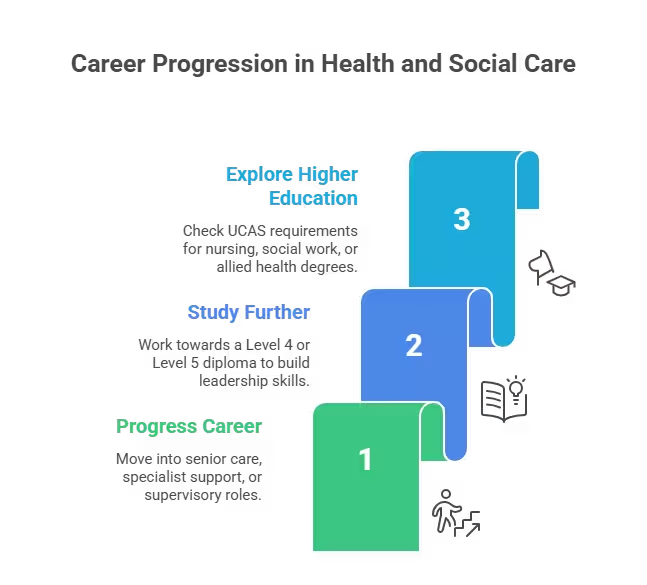
The main progression route in England runs as follows. A Level 4 Diploma in Health and Social Care builds on your Level 3 knowledge. It covers more complex care situations, team leadership, and professional responsibility. It suits experienced care workers who are ready to step into supervision roles.
A Level 5 Diploma in Leadership and Management for Adult Care is aimed at those moving into management. It covers CQC compliance, service management, safeguarding leadership, and staff development. It is closely aligned with the competency expectations placed on a Registered Manager in a regulated care service.
If you want to run a care home or domiciliary care service, the Care Quality Commission expects managers to hold appropriate leadership qualifications. The Level 5 Diploma is the most common route for this. You do not have to move from Level 3 to Level 4 to Level 5 in strict sequence. Your experience, your current role, and your career goals should guide that decision.
Can You Go to University After Level 3?
This depends entirely on the type of Level 3 you hold.
A regulated Level 3 Diploma on the RQF may carry UCAS tariff points. Some universities accept it as equivalent to A-Levels for entry into certain courses, including nursing, social work, or occupational therapy. You should always confirm entry requirements directly with the university you are applying to. Requirements differ between institutions and between courses.
A CPD-accredited Level 3 Diploma does not carry UCAS tariff points. It is not equivalent to A-Levels for university admission. Universities set their own entry criteria, and CPD certificates are not accepted in place of regulated qualifications for degree-level entry.
If your goal is a registered degree in nursing or social work, check with the specific university about alternative entry routes. Many universities offer access to higher education programmes designed for adults with care experience who do not hold traditional qualifications.
What About Working in the NHS?
The NHS employs healthcare support workers across hospitals, community health services, and mental health settings. These roles are open to candidates with relevant care training and a clear commitment to patient-centred care.
NHS pay for support roles falls under Agenda for Change. Entry-level positions typically sit at Band 2 or Band 3. Your qualifications and experience both influence where you start and how quickly you progress.
If you want to become a registered nurse, you need to complete a nursing degree approved by the Nursing and Midwifery Council. A CPD Level 3 does not qualify you for nursing registration on its own. However, it can support your personal statement and show relevant knowledge when you apply for access programmes or degree courses. NHS Jobs is the best place to search for current NHS healthcare support worker vacancies and to review what each role requires.
Quick Recap
Studying Through Royal Open College (CPD Learning)
If you want to build your knowledge and strengthen your professional profile in care, Royal Open College offers a CPD-accredited Health and Social Care Level 3 Diploma. The course covers communication, safeguarding, person-centred care, equality and diversity, and health and safety.
It is delivered fully online, at your own pace, with flexible access designed to fit around work and personal commitments. It is suitable for aspiring care workers, existing professionals seeking upskilling, and career changers preparing to enter the sector. CPD learning supports your professional development and signals commitment to employers. It does not replace regulated workplace qualifications in roles that require them, but it builds a strong knowledge foundation for every stage of your care career.
Health and Social Care Level 3 Diploma
Learn to Promote Health and Social Care Level 3 Diploma!
Protecting adults from harm starts with understanding the legal responsibilities behind everyday care. Those responsibilities vary across the UK, and several laws can apply to the same situation. Knowing how they fit together helps you make sense of your role. Explore the main legislation and what it means for safeguarding decisions in your workplace.
What makes an adult vulnerable is not always obvious from their age or diagnosis. Understanding their situation means looking at the support they need and the challenges they face in protecting themselves from abuse or neglect. Explore how these factors shape vulnerability, why individual circumstances matter and what this means for recognising concerns in adult safeguarding.
Abuse can take different forms and recognising the differences makes safeguarding concerns easier to understand. Child safeguarding commonly groups abuse into physical, emotional and sexual abuse, alongside neglect. These categories can overlap and appear in different settings. This guide explains what each type means and how to recognise important warning signs in everyday safeguarding practice.