


Safeguarding Level 3 teaches the practical skills people need when safeguarding concerns are more serious, sensitive or complex. It usually covers how to recognise abuse, respond to disclosures, report concerns, keep clear records and follow the right safeguarding route at work.
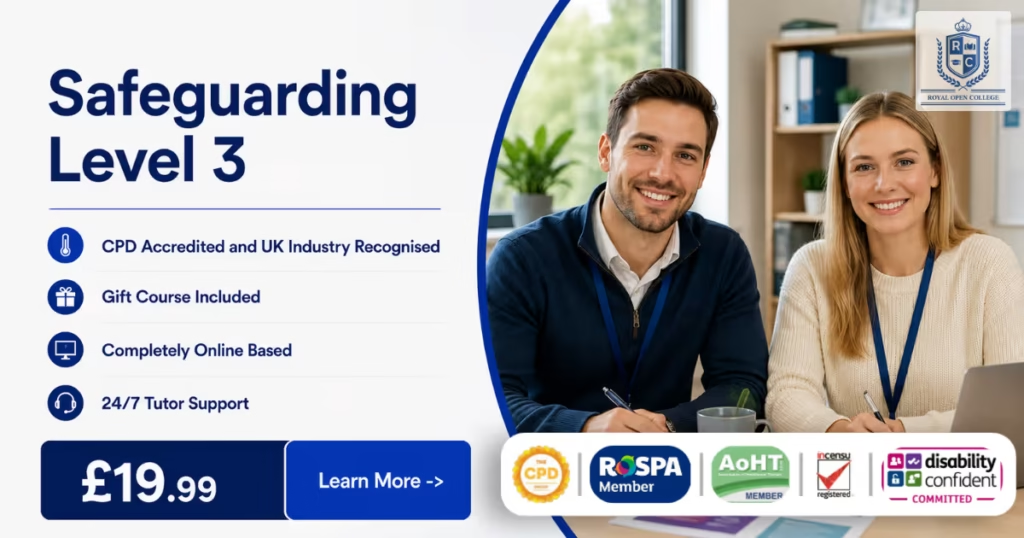
If you want structured CPD learning in this area, Royal Open College’s Safeguarding Level 3 course can support your understanding of recognising concerns, responding safely, reporting, referral, record keeping, confidentiality and safer workplace practice. It is CPD training, so it does not replace employer procedures, DBS checks, supervision, regulated qualifications or role-specific statutory training where these are required.
Quick recap
- Safeguarding Level 3 focuses on recognising, responding to and reporting safeguarding concerns.
- It usually includes disclosures, escalation, record keeping, confidentiality and information sharing.
- The exact skills you need depend on your role, setting, employer policy and local safeguarding procedures.
What does Safeguarding Level 3 usually teach?
In simple terms, Safeguarding Level 3 helps learners move beyond basic awareness. It is not only about knowing what abuse is. It is about understanding what to do when something feels wrong, when someone tells you something worrying, or when a concern needs to be passed on quickly and safely.
The training often supports people who work in care, healthcare, education, childcare, charities, community support, sports, housing or voluntary services. Some learners may be team leaders, supervisors, safeguarding leads or deputy safeguarding leads. Others may simply need stronger safeguarding knowledge because their role involves people who could be at risk.
Does it teach you how to recognise abuse and neglect?
Yes. One of the main skills taught is recognising possible signs of abuse, neglect, harm or exploitation.
This can include:
Children & Young People
For children and young people, training may also look at concerns such as:
Adults at Risk
For adults at risk, it may include:
The Aim
The aim is not to make learners investigators. The aim is to help them notice warning signs, stay professionally curious and take the right next step.
What disclosure skills are covered?
Safeguarding Level 3 usually teaches how to respond when someone shares a concern or tells you they have been harmed.
This is where people often feel nervous, and that is understandable. Training helps learners stay calm, listen carefully, avoid judgement and avoid asking leading questions. It also explains why you should not promise complete confidentiality if someone may be at risk.
A good response can help the person feel believed, respected and safer. A poor response can make them shut down. That is why communication is such an important safeguarding skill.
Does it teach reporting and escalation?
Yes. Reporting is a core part of Level 3 safeguarding training.
Learners usually study how to report concerns through workplace procedures. This may involve a manager, Designated Safeguarding Lead, safeguarding officer, local authority team, social care, police, NHS service or another local safeguarding partner.
Escalation is also important. This means knowing what to do if the concern becomes more serious, if the first response is not suitable, or if the person remains at risk. In practice, escalation should always follow employer policy and local safeguarding procedures.
What record keeping and information-sharing skills are included?
Safeguarding Level 3 normally covers how to record concerns clearly and responsibly.
A good record should be:
Factual
Dated
Accurate
Secure
It should explain:
It should not include guesswork or emotional language.
Training Also Covers
The training also covers confidentiality, consent and information sharing.
Important to Know
Safeguarding often involves private information, but there are times when relevant information may need to be shared to help protect someone from harm.
What does Safeguarding Level 3 not teach?
Safeguarding Level 3 does not make someone a social worker, police officer or investigator. It does not give a licence to practise, and it does not guarantee that every employer will accept the same certificate.
It also does not replace safer recruitment, DBS checks, workplace induction, supervision, regulated qualifications or local safeguarding training where these are required.
Common misunderstandings about Level 3 skills
One common misunderstanding is that Level 3 always means DSL training.
It can support safeguarding lead knowledge, but some DSL roles need specific employer-approved or sector-specific training.
Another misunderstanding is that Level 3 only applies to children.
Safeguarding can involve children, young people and adults at risk, depending on your workplace.
Safest Approach
Match your training to your role.
Use CPD learning to build knowledge
Follow your employer's procedures in practice
Always check local safeguarding rules when you are unsure