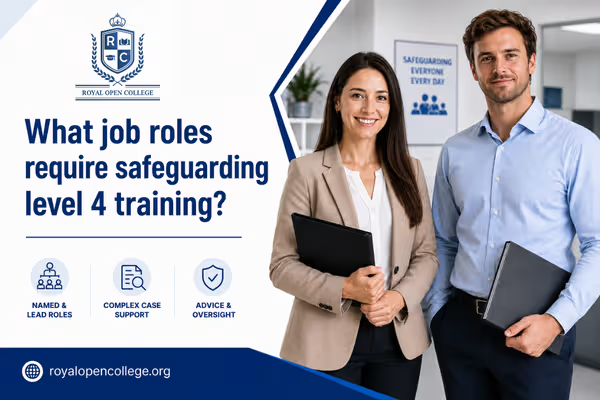

Safeguarding Level 4 training is usually for people with senior, named, lead or specialist safeguarding duties. It is not normally needed by every care worker, teacher, nurse, healthcare assistant or volunteer.
If you are preparing for a role with higher safeguarding responsibility, Royal Open College’s Safeguarding Level 4 CPD course can support your knowledge of complex concerns, risk assessment, referrals, record keeping and multi-agency working. It should sit alongside employer induction, workplace procedures and any role-specific training your organisation asks for.
Quick recap
Which job roles usually need Level 4 safeguarding training?
Level 4 safeguarding training may be suitable when your role goes beyond spotting and reporting concerns. It is usually linked to people who support other staff, manage complex cases, make referrals, review decisions, or work with outside agencies.
Typical roles may include:
The important thing is not just the job title. It is the level of responsibility attached to the role.
Is Level 4 safeguarding a legal requirement?
There is no simple UK-wide rule that says one job title must always have a Level 4 certificate. Requirements depend on your role, workplace, sector guidance, employer policy and local safeguarding procedures.
In healthcare, Level 4 is more clearly linked to senior or named safeguarding roles. The intercollegiate safeguarding guidance sets out five healthcare staff competency levels, including Level 4 for more senior safeguarding responsibility.
Do healthcare roles need Level 4 safeguarding?
Some do, especially named or senior professionals. This may include named doctors, named nurses, named midwives, named GPs, safeguarding advisors, clinical leads and senior practitioners who guide others on complex safeguarding concerns.
These roles may involve supervision, case discussion, escalation, audit, risk assessment, information sharing and working with statutory agencies. That is why basic awareness training is usually not enough for this level of responsibility.
Do school DSLs need Level 4 safeguarding?
Sometimes, but not always. Schools and colleges in England must follow Keeping Children Safe in Education, and they need suitable safeguarding leadership and DSL training.
However, “Level 4” is not a fixed legal label for every school DSL. Some employers may ask for Level 3 DSL training. Others may prefer Level 4 for senior DSLs, trust-wide safeguarding leads, multi-site roles or staff who advise several teams.
Do care home managers need Level 4 safeguarding?
A care home manager may need advanced safeguarding knowledge because they oversee staff practice, respond to concerns, support safe systems and work with other professionals.
CQC Regulation 13 says people using regulated services must be protected from abuse and improper treatment. Skills for Care also explains that adult social care employers need to understand safeguarding responsibilities and support staff to act safely.
Still, Level 4 is not automatic for every manager. It depends on the service, residents’ needs, risk level and employer policy.
What does Level 4 safeguarding training usually cover?
Level 4 training usually covers complex safeguarding concerns, adult and child protection, risk assessment, disclosure handling, referral pathways, accurate recording, lawful information sharing, escalation and multi-agency working.
It may also explore the Mental Capacity Act, DoLS, domestic abuse, exploitation, trafficking, professional curiosity, person-centred care and safeguarding leadership.
Common misunderstandings
Common Belief
The biggest misunderstanding is thinking Level 4 is for everyone who works with children or adults at risk.
Most frontline workers need role-based safeguarding training, but not always Level 4.
Common Belief
Another mistake is thinking a CPD course replaces employer sign-off, supervision, professional registration or local safeguarding procedures.
It does not.
🛡️ The Safest Approach
Check your job description
Ask your manager or safeguarding lead
Match your training to your real duties
Level 4 is best for people moving into senior, named, advisory or complex-case safeguarding responsibility.