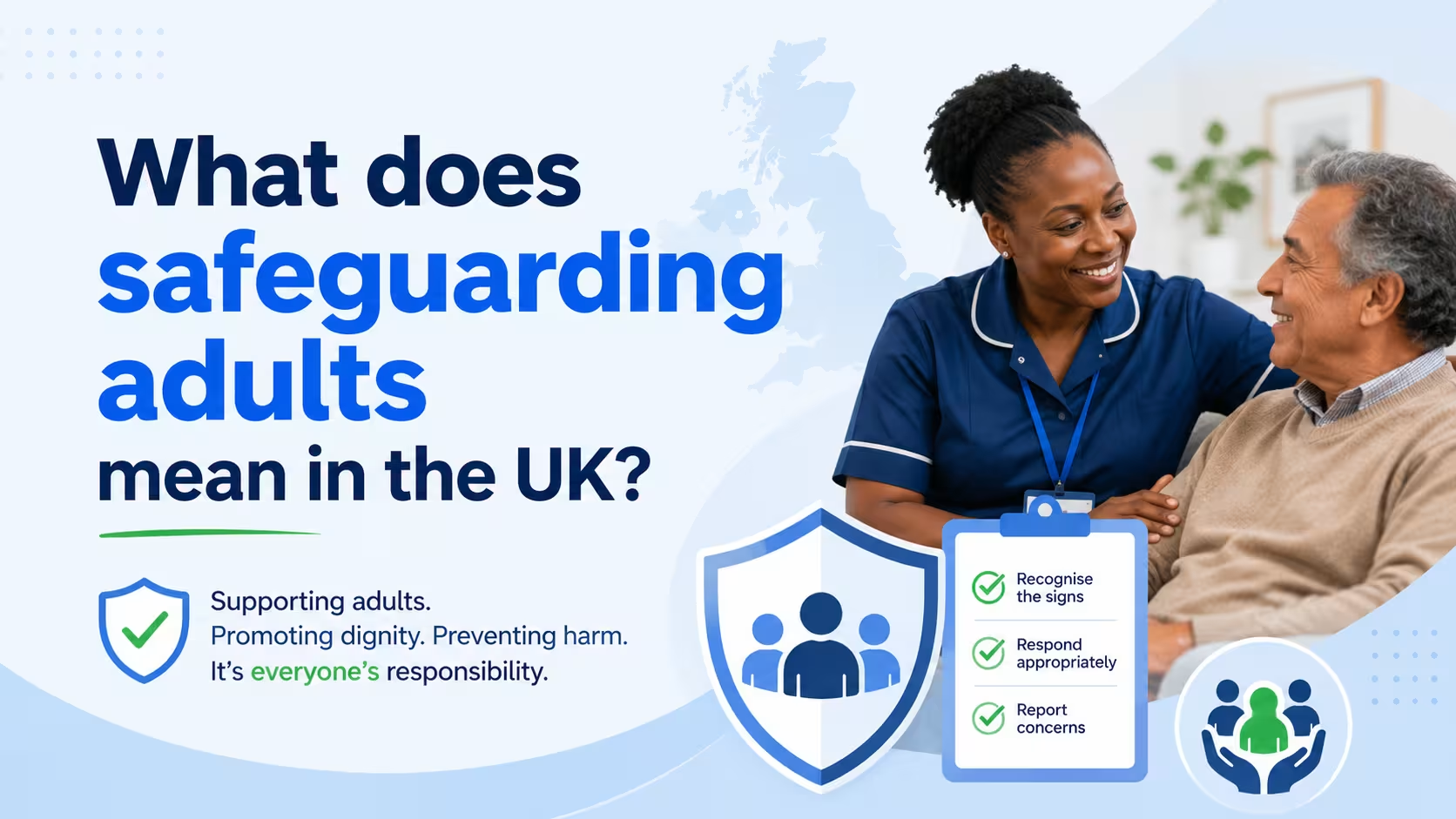
Safeguarding adults means protecting an adult’s right to live safely, free from abuse and neglect. It helps prevent harm and respond when a concern appears.
It also respects the adult’s views, wishes, and choices. Safeguarding should support safety without taking away control where this can be avoided. For a broader introduction, see our guide on what safeguarding means.
Quick recap
- Safeguarding adults protects adults at risk from abuse and neglect while respecting their rights and choices.
- It applies when an adult has care and support needs, faces abuse or neglect risk, and cannot protect themselves because of those needs.
- CPD learning can support safer practice, but employers still need correct systems, supervision, and local procedures.
What does safeguarding adults mean in the UK?
Safeguarding adults means protecting people aged 18 and over who may face abuse or neglect. It focuses on adults who have care and support needs and may not be able to protect themselves.
In England, the Care Act 2014 gives the main legal framework for adult safeguarding. Other UK nations use their own law and procedures. Local policies also matter because each council and safeguarding board may set local steps for reporting concerns.
Adult safeguarding is not just one action. It includes prevention, early action, reporting, risk checks, support, and multi-agency work. It can involve care staff, managers, social workers, health teams, police, housing teams, and local councils.
A key part of safeguarding is balance. Professionals must think about risk and safety. They must also think about choice, dignity, consent, and wellbeing.
For example, an adult may want to stay in their own home even when risks exist. Safeguarding does not always mean removing that choice. It means looking at the risk, listening to the adult, and planning safe support where possible.
Adult safeguarding is also a key part of care practice. If you want the wider care context, our guide to safeguarding in health and social care explains how it fits into daily support.
Studying through Royal Open College (CPD learning)
Royal Open College offers the Level 3 Safeguarding Adults course as CPD learning for people who need stronger knowledge of adult safeguarding practice.
CPD learning can support understanding of abuse indicators, reporting, multi-agency work, Section 42 processes, mental capacity, and information sharing. It can help staff feel clearer about their role.
It is not a regulated qualification. It does not guarantee compliance. Employers still decide what training each role needs and must follow local safeguarding policies, CQC expectations, and legal duties.
This type of learning suits people who work in care roles where safeguarding decisions carry more responsibility. Requirements can differ by role, employer, and care setting. If you are unsure about level choice, our guide on what level of safeguarding training you need may help.
Who does adult safeguarding apply to?
Adult safeguarding applies to adults aged 18 or over who meet three main points.
They have needs for care and support.
They experience abuse or neglect, or they face a risk of it.
Because of their care and support needs, they cannot protect themselves from that abuse or neglect.
Care and support needs can include many things. An adult may need help due to age, disability, illness, dementia, mental health needs, sensory loss, frailty, or a long-term condition.
It can also apply when the adult does not receive formal care. Their needs do not need to be met by the council for safeguarding to matter. The risk and the person’s ability to protect themselves are key.
Safeguarding can apply in many settings. This includes a person’s own home, a care home, supported living, a hospital, a day centre, a workplace, a public place, or online.
The phrase “adult at risk” often works better than “vulnerable adult”. It keeps the focus on the situation and the risk. It also avoids labelling the person as weak.
Not every adult who faces harm comes under formal adult safeguarding duties. Some concerns may need another response. This may include a complaint, care review, police report, mental health support, or family support. The right route depends on the facts.
What does safeguarding adults include?
Safeguarding adults includes action to prevent harm and respond to concerns. It starts before abuse happens. Good care practice reduces risk through safe staffing, clear records, training, supervision, and respectful support.
Safeguarding also includes noticing signs that something may be wrong. A concern may come from what a person says. It may also come from a change in mood, injury, poor hygiene, missing money, fear, withdrawal, or unsafe living conditions.
These early signs are often called safeguarding concerns. Our guide on what safeguarding concerns are explains how concerns can appear in practice.
Safeguarding includes listening to the adult. Staff should stay calm and take the concern seriously. They should not promise secrecy because some information may need sharing to protect the person or others.
It includes clear recording. A record should use the person’s own words where possible. It should note dates, times, facts, visible signs, and any action taken. Staff should avoid guesses or personal labels.
It also includes reporting. Care workers usually report concerns to a manager or safeguarding lead. Serious risk may need urgent action. In an emergency, people should contact emergency services.
Local authorities lead adult safeguarding enquiries in England when the legal criteria apply. This is often called a Section 42 enquiry. The local authority may make enquiries itself or ask another organisation to do so. You can read more about this in our guide on who coordinates safeguarding enquiries in the UK.
Safeguarding can also include multi-agency work. Police may lead if a crime may have happened. Health teams may support care or treatment needs. The provider may complete internal actions. The local council checks what action protects the adult.
What does safeguarding adults not include?
Safeguarding adults does not mean taking over a person’s life. Adults have rights. They can make choices that others may not agree with.
Safeguarding also does not remove the need for consent in every case. Consent matters in adult care. Staff should seek the adult’s views and wishes where possible. Yet action may still need to happen if the adult lacks capacity for a decision, a crime may have occurred, or other people face risk.
Safeguarding is not the same as general poor service management. A late visit, missed call, or one-off complaint may need a service response. It may become a safeguarding concern if it creates risk of abuse or neglect.
Safeguarding is not a substitute for safe care. Providers still need safe systems, good staffing, clear policies, and quality checks. A written process also matters, which is why care teams often need a clear safeguarding policy in the UK.
Safeguarding is not only about care homes. Abuse can happen in family homes, hospitals, supported living, online spaces, and community settings.
Safeguarding is not only about physical harm. Emotional pressure, financial control, neglect, discrimination, and coercion can also create serious risk.
Safeguarding training also does not guarantee compliance. Training supports knowledge. Employers still need safe practice, supervision, local procedures, and correct reporting.

What types of abuse and neglect does adult safeguarding cover?
Adult safeguarding covers many forms of abuse and neglect. Abuse can happen once or many times. It can come from one person, a group, or an organisation.
Physical abuse includes hitting, pushing, rough handling, misuse of restraint, or unsafe physical control.
Domestic abuse can include controlling behaviour, threats, financial control, emotional abuse, or physical harm within a family or personal relationship.
Sexual abuse includes sexual activity without consent. Staff must treat this as serious and follow local safeguarding and reporting procedures.
Psychological abuse includes threats, humiliation, intimidation, isolation, coercion, or verbal abuse.
Financial or material abuse includes theft, fraud, pressure about money, misuse of benefits, or control over property.
Discriminatory abuse includes unfair treatment linked to age, disability, race, religion, sex, sexual orientation, or other protected traits.
Organisational abuse happens when poor systems or culture cause harm. This may include unsafe routines, poor staffing, lack of respect, or repeated neglect across a service.
Modern slavery includes forced labour, trafficking, and domestic servitude.
Neglect means failing to meet care or support needs. This may involve food, drink, hygiene, medicine, heating, clothing, or medical care.
Self-neglect can also raise safeguarding concerns. This may include severe neglect of personal care, health, or the home. It does not always lead to a formal safeguarding enquiry. The response depends on risk, capacity, choice, and local procedures.
For practical scenarios, our guide on examples of safeguarding shows how concerns may appear in real care settings.
What are the six principles of adult safeguarding?
Six key principles guide adult safeguarding work in England. They help staff act in a way that protects people and respects their rights.
Empowerment means people get support to make their own choices. Staff should ask what the adult wants to happen.
Prevention means people take action before harm occurs. Clear information, safe care, and early reporting all support prevention.
Proportionality means the response should match the risk. Staff should avoid heavy action when a lower level of support can keep the person safe.
Protection means people who need help receive support. Some adults need advocacy, representation, or urgent action.
Partnership means services work together. Safeguarding often needs clear communication between care, health, police, housing, and local authority teams.
Accountability means people and organisations know their roles. Good records, clear decisions, and transparent actions help protect adults and staff.
These principles support “Making Safeguarding Personal”. This means safeguarding should focus on the adult’s wishes and outcomes. It should not become a process that ignores the person. For a deeper breakdown, see our guide to the principles of safeguarding.
How does a safeguarding concern usually get handled?
A safeguarding concern often starts when someone notices a risk. This may be a care worker, family member, neighbour, health worker, friend, or the adult themselves.
The first step is immediate safety. If someone faces urgent danger, the response must focus on safety first. Emergency services may need to act.
The next step is listening. Staff should give the adult time to speak. They should avoid leading questions. They should not investigate beyond their role.
Then staff record the facts. They should include what they saw, heard, and did. They should use clear language and keep the record accurate.
After that, staff report the concern through the right route. In a care service, this usually means the manager or safeguarding lead. The provider may then contact the local authority safeguarding team. Local policy sets the exact route.
The local authority decides whether a Section 42 enquiry duty applies. It looks at care and support needs, risk of abuse or neglect, and the adult’s ability to protect themselves.
An enquiry does not always look the same. It may be a conversation with the adult. It may involve a formal plan. It may involve police, health teams, or provider action.
The aim is not just to prove what happened. The aim is to understand risk, support the adult, stop or reduce harm, and decide what action should happen next.
When several services need to act, clear joint working matters. Our guide on multi-agency working in safeguarding explains this in more detail.
Is adult safeguarding different from child safeguarding?
Adult safeguarding and child safeguarding both aim to protect people from harm. The legal context and decision-making approach differ.
Adult safeguarding works with adults who may still have mental capacity and legal rights to make their own choices. This means consent, capacity, risk, and personal outcomes are central.
Child safeguarding focuses on children and young people. It gives stronger weight to protection because children do not have the same legal decision-making position as adults.
Both areas still need clear reporting, good records, safe practice, and timely action. Staff who work with families or mixed services may need to understand both routes. Our guide on what safeguarding children means explains the child-focused side.
What are common misunderstandings about safeguarding adults?
One common misunderstanding is that safeguarding only applies to older people. It does not. Any adult aged 18 or over can need safeguarding if the legal criteria apply.
Another misunderstanding is that staff must prove abuse before they report it. They do not. Staff report concerns. They do not need to investigate or decide guilt.
Some people think safeguarding always means calling the police. It does not. Police involvement may be needed if a crime may have happened. Other concerns may need social care, health, or provider action.
Some people think consent always stops action. Consent matters, but it does not settle every case. A concern may still need sharing if the person lacks capacity for the decision, others face risk, or a crime may have occurred.
Another misunderstanding is that safeguarding means stopping all risk. It does not. Adults can make choices. Good safeguarding supports safe choices and reduces avoidable harm.
Some people think self-neglect always creates a Section 42 enquiry. It depends on the case. Staff need to consider capacity, risk, care needs, and the adult’s ability to protect themselves.
A final misunderstanding is that a certificate alone makes a service compliant. It does not. Learning helps staff understand their role. Employers still need safe systems, correct policies, supervision, and local reporting routes.