What Settings Can You Work In?
Your options are not limited to one type of environment. A Level 3 Health and Social Care course can support entry into:
Residential and nursing care homes, NHS hospitals and community health services, domiciliary and home care agencies, supported living services, mental health services, and charities or voluntary organisations. The UK care workforce is large and varied. This gives you real flexibility in choosing a setting that suits you.
Does It Support Progression?
Yes. Many people use a Level 3 course as a starting point. With experience and further learning, you can move into senior care assistant or team leader roles, care coordinator positions, and eventually management or registered manager roles. Some people also use care sector experience as a route into nursing or social work degrees, though a university admissions team would confirm entry requirements for any degree programme.
What Does a Level 3 Course Cover?
A Level 3 Health and Social Care course typically covers safeguarding adults and children, person-centred care and duty of care, communication and confidentiality, health and safety in care settings, infection prevention, dementia and disability awareness, and equality and inclusion in practice. These topics reflect the day-to-day demands of frontline care work in the UK.
Is This a Qualification or CPD Learning?
This is an important distinction. A Level 3 Health and Social Care course delivered as CPD (continuing professional development) is not the same as a regulated qualification such as an RQF diploma or NVQ. CPD courses build your knowledge and demonstrate your commitment to professional development. Many employers value CPD training. However, some roles or career steps may require a regulated qualification or workplace assessment. Always check with an employer or training provider about what they specifically require for a given role.
What It Does Not Guarantee
Completing a Level 3 Health and Social Care course does not guarantee employment or automatic access to any regulated role. Entry requirements vary between employers, care settings, and local authorities. The course supports your development but individual employers set their own hiring standards. It does not replace a regulated qualification where one is specifically required.
Quick Recap
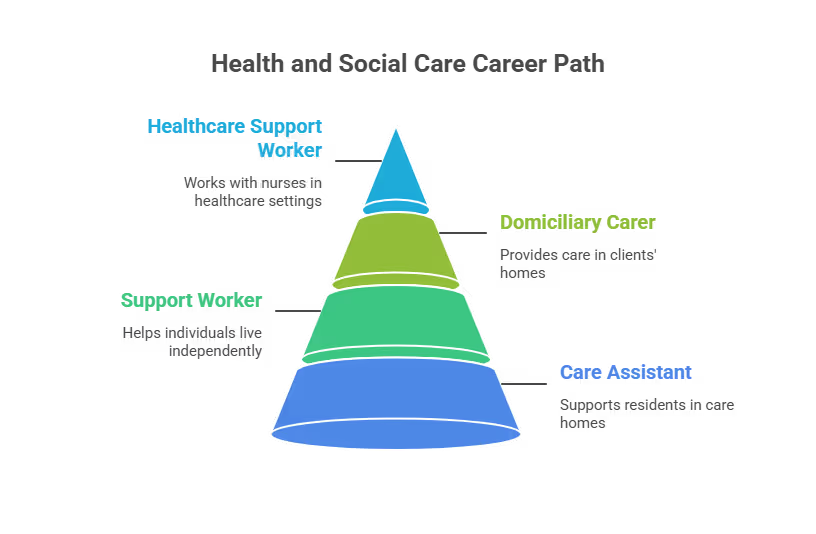
A Level 3 Health and Social Care course supports entry into roles such as care assistant, support worker, domiciliary carer, and NHS healthcare support worker.
You can work across a wide range of settings including care homes, the NHS, community services, and people’s homes.
CPD learning builds your knowledge and demonstrates commitment to professional development — always confirm specific employer requirements before applying.
Studying Through Royal Open College (CPD Learning)
Royal Open College offers a Level 3 Health and Social Care course designed for people looking to build practical knowledge for care roles. The course covers core topics such as safeguarding, person-centred care, and communication in care settings. It is delivered as CPD learning, which means it supports your professional development and helps you understand the standards expected in UK care environments. It is not a regulated qualification. If you are exploring care sector roles and want to develop your understanding before or alongside employment, it is a practical starting point.