What Are Training Courses in Health and Social Care?
What Are Training Courses in Health and Social Care?
Training courses in health and social care include induction learning, CPD training, specialist courses, and regulated qualifications. This UK guide explains course types, mandatory training, and how CPD supports ongoing professional development in adult social care.
Health and social care (often called HSC or H&SC) describes the services that support people’s health, wellbeing, and daily living across the United Kingdom. This includes hospitals, care homes, home care, supported living, and community services.
These courses range from induction learning to specialist training and regulated qualifications. They help care workers build knowledge, confidence, and responsibility at different stages of their career.
Why training matters in health and social care
Care workers support people who may be older, disabled, unwell, or vulnerable. They help with daily tasks, emotional support, and health needs.
Training helps staff:
protect people from harm
understand safeguarding duties
follow health and safety rules
respect equality and human rights
deliver person-centred care
Health and social care combines areas such as biology, sociology, nutrition, law, and ethics. Workers must understand confidentiality, privacy, risk, and informed choice in real situations.
Training builds this foundation.
Health and Social Care Level 3 Diploma
Learn to Promote Health and Social Care Level 3 Diploma!
The main types of health and social care training courses
Health and social care training falls into four main categories.
Induction training
Induction training supports new staff when they start work. It introduces workplace policies, safety procedures, and basic standards.
This often includes:
infection prevention and control
health and safety
fire safety
safeguarding adults and children
moving and handling awareness
basic life support
In England, many employers use the Care Certificate during induction. It sets standards for the adult social care workforce and supports safe practice in the workplace.
Induction training prepares staff for day-to-day responsibilities. It does not replace ongoing learning.
CPD health and social care courses
CPD stands for Continuing Professional Development. CPD courses support ongoing learning after induction.
CPD courses focus on knowledge, awareness, and best practice. They help care workers refresh understanding and develop specialist insight.
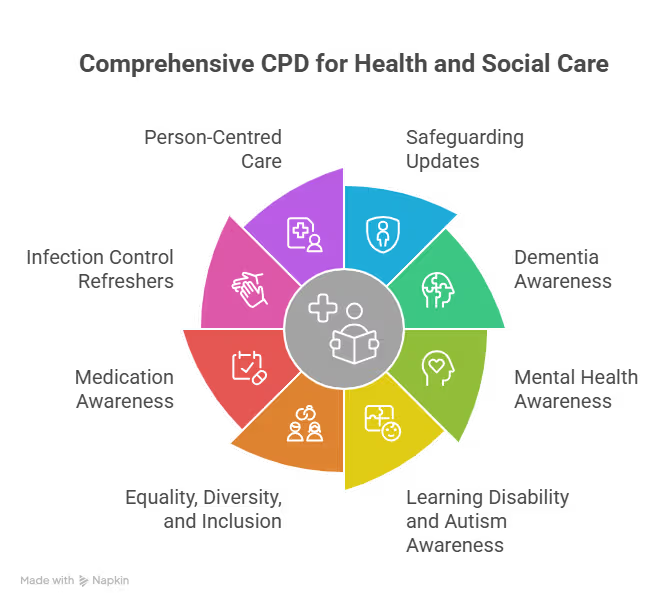
Common CPD topics include:
safeguarding updates
dementia awareness
mental health awareness
learning disability and autism awareness
equality, diversity and inclusion
medication awareness
infection control refreshers
person-centred care
CPD courses support flexible learning. Many are delivered online to fit around work schedules.
Royal Open College provides CPD health and social care courses designed to support ongoing professional development. These courses help learners strengthen knowledge while working in care settings.
CPD courses do not replace regulated qualifications. They support continuous improvement.
Specialist training and mandatory programmes
Some training focuses on specific care needs or legal duties.
For example, under the Health and Care Act 2022, CQC-registered adult social care providers in England must ensure staff receive training on learning disability and autism that suits their role. This includes the Oliver McGowan Mandatory Training on Learning Disability and Autism.
Other specialist areas include:
positive behavioural support
mental health first aid
dementia care
end of life care
diabetes awareness
medication handling
falls prevention
oral health
In England, the government publishes a list of eligible training courses and qualifications under the Learning and Development Support Scheme (LDSS). Only listed courses qualify for funding support, and the list may change.
This shows how wide the training landscape is across adult social care.
Regulated qualifications
Some learners complete formal qualifications awarded by recognised awarding organisations.
Examples include:
Level 2 Adult Social Care Certificate
Level 3 Diploma in Adult Care
Level 4 and 5 leadership and management diplomas
These qualifications often require workplace-based assessment. An assessor observes practice and reviews evidence of competence.
Level 2 suits entry-level care workers. Level 3 suits senior staff with more responsibility. Higher levels support leadership roles.
Regulated qualifications provide formal certification. CPD courses support knowledge and development alongside them.
How health and social care training is delivered
Training can be delivered in different formats.
Online learning works well for theory-based subjects and refresher courses.
Workplace assessment is required for regulated qualifications where practical competence must be observed.
Some programmes combine online study with real-world supervision.
The right format depends on the type of course and the role of the learner.
Are training courses mandatory?
Training requirements depend on the role and setting.
Employers must ensure staff are trained to work safely under health and safety law. Regulators such as the Care Quality Commission expect providers to show how they support staff development.
Some training links to legal duties, such as learning disability and autism training in England. Other courses support professional standards and continuous improvement.
Not all courses are mandatory. The required training depends on the service provided and the responsibilities of the worker.
Choosing the right health and social care training course
The right course depends on:
your current role
your experience level
the people you support
your career goals
New to care? Focus on induction and core knowledge.
Working in care? Choose CPD courses to deepen understanding.
Seeking progression? Consider specialist learning or regulated qualifications.
Health and social care training is not one single path. It is a structured journey of learning and development.
Final thoughts
Training courses in health and social care build safe, confident, and skilled professionals. They combine knowledge of health, law, ethics, and practical care standards.
From induction training to CPD development and regulated qualifications, each course supports better outcomes for individuals who rely on care services.
Continuous learning raises standards across the health and social care sector. It protects vulnerable people and strengthens the workforce that supports them.
Health and Social Care Level 3 Diploma
Learn to Promote Health and Social Care Level 3 Diploma!
Protecting adults from harm starts with understanding the legal responsibilities behind everyday care. Those responsibilities vary across the UK, and several laws can apply to the same situation. Knowing how they fit together helps you make sense of your role. Explore the main legislation and what it means for safeguarding decisions in your workplace.
What makes an adult vulnerable is not always obvious from their age or diagnosis. Understanding their situation means looking at the support they need and the challenges they face in protecting themselves from abuse or neglect. Explore how these factors shape vulnerability, why individual circumstances matter and what this means for recognising concerns in adult safeguarding.
Abuse can take different forms and recognising the differences makes safeguarding concerns easier to understand. Child safeguarding commonly groups abuse into physical, emotional and sexual abuse, alongside neglect. These categories can overlap and appear in different settings. This guide explains what each type means and how to recognise important warning signs in everyday safeguarding practice.