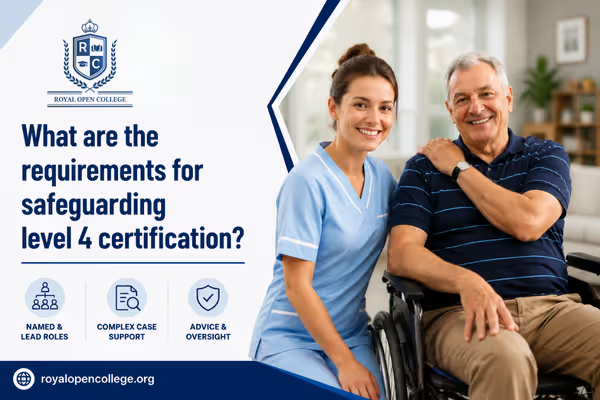


Safeguarding Level 4 certification requirements are not the same for every person or workplace. In the UK, they usually depend on your role, sector, employer policy, local safeguarding procedures and whether you need CPD learning, workplace evidence or a regulated qualification.
If you are building advanced safeguarding knowledge, Royal Open College’s Safeguarding Level 4 course can support CPD learning around child and adult safeguarding, risk, referrals, recording and safeguarding leadership. It does not replace employer induction, local policy, workplace sign-off or any regulated qualification where your role asks for one.
Quick recap
What does Level 4 safeguarding usually mean?
Level 4 safeguarding usually means advanced training for people with more responsibility than basic awareness or frontline reporting.
It may be relevant if you advise staff, manage concerns, support referrals, supervise safeguarding practice, review records, or help shape safer procedures. It is not just about spotting abuse. It is about making careful decisions, knowing when to escalate, and helping others act safely.
Is Level 4 safeguarding legally required?
The Core Fact
There is no single UK law that says every safeguarding lead must hold one specific "Level 4 certificate."
Why the Confusion Happens
That is where people often get confused. Safeguarding duties are serious, but the exact training level is normally set by your employer, sector guidance, regulator expectations or local safeguarding arrangements.
Different Sectors, Different Wording
For example, a school, care provider, NHS service, charity or training organisation may all use different wording. One may ask for DSL training. Another may ask for Level 4 safeguarding. Another may ask for evidence matched to a competency framework.
Training expectations depend on your role, workplace, employer policy and safeguarding responsibilities.
What are the usual entry requirements?
For some CPD safeguarding Level 4 courses, there may be no formal entry requirement. That can make online learning accessible if you want to build knowledge before taking on more responsibility.
But advanced workplace roles may ask for more. Employers may expect Level 3 safeguarding knowledge, experience in health, social care or education, confidence with safeguarding records, and an understanding of referrals and escalation.
In some healthcare roles, especially named professional or specialist safeguarding roles, professional registration, seniority and participatory training may also be expected. So, it is always best to check the job description or employer training matrix before enrolling.
Who might need Safeguarding Level 4?
Safeguarding Level 4 may suit people who already have safeguarding responsibilities or are preparing for them.
This can include designated safeguarding leads, deputy DSLs, safeguarding officers, care managers, senior support workers, nurses, healthcare professionals, teachers, SENCOs, early years leads, charity managers and team leaders in services supporting children or adults at risk.
Not everyone in a workplace needs Level 4. A new care assistant, receptionist or volunteer may need a lower level of awareness training instead. The right level should match the risk, contact level and responsibility of the role.
What does Level 4 training usually cover?
Often Covers
Level 4 safeguarding training often covers complex safeguarding concerns, child and adult abuse, disclosures, referrals, risk assessment, information sharing, accurate record keeping, multi-agency working and safeguarding leadership.
May Also Include
It may also include topics such as the Care Act, Mental Capacity Act, DoLS, domestic abuse, exploitation, trafficking, neglect, professional boundaries, allegations against staff and safer organisational culture.
The Aim
The aim is to help learners think clearly when the situation is sensitive, urgent or complicated.
What does a CPD certificate not prove?
A CPD certificate does not automatically make someone a Designated Safeguarding Lead, named professional, registered manager or safeguarding officer.
It also does not replace DBS checks, employer induction, supervision, practical competency checks, professional registration or regulated qualifications where those are required.
This does not make CPD training unhelpful. It simply means CPD should be used in the right way: to build knowledge, confidence and awareness alongside workplace procedures.
Common misunderstandings
The biggest misunderstanding is thinking Level 4 means one fixed UK certificate. It does not.
Another common mistake is assuming online CPD alone will meet every employer's safeguarding requirement. Some employers may accept it as useful CPD evidence. Others may need live training, internal training, refresher learning, supervision or a regulated qualification.
The safest step is simple: check your role, read your employer's safeguarding policy, and choose training that matches your responsibility. That way, your learning supports your real workplace duties instead of leaving you unsure later.