

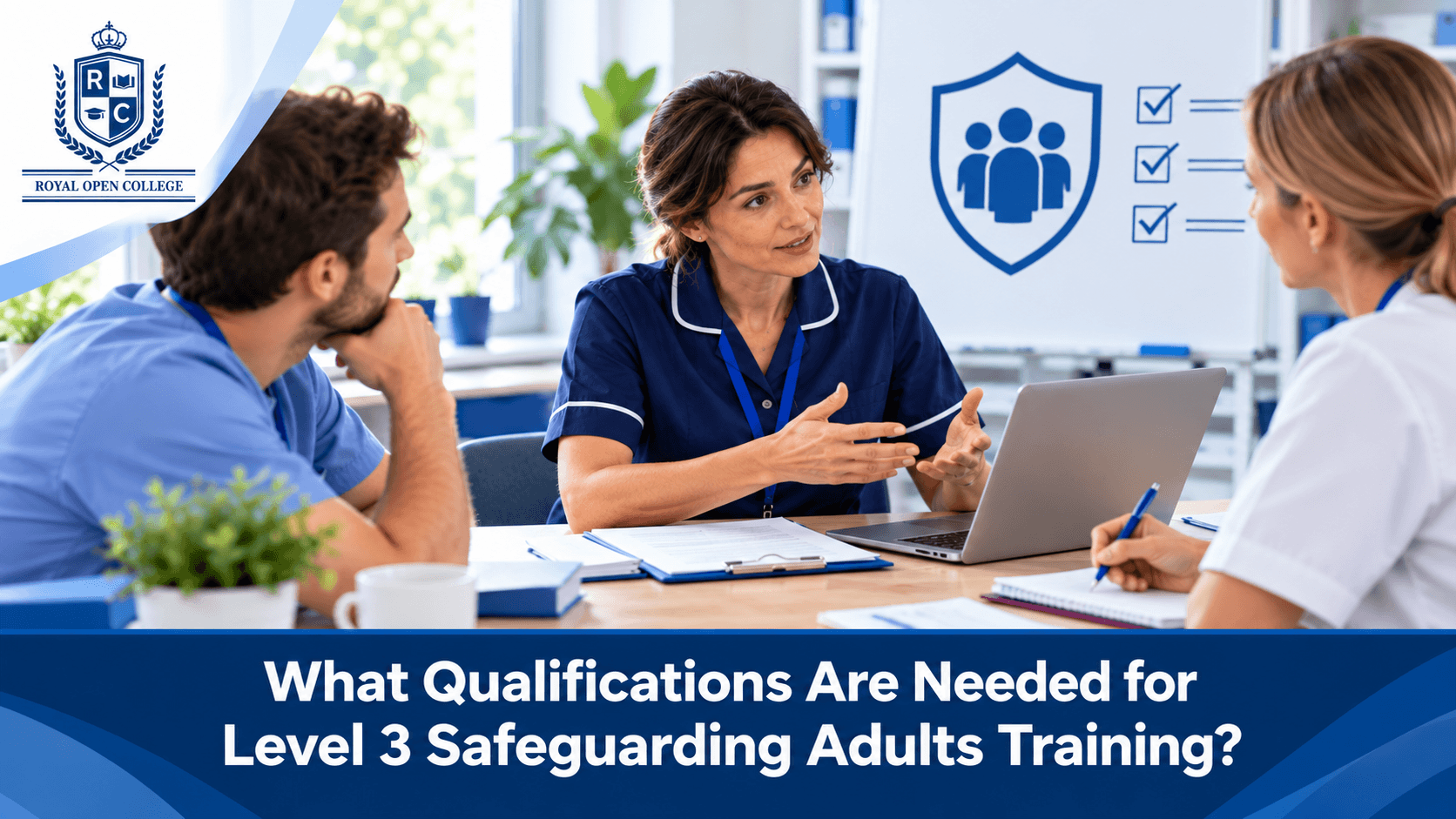



Level 3 safeguarding adults training needs no qualification, but you should complete Levels 1 and 2 first. No national framework sets a diploma or degree as an entry requirement.
Your role decides the rest. Health care staff follow the Royal College of Nursing framework, while social care employers set policy. Level 3 is a competency level, not a regulated qualification. Your employer decides which level your role needs.
If you lead safeguarding while managing a rota, the format matters. Our Level 3 Safeguarding Adults CPD course is fully online and self-paced. You study around your shifts, on any device. A multiple-choice exam, scenario tasks and a written assignment test your learning. Once you pass, you order a CPD certificate as a record.
Quick Recap
- Level 3 is a training level for staff who assess or manage safeguarding concerns, not a qualification.
- Health care, social care and general practice follow different frameworks, so your route depends on your workplace.
- A certificate shows completed learning, and your employer assesses workplace competence.
Do you need a qualification or earlier training first?
You need no qualification, but earlier safeguarding training usually comes first. No national framework sets a diploma or degree as an entry requirement. Each level builds on the one before, and some local authority courses require Level 2 at booking. Ask your employer which earlier certificates they expect you to hold.
Which qualifications get confused with Level 3 safeguarding training?
A Level 3 Diploma in Adult Care is a regulated qualification, not safeguarding training. Four items cause most confusion.
- The Care Certificate sets 16 induction standards, and Standard 10 covers adult safeguarding.
- A Level 3 Diploma in Adult Care includes safeguarding content but is a separate qualification.
- A regulated Level 3 qualification sits at the same level as A levels.
- Level 3 safeguarding CPD training records learning and is not regulated.
Your employer decides whether any of these meets its training requirement.
Which level does your role need?
No single level fits every role, because each framework matches training to duties. The Royal College of Nursing (RCN) 2024 framework covers health care staff.
- New care workers complete Care Certificate Standard 10 during induction.
- Senior care workers, team leaders and registered managers follow employer policy, which sometimes sets Level 3.
- Registered nurses, doctors and midwives need Level 3 as a minimum under the RCN framework.
- The 2024 edition extends Level 3 to healthcare assistants and support workers where duties require this.
- General practice staff follow the Royal College of General Practitioners standards of October 2024.
How do employers decide the right level?
Employers match training to each role’s safeguarding duties. They look at contact with adults at risk, decision-making, supervision and safeguarding lead responsibilities. They also follow local procedures. A senior carer who becomes a team leader and makes referrals often needs a higher level.
Is online-only study enough for Level 3?
Online-only study does not always meet Level 3 requirements, because health care frameworks expect participatory learning. The RCN framework advises against making e-learning the main method, and half the learning should be participatory. The framework suggests 8 hours of Level 3 training across a three-year cycle. New post-holders without the required knowledge complete 8 hours of tailored learning within 12 months.
General practice staff follow an annual Level 3 update instead. Social care employers set their own rules, so ask which format they accept before you enrol.
How do you practise Level 3 decisions before you book?
Work through a realistic scenario to test your recording and escalation decisions. Try our Safeguarding Decision Tree. You choose a concern type and answer questions on a UK-aligned scenario. The tool then produces a report with risk indicators, recording points and suggested next steps. The tool does not replace your safeguarding lead or local procedures.
Health care staff should check whether their employer accepts online-only learning. For England’s legal duties, read the Care and support statutory guidance on GOV.UK. Then ask your manager which level your role needs.
Studying through Royal Open College (CPD learning)
Royal Open College is a CPD provider, not a regulated awarding organisation. Our Level 3 safeguarding adults course is fully online and self-paced. The course covers recognising abuse, responding to disclosures and the Mental Capacity Act. Lessons also cover information sharing and multi-agency working.
Assessment includes a multiple-choice exam, scenario tasks and a written assignment, with a 60% pass mark. Once you pass, order a CPD certificate as a record of your learning.