





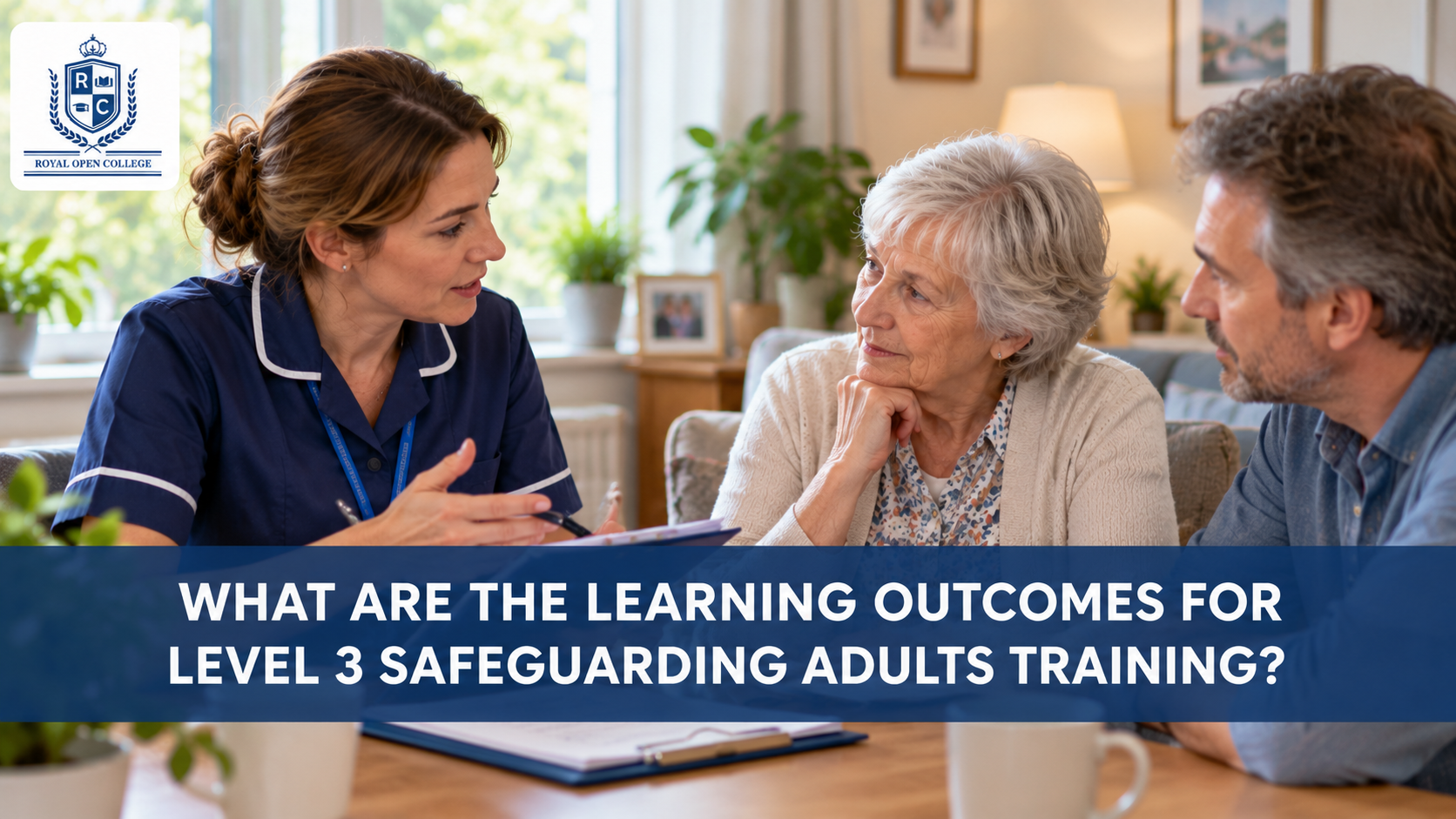


Level 3 safeguarding adults training teaches four skills: assessing risk, deciding action, recording concerns and reviewing practice. The intercollegiate document sets these outcomes for registered health care staff. Your role and employer decide how much applies to you.
You spot signs of abuse or neglect and judge the risk. You check mental capacity and refer correctly. You record facts for legal processes and share information lawfully. You then reflect through supervision and case review. The document is guidance, not law, so employers shape the final content.
Right now, the outcomes read like a list. You aim to explain Section 42 enquiries clearly, judge capacity carefully and record concerns accurately. The Level 3 Safeguarding Adults course supports this aim through CPD learning. Lessons cover the Care Act and the Mental Capacity Act.
Quick Recap
- Level 3 outcomes fall into four groups: assess, decide, record and review.
- Not every worker needs Level 3, because the right level depends on role and responsibility.
- A certificate records learning. Your employer judges competence through supervision and appraisal.
What will you be able to do after Level 3 training?
Level 3 learning outcomes fall into four groups: assess, decide, record and review. The intercollegiate document Adult Safeguarding: Roles and Competencies for Health Care Staff sets them. The document is non-statutory guidance.
Assess risk and harm
- You identify signs of physical, sexual and emotional abuse or neglect using a person-centred approach.
- You carry out a risk or harm assessment where your role requires one.
- You recognise the signs and impact of trauma.
- You manage uncertainty when you only suspect abuse.
- You communicate with adults who have capacity issues, a learning disability or communication needs.
- You identify adults who care for others and make the right referral.
Decide and plan
- You contribute to considered judgements about how to act.
- You help formulate and explain care and support plans.
- You act early to reduce risk and challenge other professionals using evidence.
- You assess mental capacity, coordinate best interests decisions and recognise deprivation of liberty.
- You know where to get expert help when a problem exceeds your experience.
Record, share and take part
- You document concerns in a form suited to protection and legal processes.
- You advise colleagues on lawful information sharing.
- You share information to support inter-agency assessments.
- You take part in safeguarding enquiries and multidisciplinary meetings, and chair them where required.
- You contribute to case reviews and domestic homicide reviews.
Review and improve practice
- You review your own or your team’s practice through audit, peer review or supervision.
- You apply lessons from case reviews to improve practice.
- You give and receive supervision and recognise the personal impact of safeguarding work.
- Where your role includes forensic work, you present findings to legal requirements.
Who needs Level 3 safeguarding adults training?
Level 3 applies to registered health care staff who assess, plan or evaluate safeguarding care. Examples include registered nurses, doctors, midwives, health visitors, ambulance staff and care home managers. Commissioners and integrated care board quality teams also sit at Level 3.
Employers decide the level for senior carers and team leaders by reviewing role duties. Level 2 teaches you to recognise abuse and refer concerns. Level 3 adds assessment, planning and enquiry work. Safeguarding leads who advise colleagues sit at Level 4. Level 3 does not make you a safeguarding lead.
How many hours does Level 3 training take?
Level 3 training suggests 8 hours over three years. The intercollegiate document sets these figures, not the law. Half the learning is participatory, so e-learning is not the primary or sole method. Over those years you also show reflection on at least three aspects of safeguarding.
New role holders attain Level 3 competencies within six weeks. They also complete 8 hours of tailored education within 12 months.
How do the outcomes work in practice?
Take a nurse who notices unexplained bruising on a care home resident. They check capacity, ask about the resident’s wishes and record facts only. They then follow local procedures and refer through the safeguarding route.
A team leader uses the same outcomes to brief staff and check records are factual and dated.
Our Safeguarding Decision Tree tool lets you rehearse a scenario like this and generate a report. The tool does not replace professional judgement, your safeguarding lead or local procedures.
What are the common mistakes around Level 3 training?
These mistakes lead to mismatched training choices.
- Some employers assume every worker needs Level 3, but roles differ.
- Some learners treat a CPD certificate as a regulated qualification.
- Some teams assume a certificate proves competence without supervision or observation.
- Some staff treat employer policy or the intercollegiate document as legislation.
Studying through Royal Open College (CPD learning)
Royal Open College offers the Level 3 Safeguarding Adults course as CPD learning. The lessons cover Care Act duties, Section 42 enquiries and the Mental Capacity Act. Pair online study with supervision and team discussion.
Read Chapter 14 of the Care and Support Statutory Guidance on GOV.UK. Then check your employer’s requirements before you book. Ask your employer which level your role needs, then compare the outcomes above with your duties.