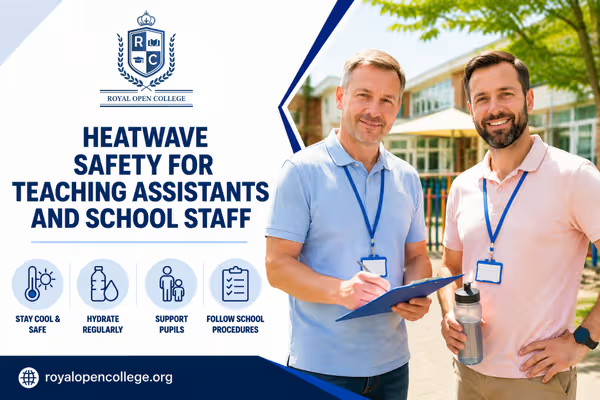


Heatwave safety for teaching assistants and school staff is about keeping pupils comfortable, hydrated and closely observed during very hot school days. In simple terms, staff should help children drink water regularly, stay out of strong sun where possible, reduce heavy physical activity, and report any signs of heat exhaustion or heatstroke quickly.
For teaching assistants, this matters because you are often close to pupils during lessons, playground duty, lunch, PE, interventions and transitions. If you want to build confidence around heat-related risks in the workplace, Royal Open College’s Heatwave: Health and Safety Tips can support CPD learning, while school policy, first-aid procedures and employer risk assessments should always come first.
Quick recap
- There is no fixed legal maximum classroom temperature in the UK.
- TAs can help by encouraging water breaks, shade, cooler activities and early reporting.
- Always follow your school’s health and safety, first-aid and safeguarding procedures.
What should teaching assistants do during a heatwave?
Teaching assistants are often the people closest to pupils during lessons, playground duty, lunch, interventions and transitions. That means you may notice early signs before anyone else.
You can help by gently reminding pupils to drink water, moving them away from direct sunlight, supporting calmer classroom tasks, and checking on children who seem tired, quiet, dizzy, flushed or not quite themselves. You do not need to panic, but you should act early and report concerns to the class teacher, first aider, SENCO, school nurse or senior leader.
Is there a maximum classroom temperature in UK schools?
No. UK schools do not have a set legal maximum classroom temperature that automatically means they must close.
But that does not mean heat can be ignored. School leaders still need to manage health and safety risks. If classrooms are too hot, schools may use risk assessments, change rooms, relax uniform rules, reduce physical activity, adjust routines, or take other sensible steps.
How can school staff keep classrooms cooler?
Small changes can help a lot.
Open windows early in the morning when the air is cooler.
Use blinds or curtains to block strong sunlight where possible, but do not block needed airflow.
Switch off when not needed:
Standby mode can still add heat.
If one room is much hotter than another, staff may move pupils to a cooler space.
Fans may help in warm rooms, but they are not always suitable in extreme heat.
Follow your school's guidance.
What about playground duty, PE and school trips?
Outdoor time needs extra care in a heatwave. Encourage pupils to stay in shaded areas, wear sun hats if allowed, drink water more often, and avoid unnecessary running during the hottest part of the day.
PE, sports day, outdoor lessons and trips may need to be changed, shortened, moved indoors, or rearranged. Teaching assistants can support this by keeping pupils calm, watching for signs of heat stress, and telling a senior member of staff if conditions feel unsafe.
Which pupils need extra attention?
Some children may struggle more in hot weather. This can include younger pupils, children with SEND, pupils with medical conditions, children taking certain medicines, and pupils who cannot clearly explain how they feel.
Staff can also be affected. Pregnant staff, staff with breathing or heart conditions, and staff working outdoors or in hot rooms may need extra support. Concerns should be raised early, not left until someone becomes seriously unwell.
What are the warning signs of heat illness?
Signs to watch for
Heat Exhaustion
Heat exhaustion may look like :
In children, it can also look like irritability, confusion, crying, silence or unusual behaviour.
More serious
Heatstroke
Heatstroke is more serious. Warning signs can include :
If heatstroke is suspected, call 999 and follow first-aid guidance while cooling the child safely.
Common misunderstandings
A heatwave does not always mean a school must close. Decisions depend on the building, pupils, staffing, transport, risk assessment and local guidance.
A fan alone does not make a room safe. Water, shade, ventilation, reduced activity and close observation matter too.
A CPD course can support knowledge, but it is not a legal certificate or a licence to work in schools. In real school settings, employer policy, first-aid arrangements and role-specific instructions always come first.