

🌞 Summer Sale! Get any Course for £11.99 Only!
Offer ends soon! 00 : 00 : 00
Use Coupon Code 👇
SUMMER98
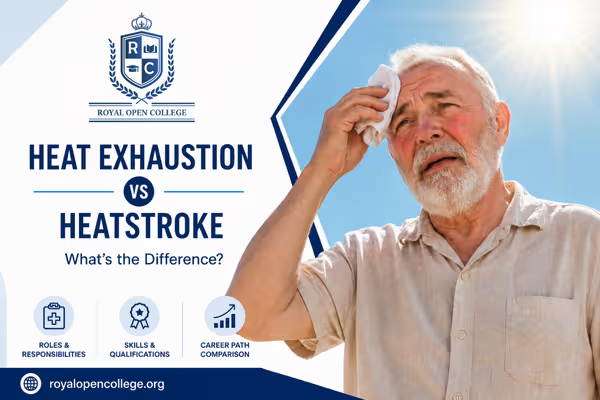
Heat Exhaustion vs Heatstroke: What’s the Difference

Heat Exhaustion vs Heatstroke: What’s the Difference

Heat exhaustion is the body’s warning sign that it is overheating. Heatstroke is a medical emergency. Learn the key differences, early symptoms, first steps, and what UK workplaces and care settings should know during hot weather.

Heat exhaustion and heatstroke are both caused by the body getting too hot, but they are not the same thing. Heat exhaustion is usually the early warning stage, where the body is struggling with heat but may still recover with rest, fluids and cooling. Heatstroke is much more serious because the body can no longer control its temperature properly, and it needs urgent medical help.

The simple rule is this: heat exhaustion should start to improve within 30 minutes of cooling, resting and drinking fluids. If the person is still unwell after that, or shows signs of heatstroke, call 999. NHS guidance uses this 30-minute point as a key warning sign. 

For people responsible for staff wellbeing, care environments or workplace safety, Royal Open College’s Heatwave Awareness course can support CPD awareness of heat-related risks, while employer risk assessments, first aid arrangements and local procedures remain separate.

Quick recap

  • Heat exhaustion is serious, but it often improves with quick cooling and fluids.
  • Heatstroke is an emergency, especially with confusion, seizures or loss of consciousness.
  • Risk depends on the person, the heat, the setting, the activity, and workplace or local procedures.

Why does the difference matter?

In hot weather, it is easy to brush symptoms off as “just feeling tired” or “too much sun”. That can be risky. Heat exhaustion can sometimes move into heatstroke if the person does not cool down quickly.

This matters in homes, care settings, offices, schools, kitchens, warehouses, outdoor work and healthcare environments. If you support staff wellbeing or manage people during hot weather, structured CPD learning can help build awareness.

What are the signs of heat exhaustion?

Warning Stage
🌡️

Heat exhaustion is the warning stage.

Early Signs
🥵

The person may look or feel drained, dizzy, sick, thirsty or weak.

Body Symptoms
💧

They may have a headache, muscle cramps, heavy sweating, fast breathing, a fast heartbeat, or pale and clammy skin. Skin colour changes may be harder to spot on brown or black skin, so do not rely on appearance alone.

Behaviour Changes
👀

A child may also become irritable. An older adult, patient or vulnerable person may not explain clearly how they feel, so small changes in behaviour can matter.

What are the signs of heatstroke?

Heatstroke is different because the body’s cooling system is failing. The person may seem confused, restless, uncoordinated or unusually drowsy. They may have hot skin without sweating, fast breathing, shortness of breath, a seizure, or they may lose consciousness.

If you see these signs, do not wait to see if it passes. GOV.UK advises calling 999 in an emergency or if you think someone has heatstroke.

What should you do first?

Move the person to a cooler place, such as shade, a cool room or an air-conditioned area. Remove extra clothing like jackets or socks. Give cool water or a rehydration drink if they are awake and able to drink safely.

Cool their skin with cool water, a damp cloth, a fan, or wrapped cold packs under the armpits or on the neck. Stay with them and watch closely. They should start to feel better within 30 minutes.

When should you call NHS 111 or 999?

When should you call NHS 111 or 999?

Call NHS 111 if symptoms are difficult to treat, worrying or getting worse. Call 999 if the person is still unwell after 30 minutes, becomes confused, has a seizure, loses consciousness, has fast breathing, or has hot skin without sweating.

Do not drive someone with suspected heatstroke to A&E yourself. An ambulance crew can give safer support on the way.

Who is most at risk?

Anyone can get heat exhaustion or heatstroke. Some people need extra care, including older adults, babies, young children, pregnant people, people with heart or breathing problems, people with diabetes, and people who may struggle to drink enough fluids.

Workers may also be at risk in hot indoor or outdoor settings. HSE links heat stress with symptoms such as dizziness, nausea, headache, moist skin, confusion, convulsions and loss of consciousness.

Common misunderstandings

Heatstroke is different

Heatstroke is not the same as a stroke. A stroke affects blood flow to the brain. Heatstroke happens when the body overheats dangerously.

Stroke Brain blood flow Body overheats
Sweating can mislead

Sweating does not always mean someone is safe. Heavy sweating can be part of heat exhaustion, while hot dry skin can be a danger sign of heatstroke.

Heavy sweating Heat exhaustion Hot dry skin
CPD supports awareness

A CPD course can support awareness, but it does not replace first aid training, emergency help, workplace sign-off, employer risk assessments or local health and safety procedures.

CPD awareness First aid training Emergency help Employer procedures Risk assessments

Recent Blogs

What Are the Requirements for a Nursing Assistant Course in the UK

What Are the Requirements for a Nursing Assistant Course in the UK

Searching for nursing assistant course requirements in the UK returns contradictory answers. This guide separates the topic into three distinct layers: what you need to enrol, what employers check before hiring you, and what you complete on the job. It corrects widespread errors about the Care Certificate, explains the CPD versus Ofqual distinction, and maps the DBS process accurately.