
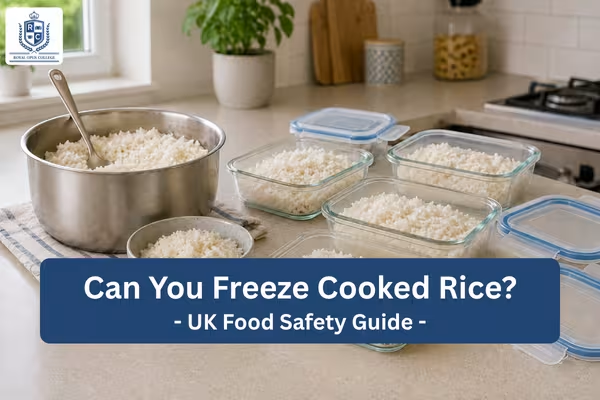



Yes, you can freeze cooked rice safely. The key is to cool it quickly and place it in the freezer soon after cooking. When handled properly, freezing leftover rice can reduce food waste, save time and give you convenient portions for future meals. The food safety principles behind this process are also covered in training such as the Food Hygiene and Safety Level 3 course.
The main food safety risk is not the freezing itself, but what happens between cooking and freezing. If cooked rice is left to cool slowly at room temperature, Bacillus cereus bacteria can multiply. That is why cooling rice promptly and storing it correctly are such important steps when you want to keep frozen rice safe.
Quick Recap
- Cool cooked rice within one hour and freeze it promptly.
- Store frozen cooked rice for up to three months when handled correctly.
- Reheat the rice only once, until steaming hot throughout, and serve immediately.
Why Does Rice Need Special Care?
Most people would not think of rice as a high-risk food, and rice itself is not usually the problem. The risk comes from a bacterium called Bacillus cereus, which can be present in uncooked rice as spores. Cooking will kill many bacteria, but these spores can survive.
The problem starts when cooked rice is left sitting at room temperature for too long. In warm conditions, the spores can become active, allowing bacteria to multiply and, in some cases, produce toxins.
This is why reheating rice does not automatically make it safe. Some toxins produced by Bacillus cereus, particularly those linked to vomiting, can survive high temperatures. So if rice has already been stored incorrectly, reheating it may not remove the risk.
The most important stage is actually cooling. The food safety danger zone is between 8°C and 63°C, which means rice left on the kitchen worktop can quickly enter the temperature range where bacteria grow. Cooling and storing it promptly after cooking is therefore one of the best ways to reduce the risk.
How Quickly Should You Cool Cooked Rice?
The method matters as much as the timing.
Leaving rice in the cooking pan with a lid on is one of the most common mistakes.
A deep, covered pan holds heat for a surprisingly long time, and the rice at the centre can remain warm well beyond the one-hour window without any obvious sign on the surface.
Spread the rice across a clean baking tray or a large, shallow dish and break up any clumps with a clean fork.
The wider and flatter the layer, the faster the heat escapes.
Do not cover the rice while it is still hot; a lid or cling film traps steam and slows the process considerably.
Once cooled, divide into portions and freeze on the same day it was cooked.
How to Freeze Cooked Rice
Once the rice has cooled, freezing it is the easy part. It is best to divide it into individual or meal-sized portions first. That way, the rice freezes faster, defrosts more evenly and you can take out only what you need instead of thawing a large batch.
Pop each portion into an airtight, freezer-safe container or freezer bag. If you are using bags, squeeze out as much excess air as you can before sealing them. Flattening the rice into a thin, even layer is useful too, as it helps the rice freeze more evenly and makes the bags much easier to stack.
A quick label can save some guesswork later. Add the freezing date and, if useful, the type of rice. Basmati, jasmine and white long-grain rice can look surprisingly similar once frozen.
For freezer bags, lay them flat until the rice is completely frozen. Once solid, you can stand them upright like files, which is a simple way to make better use of your freezer space.
How Long Can You Keep Cooked Rice in the Freezer?
Cooked rice can be stored in the freezer for up to three months if it has been cooled, packaged and frozen correctly. WRAP, the UK charity focused on reducing food waste, supports this three-month guideline for frozen cooked rice. Using it sooner can give better texture and quality.
Rice stored for close to three months may become drier or more grainy after reheating. This is a quality issue, not a safety concern. Freezer burn can also affect texture and flavour, but it does not mean the rice is unsafe.
If you cannot remember when the rice was frozen, think it was stored incorrectly, or are unsure about its condition, the safest option is to discard it.
How to Defrost and Reheat Frozen Rice Safely
The safest way to defrost frozen rice is to place it in the fridge and leave it overnight. Once fully defrosted, use it within 24 hours and do not freeze it again. Defrosting rice in the fridge keeps it at a safe, controlled temperature and reduces the risk of bacterial growth.
Do not leave frozen rice on the kitchen worktop to thaw. The outside can warm up long before the centre has defrosted, creating conditions where bacteria can grow.
✏️ Reheating Rice Safely
Place the defrosted rice in a microwave-safe bowl and add a small splash of water to stop it drying out.
Cover with a microwave-safe lid or damp kitchen paper, then heat thoroughly.
Stir the rice at least once during reheating to help prevent cold spots. It should be steaming hot throughout before you eat it.
If you are using a food probe thermometer, 75°C for 30 seconds is one recognised time and temperature combination for checking that food has been heated through.
🌡️ 75°C for 30 secondsPlace the rice in a suitable pan with a small amount of water.
Heat over a medium heat, stirring regularly, until it is steaming hot throughout.
Serve immediately.
Can You Reheat Rice More Than Once?
No. Cooked rice should only be reheated once. After reheating, eat it straight away and do not save it to reheat again later.
Takeaway rice needs extra care. You may not know when it was first cooked, how it was stored before serving, or whether it had already been reheated before reaching you. For this reason, the FSA advises taking particular care when reheating takeaway rice.
What Are the Symptoms of Bacillus Cereus Food Poisoning?
Food Safety
Bacillus cereus causes two main forms of illness.
Vomiting Form
The vomiting form can develop around 30 minutes to 6 hours after eating affected food.
Diarrhoeal Form
The diarrhoeal form more commonly develops around 6 to 24 hours afterwards.
Other symptoms can include nausea and stomach cramps, and both forms may occur together in some cases.
For most healthy adults, the illness is mild and clears without medical treatment.
Seek medical advice if:
Symptoms are severe
You cannot keep fluids down
There are signs of dehydration or bloody diarrhoea
Symptoms continue beyond the timeframes advised by the NHS
More Vulnerable
Children, older adults and people with weakened immune systems may be more vulnerable to complications.
If you are unsure, contact your GP or call NHS 111.
Correct cooling, freezing, defrosting and reheating considerably reduce the risk of Bacillus cereus causing any problem at all.
Can You Freeze Different Types of Rice?
Most common varieties of cooked rice freeze well. This includes white long-grain, basmati, jasmine, brown rice, wild rice blends and short-grain varieties such as sushi rice or arborio.
Brown rice is denser, so it may need slightly longer to reheat after defrosting. Adding a small splash of water before reheating can help prevent it from drying out.
Short-grain varieties such as arborio or sushi rice may become softer or stickier after freezing. They are still safe to eat and work well in cooked dishes where the texture of individual grains is less important.
Rice-based dishes such as pilau or egg fried rice can also be frozen using the same method. Any meat, fish, eggs or other perishable ingredients in the dish must also be safe to freeze and must still be within their own safe storage limits before the dish is placed in the freezer.
Common Mistakes to Avoid
Most problems with storing and reheating rice come down to a small number of habits that are easy to overlook in a busy kitchen.
The frustrating reality is that Bacillus cereus may give no visible warning. Rice that has been handled incorrectly can still look, smell and taste normal. There may be no obvious sign that something has gone wrong before symptoms appear.
This is what makes these habits worth taking seriously.
None of them require:
- Extra equipment
- Specialist knowledge
- Significant additional effort
They simply require awareness of where the risks sit and a consistent approach every time rice is cooked, cooled, stored and reheated.
Leaving Rice to Cool for Too Long
Cool rice quickly after cooking rather than leaving it sitting in a pan or serving dish while other tasks take priority.
Freezing Rice Too Late
Freeze cooked rice on the day it is cooked. Moving it from the fridge to the freezer the following day carries additional risk.
Cooling Rice in a Large, Deep Container
A deep container retains heat far longer than expected. Spread rice across a shallow surface or divide it into smaller portions to speed up cooling.
Defrosting Rice on the Worktop
Always defrost rice in the fridge rather than at room temperature.
Heating Rice Unevenly
Stir rice during microwave reheating and confirm that it is steaming hot throughout before serving.
Reheating Rice More Than Once
One reheating cycle only. Eat it immediately afterwards without exception.
Freezing Very Large Portions
Smaller portions are safer and more convenient at every stage of the process.
Studying Through Royal Open College (CPD Learning)
In a professional kitchen, poor food handling can have serious consequences, both for the people eating the food and for the business responsible for it. That is why every person who handles food in a catering environment has a direct role in protecting the health of the people they serve.
For those with greater responsibility in the workplace, having a strong understanding of food safety is especially important. Royal Open College offers a CPD-accredited Food Hygiene and Safety Level 3 course for supervisors, managers and chefs who have day-to-day responsibility for food safety.
The course covers temperature control, food preservation, contamination risks, HACCP principles and food safety management in UK catering environments.
CPD learning supports ongoing professional development and helps food industry staff keep pace with evolving food safety standards. It is not a regulated qualification.